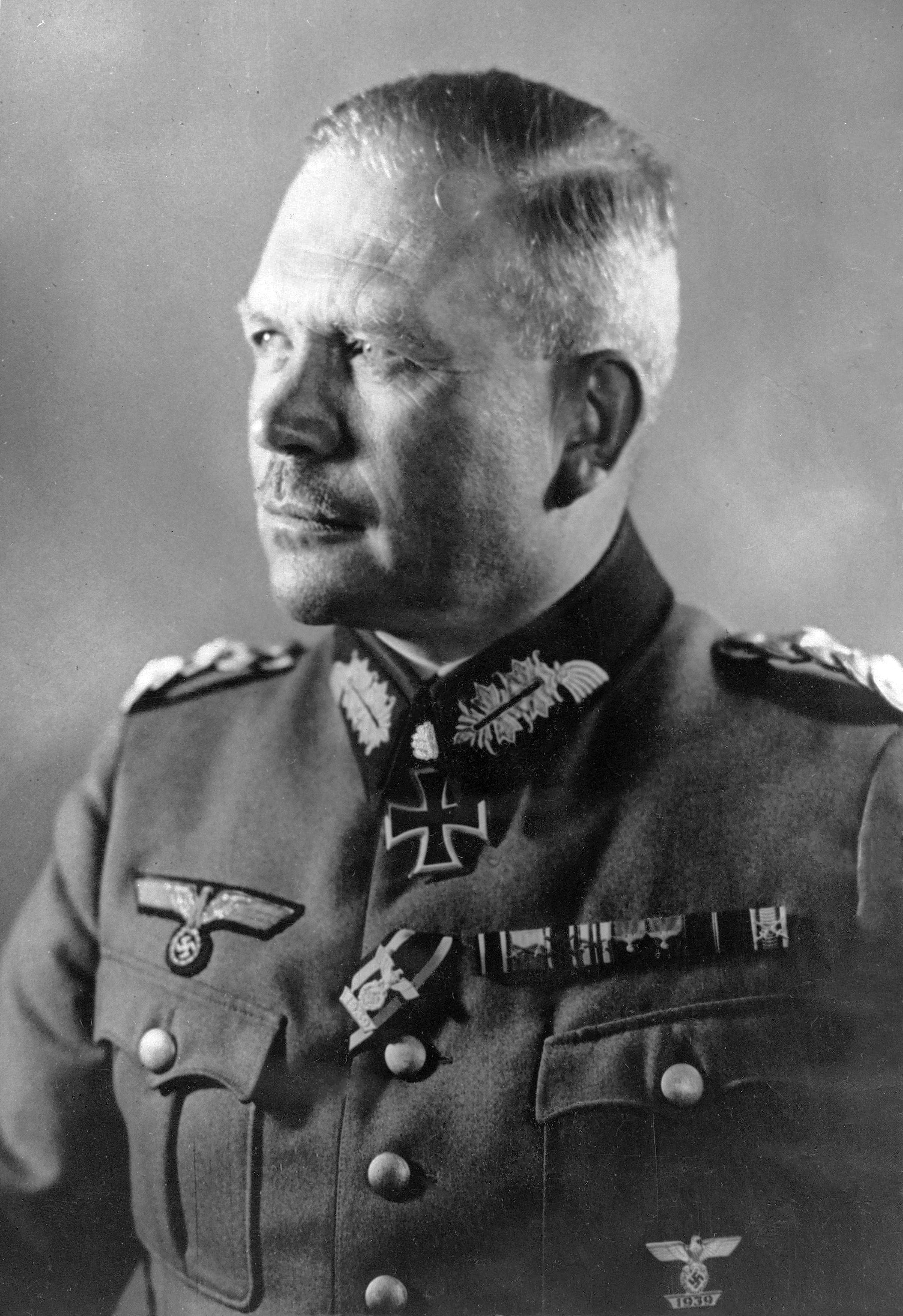
Heinz Guderian
 Germany
writer•military personnel•Generaloberst
Birthday
+1888-06-17
Birth Sign
Gemini
Birthplace
Chełmno
Age
Died at 65
About
Heinz Guderian, born on June 17, 1888, in Chełmno, was a German army general and military theorist whose ideas on armored warfare reshaped modern combat. He is best known as a pioneer of the blitzkrieg approach, a strategy that emphasized speed, surprise, and concentrated tank formations. Guderian's advocacy for the panzer division concept made him a central figure in the development of tank warfare, and his influence extended far beyond the battlefield. Guderian's military career began after leaving school, and he served in World War I before rising through the ranks. In 1936, he was promoted to Major General and appointed Inspector of Motorized Troops, a role that allowed him to shape Germany's armored forces. During World War II, he led an armored corps in the invasion of Poland, then commanded the units that broke through the Ardennes and overwhelmed Allied defenses at the Battle of Sedan in 1940. As a Generaloberst, he led the 2nd Panzer Army during Operation Barbarossa, the invasion of the Soviet Union. However, after the failure of Operation Typhoon to capture Moscow, a disagreement with Hitler led to his dismissal in December 1941. In early 1943, Hitler recalled Guderian to serve as Inspector General of Armoured Troops, tasked with rebuilding and training new panzer forces. Despite his efforts, Germany's deteriorating war economy limited his success. Following the 20 July Plot to assassinate Hitler in 1944, Guderian was appointed Acting Chief of the General Staff of the Army High Command. He also served on Hitler's 'Court of Honour,' which expelled officers from the military so they could be tried by the People's Court and executed. Guderian's association with the Nazi regime deepened as he became Hitler's personal advisor on the Eastern Front. His troops carried out the criminal Commissar Order during Barbarossa, and he was implicated in reprisals following the Warsaw Uprising of 1944. Guderian surrendered to US forces on May 10, 1945, and was interned until 1948. Released without charges, he retired to write his memoirs, published in 1950 as 'Memoirs of a Soldier.' The book became a bestseller but later drew criticism from historians for perpetuating the myth of the 'clean Wehrmacht.' Guderian portrayed himself as the sole originator of the panzer force and downplayed the war crimes committed by units under his command. A revised edition, retitled 'Panzer Leader,' appeared in 1952 with corrections and a foreword by B. H. Liddell Hart, yet the controversy persisted. Guderian died on May 14, 1954, and was buried in Goslar.
Fame & Fandom
Heinz Guderian stands as a towering figure in military history, yet the iFANN Global Fame Engine has evaluated him without assigning a current placement in its published rankings. While he remains a central subject of academic study and historical analysis, he does not currently hold a spot in the Global Top 1,000 or any Top-100 scope list maintained by the engine. This absence from the active charts reflects his status as a deceased historical figure rather than a decline in relevance; his legacy is preserved in archives and textbooks rather than on trending lists. The audience surrounding his name lacks a formal designation. Unlike modern icons who boast organized fan clubs with specific titles, supporters of Guderian operate under no unified banner. There is no documented fandom name to claim, nor are there campaigns, birthday billboards, or fan-funded projects dedicated to keeping his memory alive in the way living celebrities receive. His followers are historians, military enthusiasts, and students of strategy who engage with his work through rigorous analysis rather than interactive rituals. No viral incidents or crowds shutting down streets ever marked his life, for his fame stems entirely from his command of armored warfare and his theoretical writings. The engagement with his persona is quiet, intellectual, and deeply rooted in the factual record of World War II. He is remembered not for pop-culture myths or performance-based charisma, but for the concrete impact of the Blitzkrieg tactics he pioneered. The scale of his influence spans decades of military doctrine, reaching far beyond the battlefield into the very structure of modern tank warfare, even if that reach does not translate to a ranked score in contemporary fame metrics.
Interesting Facts and Legends
While many know Guderian as the father of the Blitzkrieg, a specific legendary incident often retold involves his daring breakthrough through the Ardennes during the Battle of France. This maneuver saw his panzer divisions bypass the heavily fortified Maginot Line, effectively encircling Allied forces and ending the war in the West at that time. Another pivotal moment frequently cited in biographies is his dismissal by Adolf Hitler in 1944, following sharp disagreements over Eastern Front strategy. This event marked a significant turning point before his eventual death from heart disease in 1954. Beyond these operational highlights, his influence extended to literature with influential texts like Panzer Leader and Achtung-Panzer!, which remain standard military reading rather than sources of viral lore. These works codified his theories on rapid armored movement, ensuring his ideas survived long after his career ended. Historians continue to debate the nuances of his decisions, particularly regarding his awareness of war crimes and the Commissar Order, adding layers of complexity to his legacy. Stories of his leadership style emphasize his insistence on speed and surprise, traits that defined the German army's early successes. The narrative of his career is one of brilliant innovation followed by political friction, leaving a mark on military theory that persists in academies worldwide.
Death & Aftermath
Died
+1954-05-14 (aged 65)
Death Place
Bad Wiessee, Bavaria, Germany
Cause of Death
Heart disease (cardiac failure)
Heinz Guderian spent his final years in quiet retirement within Bad Wiessee, Bavaria, devoting his time to writing and promoting his memoirs rather than engaging in public political life. The former Generaloberst passed away on May 14, 1954, at the age of sixty-five, with medical professionals attributing his death to heart disease following a period of declining health., attending physicians established the cause through standard civil registration procedures common for natural deaths in post-war West Germany. Tributes to the architect of blitzkrieg tactics remained confined to military journals and historical texts that acknowledged his contributions to armored warfare theory, reflecting his status as a controversial figure who had not yet seen the full rehabilitation of his legacy.
A private funeral service was held shortly after his passing in Bad Wiessee, attended only by family members. His estate was managed by his wife Margarete von Guderian and their children, who handled the distribution of personal effects and literary rights under standard probate laws. Posthumously, his influence grew significantly as Panzer Leader became a seminal text in military studies, continuously reprinted and translated into multiple languages since its first publication in 1952. Although he never received induction into an American-style hall of fame, military academies worldwide now honor his theoretical contributions to mechanized warfare.
Awards & Accolades
Keywords
Quick Facts
- Profession
- writer, military personnel, Generaloberst
- Born
- +1888-06-17
- Birthplace
- Chełmno
- Died
- +1954-05-14
- Death Place
- Schwangau
- Gender
- Male
- Spouse
- Margarete Goerne
- Birth Sign
- Gemini
Personal Details
- Spouse
- Margarete Goerne
Join the community
fans discussing