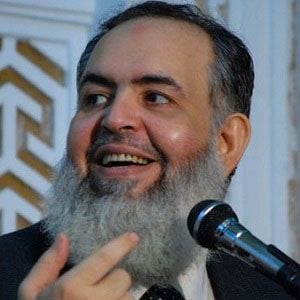
Hazem Salah Abu Ismail
 Egypt
EgyptLawyer•Islamic Preacher•Politician
Birthday
June 16, 1961
Birth Sign
Gemini
Birthplace
Egypt
Age
65 years old
About
Hazem Salah Abu Ismail is an Egyptian lawyer, Islamic preacher, and politician. He is widely recognized for his association with the Salafi Islamist movement and his significant, albeit ultimately unsuccessful, bid for the Egyptian presidency in 2012. His public life has been marked by his prominent role as a television preacher and his political activism within Islamist circles. Supporters view him as a leading voice for conservative Islamic principles in Egypt. His political career faced a pivotal moment with his disqualification from the 2012 presidential race, leading to widespread protests from his base. Currently, he is serving a sentence, with his release anticipated in July 2026. His ongoing legal status and the loyalty of his followers continue to shape his public identity.
Early Life & Background
Hazem Salah Abu Ismail was born on June 16, 1961, in Egypt, growing up immersed in a Sunni Islamic family. His upbringing in Egypt shaped his worldview, instilling in him a deep connection to the country's religious and cultural landscape. This early foundation proved influential as he matured, guiding his academic and professional pursuits. He chose to pursue a legal education, enrolling at the esteemed Cairo University, one of the oldest and most prominent universities in the region. There, he dedicated himself to his studies, eventually earning a law degree. This formal training in jurisprudence equipped him with a rigorous understanding of legal principles and argumentation, skills that would become central to his public career.
Before his political aspirations became widely known, Abu Ismail established himself as a respected Islamic preacher. He leveraged various platforms, notably television, to share his interpretations of Islamic teachings. These televised sermons allowed him to reach a substantial audience across Egypt, making him a familiar and influential figure. He became recognized for his articulate delivery and his consistent advocacy for Salafi Islamist principles, which emphasize a return to what followers believe are the original ways of Islam. This period of public religious instruction was crucial for building his profile and garnering support. His ability to connect with everyday Egyptians through religious discourse fostered a loyal following, which proved instrumental when he eventually decided to enter the political arena. The transition from religious advocacy to a presidential candidacy was a natural progression for a figure who had already cultivated a strong public voice and commanded significant attention.
Career Growth
Hazem Salah Abu Ismail's political career took a decisive turn when he announced his candidacy for the 2012 Egyptian presidential election. His campaign quickly gained momentum, drawing substantial support from Islamist factions and a broader public drawn to his conservative platform. He emerged as a strong contender, capable of mobilizing large rallies and generating significant public discourse. However, his presidential ambitions faced a severe setback in April 2012 when he was disqualified from the race. The official reason cited was that his mother had allegedly held American citizenship prior to her death, which would have rendered him ineligible under Egyptian electoral law. This decision sparked immediate and widespread protests from his dedicated supporters, who viewed it as a politically motivated move to exclude a popular Islamist candidate. They staged sit-ins and demonstrations, particularly in front of the electoral commission offices in Cairo, vehemently rejecting his disqualification.
In the wake of this controversy, Abu Ismail remained a prominent figure. He founded The Nation Alliance in 2013, an Islamist political group, aiming to continue his influence in the political landscape. However, his legal troubles escalated. In December 2012, he was arrested for inciting and participating in violent demonstrations at a Nasr City court. A subsequent ruling in 2013 saw him sentenced to seven years of rigorous imprisonment, specifically for allegedly forging documents related to his mother's nationality. Further legal proceedings led to another five-year sentence in May 2019 for his involvement in besieging a court back in 2012. These events marked a significant shift from his initial political ascent to a prolonged period of incarceration. Reports from June 2019 indicated a concerning decline in his health, with claims that he had fallen into a coma while in detention. His current sentence is set to expire on July 5, 2026, concluding over a decade of detention.
Career Timeline
Public Image & Style
Hazem Salah Abu Ismail projects the image of a committed and outspoken Salafi Islamist leader, a persona he cultivated through his extensive work as a television preacher. His public appearances and sermons are characterized by a serious and authoritative tone, reflecting his deep adherence to conservative Islamic principles. Media outlets often portray him as a hardline figure within Egyptian politics, a perception solidified by his unwavering stance on various issues. His supporters, a dedicated base drawn to his religious convictions and political platform, view him as a principled voice for Islamic values and a champion against perceived corruption or foreign influence. They often rally around him, carrying his posters at public gatherings, even during his periods of detention, demonstrating a strong sense of loyalty. His public identity is inextricably linked to his political aspirations and his persistent legal challenges, defining him as a figure who, despite setbacks, continues to command a following among those who share his vision for Egypt.
Fame & Fandom
Hazem Salah Abu Ismail holds a distinct position in the global consciousness of political figures, currently recognized as the 65th most famous person in Egypt according to the latest iFANN Global Fame Rankings. This placement reflects his enduring visibility within the nation's complex political landscape, a status he has maintained steadily from the previous cycle despite his long incarceration. His influence extends beyond immediate news cycles, anchoring him firmly in the collective memory of those who follow Egyptian Islamist movements.
Unlike pop culture icons or musicians, Abu Ismail does not possess a formal fandom with a specific name, organized rituals, or fan clubs dedicated to his personal charisma. His support base is best understood as a coalition of political constituents and adherents to his specific Salafi ideology rather than a traditional fanbase. There are no documented fan campaigns, birthday billboards, or viral social media initiatives centered on him as an individual celebrity. Instead, his audience engages with his legacy through shared political convictions and the historical narrative of his legal battles. The absence of a named fandom underscores that his public standing derives strictly from his role as a lawyer, preacher, and presidential candidate, where loyalty is ideological rather than recreational.
Interesting Facts and Legends
The defining chapter of Hazem Salah Abu Ismail's public life revolves around the controversy surrounding his eligibility for the 2012 Egyptian presidential election. In April of that year, it was revealed that his mother held American citizenship, a fact that legally disqualified him from running under Egyptian law at the time. While Abu Ismail initially contested the claim, blaming opponents for the accusation, this revelation effectively ended his hopes for the presidency and became a central pillar of his political narrative.
His reputation as a confrontational figure was further cemented by his involvement in the siege of a court in Nasr City. On May 4, 2019, the Supreme Court upheld a five-year prison sentence against him regarding this incident, marking a significant escalation in his conflicts with the state judicial system. Additionally, he faced a seven-year rigorous imprisonment sentence in 2013 for forgery related to falsifying documents concerning his mother's nationality. These legal convictions form the core of his public legacy, characterized by intense friction with authorities rather than artistic achievements.
A dramatic turn occurred in June 2019 when reports emerged that Abu Ismail had fallen into a coma while in detention following an alleged attack by jailers. This event highlighted the severe physical risks faced by high-profile Islamist figures during their incarceration. Current records indicate that his final sentence expiration is set for July 5, 2026, following over a decade behind bars.
Family & Personal Life
Hazem Salah Abu Ismail was raised in Egypt within a Sunni Islamic family, an environment that instilled strong religious values from his earliest years. His family's adherence to Sunni traditions played a significant role in shaping his personal beliefs and public persona. While specific details about his parents' names or professions are not widely publicized, their influence on his religious and political convictions is evident. Information regarding any siblings is also not readily available. Abu Ismail's public profile has primarily focused on his religious preaching and political activism, rather than his private family life. Details about his marital status or whether he has children are not mentioned in public records, keeping this aspect of his life out of the public eye. His life since 2012 has largely been defined by his political struggles and subsequent detention, with little focus on his personal household or family dynamics during this period.
Notable Connections
Relationships & Dating History
Salary, Net Worth In 2026
$100 Thousand
iFANN Editorial Team estimate
iFANN currently estimates Hazem Salah Abu Ismail's net worth at $100 Thousand as of 2026. This valuation reflects the limited available information regarding his financial assets and income streams, which tend to be more private for figures in his public roles. Prior to his extensive period of detention, Abu Ismail's earnings primarily stemmed from his professional work as a lawyer, where he would have earned fees for legal services, and his activities as a prominent Islamic preacher. His televised sermons and public speaking engagements, while popular, typically generate income through donations, modest stipends, or book sales, rather than large commercial ventures. These roles, while providing a comfortable livelihood, are generally not associated with accumulating substantial public wealth on the scale of high-profile business figures or entertainers. His incarceration, which began in late 2012 and is set to conclude in July 2026, has naturally impacted any potential for active income generation. During this prolonged period, his ability to actively practice law or engage in paid preaching activities has been severely restricted. Therefore, any current assets likely reflect savings or modest investments accumulated from his pre-detention career. The financial landscape for political and religious figures in Egypt often lacks the transparent disclosures seen in other regions, further contributing to the difficulty in accurately assessing his net worth.
Awards & Accolades
Known For
2012 Egyptian Presidential Election
2012 · Candidate
The Nation Alliance
2013 · Founder
Keywords
Sources
Quick Facts
- Profession
- Lawyer, Islamic Preacher, Politician
- Born
- June 16, 1961
- Birthplace
- Egypt
- Birth Sign
- Gemini
- Education
- Cairo University (Law Degree)
- Political Movement
- Salafi Islamist
Personal Details
- Full Name
- Hazem Salah Abu Ismail
- Education
- Cairo University
Frequently Asked Questions
Who is Hazem Salah Abu Ismail?
Why was Hazem Salah Abu Ismail disqualified from the 2012 Egyptian presidential election?
What happened to Hazem Salah Abu Ismail after his presidential bid?
When is Hazem Salah Abu Ismail expected to be released from prison?
What political group did Hazem Salah Abu Ismail found?
Join the community
fans discussing