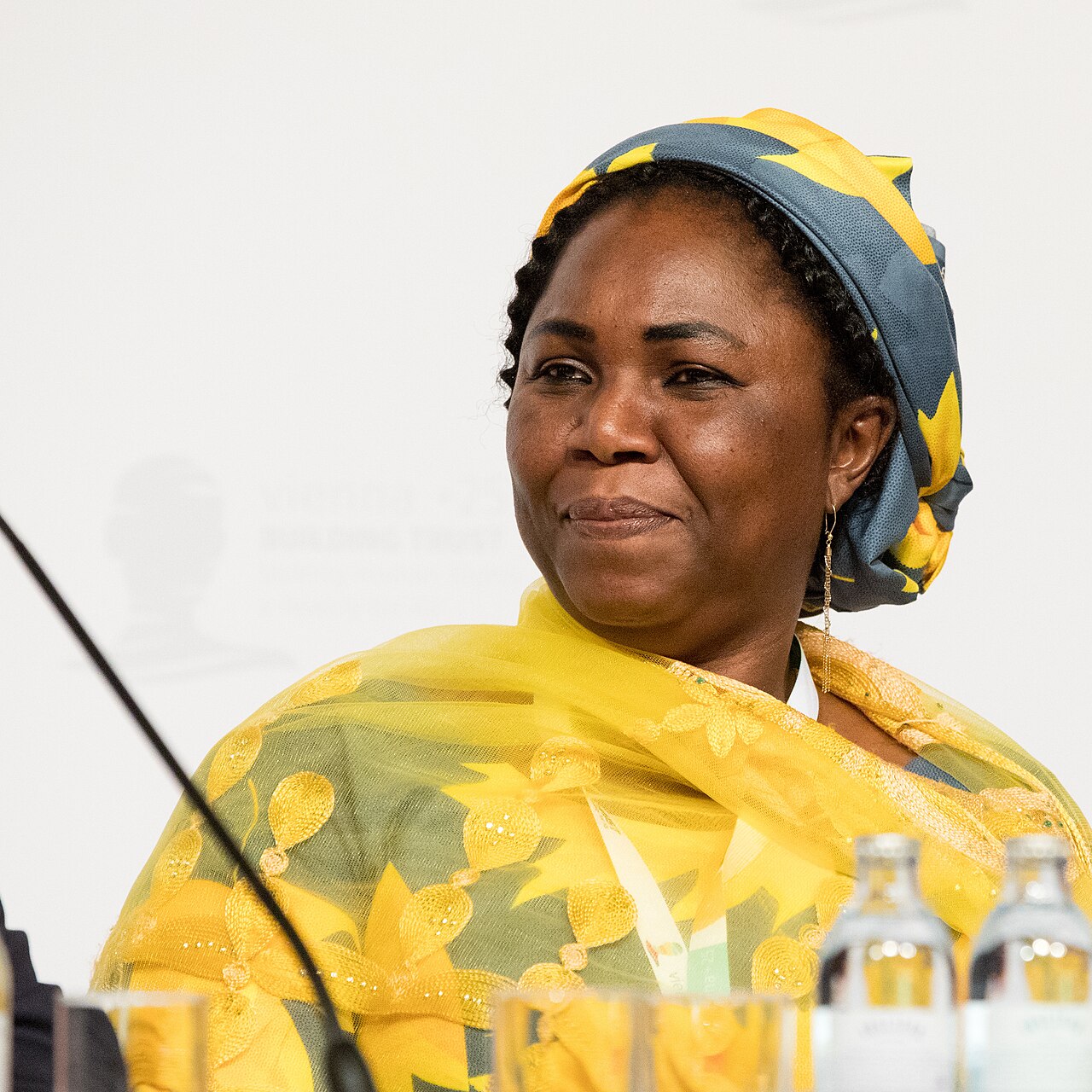
Hauwa Ibrahim
 Nigeria
Birthday
January 20, 1968
Birth Sign
Sagittarius
Birthplace
Gombe, Nigeria
Age
58 years old
About
Hauwa Ibrahim is a Nigerian human rights lawyer and jurist, born in 1968 in Gombe, Nigeria. She is internationally recognized for her fearless defense of women and children sentenced under Sharia law, most notably in the landmark case of Amina Lawal, whom she saved from death by stoning. In 2005, she became the first sub-Saharan African woman to receive the European Parliament's Sakharov Prize for Freedom of Thought, cementing her status as a global advocate for justice.
Today, Ibrahim serves as President of The Peace Institute and is a senior partner at Aries Law Firm. She has held prestigious fellowships at Harvard, Yale, and Wellesley, and continues to lecture internationally. Her work bridges legal expertise with deep cultural understanding, making her a singular voice in the fight for human dignity.
Early Life & Background
Growing up in Gombe, a city in northeastern Nigeria, Ibrahim's childhood was marked by hardship. She once hawked goods on the streets to help support her family, an experience that shaped her empathy for the marginalized. Determined to rise above her circumstances, she pursued education with fierce dedication, eventually earning a law degree and becoming the first female lawyer from northern Nigeria.
Her early career was rooted in the complexities of Sharia law, which she studied extensively to understand its nuances. This expertise would later prove crucial in her most famous cases. Before the international spotlight, she built a reputation as a principled advocate willing to challenge the status quo, often at great personal risk.
Career Growth
Ibrahim's breakthrough came in 2002 when she took on the case of Amina Lawal, a woman sentenced to death by stoning for adultery. Her successful appeal, grounded in both legal technicalities and compassionate advocacy, drew global attention and saved Lawal's life. The case became a touchstone for human rights, and Ibrahim emerged as a leading voice against gender-based violence.
In 2005, she received the Sakharov Prize, and over the following years she held fellowships at Harvard's Radcliffe Institute and Yale's World Fellows program. She has taught at the University of Rome Tor Vergata and served as Senior International Scholar-in-Residence at Wellesley Centers for Women. In 2022, she returned to Nigeria on an empowerment mission, and in 2025 she participated in the 'Mothers Without Borders' event at Wellesley College, continuing her lifelong advocacy.
Career Timeline
Public Image & Style
In the media, Ibrahim is portrayed as a trailblazer and a courageous defender of human rights. Her public image is that of a principled lawyer who combines legal acumen with deep cultural sensitivity, often taking on cases that others avoid. She is described as 'internationally acclaimed' and a 'trailblazer' by institutions like The Peace Institute. Her following consists of human rights advocates, legal professionals, and academics who admire her unwavering commitment to justice. She maintains a presence on Instagram, where she shares insights from her work.
Fame & Fandom (iFAMOUS Rankings)
Hauwa Ibrahim's renown is built on courtroom victories, not fan clubs. Her following is a global network of human rights lawyers, legal scholars, and activists who revere her as a living precedent. There is no formal fandom name, no fan campaigns, no birthday billboards, none of the apparatus of celebrity culture. Instead, her 'fans' are the law students who cite her briefs, the NGOs that invite her to speak, and the women in northern Nigeria who see in her a path forward. They do not organize streaming pushes; they organize legal aid clinics in her name. That is the distinctive shape of her audience: professional, purposeful, and deeply respectful.
Her fame, however, is measurable. As of August 2026, iFANN's Global Fame Engine has evaluated Hauwa Ibrahim, but she does not currently hold a placement in the published rankings, neither in the Global Top 1,000 nor in any Top-100 scope list. This is not a commentary on her impact; it simply reflects the engine's focus on entertainment and media figures. Her name may not trend on social media, but it is etched into legal history. The story most often told is her defense of Amina Lawal, a woman sentenced to death by stoning under Sharia law. Ibrahim, the first female lawyer from northern Nigeria, took the case and won an acquittal in 2003, a victory that reverberated across the globe. Two years later, she became the first sub-Saharan African woman to receive the Sakharov Prize for Freedom of Thought, a milestone that cemented her status as a global icon of justice. These are the legends of her career: not folklore, but documented, verifiable triumphs that continue to inspire.
Interesting Facts and Legends
Hauwa Ibrahim holds three advanced law degrees: a JD, an SJD, and an ML. She once hawked goods on the streets as a child, a fact she rarely shares but which fuels her compassion. She is a strong advocate for girls' education, calling it 'the foundation of a just society.' Her work has been featured in PBS Frontline/World's 'Nigerian Women Speak Out' series. She has taught at Harvard, Yale, Wellesley, and the University of Rome Tor Vergata, making her one of the most internationally connected legal scholars from Nigeria.
Her defense of Amina Lawal in 2003 is the story newcomers are most likely to hear first. It was a case that drew international attention and ended with Lawal's acquittal, a moment that defined Ibrahim's career. Another iconic milestone came in 2005 when she received the Sakharov Prize, an honor that placed her alongside global champions of human rights. In 2020, she volunteered during Nigeria's COVID-19 response, a quiet act of service that the World Health Organization documented. These are not legends in the mythological sense; they are real events that have become touchstones for those who follow her work.
Notable Quotes
“Education for girls is the foundation of a just society.”
“I take cases that others fear to touch, because justice demands it.”
“The law is a tool for protection, not oppression.”
Family & Personal Life
Ibrahim is married and has two sons, as confirmed in a 2005 PBS profile. She lives in Abuja, Nigeria, balancing her family life with her international academic appointments. Her family has been a source of strength throughout her career, though she keeps details of her personal life private. She has spoken about the importance of family in grounding her work, especially when facing the high stakes of her legal battles.
Notable Connections
Ibrahim is closely associated with Amina Lawal, her most famous client, whose death-by-stoning sentence she successfully overturned. She is also connected to the PBS Frontline/World series 'Nigerian Women Speak Out,' which featured her work alongside other Nigerian women advocates. Her academic associations include Harvard University, Yale University, and the Wellesley Centers for Women.
Relationships & Dating History
Public information about Ibrahim's romantic relationships is extremely limited. She is known to be married and has two sons, as confirmed in a 2005 PBS profile. No public records document her dating history or courtship. As of 2026, she is reported to be married, though the identity of her husband has not been publicly disclosed. Her family life remains private, and she has not been linked to any other romantic partners.
- MarriedCurrentMarried with two sons, as of 2005. Husband's name not publicly disclosed.
Salary, Net Worth In 2026
$2 Million
iFANN Editorial Team estimate
As a human rights lawyer, academic, and nonprofit leader, Ibrahim's income derives primarily from her academic appointments, legal practice, and speaking engagements. While specific figures are not publicly disclosed, iFANN's editorial analysis currently estimates her net worth at $2 million as of 2026. Her roles at Harvard, Yale, and other institutions, along with her leadership at The Peace Institute, provide a stable financial foundation. Her career has been driven more by mission than by wealth, and she continues to dedicate her resources to advocacy and education.
Awards Won (1)
Hauwa Ibrahim's most significant award is the 2005 Sakharov Prize for Freedom of Thought, awarded by the European Parliament. This prestigious honor recognized her courageous defense of women and children sentenced under Sharia law in Nigeria. She was the first sub-Saharan African woman to receive this prize, marking a historic achievement in human rights advocacy.
2005 · Human Rights
Defense of women and children under Sharia law
Known For
Defense of Amina Lawal
2002 · Lead Counsel
Sakharov Prize for Freedom of Thought
2005 · Laureate
Keywords
Sources
Quick Facts
- Profession
- lawyer, jurist
- Born
- +1968-01-20
- Birthplace
- Gombe
- Gender
- Female
- Birth Sign
- Sagittarius
Personal Details
- Children
- 2 sons
- Education
- JD, SJD, ML
Frequently Asked Questions
Who is Hauwa Ibrahim?
What did Hauwa Ibrahim do?
Is Hauwa Ibrahim married?
What is Hauwa Ibrahim's net worth?
Where does Hauwa Ibrahim teach?
Social Media
Join the community
fans discussing