
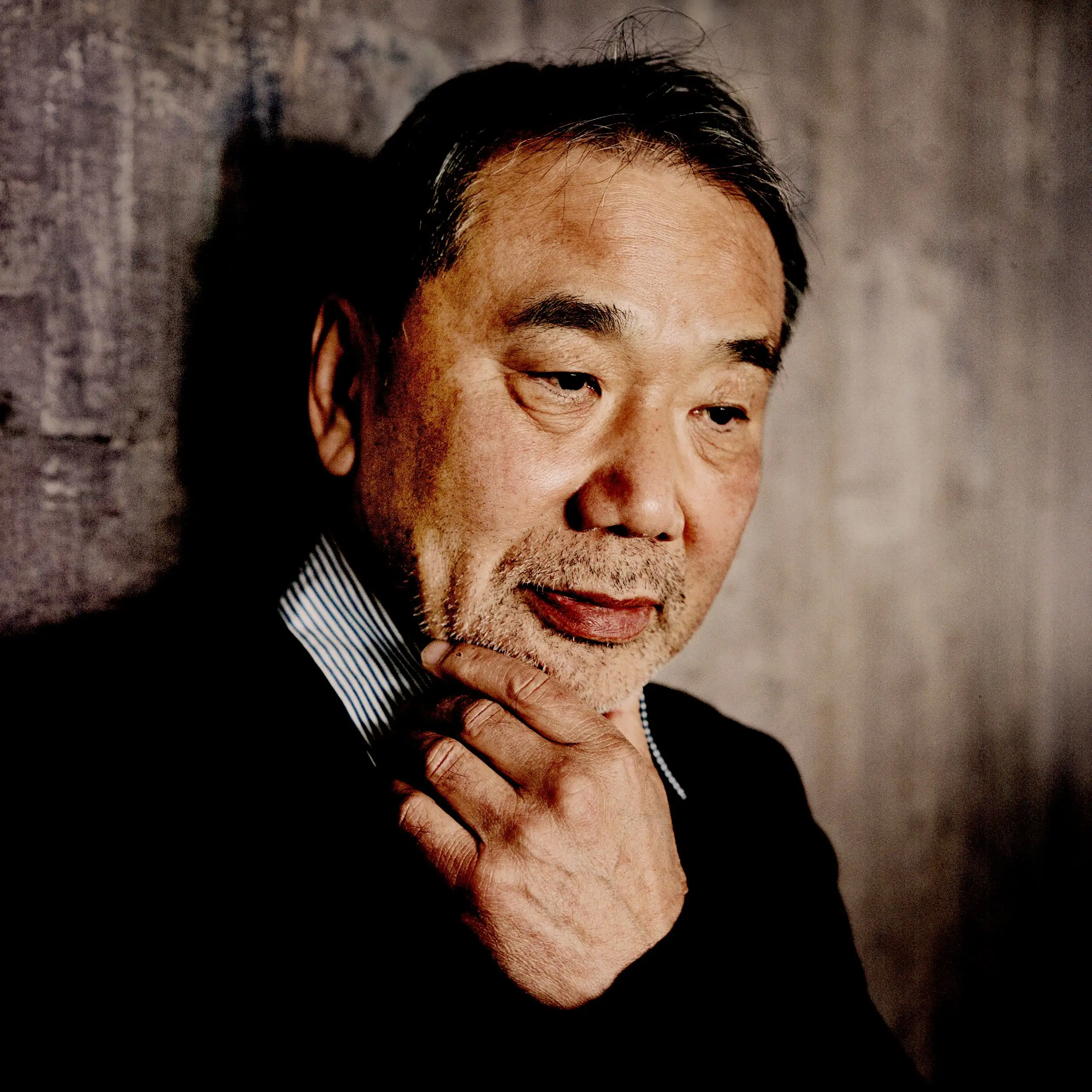
Haruki Murakami
 Japan
JapanAlso known as: 村上 春樹, Murakami Haruki
Birthday
January 12, 1949
Birth Sign
Capricorn
Birthplace
Fushimi-ku, Kyoto, Japan
Age
77 years old
Height
5 ft 9 in (175 cm)
About
Haruki Murakami is a Japanese novelist and short story writer born in Fushimi-ku, Kyoto. He is one of the most translated living authors in the world, known for blending magical realism with pop culture references and themes of urban alienation. His works have sold tens of millions of copies globally and been adapted into films, plays, and operas. Murakami currently resides in Tokyo and continues to write new fiction while maintaining a low public profile.
His literary voice is distinct for its dreamlike quality and frequent use of Western cultural touchstones like jazz music, classic rock, and American literature. Critics often describe his style as surreal yet grounded in emotional reality. Major titles include Norwegian Wood, The Wind-Up Bird Chronicle, and 1Q84. As of 2026, he remains an active force in global literature with a steady stream of new releases and translations.
Early Life & Background
Haruki Murakami was born on January 12, 1949, in Fushimi-ku, Kyoto, to parents who both taught English. When he was six years old, his family relocated to Ashiya, a suburb near Kobe, where he spent the majority of his childhood. This period was formative for his love of music and reading; his father introduced him to jazz records, which became a lifelong obsession. He also discovered American literature early on, finding particular resonance in the works of Raymond Chandler and Kurt Vonnegut.
Murakami attended Waseda University in Tokyo, graduating in 1975 with a degree in drama and literature. During his university years, he worked part-time at a bookstore, exposing himself to a wide range of contemporary writing. In 1974, while still a student, he married Yoko Tsujimura, a fellow jazz enthusiast. Together they opened a small jazz bar named Peter Cat in Minami-Aoyama, Tokyo, in 1974. They operated the establishment for seven years until 1981.
Running the bar provided a unique vantage point on human nature. Murakami listened to customers' conversations late into the night, absorbing stories of loneliness, joy, and regret. This experience deeply influenced his narrative voice, infusing his future novels with a rhythmic quality reminiscent of jazz improvisation. It was during this time that he decided to pursue writing full-time after reading J.D. Salinger's The Catcher in the Rye and feeling compelled to tell his own stories. He began writing short stories in earnest around 1978.
Career Growth
Murakami's professional debut arrived in 1979 with the novella Hear the Wind Sing (Kaze no uta o kike), which won the Gunzo Prize for New Writers. This accolade allowed him to quit running Peter Cat and dedicate himself entirely to writing. His breakthrough into mainstream success occurred with the 1987 publication of Norwegian Wood (Noruwei no mori). Originally a realistic coming-of-age story, it became a massive bestseller in Japan, selling millions of copies and introducing him to a wider international audience.
Following this success, he established himself as a master of genre-blending fiction. Key milestones include the 1985 win of the Yukio Mishima Prize for Hard-Boiled Wonderland and the End of the World and the 1994–1995 release of The Wind-Up Bird Chronicle, a sprawling epic often cited as his masterpiece. In 2000, he won the World Fantasy Award for his short story collection The Elephant Vanishes. His 2002 novel Kafka on the Shore further cemented his status as a global icon.
Murakami has continued to produce significant work throughout the 21st century. He released the memoir What I Talk About When I Talk About Running in 2007, detailing his life as a long-distance runner. The trilogy-length novel 1Q84 appeared between 2009 and 2010, later ranked the best work of Japan's Heisei era by experts in a survey by Asahi Shimbun. In 2013, he received the Franz Kafka Prize, followed by the Princess of Asturias Award for Literature in 2016. Most recently, in 2026, he released The Tale of Kaho, his first novel in three years, which triggered a fierce bidding war among Korean publishers.
Career Timeline
Public Image & Style
Murakami is known for being extremely private and reclusive. He rarely gives interviews and does not maintain a personal social media presence, although an official Facebook page is managed by his US team. He is often seen wearing simple shirts, trousers, and glasses, avoiding flashy fashion in favor of comfort and practicality. This understated style aligns with his public persona as a quiet, unpretentious intellectual. Despite his global fame, he avoids the trappings of celebrity, often declining public appearances and maintaining a boundary that adds to his mystique.
Fame & Fandom
Haruki Murakami is the 31st most famous person in Japan, a position he holds steady from the previous cycle. His influence extends far beyond national borders, where he ranks as the 7th most famous person from Japan, maintaining this spot consistently. Within the broader cultural landscape of East Asia, he stands as the 35th most famous person in East Asia, having moved up slightly from the 36th position last cycle. In the specific arena of global literature, Murakami is recognized as the 45th most famous person in Books & Literature, holding firm against a crowded field of contemporaries. These placements within the iFANN Global Fame Rankings reflect a sustained resonance that tracks global attention across media coverage and consumption signals worldwide.
The community surrounding his work defies the chaotic energy of pop stardom. There is no formal name for his fanbase; they are simply Murakami fans or readers who gather organically on platforms like Goodreads to dissect themes of loneliness and surrealism rather than chasing celebrity interaction. Murakami himself remains famously reclusive, offering no personal social media presence and avoiding meet-and-greets, which only deepens the allure of his rare public appearances. This dynamic was palpable during a Barbican celebration in London, where the European premiere of a stage adaptation of Hard-Boiled Wonderland and the End of the World drew crowds eager to witness the author's world come alive. The anticipation for his new novel, The Tale of Kaho, further illustrates this devotion, sparking an intense international bidding war for publishing rights and generating widespread discourse about his evolving narrative style.
Interesting Facts and Legends
Murakami maintains a strict daily routine: he wakes at 4 AM, writes for five hours, runs or swims, reads, and goes to bed early. He rarely flies on commercial airplanes within Japan, preferring trains for travel. A story often retold by fans involves the intense market dominance he commands even decades into his career; the release of The Tale of Kaho sparked a bidding war among South Korean publishers, proving his latest work can still ignite financial competition on a massive scale. Unlike many celebrities, he does not attract crowds that shut down streets or faint at his presence; instead, his legend is built on the quiet impact of his stories. He listens to classical music and jazz while writing, often creating specific playlists for each book. His favorite food is pasta and Italian cuisine, reflecting his deep appreciation for Western culture.
Notable Quotes
“Writing struck me completely unexpectedly, like a lightning bolt from a clear sky.”
“What lasts, lasts; what doesn't, doesn't. Time solves most things.”
“If only we could live our lives without fear, without anxiety, without the constant need to prove ourselves.”
Family & Personal Life
Haruki Murakami has been married to Yoko Murakami (née Yoko Tsujimura) since 1974. They met through mutual friends who shared an interest in jazz before opening their jazz bar together. The couple has one son, Haruto Murakami, born in 1982. Haruto has pursued a career in the music industry and occasionally collaborates on projects related to his father's work, though he maintains a lower public profile. Murakami lives a quiet life in Tokyo, focusing on writing, running, and listening to jazz. There are no reports of divorce or separation, and the couple remains together as of 2026.
Notable Connections
Yoko Murakami (wife), Haruto Murakami (son), Jay Rubin (translator), Philip Gabriel (translator), Kazuo Ishiguro (friend and fellow author).
Relationships & Dating History
Haruki Murakami has been married to Yoko Murakami (née Yoko Tsujimura) since 1974. They met through mutual friends who shared an interest in jazz before he opened the Peter Cat bar. There are no reports of divorce or separation; they remain married as of 2026. Their relationship is described as long-standing and stable, built on shared interests in music and literature. There are no credible rumors of extramarital affairs or other romantic relationships. The couple has one son, Haruto Murakami, born in 1982. Haruto has followed in his father's footsteps somewhat, working in the music industry and occasionally collaborating on projects related to his father's work, though he maintains a lower profile.
- MarriedYoko Murakami1974 - presentCurrentMet through mutual friends interested in jazz; married in 1974; one son together.
Salary, Net Worth In 2026
$22 Million
iFANN Editorial Team estimate
iFANN Editorial Team research estimates Haruki Murakami's net worth at approximately $22 million as of 2026. The vast majority of his wealth comes from book royalties, both domestic and international, given that his works have been translated into over 50 languages. Financial analyses suggest his annual earnings from royalties alone exceed $5 to $10 million, driven by the global sales of his backlist and new releases like The Tale of Kaho.
Unlike many celebrities, Murakami does not engage in endorsement deals or have a production company, keeping his revenue streams focused on his literary output. He owns real estate in Tokyo and likely in rural areas where he retreats to write. Film rights and licensing deals provide additional income, though he remains selective about adaptations. His consistent output and enduring popularity ensure a steady financial trajectory, making him one of the wealthiest authors in Japan.
Awards Won (7)
Haruki Murakami has received numerous prestigious awards throughout his career, including the Gunzo Prize for New Writers (1979), the Yukio Mishima Prize (1985), the World Fantasy Award (2000), the Tanizaki Prize (1992), the Franz Kafka Prize (2013), and the Princess of Asturias Award for Literature (2016). He has also been nominated for the Nobel Prize in Literature multiple times. His work has been recognized with honorary degrees from institutions like Princeton University and the University of Cambridge.
1979 · Literature
Hear the Wind Sing
1985 · Literature
Hard-Boiled Wonderland and the End of the World
Known For
Norwegian Wood
1987 · Author
The Wind-Up Bird Chronicle
1994 · Author
Kafka on the Shore
2002 · Author
1Q84
2009 · Author
The Tale of Kaho
2026 · Author
Keywords
Sources
Quick Facts
- Profession
- Novelist, Essayist, Translator
- Born
- January 12, 1949
- Birthplace
- Fushimi-ku, Kyoto, Japan
- Gender
- Male
- Birth Sign
- Capricorn
- Height
- 5 ft 9 in (175 cm)
- Spouse
- Yoko Murakami
- Children
- Haruto Murakami
Personal Details
- Full Name
- Haruki Murakami
- Height
- 5 ft 9 in (175 cm)
- Spouse
- Yoko Murakami
- Children
- Haruto Murakami
- Education
- Waseda University
Filmography
12
Total
5
Film
7
TV
Frequently Asked Questions
How old is Haruki Murakami?
Is Haruki Murakami married?
What is Haruki Murakami's latest book?
Why is Haruki Murakami famous?
Does Haruki Murakami run marathons?
Social Media
Similar People
Join the community
fans discussing