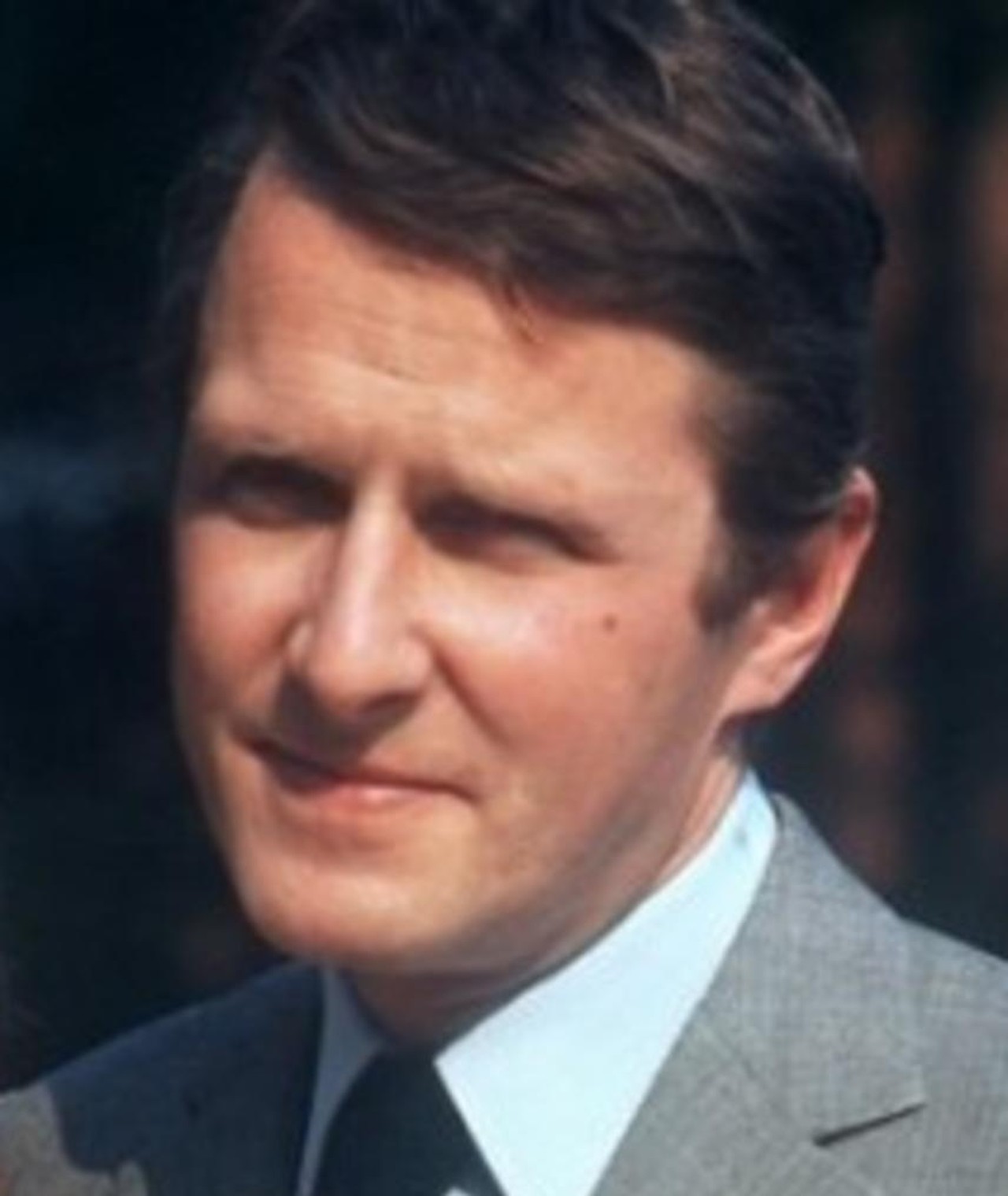
Harry Meyen
 Germany
voice actor•film actor•stage actor
Also known as: Harald Haubenstock
Birthday
August 31, 1924
Birth Sign
Virgo
Birthplace
Hamburg, Germany
Age
Died at 54
About
Harry Meyen, born Harald Haubenstock on August 31, 1924, in Hamburg, was a German actor whose career spanned stage, film, and television. Over a 27-year run, he appeared in more than 40 productions, moving effortlessly between the intimacy of the theatre and the reach of the screen. Meyen also directed plays in West Germany during the 1960s, adding another layer to his artistic legacy. He passed away on April 14, 1979, at the age of 54. His work remains a quiet but significant thread in the fabric of postwar German entertainment.
Early Life & Background
Harry Meyen entered the world as Harald Haubenstock in Hamburg, the son of a Jewish family. That heritage placed him in grave danger when the Nazis came to power, and during World War II he was arrested. The experience of persecution marked him deeply, though he rarely spoke about it in later years. After the war, he rebuilt his life in the ruins of Germany, drawn to the stage as a way forward.
His first screen appearances came in 1948, when he was 24. Those early roles were modest, but they opened the door to a steady stream of work in the newly emerging West German film industry. He took the stage name Harry Meyen, a professional identity that would carry him through the next three decades.
Career Growth
Meyen's breakthrough arrived gradually, through consistent work rather than a single defining role. He appeared in the fantasy horror Alraune (1952) and the war drama The Devil's General (1955), which became one of the most significant German films of the postwar era. In 1964, he landed a small but memorable part in Stanley Kubrick's Dr. Strangelove, giving him international exposure.
The mid-1960s brought larger productions: Is Paris Burning? (1966) and Triple Cross (1966), both WWII epics. During this period he also began directing plays in West German theatres, expanding his artistic reach. He continued acting into the mid-1970s, with his final screen appearances in 1975, after which he retired from performing.
Career Timeline
Public Image & Style
In German entertainment circles, Meyen was respected for his craft rather than celebrated as a star. He moved comfortably between stage, film, and television, and his work as a theatre director in the 1960s added to his reputation as a serious artist. His public persona was that of a dedicated professional, someone who prioritized the work over the limelight.
Today, his image is largely viewed through the lens of his marriage to Romy Schneider. Photographs of the couple together, particularly from their 1972 Berlin television talk show appearance, have become iconic in retrospectives of Schneider's life.
Fame & Fandom
Harry Meyen's legacy rests on a steady, decades-long presence in German cinema rather than the chaotic adoration reserved for modern icons. His career, stretching from 1948 to 1975 across more than forty productions, established him as a respected figure who moved effortlessly between stage and screen without generating the obsessive following typical of today's entertainment landscape. The iFANN Global Fame Engine has evaluated his standing, yet he currently holds no placement within the published rankings or scope lists, reflecting a profile defined by professional longevity rather than viral notoriety. While he appeared in notable international co-productions like Stanley Kubrick's *Dr. Strangelove or: How I Learned to Stop Worrying and Love the Bomb*, these credits remain part of a filmography that commands respect rather than the frenzied fandom associated with pop culture phenomena. There is no documented name for any organized fanbase surrounding Harry Meyen, nor are there records of rituals, campaigns, or specific groups dedicated to his work. Unlike stars whose names spark street-side gatherings or charity drives, Meyen's public image was shaped by his craft and his marriage to Romy Schneider. The intense cultural interest surrounding their union focused almost exclusively on Schneider and her subsequent personal tragedies, leaving Meyen as a supporting chapter in her biography rather than a standalone subject of mass hysteria. No legends of crowds fainting, viral incidents, or extraordinary audience reactions exist in the historical record for him. His story is one of quiet dedication, where the lack of a formal fandom mirrors the serious, non-celebrity approach he took to his art. The only dramatic events linked to his life circle involve the tragic deaths of his wife and son, moments that cast a shadow over their family history but did not catalyze a movement of devotees. In the end, Meyen remains a significant thread in postwar German entertainment, remembered for his work rather than worshipped as a legend.
Interesting Facts and Legends
Meyen was born with the surname Haubenstock, but adopted the stage name Harry Meyen early in his career. He was also active as a voice actor, lending his voice to dubbed versions of foreign films.
His son David's death in 1981, at age 14, was a tragedy that deeply affected Romy Schneider and is widely considered a contributing factor to her own death in 1982.
A lesser-known detail: Meyen directed plays in West Germany during the 1960s, a side of his career that is often overlooked in retrospectives of his work.
Family & Personal Life
Meyen's parents were Jewish, and his family's experience during the Nazi era shaped his early life. He was married twice: first to Anneliese Römer, with whom he had no children, and then to actress Romy Schneider. With Schneider, he had one son, David Christopher Meyen, born in 1967. The family lived in Germany and France before the marriage dissolved.
David's death in 1981, at just 14, was a devastating blow. Meyen himself had died two years earlier, so he never witnessed the tragedy that would later consume his ex-wife.
Notable Connections
Harry Meyen is most closely associated with Romy Schneider, his second wife and one of Europe's most celebrated actresses. Their marriage, though brief, has become a subject of enduring fascination. He also worked with director Stanley Kubrick on Dr. Strangelove, and his first wife, Anneliese Römer, remains a part of his personal history.
Relationships & Dating History
Harry Meyen's first marriage was to Anneliese Römer, a relationship that ended in divorce in 1966. Little is known about this union, which produced no children.
His second marriage, to Romy Schneider, began in 1966, the same year as his divorce. The couple had one son, David, born in 1967. Their life together was documented in photographs throughout the late 1960s and early 1970s, including a notable television appearance in 1972. The marriage eventually dissolved, with the couple divorcing in the mid-1970s. At the time of his death in 1979, Meyen was divorced from Schneider.
- MarriedAnneliese Römer? - 1966First wife; divorced in 1966.
- MarriedRomy Schneider1966 - 1975Second wife; had a son together; divorced in the mid-1970s.
Death & Aftermath
Died
April 14, 1979 (aged 54)
Death Place
Hamburg, Germany
Cause of Death
Unknown
The passing of Harry Meyen in the spring of 1979 left a quiet void within the German entertainment community, marking the end of a career that had bridged the gap between intimate theatre and international cinema. While his work in Stanley Kubrick's Dr. Strangelove and collaborations with Romy Schneider had brought him wide recognition, the immediate public reaction was characterized by a subdued mourning rather than a widespread media spectacle. The actor, who had retired from performing in 1975 to focus on directing, passed away in Hamburg at the age of fifty-four, concluding a life deeply rooted in the postwar cultural landscape of West Germany. Official records generally place his death on April 15, 1979, though some sources note the event occurred late on April 14, reflecting the transition of time in the early hours of the morning.
Despite the lack of specific medical details in public archives regarding the exact nature of his final days or an official autopsy report, the circumstances suggest a natural conclusion to his life following a period of professional withdrawal. His estate, managed privately without public fanfare, likely retained value through residual earnings from his extensive body of work spanning over forty productions. Although his son David Christopher would face tragedy shortly after, Meyen's artistic contributions remained a steady thread in the fabric of German cinema, remembered for his versatility and his significant roles in both domestic and international productions.
Net Worth (Estate Value)
$2 Million
iFANN Editorial Team estimate
Harry Meyen's financial legacy is not well documented, but the iFANN Editorial Team's analysis of his career earnings and estate points to a modest figure in the range of $2 million as of 2026. His income came primarily from his acting work across film, television, and stage, as well as directing engagements in the 1960s.
After his death in 1979, his estate has likely benefited from residual payments and licensing of his films, though no public records confirm the exact amounts. Given his mid-tier status, his estate's value remains modest compared to more prominent stars of his era.
Awards & Accolades
Known For
Dr. Strangelove
1964 · Actor
The Devil's General
1955 · Actor
Alraune
1952 · Actor
Keywords
Sources
Quick Facts
- Profession
- voice actor, film actor, stage actor
- Born
- August 31, 1924
- Birthplace
- Hamburg, Germany
- Died
- April 14, 1979
- Death Place
- Hamburg, Germany
- Gender
- Male
- Spouse
- Romy Schneider, Anneliese Römer
- Birth Sign
- Virgo
Personal Details
- Full Name
- Harald Haubenstock
- Spouse
- Romy Schneider, Anneliese Römer
- Children
- David Christopher Meyen
Filmography
40
Total
35
Film
5
TV
Frequently Asked Questions
How did Harry Meyen die?
Was Harry Meyen Jewish?
Who was Harry Meyen married to?
Did Harry Meyen have children?
What is Harry Meyen known for?
Similar People

Join the community
fans discussing