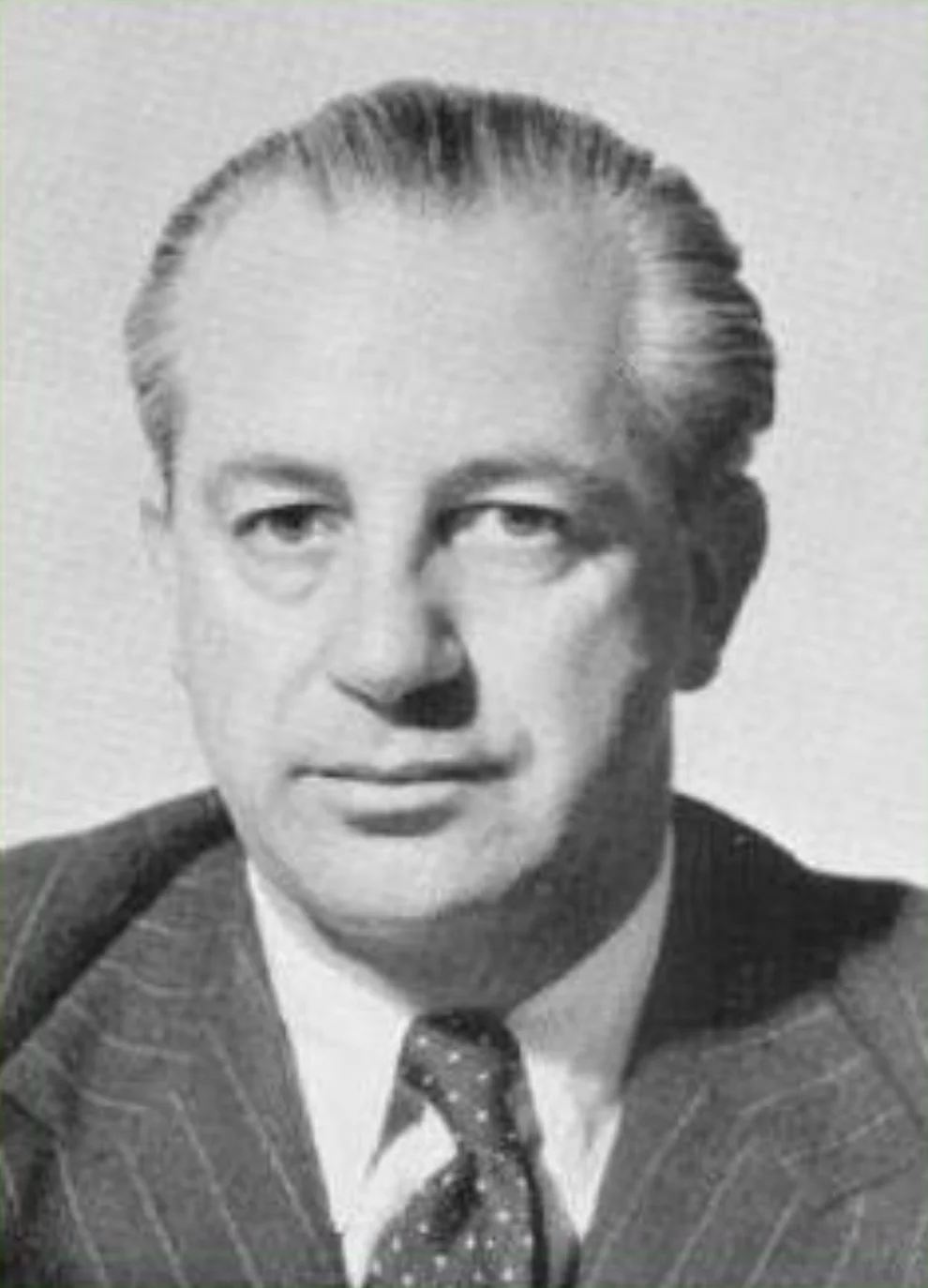
Harold Holt
 Australia
politician•lawyer•head of government
Also known as: Harold Edward Holt, The Right Honourable Harold Holt
Birthday
August 5, 1908
Birth Sign
Leo
Birthplace
Stanmore, Sydney, Australia
Age
Died at 59
About
Harold Edward Holt was the 17th prime minister of Australia, serving from January 1966 until his mysterious disappearance in December 1967. A lawyer by training and a lifelong politician, Holt was born in Sydney on August 5, 1908, and grew up in Melbourne, where he studied law at the University of Melbourne. Before entering Parliament, he practiced law and lobbied for cinema operators. His political career began in 1935 when, at just 27, he won the Fawkner by-election for the United Australia Party. Holt's rise was swift; by 1939 he was a minister without portfolio under his mentor Robert Menzies. A brief stint in the Australian Army ended when he was recalled to cabinet after the 1940 Canberra air disaster killed three ministers. When the UAP fell from power in 1941, Holt helped found the Liberal Party in 1945.
Holt's real influence came after the Liberals returned to office in 1949. As Minister for Immigration from 1949 to 1956, he expanded the post-war immigration program and took the first steps to relax the White Australia policy. In his concurrent role as Minister for Labour and National Service, he handled several industrial disputes with a steady hand. After becoming deputy Liberal leader in 1956, he replaced Arthur Fadden as Treasurer in 1958. In that role, he oversaw the creation of the Reserve Bank of Australia and the introduction of decimal currency, the Australian dollar. However, a credit squeeze in 1961 nearly cost the Coalition the election, and Holt bore much of the blame. The economy recovered, and he remained Menzies' chosen successor.
When Menzies retired in January 1966, Holt was elected unopposed as Liberal leader and became prime minister. He called a general election later that year and won a landslide. His government continued to dismantle the White Australia policy, amended the constitution to give the federal government responsibility for Indigenous affairs, and took Australia out of the sterling area. Holt pushed for closer ties with Asia and the Pacific, visiting several East Asian nations. He also deepened Australia's commitment to the Vietnam War and forged a close relationship with U.S. President Lyndon B. Johnson. A remark made during a White House visit, "all the way with LBJ," was meant to signal solidarity but drew criticism back home for its subservience.
On December 17, 1967, Holt disappeared while swimming in rough surf at Cheviot Beach, Victoria. His body was never found, and he was presumed dead. He was the third Australian prime minister to die in office. An interim government led by Country Party leader John McEwen lasted until John Gorton took over. Holt's legacy is remembered in the Harold Holt Memorial Swimming Centre in Melbourne and the Harold E. Holt Naval Communication Station in Western Australia, both named in his honor.
Early Life & Background
Harold Edward Holt came into the world on August 5, 1908, in Stanmore, an inner-western suburb of Sydney. He was the eldest child of Tom and Olive Holt, but their marriage fell apart early, and young Harold spent part of his childhood in kinship care before settling in Melbourne with his mother. That instability shaped him, and he carried a nickname from those days, "Puss," which stuck with him through his political career.
In Melbourne, Holt attended Wesley College, where he was a decent student and a keen debater, skills that would serve him well later. He moved on to the University of Melbourne to study law, and after graduating he practiced as a lawyer. But he also worked as a lobbyist for cinema operators, a job that gave him an early taste of political maneuvering and public persuasion. That combination of legal training and lobbying experience proved to be his springboard.
At 27, Holt entered politics, winning the Fawkner by-election in 1935 for the United Australia Party. He quickly caught the eye of Robert Menzies, who became his mentor. By 1939, Holt was a minister without portfolio, a junior role but a foot in the door. When World War II broke out, he enlisted in the Australian Army, but his service was cut short. The 1940 Canberra air disaster killed three cabinet ministers, and Holt was recalled to fill the gap. That tragedy inadvertently accelerated his rise, and he was soon a key figure in the UAP. When the party lost power in 1941, Holt was part of the group that rebuilt the conservative movement, helping to found the Liberal Party in 1945. That was the foundation for everything that followed.
Career Growth
Holt's breakthrough came with the Liberal Party's return to government in 1949. As Minister for Immigration from 1949 to 1956, he transformed Australia's post-war migration program, bringing in hundreds of thousands of new settlers and quietly chipping away at the White Australia policy, a stance that was bold for the time. Simultaneously, he served as Minister for Labour and National Service, where he handled industrial disputes with a reputation for fairness and firmness.
In 1956, he became deputy leader of the Liberal Party, and two years later, in 1958, he took over as Treasurer from Arthur Fadden. His time at Treasury was marked by two major achievements: the creation of the Reserve Bank of Australia in 1959 and the introduction of decimal currency, with the Australian dollar replacing the pound in 1966. But it wasn't all smooth sailing. The 1961 credit squeeze, which he oversaw, nearly cost the Coalition the election, and Holt copped much of the blame. Still, Menzies never wavered in his support, and Holt remained the heir apparent.
When Menzies finally retired in January 1966, Holt became prime minister, winning a landslide general election later that year. His government pushed ahead with reforms, including a constitutional amendment in 1967 that gave the federal government responsibility for Indigenous affairs. He also took Australia out of the sterling area, a significant economic shift. On the international stage, Holt deepened Australia's involvement in the Vietnam War and built a close bond with U.S. President Lyndon B. Johnson, famously declaring "all the way with LBJ" during a 1966 White House visit. That phrase became a lightning rod for critics who saw it as Australia kowtowing to America, but Holt saw it as loyalty to a key ally. His premiership was cut short on December 17, 1967, when he disappeared at Cheviot Beach, leaving behind a legacy of reform and an unresolved mystery.
Career Timeline
Public Image & Style
Harold Holt's public image was that of a genial, athletic, and modern politician, a stark contrast to the older, more reserved Menzies. He was seen as a man of action, comfortable in the water and on the world stage. His famous "all the way with LBJ" remark defined his foreign policy stance, and it has become a shorthand for Australia's close alignment with the United States during the Vietnam War era. In Australian culture, Holt is often remembered more as a meme than a man, as the ABC noted. The irony of the Harold Holt Memorial Swimming Centre, named after a man who drowned, has made his name a recurring source of dark humour. Yet beyond the jokes, there is a genuine affection for him as a reformer who modernized Australia and a tragic figure whose story remains unresolved. Fans of political history are drawn to the mystery of his disappearance, and his legacy is a mix of admiration and curiosity.
Fame & Fandom (iFAMOUS Rankings)
Harold Holt commands a global audience defined by historical curiosity rather than celebrity worship. His presence in the public consciousness stems from his role as Australia's 17th Prime Minister and the enduring mystery of his disappearance, creating a legacy that resonates far beyond national borders. Despite this widespread recognition, Harold Holt is currently unranked on the iFANN Global Top 1,000 list. The iFANN Global Fame Engine has evaluated this figure but does not assign him a placement in any published ranking scope. This absence of a numeric rank reflects his status as a historical statesman rather than a contemporary pop culture icon whose fame fluctuates with current media cycles. There is no formal fandom name documented for Harold Holt. Unlike modern entertainers who cultivate organized fanbases with specific monikers, Holt's public engagement was strictly political during his lifetime. Today, discussions about him remain rooted in historical analysis and civic memorialization rather than fan-driven rituals or campaigns. No groups organize around his persona to promote streaming numbers or social media metrics, as these concepts did not exist in his era nor apply to his posthumous standing. While locations like the Harold Holt Naval Communication Station and swimming centers keep his name visible in Australian infrastructure news, these references serve functional purposes rather than signaling a living cult of personality. The lack of a named fanbase underscores the distinction between a politician remembered for state leadership and a celebrity sustained by parasocial adoration.
Interesting Facts and Legends
Harold Holt's nickname "Puss" originated in childhood and persisted throughout his political career, offering a playful contrast to his dignified statesman image. An avid swimmer who loved the water, his death by drowning at Cheviot Beach near Melbourne carries a poignant irony that has fueled dark humor for decades. He frequently drove fast cars, a hobby that often alarmed his security detail. As the first Australian prime minister born in the 20th century, he represented a generational shift in leadership. The Harold Holt Memorial Swimming Centre in Melbourne remains a recurring subject of jokes due to the stark irony of its namesake vanishing in the sea. His famous "all the way with LBJ" remark, originally a campaign slogan used by Lyndon B. Johnson, became a defining shorthand for Australia's alignment with the United States during the Vietnam War. Beyond the facts, the narrative of the "Vanishing Prime Minister" has evolved into a unique piece of Australian folklore. On December 17, 1967, Holt swam into heavy seas at Cheviot Beach and vanished without a trace, sparking a massive search that ended with his official declaration of death two days later. While official inquiries concluded it was an accidental drowning, the story persists as a surreal tragedy where a man walked into the ocean and never returned, cementing his place in history as a leader whose end remains one of the nation's most enduring mysteries.
Notable Quotes
“All the way with LBJ.”
“I am not a man to be cowed by criticism.”
Family & Personal Life
Harold Holt's parents, Tom and Olive, separated when he was young, and he spent time in kinship care before being raised by his mother in Melbourne. That early instability stayed with him, but he rarely spoke publicly about it. He had three sons with his wife, Zara: Nicholas, Sam, and Andrew. The family lived in Melbourne, and Zara, a fashion designer, became a well-known public figure in her own right, known for her stylish hats and outgoing personality. She was a supportive political wife, and after Holt's death, she was made a Dame Commander of the Order of the British Empire in 1971. Zara passed away in 1989. The Holt household also included a beloved dog, a labrador named Rex, who was often photographed with the family.
Notable Connections
Relationships & Dating History
Harold Holt married Zara Bate in 1946, when he was 38 and she was 37. Zara was a fashion designer and a widow with a daughter from her first marriage. The couple had three sons together: Nicholas, Sam, and Andrew. Their marriage was considered happy and supportive, with Zara playing an active role in his political career. She was known for her stylish appearance and her ability to charm the press. Holt had no other publicly documented relationships before or during his marriage. He was married to Zara at the time of his disappearance in 1967, and she was widowed upon his presumed death. Zara Holt died in 1989.
- MarriedZara Bate1946 - 1967Married in 1946, had three sons together. Holt disappeared in 1967, and Zara was widowed.
Death & Aftermath
Died
December 19, 1967 (aged 59)
Death Place
Portsea, Victoria, Australia
Cause of Death
Drowning
The government led by Acting Prime Minister Paul Hasluck announced on December 19 that Harold Holt was "presumed dead" following a massive search operation that failed to locate his body. On Sunday, December 17, 1967, the Prime Minister dove into the surf near rocks known as The Grotto at Cheviot Beach in Portsea, Victoria, accompanied by friends Dr. William Mills and John Mackay before failing to resurface. Authorities officially ruled the cause as drowning due to strong currents and rips, though the absence of remains left the circumstances open to persistent conspiracy theories regarding assassination or suicide that lack evidentiary support. The news triggered immediate national grief with vigils held across Australia and public tributes from political peers including U.S.
President Lyndon B. Johnson who mourned the loss of a key ally. Because no body was recovered, no traditional funeral service could be conducted; instead, a memorial service took place at St Paul's Cathedral in Melbourne on January 11, 1968, attended by thousands of mourners. Posthumous honours included the naming of the Harold E. Holt Naval Communication Station in Western Australia and the Harold Holt Swimming Centre in Glen Iris, while his estate remained a private family matter handled away from public scrutiny.
Net Worth (Estate Value)
$1 Million
iFANN Editorial Team estimate
As a prime minister in the 1960s, Harold Holt's salary was modest by today's standards. His income came from his parliamentary salary, which was around $10,000 per year at the time. He also had a law practice before entering politics, but he gave that up to focus on his political career. After his death, his estate was valued at approximately $100,000, which included his home in Melbourne and some investments. Adjusted for inflation, that would be equivalent to roughly $1 million in 2026. The estate was managed by his wife Zara, and later by his sons. There are no significant posthumous earnings, as his legacy is more historical than commercial. His name is attached to a naval communication station and a swimming centre, but those are government properties, not sources of private income. Per iFANN's editorial analysis, his net worth in 2026 is estimated at $1 Million.
Awards Won (1)
Harold Holt received the Companion of Honour (CH) from the Commonwealth, a prestigious appointment recognizing his service as prime minister. He was also a member of the Privy Council, entitling him to the style "The Right Honourable." These were the primary honours he received during his lifetime.
1966 · National Honour
Public service as Prime Minister
Known For
Prime Minister of Australia
1966–1967 · 17th Prime Minister
Minister for Immigration
1949–1956 · Expanded post-war immigration
Treasurer of Australia
1958–1966 · Oversaw creation of Reserve Bank and decimal currency
Keywords
Sources
Quick Facts
- Profession
- politician, lawyer, head of government
- Born
- August 5, 1908
- Birthplace
- Stanmore, Sydney, Australia
- Died
- December 19, 1967
- Death Place
- Cheviot Beach, Victoria, Australia
- Gender
- Male
- Spouse
- Zara Bate
- Children
- Nicholas, Sam, Andrew
- Education
- University of Melbourne (law)
- Prime Ministership
- 26 January 1966 – 19 December 1967
Personal Details
- Full Name
- Harold Edward Holt
- Spouse
- Zara Bate
- Children
- Nicholas Holt, Sam Holt, Andrew Holt
- Education
- University of Melbourne (law)
Frequently Asked Questions
How did Harold Holt die?
Was Harold Holt's body ever found?
How long was Harold Holt prime minister of Australia?
Who was Harold Holt's wife?
What is the Harold Holt Memorial Swimming Centre?
Similar People
Join the community
fans discussing