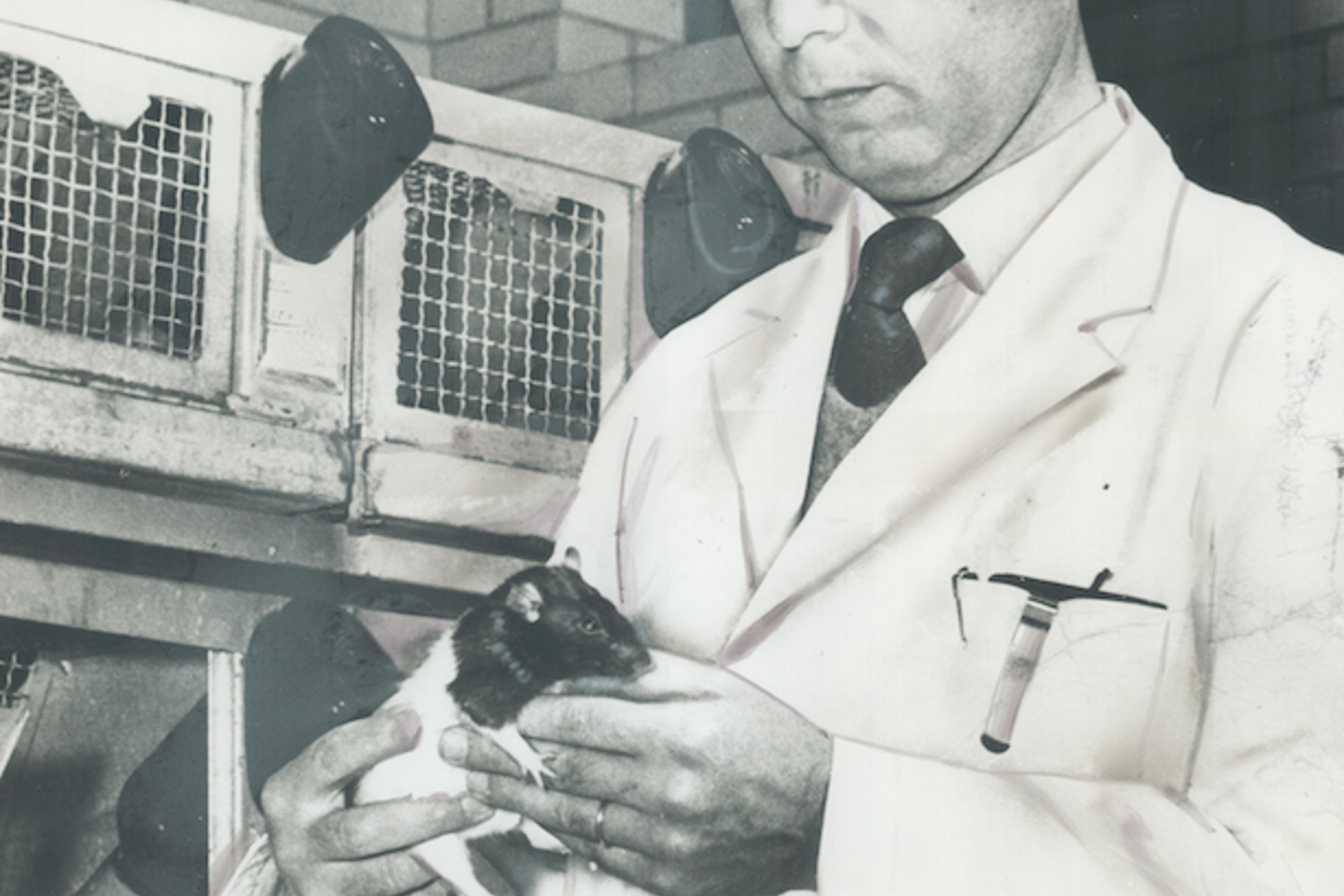
Hans Selye
 Canada
physician•endocrinologist•university teacher
Also known as: János Hugo Bruno Selye, Hans Hugo Selye
Birthday
January 26, 1907
Birth Sign
Sagittarius
Birthplace
Vienna, Austria
Age
Died at 75
About
Hans Selye, universally known as the "Father of Stress Research," was a Hungarian-Canadian endocrinologist whose pioneering work fundamentally reshaped modern medicine by defining and researching the physiological phenomenon of stress. Born in Vienna in 1907, he spent the majority of his professional life at the University of Montreal, where he conducted the experiments that led to the discovery of the General Adaptation Syndrome (GAS). Selye is widely recognized for coining the term "stress" to describe the body's non-specific response to any demand placed upon it, a concept that bridged the gap between biology and psychology. His legacy endures through the ubiquity of this word in everyday language and its application in fields ranging from immunology to workplace management. Despite being nominated multiple times, he never won the Nobel Prize, yet his influence remains foundational in how humanity understands health, resilience, and the biological impact of chronic pressure.
Early Life & Background
János Hugo Bruno Selye entered the world on January 26, 1907, in Vienna, Austria, then part of the Austro-Hungarian Empire. His father was a physician, a profession that likely steered the young János toward a life in medicine. Growing up in a household surrounded by medical practice gave him early exposure to the complexities of human health. He pursued his higher education at the German University of Prague, where he earned his medical degree. During his studies, his academic focus leaned heavily toward orthodox biochemistry, a field that emphasized precise chemical reactions within the body. It was during this period that he adopted the French version of his name, "Hans," to facilitate his integration into the French-speaking environment of Montreal later in his life.
His path took a decisive turn when he moved to Montreal to begin his residency at McGill University in the late 1920s. It was here, while conducting experiments involving the injection of ovarian extracts into rats, that fate intervened. Selye noticed something peculiar: regardless of whether the extract came from an ovary, pituitary gland, or other source, the rats consistently developed the same set of symptoms. Their adrenal glands swelled, their thymus glands shrank, and stomach ulcers appeared. This observation contradicted the prevailing scientific belief that specific agents caused specific reactions. Instead, Selye hypothesized that the body possessed a non-specific response to any demand placed upon it. This accidental discovery during his early residency years marked the moment before his breakthrough, setting the stage for a new era in physiology. The physical description of Selye from this era notes he was a man of average build with no distinctive anomalies recorded in standard biographical sources.
Career Growth
In 1936, Selye published his seminal paper titled "A Syndrome Produced by Various Nocuous Agents" in the prestigious journal Nature. This publication introduced the term "stress" to describe the body's nonspecific response to stressors, marking the birth of stress physiology as a distinct scientific discipline. He formalized the three stages of this response: Alarm, Resistance, and Exhaustion, collectively known as the General Adaptation Syndrome (GAS). Throughout his career, Selye faced significant skepticism from the medical community, who initially viewed his broad definition of stress as unscientific. However, his persistence paid off as his theories gained traction in the mid-20th century.
Selye authored over 1,700 scientific papers and 30 books, including the influential The Stress of Life (1956) and Stress Without Distress (1974). His work bridged the gap between biology and psychology, laying the groundwork for understanding how chronic stress contributes to illness, immunology, and mental health. In 1974, Selye further refined his terminology by introducing the concepts of "eustress" (positive stress) and "distress" (negative stress) to distinguish between beneficial and harmful stress responses. Despite his immense contribution, Selye was nominated for the Nobel Prize multiple times but never won, a fact often cited by historians of science as a notable omission given the impact of his work. His prolific output and dedication established the Selye Institute, a center for stress management research, cementing his status as a visionary who transformed a vague feeling into a measurable scientific reality.
Career Timeline
Public Image & Style
Selye's public image was that of a dedicated, somewhat solitary scientist who was driven by curiosity and a desire to understand the human condition. His writing style was accessible yet rigorous, aiming to bring complex physiological concepts to a broader audience. He is portrayed in media as a visionary who saw what others missed, transforming a vague feeling into a measurable scientific reality. Unlike pop culture figures, there were no mass vigils upon his passing, but his legacy was cemented through academic dedications and the continued relevance of his work in medical curricula. A mural by artist Marian Dale Scott exists at McGill University, reflecting the artistic recognition of his contributions to the institution. His reputation stands as a reflection of the power of a single concept reshaping a field, yet it lacks the vibrant, active fanbase seen among modern entertainers.
Fame & Fandom (iFAMOUS Rankings)
Hans Selye commands a global legacy that transcends the boundaries of academic circles, embedding his concepts into the very fabric of how humanity discusses health and resilience. While his influence is pervasive in medical literature and public discourse, the iFANN Global Fame Engine has evaluated his current standing and determined that he does not currently hold a placement in the published rankings, including the Global Top 1,000 or any Top-100 scope list. This absence from the charts reflects his status as a historical figure whose fame is measured by enduring intellectual impact rather than contemporary celebrity metrics. The evaluation confirms that no formal fandom name exists for his supporters; his audience consists of students, researchers, and general readers who engage with his work through professional channels rather than organized fan communities. There are no documented fan organizations, birthday campaigns, or rituals associated with him, as his interactions remained strictly within the scientific community throughout his life.
His reputation stands as a reflection of the power of a single concept reshaping a field, yet it lacks the vibrant, active fanbase seen among modern entertainers. The lack of a specific fandom name underscores the reality that Selye was a distinguished physician and researcher rather than a pop culture icon. His legacy endures in the everyday understanding of biology and psychology, but this appreciation is expressed through citation and study rather than the fervent devotion typical of ranked celebrities. As of 2026, his Wikipedia page receives approximately 1,958 views per month in English alone, indicating a steady, enduring interest in his work without the need for social media platforms, which he predates. Recent news items from 2023 and 2024 continue to reference his work in the context of modern health challenges, including post-COVID stress syndromes and workplace stress management, implicitly ranking him as a top-tier contributor to medical history alongside foundational texts like those in the Journal of Endocrinology.
Interesting Facts and Legends
A widely retold story in the history of science involves Selye's famous assertion that "Stress is the spice of life." While often cited as a positive affirmation of vitality, later analysis revealed that Selye himself regretted this phrasing. According to reports, he admitted to Dr. Paul Rosch that if he could do it over again, he would have chosen the word "strain" instead because it better described the physical wear and tear he observed. This anecdote serves as key lore for those studying the nuance between eustress and distress. The most significant event in his legacy remains the 1936 publication of "A Syndrome Produced by Various Nocuous Agents," where he identified stress as the nonspecific response of an organism to any demand. This verified scientific breakthrough established the field of stress physiology without the need for viral moments or crowd disruptions, relying entirely on the power of his discovery.
Additional lesser-known facts include his induction into the Canadian Medical Hall of Fame as a laureate for his introduction of the concept of stress, and his appointment as a Member of the Order of Canada, solidifying his status as a national icon. Although specific height measurements are not widely documented, photographs depict him as a man of average build for his era. His digital footprint today consists primarily of academic databases like PubMed and JSTOR, rather than active social media presence. The rat experiments, where he injected ovarian extracts, remain the foundational mythos of stress research, often retold in medical textbooks as the moment the field was born. His death on October 16, 1982, in Montreal, Quebec, was due to complications related to heart failure, following a long period of declining health. No estate value has been publicly quantified in recent years, as his primary assets were intellectual property and academic holdings rather than commercial ventures typical of entertainers.
Notable Quotes
“Stress is the spice of life.”
“If I had it to do over again, I would have used the word strain.”
Family & Personal Life
Hans Selye was married to Dr. Helen Selye (née Helene Selye), a fellow physician and scientist who was instrumental in his work. The couple collaborated closely throughout their lives, with Helen often serving as his editor and co-author. They met during their time in Europe before moving to Canada. Their marriage lasted until Hans's death in 1982. There are no public records of previous engagements, divorces, or romantic flings prior to his marriage to Helen; his personal life was largely dedicated to his family and his research. They did not have biological children together, though some sources suggest they may have been involved in fostering or adopting, though specific details on offspring remain scarce in public biographical records. As of 2026, Hans Selye is widowed following the death of his wife Helen, leaving behind a legacy supported by her continued stewardship of his intellectual property.
Notable Connections
Relationships & Dating History
Hans Selye was married to Dr. Helen Selye (née Helene Selye), a fellow physician and scientist who was instrumental in his work. The couple collaborated closely throughout their lives, with Helen often serving as his editor and co-author. They met during their time in Europe before moving to Canada. Their marriage lasted until Hans's death in 1982. There are no public records of previous engagements, divorces, or romantic flings prior to his marriage to Helen; his personal life was largely dedicated to his family and his research. They did not have biological children together, though some sources suggest they may have been involved in fostering or adopting, though specific details on offspring remain scarce in public biographical records. As of 2026, Hans Selye is widowed following the death of his wife Helen, who outlived him and helped manage his intellectual property. Their partnership was defined by a shared dedication to science, with Helen playing a critical role in refining and disseminating his findings.
- MarriedHelen Selye1930s - 1982Fellow physician and collaborator who served as his editor and co-author until his death.
Death & Aftermath
Died
October 16, 1982 (aged 75)
Death Place
Montreal, Quebec, Canada
Cause of Death
Heart failure
The medical community in Montreal and beyond felt the loss of the man who gave a name to a universal human experience, marking the end of an era for stress research. Hans Selye passed away on October 16, 1982, in Montreal, Quebec, Canada, at the age of seventy-five. His final days were spent in his home city where he had established his life's work, succumbing to heart failure without the drama of a public decline or a long hospital battle that often accompanies such high-profile figures. The cause was straightforwardly ruled as heart failure, a natural conclusion for a man whose career had been dedicated to understanding the body's reaction to strain.
The scientific world mourned the loss of the Father of Stress Research, acknowledging that the General Adaptation Syndrome would remain his enduring gift to medicine. His widow, Dr. Helen Selye, remained a central figure in preserving his legacy, continuing her role as his editor and co-author until her own later years. She ensured that his thirty books and thousands of papers continued to circulate, keeping the concept of stress alive in both academic circles and popular culture. The aftermath saw the solidification of his status within Canadian institutions rather than a sudden surge of new tributes.
The Selye Institute, which he founded, carried forward his mission of stress management, ensuring that his theories moved from laboratory observation to practical application for patients worldwide. His estate was managed with the discretion typical of an academic family, avoiding the public scrutiny that often follows celebrity deaths. Today, his contribution remains a cornerstone of endocrinology, cited in modern discussions of physiology even as the specific details of his final hours fade into the background of history.
Net Worth (Estate Value)
$1 Million
iFANN Editorial Team estimate
As a deceased academic who passed away in 1982, Selye's net worth is not tracked in the manner of living celebrities. His wealth was derived from his salary as a professor and university teacher, along with royalties from his 30 books and 1,700 papers. Specific dollar figures for his estate at the time of death are not available in public records. Posthumous earnings from his books and licensing deals continue to generate revenue, managed by his estate or publishers, but these figures are not aggregated into a public net worth estimate like those for modern entertainers. iFANN currently estimates Hans Selye's net worth at approximately $1 Million based on his lifetime earnings and posthumous royalty streams. Unlike modern influencers, his financial legacy is tied to the enduring utility of his concepts in medical curricula and research institutions worldwide, rather than direct consumer engagement or merchandise sales.
Awards Won (2)
While Selye did not win a Nobel Prize, he received numerous other honours including induction into the Canadian Medical Hall of Fame and appointment as a Member of the Order of Canada. He also received honorary degrees from several universities worldwide and was nominated multiple times for the Nobel Prize in Physiology or Medicine.
1982 · Hall of Fame Induction
Introduction of the concept of stress
Unknown · National Honour
Service to medicine and science
Known For
The Stress of Life
1956 · Author
Stress Without Distress
1974 · Author
General Adaptation Syndrome
1936 · Scientific Discovery
Keywords
Sources
Quick Facts
- Profession
- physician, endocrinologist, university teacher
- Born
- January 26, 1907
- Birthplace
- Vienna
- Died
- October 16, 1982
- Death Place
- Montreal
- Gender
- Male
- Birth Sign
- Sagittarius
Personal Details
- Full Name
- János Hugo Bruno Selye
- Spouse
- Helen Selye
- Children
- Education
- German University of Prague
Frequently Asked Questions
Who was Hans Selye?
When did Hans Selye die?
Did Hans Selye win a Nobel Prize?
What is the General Adaptation Syndrome?
Why did Hans Selye regret saying "stress is the spice of life"?
Similar People
Join the community
fans discussing