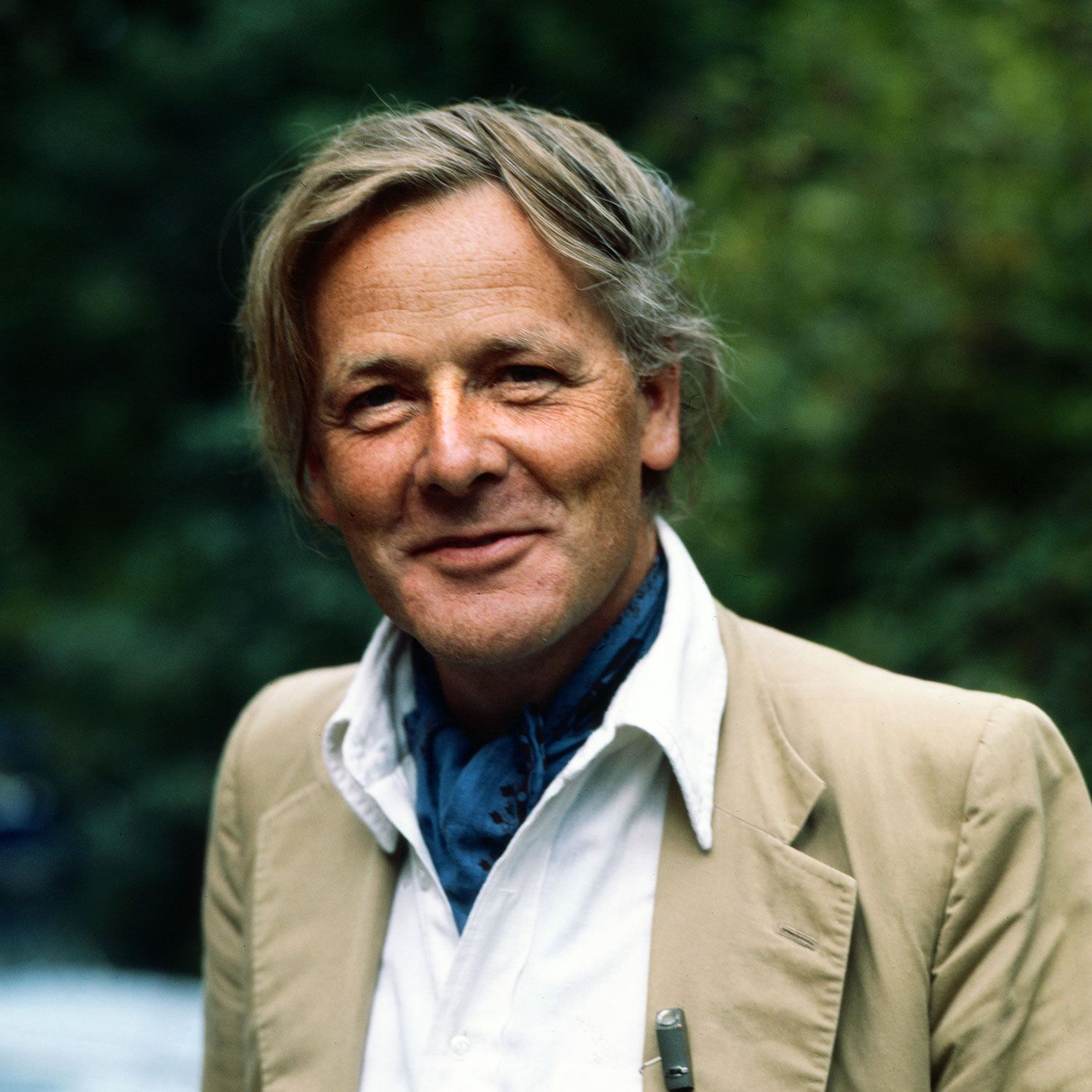
Hans-Jürgen Syberberg
 Germany
film director•film producer•film editor
Also known as: Hans Jürgen Syberberg
Birthday
December 8, 1935
Birth Sign
Sagittarius
Birthplace
Nossendorf, Germany
Age
90 years old
About
Hans-Jürgen Syberberg is a German film director, producer, and editor whose work has left a deep imprint on post-war European cinema. Born on December 8, 1935, in Nossendorf, he is best known for his monumental 1977 film Hitler: A Film from Germany, a nearly eight-hour meditation on the Nazi era that defies conventional documentary form. Syberberg's films are marked by a theatrical, collage-like style, drawing on mythology, Wagnerian opera, and German history to create what he calls a Gesamtkunstwerk, a total work of art.
Over a career spanning more than five decades, Syberberg has earned admiration from figures like Susan Sontag, Heiner Müller, and Michel Foucault, who recognized his singular vision. His “German Trilogy”, comprising Ludwig: Requiem for a Virgin King, Hitler: A Film from Germany, and Parsifal, stands as a landmark in experimental cinema. As of 2026, Syberberg remains a provocative and influential figure, with retrospectives and screenings of his work continuing to draw attention worldwide.
Early Life & Background
Hans-Jürgen Syberberg grew up in the small town of Nossendorf in Mecklenburg, a region that would later permeate his films with its landscapes and folklore. He lived in Rostock until 1945, when the end of World War II forced his family to flee westward. The experience of displacement and the weight of German guilt would become recurring themes in his work.
Details of his formal education remain scarce, but Syberberg's early fascination with theater and opera is evident in his later directorial choices. He studied art history and philosophy at university, though the specifics are not widely documented. Before making his mark as a filmmaker, Syberberg worked in television, directing documentaries and cultural programs. These early projects allowed him to experiment with non-traditional narrative structures and visual styles, setting the stage for his later groundbreaking features.
Career Growth
Syberberg's breakthrough came in 1970 with Ludwig: Requiem for a Virgin King, a highly stylized portrait of Bavaria's eccentric monarch Ludwig II. The film's operatic visuals and fragmented narrative drew immediate attention, establishing Syberberg as a bold new voice in the New German Cinema movement.
His magnum opus, Hitler: A Film from Germany (1977), premiered to both acclaim and controversy. This nearly eight-hour epic, shot largely in a studio with painted backdrops and puppetry, reimagines the rise and fall of the Third Reich as a nightmarish allegory. It was praised by critics like Susan Sontag, who called it a masterpiece, while others found its approach problematic.
In 1982, Syberberg adapted Wagner's final opera into Parsifal, a lush and controversial film that further cemented his reputation for ambitious, challenging cinema. He continued to work into the 2000s, with later projects like Die Nacht (1985) and Germania (2023) exploring similar themes of myth and memory. His films have been featured at major festivals, including Cannes, and have inspired generations of experimental filmmakers.
Career Timeline
Public Image & Style
Hans-Jürgen Syberberg is often described as a flamboyant and ingenious chronicler of the German soul. His public persona is that of a provocateur, unafraid to tackle the darkest chapters of German history with a mixture of reverence and surrealism. Critics have called his style “surreal, collage-like,” and his films demand active engagement from the viewer, rewarding patience with profound insights.
Syberberg's admirers include some of the most influential intellectuals of the late 20th century, from Susan Sontag to Michel Foucault. He has a reputation for being uncompromising, often clashing with producers over creative control. Yet his dedication to his vision has earned him a devoted following among cinephiles who appreciate his willingness to push boundaries.
Fame & Fandom
The world of Hans-Jürgen Syberberg is not populated by a mass movement of devotees in matching t-shirts or organized fan clubs, but rather by a scattered constellation of film scholars, intellectuals, and cinephiles who treat his work as high art. Unlike pop culture icons with dedicated armies, Syberberg's admirers, figures like Susan Sontag, Heiner Müller, and Michel Foucault, engage with him through critical discourse and academic analysis rather than public rituals or campaigns. The cultural mythology surrounding him is defined entirely by the sheer scale and controversy of his films, particularly *Hitler: A Film from Germany* and the operatic *Parsifal*. These works are legendary for their attempt to confront the German soul through a Gesamtkunstwerk approach, creating a narrative that has endured for decades as a polarizing yet monumental touchstone of German New Cinema. Recent events, such as a rare 2024 screening at the Cannes Film Festival, have only reinforced the status of these films as significant historical re-evaluations. While modern discussions sometimes pivot to ethical debates regarding his personal ideology, the core of his legacy remains the intense intellectual engagement his cinema demands. Despite this deep respect within specific circles, iFANN's Global Fame Engine has evaluated this person, but they do not currently hold a placement in the published rankings (Global Top 1,000 or a Top-100 scope list). Consequently, no official numeric rank or score applies to his current standing in the global hierarchy.
Interesting Facts and Legends
Syberberg once described cinema as a form of Gesamtkunstwerk, a total work of art that combines all other art forms. He is known for his meticulous control over every aspect of his productions, often acting as his own producer and editor. Despite the heavy themes, Syberberg has a playful side; his films frequently incorporate puppets and cardboard cutouts to create a deliberately artificial, theatrical effect. He has cited Richard Wagner as a major influence, not just for his music but for his concept of integrating art forms. In a 2024 interview, Syberberg revealed that he keeps a collection of vintage film posters in his Munich apartment, a nod to his lifelong passion for cinema history. The production of *Hitler: A Film from Germany* stands as one of the most legendary stories in cinema lore, a seven-hour epic described as mind-bending for its attempt to confront the German soul. Another iconic moment involves the film *Parsifal*, which is often cited alongside his Hitler film as a monumental achievement in adapting Wagnerian opera to film. A verified documented event occurred recently when the film received a rare screening at the Cannes Film Festival in 2024, where it was highlighted as a significant historical re-evaluation.
Notable Quotes
“Cinema is a total work of art, a Gesamtkunstwerk that combines all other art forms.”
“I am not a Nazi, but I am fascinated by the power of myth and its ability to distort reality.”
“My films are not meant to be easy; they are journeys into the forest of symbols and the cave of memory.”
Family & Personal Life
Hans-Jürgen Syberberg has kept his personal life largely private, and details about his family, including any spouse or children, are not publicly documented. He was born in Nossendorf to a family that experienced the upheaval of World War II, a period that deeply shaped his worldview. Syberberg has mentioned in interviews that his parents were supportive of his artistic ambitions, though they did not fully understand his unconventional path. He currently resides in Munich, where he continues to work on new projects and occasionally participates in retrospectives of his films.
Notable Connections
Hans-Jürgen Syberberg has been associated with several prominent intellectuals and artists who admired his work, including Susan Sontag, Heiner Müller, Michel Foucault, and Naum Kleiman. His cinematographer on Hitler: A Film from Germany was Dietrich Lohmann, and the film featured music by Richard Strauss and Richard Wagner.
Relationships & Dating History
Salary, Net Worth In 2026
$5 Million
iFANN Editorial Team estimate
Hans-Jürgen Syberberg's net worth is estimated at around $5 million as of 2026. This figure represents an editorial estimate by the iFANN Editorial Team based on his career trajectory. His wealth primarily stems from his work as a director, producer, and editor, with income generated from film royalties, screenings, and retrospective events. While his films are not mainstream commercial successes, they have maintained a steady presence in art-house circuits and academic settings, ensuring a modest but consistent revenue stream. Syberberg has also earned from television productions early in his career and from occasional public appearances and lectures.
Awards & Accolades
View 1 records, honours and achievementsKnown For
Hitler: A Film from Germany
1977 · Director
Ludwig: Requiem for a Virgin King
1970 · Director
Parsifal
1982 · Director
Keywords
Sources
Quick Facts
- Profession
- film director, film producer, film editor
- Born
- December 8, 1935
- Birthplace
- Nossendorf, Germany
- Gender
- Male
- Birth Sign
- Sagittarius
Personal Details
- Full Name
- Hans-Jürgen Syberberg
Frequently Asked Questions
Who is Hans-Jürgen Syberberg?
What is Hans-Jürgen Syberberg famous for?
When was Hans-Jürgen Syberberg born?
What is the significance of 'Hitler: A Film from Germany'?
Is Hans-Jürgen Syberberg still active in 2026?
Join the community
fans discussing