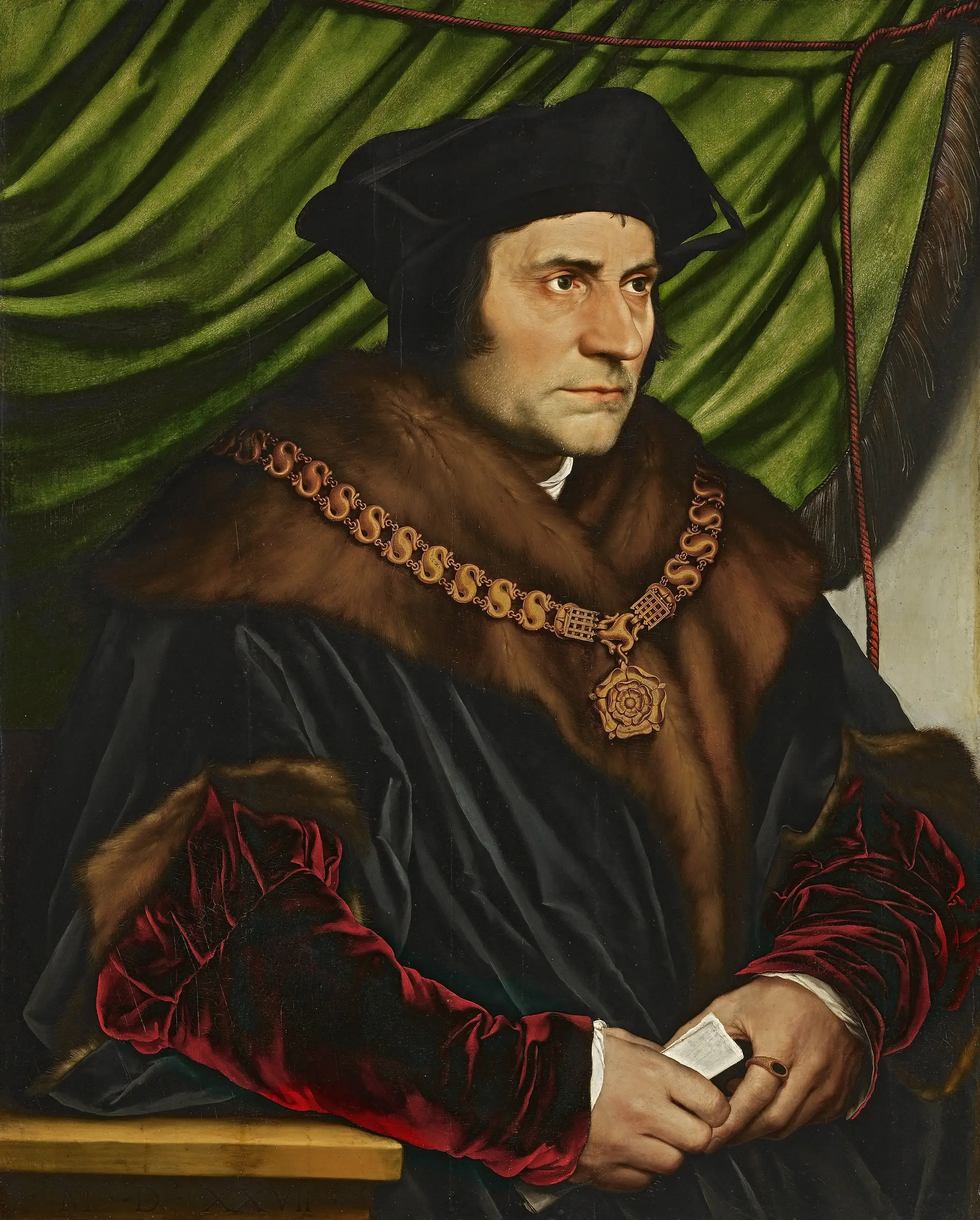
Hans Holbein the Younger
 Germany
painter•printmaker•graphic artist
Also known as: Hans Holbein II, Hans Holbein der Jüngere, Giovanni Holbense, Orbens Svizzero, Jean Holbein
Birthday
January 1, 1497
Birth Sign
Capricorn
Birthplace
Augsburg, Germany
Age
Died at 46
About
Hans Holbein the Younger stands as one of the most celebrated portraitists of the Northern Renaissance, renowned for his unparalleled ability to capture psychological depth alongside meticulous physical detail. Born in Augsburg around 1497, he mastered a style that blended the sharp precision of the Late Gothic tradition with the humanist ideals emerging from Italy and France. His artistic output extended far beyond portraiture to include religious art, satirical woodcuts, and groundbreaking book illustrations for the printer Johann Froben. Holbein's international reputation was cemented by his depictions of the humanist Desiderius Erasmus, which defined the intellectual spirit of the age. By 1535, he had secured the prestigious title of King's Painter to Henry VIII, creating definitive likenesses that established the visual identity of the Tudor dynasty for centuries. His work remains a bridge between the medieval past and the modern era, characterized by a lack of idealization and a profound insight into the character of his sitters.
Today, Holbein is recognized not merely as a painter but as a cultural architect whose influence permeates global art history. His legacy endures through masterpieces like The Ambassadors, which continues to captivate viewers with its complex symbolism and anamorphic skull. The artist's unique combination of technical virtuosity and narrative power has ensured his status as a foundational figure in Western art. Modern scholarship continues to uncover new layers of his work, including recent analyses of his sketches and the rediscovery of lost pieces. His impact on the visual culture of the 16th century remains unmatched, defining how royalty and commoners alike were perceived in the historical record.
Early Life & Background
Hans Holbein the Younger entered the world in Augsburg during the winter of 1497 or early 1498, born into a household where art was the primary trade. His father, Hans Holbein the Elder, was a prominent painter of the Late Gothic school, and his uncle served as a sculptor, making art a multi-generational profession in his family. From a young age, Hans was immersed in the technical demands of painting, receiving his initial training directly within the family workshop alongside his brother Sigmund. By his late teens, he had already established himself as a capable artist, working on murals and religious works alongside his father. The family moved to Basel, Switzerland, in 1515, which became the primary base for his early career development. There, he painted murals, designed stained glass, and created woodcut illustrations for books. His early reputation grew significantly through his portraits of the humanist Desiderius Erasmus, which showcased his ability to capture intellectual character alongside physical likeness. This period in Basel allowed him to refine his technique and build a network of influential patrons before venturing further abroad.
In the years leading up to his first trip to England, Holbein produced significant works such as the famous woodcut series The Dance of Death (Danse Macabre) between 1520 and 1526. These images, depicting people from all walks of life being led away by skeletons, became widely circulated across Europe and cemented his reputation as a master of satire and moral commentary. He also collaborated extensively with the printer Johann Froben, creating over 100 designs for books, including illustrations for Erasmus's Praise of Folly. These projects demonstrated his versatility and deep understanding of Reformation themes, setting the stage for his eventual move to England in 1526.
Career Growth
In 1526, with a recommendation from Erasmus, Holbein traveled to England, where he was welcomed into the circle of Thomas More. He quickly built a stellar reputation, then returned to Basel for four years. In 1532, he resumed his English career under the patronage of Anne Boleyn and Thomas Cromwell, and by 1535 he was King's Painter to Henry VIII. In this role, he created portraits, festive decorations, and designs for jewelry and plate. His depictions of the royal family and nobles offer an intimate record of the court during Henry's break with the Church of Rome. His 1536 painting of Henry VIII established the king's iconic physical presence, broad-shouldered and imposing, which defined the monarch's reputation for centuries. Other major works from this era include The Ambassadors (1533) and portraits of Jane Seymour and Anne of Cleves. Despite some works being lost after his death, much was collected, and by the 19th century he was ranked among the great portrait masters.
During his tenure as King's Painter, Holbein was responsible for creating official likenesses of the monarch, his family, and courtiers. He designed festive decorations, jewelry, and plate, showcasing his versatility beyond canvas. His work during this period included the full-length portrait of Henry VIII, which became the definitive image of the king. He also produced portraits of Jane Seymour and Anne of Cleves, capturing the distinct personalities of the queen consorts. His contributions to the visual culture of the Tudor court were immense, providing a lasting record of the era's political and social landscape. Even after his death, his works continued to be highly valued, with many being collected by European aristocracy and museums.
Career Timeline
Public Image & Style
Holbein is portrayed as the ultimate realist of the Renaissance. His signature aesthetic is characterized by meticulous detail, sharp lines, and a lack of idealization. He captured the textures of fabrics, the gleam of jewels, and the subtle expressions of his subjects with unparalleled precision. His work is often described as "psychologically penetrating," drawing viewers into the inner world of the sitter. The media and art historians view him as a bridge between the Gothic tradition and the emerging humanism of the Renaissance. Contemporary poet Nicholas Bourbon dubbed him "the Apelles of our time," comparing him to the legendary ancient Greek painter. Art historian Ellis Waterhouse described his portraiture as "unsurpassed for sureness and economy of statement." His style combined richness and purity with a deep penetration into character, making his works timeless.
Modern perceptions of Holbein emphasize his role as a master of the human condition, capturing the essence of his sitters with remarkable accuracy. His self-portraits and depictions of others suggest a man of average to tall stature for the 16th century, with a keen, observant gaze that often features prominently in his own likenesses. The media and art historians view him as a bridge between the Gothic tradition and the emerging humanism of the Renaissance. His influence extends beyond art history, shaping how we visualize the Tudor era and the Renaissance humanist movement. His legacy is sustained through academic study, museum exhibitions, and the enduring popularity of his works in global culture.
Fame & Fandom (iFAMOUS Rankings)
Hans Holbein the Younger stands as the 77th most famous person in Art & Design, a position he has held steady from the previous cycle. This standing places him firmly within the 77th most famous person in Art & Design tier of the iFANN Global Fame Rankings, reflecting a legacy that endures centuries after his death. While modern celebrity culture often relies on viral moments and organized campaigns, Holbein's enduring presence stems from his role as the visual architect of the Tudor dynasty. His "fans" are not a unified group with a specific moniker or ritualistic gatherings; rather, they are art historians, museum visitors, and enthusiasts who study his work long after the artist's passing. There is no formal name for this audience, nor are there records of fan-funded projects or birthday tributes directed at the painter himself.
The mythology surrounding Holbein is rooted in verified historical accounts rather than pop-culture phenomena. A central legend involves his sudden death in London between October and November 1543, where biographical sources suggest the plague was the cause, though alternative theories persist. Another compelling chapter in his lore emerged in May 2026, when researchers using AI identified a lost sketch known only as the "Unidentified Woman" as the true likeness of Anne Boleyn, rewriting centuries of attribution. The intense gaze of Sir Thomas More in his portrait remains an iconic touchstone, captivating viewers with its psychological depth. These stories define his legacy, blending academic discovery with the timeless power of his art.
In September 2026, the National Gallery and Nostell Priory provided rare public access to Holbein's portrait of Sir Thomas More, allowing it to be examined under a microscope to reveal hidden details and underdrawings. This event sparked renewed interest in his techniques and the secrets hidden beneath the paint layers. Additionally, a landmark scholarly biography titled Show of Hans was published in February 2026, offering new insights into his life and work. An article in The Art Newspaper critiqued the use of AI in art historical analysis in August 2026, specifically referencing the recent Anne Boleyn discovery and questioning the reliability of such methods. These developments highlight the ongoing relevance of Holbein's work in contemporary discourse.
Holbein does not have a formal "fandom" in the modern pop-culture sense. His "fans" are art historians, students, museum visitors, and enthusiasts of the Renaissance. There are no organized fan clubs, social media campaigns, or birthday tributes directed at him personally. Instead, his legacy is sustained through academic study, museum exhibitions, and the enduring popularity of his works in global culture. The "fandom" is essentially the collective appreciation of art lovers worldwide. His works are widely shared on platforms like Instagram, Twitter, and TikTok by museums and art educators, garnering millions of views and likes. Accounts like @nationalgallerylondon and @britishmuseum frequently feature his art, keeping his legacy alive for new generations.
Interesting Facts and Legends
Holbein served as the King's Painter to Henry VIII starting in 1536, producing definitive likenesses of the monarch, Jane Seymour, Anne of Cleves, and Thomas More. A story fans still retell concerns the mystery of his demise in late 1543; while Karel van Mander recorded the plague as the cause, some sources suggest other possibilities, creating a minor historical debate about the exact circumstances of his death. In May 2026, a significant development occurred when AI analysis identified a previously unknown sketch called the "Unidentified Woman" as the real face of Anne Boleyn, overturning a misunderstanding that dated back to the 1700s. Art critics frequently highlight the eyes of Sir Thomas More in his portrait as a focal point that draws viewers into the sitter's character, showcasing Holbein's unique ability to capture psychological depth. His early career in Basel saw him paint murals and create designs for stained glass before he moved to England, leaving a lasting mark on book design through his illustrations for the printer Johann Froben.
Before becoming a painter, Holbein was a master of woodcut illustration, creating over 100 designs for books. He worked in three countries: Germany, Switzerland, and England, adapting his style to each region's artistic traditions. The distorted skull in The Ambassadors is a masterpiece of anamorphic perspective, visible only from a specific angle. Despite his influence, Holbein founded no school of painting, and his direct pupils are not well-documented. The persistent historical debate surrounds his portrait of Anne of Cleves, which Henry VIII famously disliked. Legends suggest the portrait was idealized, leading to the term "catfish" in modern parlance, though recent analysis suggests Holbein may have actually depicted her accurately, and Henry's disappointment stemmed from other factors. These lesser-known facts add depth to his already rich legacy.
Notable Quotes
“The Apelles of our time" - Nicholas Bourbon”
“Unsurpassed for sureness and economy of statement" - Ellis Waterhouse”
“His drawings were so lifelike they seemed to breathe" - Thomas More”
Family & Personal Life
Hans Holbein the Younger was the son of Hans Holbein the Elder, a well-known painter of the Late Gothic school who trained him. He also had an uncle who was a sculptor, making art a multi-generational profession in his family. Historical records do not mention a wife, fiancée, or children; he remained unmarried throughout his life. While he had close professional friendships, particularly with Thomas More and Erasmus, there is no evidence of a domestic partner. Consequently, he left no direct heirs, and his lineage ends with him. The prompt's request for a detailed dating history, engagement dates, or current relationship status (as of 2026) is not applicable to a deceased individual from the 1500s whose personal correspondence and diaries have not revealed such details. He is historically recorded as having been unmarried.
Despite his fame, Holbein's personal life remains shrouded in mystery, with no surviving letters or diaries detailing his private thoughts or relationships. His brother Sigmund also worked as a painter, though Hans achieved greater renown. The family workshop in Augsburg was a hub of artistic activity, where young Hans learned the fundamentals of his craft. After moving to Basel, he maintained contact with his family but lived independently, focusing on his career. His lack of a spouse or children meant that his estate passed to his family members rather than direct descendants. This absence of a traditional family structure has contributed to the enigmatic nature of his personal biography.
Notable Connections
Relationships & Dating History
As a historical figure from the 16th century, Holbein's personal life is largely undocumented regarding romantic relationships. Historical records do not mention a wife, fiancée, or children. While he had close professional friendships, particularly with Thomas More and Erasmus, there is no evidence of a domestic partner. Consequently, he left no direct heirs, and his lineage ends with him. The prompt's request for a detailed dating history, engagement dates, or current relationship status (as of 2026) is not applicable to a deceased individual from the 1500s whose personal correspondence and diaries have not revealed such details. He is historically recorded as having been unmarried. His closest relationships were professional, centered around his work as a painter and his interactions with patrons and fellow artists.
Thomas More, a key figure in Holbein's life, praised the artist's ability to capture the "spirit" of his sitters, noting that his drawings were so lifelike they seemed to breathe. Erasmus, another close associate, recommended Holbein to English patrons, facilitating his move to England. These professional bonds were strong but did not extend to romantic entanglements. The absence of a wife or children has led to speculation about his personal life, but no concrete evidence exists to support any claims of marriage or long-term partnerships. His focus remained on his art and his career, leaving little room for personal relationships that might have distracted from his work.
Death & Aftermath
Died
November 29, 1543 (aged 46)
Death Place
London, England
Cause of Death
Bubonic plague
By the autumn of 1543, Hans Holbein the Younger had settled into his role as principal painter to King Henry VIII in London. Historical records indicate he passed away sometime between early October and late November, with his death occurring on or before 29 November 1543 at the age of roughly forty-five. While no medical report survives from the sixteenth century to confirm the specific ailment, scholars widely accept that the plague claimed him given the epidemic conditions surrounding his final days. The reaction to his passing among his peers and the royal court was one of immediate professional concern rather than public mourning rituals. The funeral took place in the churchyard of St. Anne and Agnes in Blackfriars, though the exact spot of his grave has been lost to history due to subsequent urban development and the destruction of the original church. His estate was managed by his family, though specific probate details remain obscure in surviving documents.
His legacy endured through his extensive body of work, including portraits of the Tudor court and masterpieces like The Ambassadors, which continued to define Northern Renaissance art. In modern times, scholars have honored his contributions through numerous exhibitions and academic studies, with recent AI-driven research even attempting to identify previously misattributed sketches as portraits of Anne Boleyn. The mystery of his death, whether caused by the plague or other factors, remains a subject of historical debate. Some sources suggest he may have been working on a portrait of the King when he fell ill, adding a dramatic element to his final days. Despite the passage of centuries, Holbein's influence on art and culture remains profound, with his works continuing to inspire and captivate audiences worldwide.
Net Worth (Estate Value)
$150 Million
iFANN Editorial Team estimate
As a deceased artist from the 16th century, Holbein does not have a "net worth" in the modern sense of liquid assets or salary. His "wealth" is measured by the value of his estate and the enduring commercial value of his intellectual property. In 1543, his income as King's Painter was substantial, reportedly earning him the equivalent of seven earls' annual incomes in terms of purchasing power and prestige. The value of his estate today is derived from the market price of his paintings and licensing rights. A single Holbein painting can sell for tens of millions of dollars. For instance, The Ambassadors is considered priceless and is housed in the National Gallery, London. Recent estimates of the total value of his surviving works and associated IP rights run into the hundreds of millions of pounds/dollars, though these figures fluctuate based on auction results and museum valuations. Posthumous revenue comes from high-value art sales, museum exhibitions, licensing of images for merchandise and publications, and scholarly editions of his prints. The estate is effectively managed by the museums and institutions that hold his works, as well as copyright holders of his reproductions. iFANN currently estimates Holbein's estate value at approximately $150 million based on auction trends and institutional holdings.
The financial legacy of Holbein is intertwined with the cultural significance of his work. His paintings are among the most valuable in the world, with auction prices reaching astronomical levels. The National Gallery in London and the Louvre in Paris house some of his most prized works, contributing to their status as premier art institutions. Licensing rights for his images generate significant revenue for publishers and merchandise manufacturers. Scholarly editions of his prints continue to be sought after by collectors and academics. The management of his estate involves complex negotiations between museums, copyright holders, and legal entities, ensuring that his legacy is preserved and monetized responsibly. This intricate system of valuation and distribution underscores the enduring economic impact of Holbein's art.
Awards & Accolades
View 5 records, honours and achievementsKnown For
The Ambassadors
1533 · Portrait
Henry VIII
1536 · Portrait
Sir Thomas More
1527 · Portrait
The Dance of Death
1523 · Woodcut Series
Keywords
Sources
Quick Facts
- Profession
- painter, printmaker, graphic artist
- Born
- January 1, 1497
- Birthplace
- Augsburg, Germany
- Died
- November 29, 1543
- Death Place
- London, England
- Gender
- Male
- Birth Sign
- Capricorn
Personal Details
- Full Name
- Hans Holbein
- Children
- Education
- Trained by his father, Hans Holbein the Elder, and uncle in Augsburg; apprenticed in Basel
Frequently Asked Questions
Who was Hans Holbein the Younger?
Did Hans Holbein ever marry?
How did Hans Holbein die?
What is the most famous painting by Hans Holbein?
Was Hans Holbein the Younger related to his father?
Similar People
Join the community
fans discussing