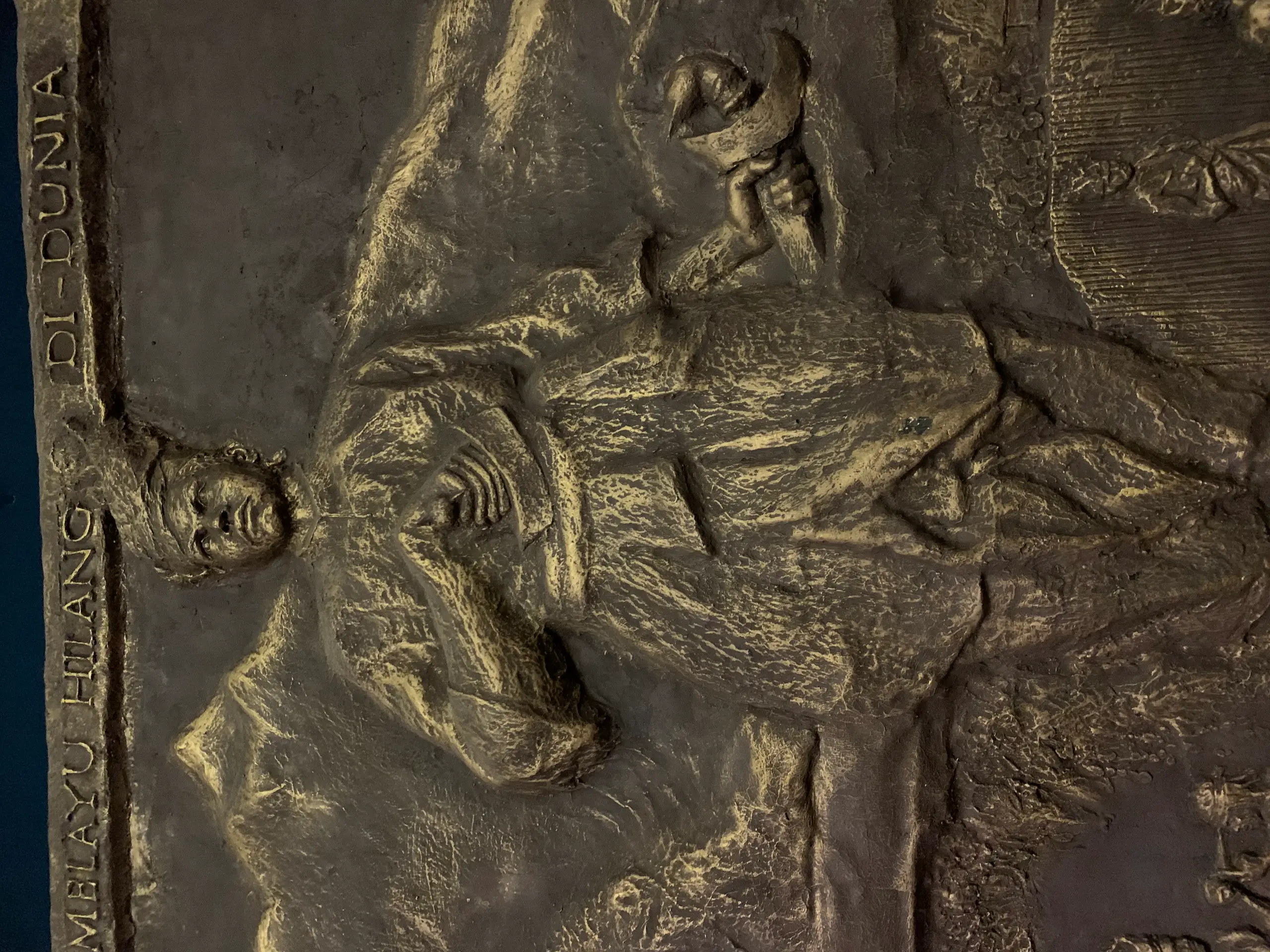
Hang Tuah
 Malaysia
Legendary warrior•admiral•diplomat
Also known as: Laksamana Hang Tuah, Hang Tuah, Admiral of Malacca
Birthday
1444
Birth Sign
Capricorn
Birthplace
Bentan, Riau Archipelago (now Indonesia) or Sungai Ujong (now Port Dickson, Malaysia)
Age
Died at 46
About
Hang Tuah was the most celebrated warrior in Malay literature, a legendary admiral and diplomat of the 15th-century Sultanate of Malacca. His name, meaning "old" or "eldest" in Malay, reflects his status as a wise and trusted figure. He is traditionally regarded as a master of silat, the Malay martial art, and a cunning diplomat who navigated the treacherous politics of the royal court. Yet for all his fame, Hang Tuah remains a contested figure; historians debate whether he was a real historical person or a composite of several warriors and courtiers, his story embellished over centuries of oral tradition.
His legend is built on loyalty, martial prowess, and unwavering devotion to his sultan, Mansur Shah. The most famous tale involves a test of that loyalty: ordered to kill his closest friend, the warrior Hang Jebat, for allegedly rebelling against the throne. Tuah's willingness to obey, even at the cost of a beloved friendship, has made his story a moral touchstone in Malay culture, a stirring example of duty over personal feeling. The tale is recorded in the Hikayat Hang Tuah, a sprawling epic that traces his adventures from a humble fisherman's son to the admiral of the Malaccan fleet, and it has been retold in countless films, novels, and stage plays across Malaysia and Indonesia. While his historical reality is uncertain, his cultural impact is beyond doubt: he remains a symbol of Malay honor and resilience.
Early Life & Background
Hang Tuah was born around 1444, traditionally in Bentan, an island in the Riau Archipelago that now belongs to Indonesia, though some accounts place his birthplace at Sungai Ujong, near present-day Port Dickson in Malaysia. His father, Hang Mahmud, was a fisherman, and his mother, Dang Merdu Wati, raised him with his younger companions. From a young age, Tuah displayed exceptional strength and intelligence, often besting older boys in wrestling and swimming contests along the coast.
His first step toward greatness came when he and his four closest friends, Hang Jebat, Hang Kasturi, Hang Lekir, and Hang Lekiu, collectively known as the Empat Beradik (Four Brothers), were discovered by a royal official while defending a village from a gang of pirates. Impressed by their courage and skill, the official brought them to the court of Sultan Mansur Shah, where they were trained in the martial arts, courtly etiquette, and statecraft. Tuah quickly distinguished himself as the most talented of the group, mastering the art of silat and demonstrating a sharp grasp of diplomacy. He was soon appointed as a royal guard, and his first missions involved escorting envoys to neighboring kingdoms, where his calm demeanor and quick wit earned him the Sultan's trust.
His formative years were marked by a single-minded devotion to the Sultan, a loyalty that would later define his legacy. The Hikayat Hang Tuah recounts how, even as a youth, Tuah vowed to serve his ruler without question, a promise that would be tested in the most brutal way imaginable.
Career Growth
Hang Tuah's rise through the ranks of the Malaccan court was meteoric. By the 1450s, he had been elevated to the position of Laksamana, or Admiral, of the Malaccan fleet, a role that made him the Sultan's chief military commander and trusted adviser. He led numerous naval expeditions against pirates and rival kingdoms, securing Malacca's dominance over the Strait of Malacca, a vital trade route. His diplomatic missions took him to the courts of China, Siam, and Java, where he negotiated treaties and forged alliances that strengthened the sultanate's position. His most famous exploit, however, came when the Sultan, manipulated by jealous courtiers, ordered him to kill his best friend, Hang Jebat, who had seized the palace in a rage after being falsely accused of treason. After a grueling seven-day duel, Tuah killed Jebat, a deed that has been debated for centuries as either the ultimate act of loyalty or a tragic betrayal of friendship.
Following Jebat's death, Tuah continued to serve the Sultan for several more decades, but the event marked a turning point in his life. He became more withdrawn, and some versions of the epic describe him retiring from active service in his later years, spending his final days in quiet contemplation. The exact circumstances of his death are unknown, with tradition placing it in the late 15th century, possibly in Malacca or abroad.
His legacy, however, has only grown with time. The 1956 film Hang Tuah, directed by Phani Majumdar, brought his story to international audiences and is still regarded as a classic of Malay cinema. In 2026, his tale was reimagined in the docudrama Fragments of Tuah by Mark Teh and the Five Arts Centre, which deconstructs the myth and its contemporary relevance. That same year, a musical revival starring actor Aqasha (Firdee Akassya Rosli) in the title role toured Malaysia, and Tamil filmmaker Viknes Perrabu announced plans for a new Malay-language film, The Keris, to introduce the warrior to a wider audience. The name also carries commercial weight: Kopi Hang Tuah, a coffee brand founded in 1955, was chosen in April 2026 as the first participant in Ekuinas' Capacity Building Programme, a government initiative to boost local businesses.
Career Timeline
Public Image & Style
Hang Tuah's public image is that of the archetypal Malay hero: loyal, brave, and honorable to a fault. In Malaysian culture, the phrase "seperti Hang Tuah" (like Hang Tuah) is used to describe someone who is unwaveringly loyal, even to their own detriment. His story is a staple of school curricula, and his face adorns murals, statues, and even an LRT station in Kuala Lumpur. Fans and scholars alike debate his morality, with some viewing him as a paragon of virtue and others as a cautionary tale about blind obedience. This duality has kept his legend alive, inspiring everything from academic treatises to internet memes.
Modern adaptations have reimagined him in various lights: as a tragic figure, a patriotic icon, or a symbol of resistance against injustice. The 2026 Fragments of Tuah docudrama, for instance, juxtaposes his story with contemporary political issues, prompting audiences to question what true loyalty means today. His image is also used in advertising and branding, where it evokes strength and tradition. On social media, the hashtag #HangTuah trends annually during National Day celebrations, with users sharing quotes and artwork. The warrior's aesthetic, often depicted in traditional Malay armor and wielding a keris, has become a visual shorthand for national pride.
Fame & Fandom (iFAMOUS Rankings)
Hang Tuah stands as a timeless figure in global cultural memory, yet he currently holds no placement within the iFANN Global Top 1,000 or any scope-specific rankings. The iFANN Global Fame Engine evaluated this historical icon and confirmed that while his legacy permeates Southeast Asian identity, he does not occupy a numeric rank among contemporary celebrities. This absence of a score reflects his status as a static historical entity rather than a dynamic pop culture phenomenon competing for daily attention spans. Unlike modern stars who cycle through viral moments, Hang Tuah's presence is anchored in centuries of literary tradition and national education systems. There is no organized fanbase with a formal name; the public reveres him as a national hero rather than a celebrity with an active following. No fan clubs, birthday campaigns, or ritualistic gatherings exist to celebrate him as a living personality. Instead, his influence manifests through academic study, government-sponsored heritage projects, and commercial adaptations of his story. Recent developments include the theatrical production Fragments of Tuah and the upcoming film The Keris, which draw on his legend but operate as artistic ventures rather than fan-driven movements. The Kopi Hang Tuah brand leverages his image for commercial gain, selected for capacity building programs in 2026, further illustrating how his name functions as a cultural asset rather than a celebrity brand managed by a fandom. Interaction with his legacy occurs solely through media representations, museums, and the physical infrastructure named in his honor, such as the LRT station in Kuala Lumpur where real-world incidents occasionally generate news cycles. He remains a figure of profound historical weight without the metrics of modern fame.
Interesting Facts and Legends
Hang Tuah's name anchors numerous Malaysian landmarks, including the Hang Tuah LRT station in Kuala Lumpur, a bridge in Penang, and countless schools and streets. Despite his towering fame, no physical artifacts like weapons or armor have been definitively linked to him. The phrase "seperti Hang Tuah" serves as a common Malay idiom for extreme loyalty, often used to describe unwavering devotion even to one's own detriment. In folklore, the legendary warrior is said to possess supernatural abilities, including the power to vanish and reappear at will. The epic Hikayat Hang Tuah stands as one of the longest Malay literary works, with some versions exceeding 500,000 words. A widely retold story from his lore details the tragic killing of his best friend Hang Jebat, an act of absolute loyalty to the Sultan that remains a subject of moral debate. Another enduring tale involves his mastery of silat and his diplomatic travels to China and India. Modern times have added new layers to his legend through real-world events; a July 2026 incident saw a passenger fall onto the tracks at the Hang Tuah LRT station, causing a spike in online searches for the historical figure. These moments blend ancient myth with contemporary reality, keeping his story alive in the public consciousness.
Notable Quotes
“I am not afraid of death, but I fear living without loyalty.”
“Like a hungry tiger, he attacked ferociously.”
“There is no vomit in the stomach, there is no water in the sea.”
Family & Personal Life
Hang Tuah's family background is known only through the Hikayat Hang Tuah. His father, Hang Mahmud, was a fisherman, and his mother, Dang Merdu Wati, is mentioned briefly. He had no known siblings. In the epic, his family is portrayed as humble and poor, which highlights his rise through merit rather than birth. His closest family-like bonds were with his four companions, the Empat Beradik, who were considered his brothers in arms. There is no record of Hang Tuah having a wife or children, and his personal life remains a mystery.
Notable Connections
Hang Tuah's story is intertwined with several key figures. Sultan Mansur Shah was his patron and ruler, whose orders he followed without question. Hang Jebat, his best friend, is the tragic counterpart in his legend, representing rebellion against injustice. His other brothers-in-arms, Hang Kasturi, Hang Lekir, and Hang Lekiu, served alongside him. In modern times, actor Aqasha has portrayed him in the 2026 musical, and playwright Mark Teh created the docudrama Fragments of Tuah.
Relationships & Dating History
There are no verifiable historical records of Hang Tuah's romantic relationships, marriages, or children. The Hikayat Hang Tuah focuses almost exclusively on his public duties, military campaigns, and interactions with royalty and rivals. Any claims regarding specific spouses or dating history found in folklore are considered allegorical or fictional embellishments rather than factual biographical data.
In the literary tradition, Hang Tuah's closest bonds are with his comrades, the Empat Beradik: Hang Kasturi, Hang Lekir, Hang Lekiu, and Hang Jebat. Their brotherhood is central to the epic, and the tragic duel with Jebat is often interpreted as a conflict between personal loyalty and duty to the state. Some modern retellings have speculated about a possible romance between Tuah and a court lady, but these are not supported by the original text.
As of 2026, Hang Tuah is deceased, having lived in the 15th century. There is no record of him being married or having a partner at the time of his death, and his relationship status is listed as unknown.
Death & Aftermath
Died
1490 (aged 46)
Death Place
Melaka
Cause of Death
Suicide by stabbing with a kris
Statues of the warrior stand silent in Malacca today, monuments to a legend that outlived the sultanate by centuries. The Hikayat Hang Tuah places his final moments around the year 1490 within the capital city, though no grave marks the spot where he fell. In the epic narrative, the admiral kills his friend Hang Jebat to uphold loyalty to the Sultan, only to realize later that justice had favored his fallen comrade. Overcome by guilt and madness, Tuah reportedly took his own life with a kris, ending the story in tragedy rather than victory.
Historians debate whether he was a real person or a composite character, leaving the details of his death unverified by medical science or contemporary records. Public memory does not mourn a specific date but celebrates his virtues through school curricula and cultural institutions. His legacy lives on in films like the 1956 production titled Hang Tuah and upcoming projects such as Fragments of Tuah and a new film. The moral weight of his choice remains the true inheritance passed down through generations.
Net Worth (Estate Value)
$0
iFANN Editorial Team estimate
As a historical figure who lived in the 15th century, Hang Tuah left no personal wealth that can be quantified in modern terms. There is no estate, no bank accounts, and no descendants claiming inheritance. Per iFANN's editorial analysis, the total value attributed to his legacy is $0. His true worth lies purely in the enduring cultural capital of his story and the revenue it generates for the region. The Hikayat Hang Tuah, the epic that chronicles his life, is recognized by UNESCO as part of the Memory of the World Register, a designation that underscores its global significance. This recognition has led to numerous translations, academic studies, and educational programs, all of which contribute to the cultural economy. In 2026, the theatrical production Fragments of Tuah and the upcoming film The Keris serve as examples of commercial ventures that capitalize on his name. Additionally, the Kopi Hang Tuah brand, which has been operating since 1955, uses the warrior's image on its packaging, and its selection for the Ekuinas capacity building program in April 2026 is expected to boost its sales further. While no dollar figure can be attached to Hang Tuah's personal fortune, the Malaysian government and various cultural organizations invest significant resources in preserving and promoting his story. Statues, museums, and heritage sites dedicated to him generate tourism revenue, and his name is used in everything from street names to product brands. As of 2026, the cultural capital associated with Hang Tuah remains immeasurable, but it is undoubtedly a significant contributor to Malaysia's national identity and heritage industry.
Awards & Accolades
View 3 records, honours and achievementsKnown For
Hikayat Hang Tuah
1450 · Protagonist
Hang Tuah (1956 film)
1956 · Title character
Fragments of Tuah (2026 docudrama)
2026 · Subject
Keywords
Sources
Quick Facts
- Born
- 1444
- Birthplace
- Bentan, Riau Archipelago or Sungai Ujong
- Gender
- Male
- Died
- Late 15th century (c. 1490)
- Title
- Laksamana (Admiral)
Personal Details
- Full Name
- Hang Tuah
Frequently Asked Questions
Was Hang Tuah a real person?
Why did Hang Tuah kill Hang Jebat?
Where was Hang Tuah born?
What is the Hikayat Hang Tuah?
Is Hang Tuah still relevant in 2026?
Similar People
Join the community
fans discussing