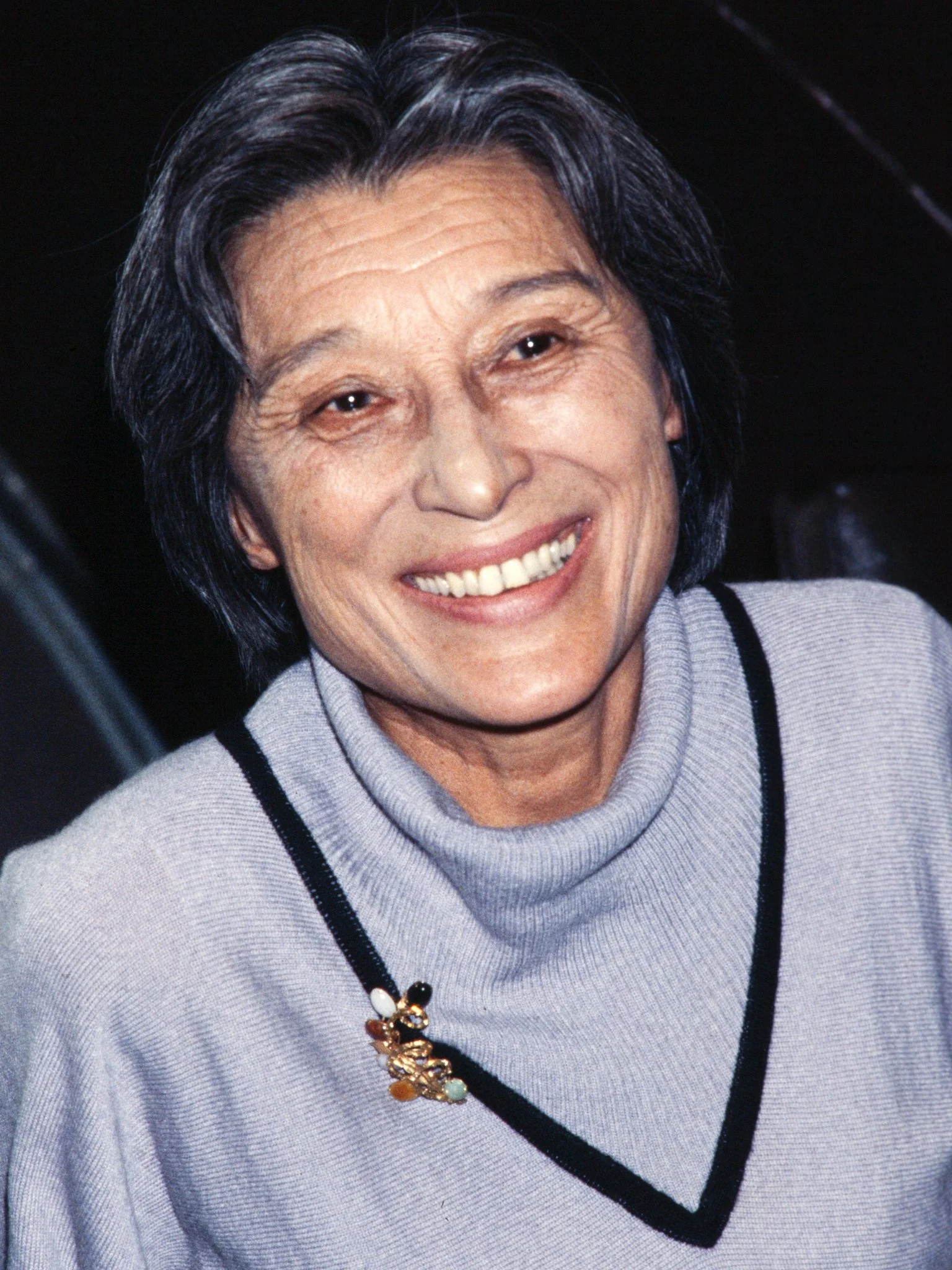
Han Suyin
 China
ChinaAlso known as: Elizabeth Comber, Rosalie Matilda Kuanghu Chou
Birthday
September 12, 1917
Birth Sign
Virgo
Birthplace
Xinyang, Henan, China
Age
Died at 95
About
Han Suyin was a Chinese-born Eurasian physician and author whose 1952 autobiographical novel A Many-Splendoured Thing made her an international literary sensation. Born Rosalie Matilda Kuanghu Chou in Xinyang, China, she wrote extensively in English and French about modern China, blending personal memoir with sweeping political history. Her work reached millions of readers and was adapted into a Hollywood film. She died on November 2, 2012, in Lausanne, Switzerland, at age 95.
Throughout her life, Han Suyin practiced medicine while writing, serving as a physician in Hong Kong and Malaysia. Her dual career gave her a unique vantage point, and she became a prominent public intellectual who offered Western audiences a window into Mao's China. She was a fervent advocate for the Chinese Communist Revolution, a stance that drew both admiration and criticism. Her legacy includes a multi-volume memoir series and a lasting influence on literature about East-West encounters.
Early Life & Background
Han Suyin grew up in a bilingual, bicultural household in China, the daughter of a Chinese railway engineer and a Belgian mother. This Eurasian heritage shaped her identity and later infused her writing with themes of cultural displacement and belonging. She studied medicine at Yenching University in Beijing, then continued her training in Brussels and at the University of London.
Her medical education was interrupted by World War II, during which she worked in war-time London. In 1949, she moved to Hong Kong with her first husband, where she practiced medicine and began writing. Her early experiences in colonial Hong Kong, including a doomed love affair with an Anglo-Irish journalist, provided the raw material for her breakthrough novel.
Career Growth
Han Suyin's breakthrough came in 1952 with the publication of A Many-Splendoured Thing, an autobiographical novel drawn from her life in Hong Kong and her love affair with journalist Mark Young. The book became an international bestseller and was adapted into the 1955 Hollywood film Love Is a Many-Splendored Thing, starring Jennifer Jones and William Holden. The film's theme song won the Academy Award for Best Original Song.
Following this success, she published extensively, including the novels And the Rain My Drink (1956) and her multi-volume autobiography: The Crippled Tree (1965), A Mortal Flower (1966), Birdless Summer (1968), and My House Has Two Doors (1980). She became an unofficial spokeswoman for China during the Cold War, writing glowing accounts of Mao's regime that later drew criticism. She settled in Lausanne, Switzerland, where she continued writing and practicing medicine until her death.
Career Timeline
Public Image & Style
Han Suyin's public image was that of a Eurasian intellectual bridging East and West, a physician-writer who offered Western audiences insight into modern China. She was portrayed in the media as both a romantic figure, due to A Many-Splendoured Thing, and a controversial political apologist for Mao's regime. Her writing style was autobiographical, deeply personal, and politically engaged. She had no formal fandom name or organized fan culture; her readership consisted primarily of literary and politically interested audiences. In her later years, she was known for her grand, dignified presence in Lausanne.
Fame & Fandom (iFAMOUS Rankings)
Han Suyin remains a figure of significant historical weight, though her current standing in global celebrity metrics reflects the natural trajectory of a mid-20th century literary icon rather than contemporary viral fame. As of August 2026, iFANN has evaluated her profile and determined that she does not currently hold a placement within the Global Top 1,000 or any specific top-tier scope list, meaning no ordinal rank is assigned to her present-day visibility. This absence from the active rankings aligns with her status as a deceased author whose primary cultural resonance stems from a singular, massive bestseller and its film adaptation rather than sustained modern media consumption. Her audience consists of readers engaged with political history, medical memoirs, and Eurasian studies, a demographic that does not generate the continuous engagement signals required for current chart inclusion. While there is no formal fandom name documented for her supporters, nor are there organized campaigns, fan rituals, or interactive social movements dedicated to her legacy, her work maintains a steady presence through academic citation and literary prizes. The enduring interest in her life is characterized by scholarly retrospectives on her controversial political alignments and her unique role as a physician-writer bridging East and West. Unlike living stars who rely on constant public appearances, Han Suyin's fame is anchored in the static but powerful impact of A Many-Splendoured Thing, which continues to be studied and referenced long after her passing. The lack of a numeric ranking underscores that her influence operates in the realm of historical record rather than real-time popularity contests.
Interesting Facts and Legends
Born Rosalie Matilda Kuanghu Chou, Han Suyin was a trilingual writer who composed works in English and French while speaking Chinese, with her pen name translating roughly to 'the sound of the Han people.' She maintained a dual career as a practicing physician in Hong Kong and Malaysia throughout her literary life, a fact that often surprises those familiar only with her novels. Her birth year remains a subject of minor dispute, with some authoritative sources citing 1916. The theme song from the 1955 film adaptation of her novel became an international standard and won an Academy Award. In her later years residing in Lausanne, she was frequently described as 'a splendid grande dame.' Beyond these established facts, a persistent legend surrounds her complex political identity; despite her mixed heritage and humanitarian medical work, she became a staunch advocate for Mao Zedong, a stance that generated decades of debate regarding her willingness to overlook the excesses of the Cultural Revolution. Another iconic moment in her biography involves the sheer scale of her early success, where the 1953 publication of A Many-Splendoured Thing catapulted her into immediate international stardom, a feat rarely achieved by first-time authors without prior industry connections. Following her death in November 2012 at age 95, her legacy was further cemented by the establishment of the Han Suyin Literary Prize by Boston University, ensuring her voice remains part of ongoing dialogues on cross-cultural understanding.
Notable Quotes
“There is nothing stronger in the world than gentleness.”
Family & Personal Life
Han Suyin was born to a Chinese railway engineer father and a Belgian mother, a background that gave her a unique bicultural upbringing. She had two daughters, one from each of her two marriages. Her first husband, Tang Pao-huang, a Chinese Nationalist officer, was killed in 1947 while fighting communist forces in Manchuria. Her second husband, Leon Comber, was a British publisher; they divorced in 1958. In her later years, she lived in Lausanne, Switzerland, where she died in 2012.
Notable Connections
Han Suyin's life intersected with several notable figures. Her second husband, Leon Comber, was a British publisher. Her first husband, Tang Pao-huang, was a Chinese Nationalist officer. The journalist Mark Young inspired the central romance in A Many-Splendoured Thing. The 1955 film adaptation starred Jennifer Jones and William Holden.
Relationships & Dating History
Han Suyin's first marriage was to Tang Pao-huang, a Chinese Nationalist officer, in the 1940s. He was killed in Manchuria in 1947, leaving her a widow with a daughter. In the early 1950s, she married Leon Comber, a British intelligence officer and later publisher; they divorced in 1958. That marriage produced a second daughter. The central romantic relationship of her life, with Anglo-Irish journalist Mark Young, occurred in Hong Kong in the early 1950s and inspired A Many-Splendoured Thing. She was not married at the time of her death in 2012.
- MarriedTang Pao-huang1940 - 1947Chinese Nationalist officer; killed in Manchuria in 1947.
- RumouredMark Young1950 - 1952Anglo-Irish journalist; subject of A Many-Splendoured Thing.
- MarriedLeon Comber1952 - 1958British publisher; divorced in 1958.
Death & Aftermath
Died
November 2, 2012 (aged 95)
Death Place
Unknown
Cause of Death
Unknown
Han Suyin, the pen name of Rosalie Matilda Kuanghu Chou, passed away on November 2, 2012, at the age of 95. While she had lived in Lausanne, Switzerland, for many years, specific details regarding the exact location of her passing, the official medical cause, or the circumstances of her final days remain absent from available records.
Public reaction to her death featured tributes from major publications such as The Guardian and the New York Times, which highlighted her dual identity as a physician and a prolific author whose career spanned continents and decades of historical upheaval. The Los Angeles Times described her as a writer whose commercial success fueled a prolific career. Discussions persisted regarding her controversial political views and support for Mao Zedong during the Cold War, yet the immediate public response focused on her literary contributions. Arrangements for her funeral or burial were not documented in the provided sources, and no information exists regarding the date, location, or nature of any service held in her memory.
Posthumously, Han Suyin's legacy has been maintained through academic recognition and the establishment of prizes dedicated to translation. Boston University established the Han Suyin Literary Prize, awarded annually to two students for the best literary translations from Chinese into English. Her works, including Love Is a Many-Splendored Thing and biographies such as Zhou Enlai: A Biography, continue to be referenced in academic and literary contexts. The provided search results do not contain information on how her estate was handled, nor do they mention specific foundations, scholarships, or family statements released after her death beyond general biographical recollections.
Net Worth (Estate Value)
$5 Million
iFANN Editorial Team estimate
The estate of Han Suyin, administered by her two daughters, generates consistent revenue streams from her extensive bibliography, most notably the enduring sales of A Many-Splendoured Thing and her multi-volume memoirs. Licensing fees from the 1955 film adaptation and its Oscar-winning theme song continue to contribute to the family trust, alongside royalties from translations distributed across numerous languages. Per iFANN's editorial analysis, the total value of her estate is estimated at $5 Million as of 2026, a figure that reflects the lasting commercial viability of her most celebrated works and the persistent academic interest in her contributions to literature and political discourse.
Awards Won (1)
Han Suyin received relatively few formal awards compared to her literary fame. Her primary recognition came through the commercial and critical success of her books, particularly the film adaptation of A Many-Splendoured Thing, and her status as a prominent public intellectual. She was awarded honorary doctorates from several universities, though specific institutions are not well documented.
1955 · Best Original Song
Love Is a Many-Splendored Thing (theme song)
Known For
A Many-Splendoured Thing
1952 · Author
Love Is a Many-Splendored Thing
1955 · Book source
The Crippled Tree
1965 · Author
A Mortal Flower
1966 · Author
Birdless Summer
1968 · Author
Keywords
Sources
Quick Facts
- Profession
- Physician, Author
- Born
- September 12, 1917
- Birthplace
- Xinyang, Henan, China
- Died
- November 2, 2012
- Death Place
- Lausanne, Switzerland
- Gender
- Female
- Spouse
- Leon Comber
- Birth Sign
- Virgo
Personal Details
- Full Name
- Rosalie Matilda Kuanghu Chou
- Spouse
- Leon Comber
- Children
- Two daughters
- Education
- Yenching University, University of London
Frequently Asked Questions
Who was Han Suyin?
What is Han Suyin's net worth in 2026?
Was Han Suyin married to a Chinese general?
Why was Han Suyin controversial?
Is Han Suyin the same person as the actress Han Suyin?
Similar People
Join the community
fans discussing