
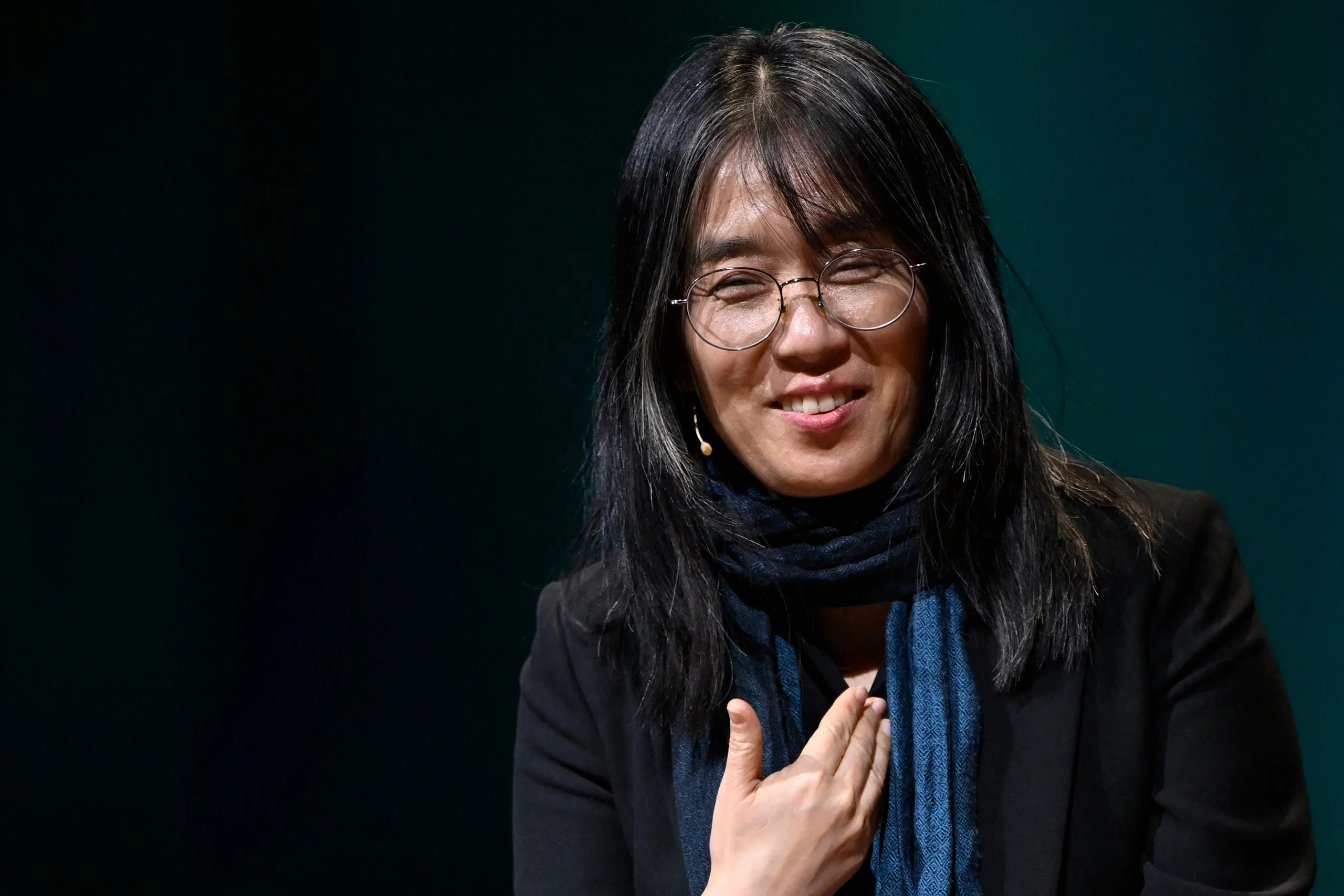
Han Kang
 South Korea
writer•novelist•short story writer
Also known as: Han Gang
Birthday
November 27, 1970
Birth Sign
Sagittarius
Birthplace
Gwangju, South Korea
Age
55 years old
About
Han Kang is a preeminent contemporary South Korean writer whose work has fundamentally reshaped the global understanding of modern Korean literature. She is best known for her intense, poetic prose that confronts historical traumas, violence, and the fragility of human life. In October 2024, she made history as the first Asian woman and the first Korean author to receive the Nobel Prize in Literature. Her career trajectory moved from poetry to experimental fiction, with her novel The Vegetarian becoming the first Korean-language book to win the International Booker Prize in 2016.
Today, Han Kang remains one of the most significant voices in world literature. She continues to live in Seoul where she writes novels, essays, and poetry that explore the intersections of memory, grief, and bodily autonomy. Her influence extends beyond the page through adaptations of her work into theater and film, cementing her status as a cultural figure who bridges the gap between high literature and broader artistic expression. Recent projects include the 2026 collection Light and Thread, described as a meditation on language, and theatrical adaptations like The Tear Box.
Early Life & Background
Born on November 27, 1970, in Gwangju, Han Kang grew up in a city that would become central to South Korea's democratic movement. Her childhood was deeply shaped by the political turbulence of the 1980s, specifically the 1980 Gwangju Uprising, where state forces violently suppressed pro-democracy protests. This event became a defining trauma for the nation and a recurring motif in her writing. The atmosphere of fear and loss permeated her early years, influencing her worldview before she ever picked up a pen for publication.
She attended Seoul National University, where she studied literature and began to hone her craft. Before achieving global fame, Han spent over a decade teaching creative writing at the Seoul Institute of the Arts from 2007 to 2018. During this period, she mentored a generation of new authors while continuing to develop her own voice. Her early career was rooted in poetry, with her first poems published in 1993. She transitioned to prose later, marking a shift toward experimental fiction that blended surrealism with stark realism. The breakthrough moment came with the publication of her short story collection The Chrysanthemums, which won the Yi Sang Literary Prize in 2002, establishing her reputation within South Korea before she expanded her reach internationally.
Career Growth
Han Kang's career is defined by a series of historic milestones that have elevated her from a respected domestic author to a global literary icon. After winning the Yi Sang Literary Prize in 2002, she continued to build her portfolio with works like Human Acts in 2011, a powerful novel addressing the 1980 Gwangju Uprising that solidified her status as a major voice on historical memory and state violence. In 2014, she published The White Book, an essay-novel exploring themes of death and grief through the lens of her sister's funeral.
The turning point for international recognition arrived in 2016 with the publication of The Vegetarian. Translated by Deborah Smith, the novel gained immediate acclaim and won the International Booker Prize, making Han the first Korean author to receive the award. This success sparked global debates regarding gender, bodily autonomy, and societal conformity. She retired from teaching in 2018 to focus full-time on writing. In October 2024, she was awarded the Nobel Prize in Literature for her "intense poetic prose that confronts historical traumas and exposes the fragility of human life." As of 2026, she remains active with the release of Light and Thread and various theatrical adaptations of her work.
Career Timeline
Public Image & Style
Han Kang is described as maintaining a low profile, avoiding the celebrity circuit common to many prize winners. Her public image is defined by her intellectual rigor and the emotional weight of her work. She is often portrayed as a serious, contemplative figure who uses her platform to discuss trauma, memory, and the power of language rather than personal lifestyle or fashion. Her signature aesthetic is one of quiet intensity, reflected in her sparse, lyrical prose style. Critics and readers alike view her as a moral conscience in literature, one who does not shy away from difficult subjects. She is frequently cited as a bridge between literature and performance arts, collaborating with figures like Isabelle Huppert.
Fame & Fandom
Han Kang's fanbase is not the kind that gathers under a banner or floods streaming charts. It is a global community of readers, critics, and academics who have quietly turned her into one of the most consequential literary voices of our time, without a formal fandom name, without fan clubs, without the rituals of pop culture. Her readers express devotion through book purchases and deep engagement with her themes of trauma, tenderness, and the human condition. The loyalty is measurable: over the past decade, her fictional works alone outsold the entire catalog of Japanese bestseller Keigo Higashino at South Korea's largest bookstore chain, a remarkable feat for a novelist.
In the iFANN Global Fame Rankings, Han Kang currently holds the 40th most famous person in South Korea, holding steady from the previous cycle. She is also the 90th most famous person in East Asia, reflecting a fame built on literary merit and historic achievement rather than viral moments. Her iconic moments are not viral stunts but historic milestones like the Nobel Prize in Literature in 2024, which transformed her from a respected author into a global cultural figure.
Interesting Facts and Legends
A lesser-known fact is that she closed her own bookstore in July 2026 after eight years of operation, a decision attributed to broader real estate pressures in South Korea rather than a lack of support for her work. Her connection to the color white is profound; The White Book explores the symbolism of white in relation to death and mourning, inspired by her sister's funeral. In August 2026, it was reported that The Vegetarian had topped offline bookstore sales charts in South Korea for a cumulative total of 450,000 copies over the preceding decade. She contributed the poem A Very Small Snowflake to The New Yorker in early 2026. Additionally, her novel We Do Not Part was featured in a reading at the Seoul Performing Arts Festival in September 2026.
Notable Quotes
“I write because I want to understand the world, and to make others understand it too.”
“The body is a site of resistance.”
“This award belongs to all those who have suffered and survived.”
Family & Personal Life
Han Kang has a sister whose funeral inspired the themes in The White Book, though specific details about other siblings or parents are not publicly disclosed. She is reported to be living in Seoul as of 2026, continuing her work as a novelist. While she maintains a notably private personal life, the emotional core of her family history remains central to her artistic output. Her privacy stands in contrast to the intense public interest generated by her literary achievements. Specific anecdotes regarding her household pets or extended family stories remain unrecorded in public archives.
Notable Connections
Relationships & Dating History
Han Kang maintains a notably private personal life, rarely discussing her romantic history in public interviews. According to available biographical data, she is married to Yong-hee Hong. The couple has remained out of the spotlight, and there are no widely publicized details regarding their courtship, wedding date, or children. There are no credible reports of divorce, separation, or other public romantic relationships prior to or during her marriage to Hong. As of 2026, she is reported to be living in Seoul, continuing her work as a novelist. Her privacy stands in contrast to the intense public interest generated by her literary achievements.
- MarriedYong-hee HongCurrentRemains private; no public details on courtship or children.
Salary, Net Worth In 2026
$2 Million
iFANN Editorial Team estimate
iFANN currently estimates Han Kang's net worth at approximately $2 Million. This figure reflects her earnings from book royalties, translation rights, and speaking engagements following her historic Nobel Prize win. While specific financial details are not publicly disclosed, her wealth is derived primarily from the sustained global sales of The Vegetarian, which has sold hundreds of thousands of copies across multiple languages. Additional income streams include lecture appearances and the licensing of her works for theatrical adaptations. Her financial standing is considered secure and significant within the literary community, supported by the enduring popularity of her novels.
Awards Won (5)
Han Kang's accolades represent some of the highest honors in the literary world. She won the Yi Sang Literary Prize in 2002, the International Booker Prize in 2016, the Manhae Prize for Literature in 2016, and the Prix Médicis Étranger in 2017. In 2024, she received the Nobel Prize in Literature, becoming the first Asian woman and first Korean author to do so. Her contributions to literature have been recognized with numerous critic awards in 2026.
2002 · Short Story Collection
The Chrysanthemums
2016 · Fiction
The Vegetarian
Known For
The Vegetarian
2016 · Author
Human Acts
2011 · Author
The White Book
2014 · Author
Keywords
Sources
Quick Facts
- Profession
- writer, novelist, short story writer
- Born
- November 27, 1970
- Birthplace
- Gwangju
- Gender
- Female
- Spouse
- Yong-hee Hong
- Birth Sign
- Sagittarius
Personal Details
- Full Name
- Han Kang
- Spouse
- Yong-hee Hong
- Children
- Education
- Seoul National University
Frequently Asked Questions
What did Han Kang win the Nobel Prize for?
Is Han Kang married?
What is Han Kang's most famous book?
Where was Han Kang born?
Does Han Kang have a formal fandom?
Social Media
Similar People
Join the community
fans discussing