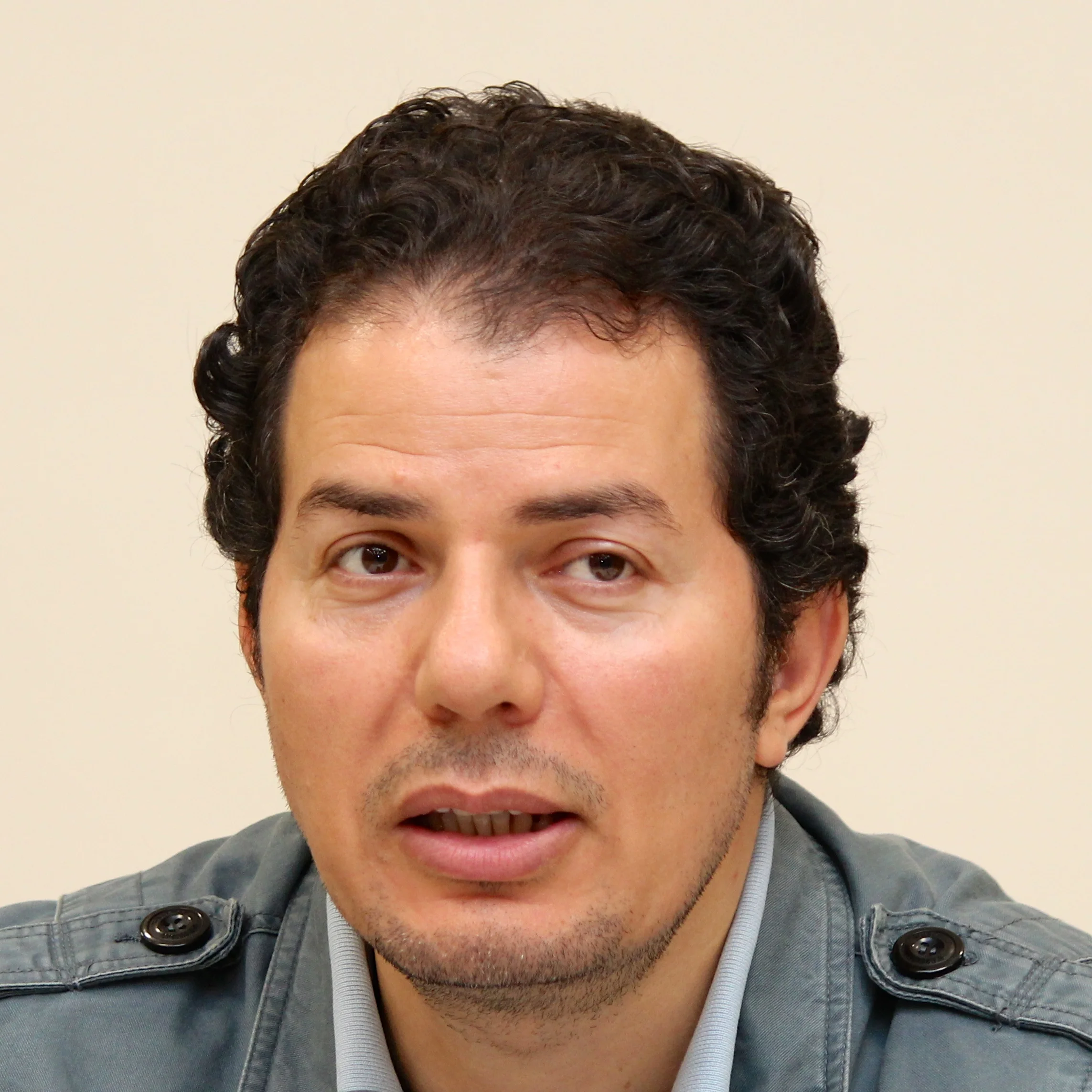
Hamed Abdel-Samad
 Egypt
Egyptwriter•autobiographer•historian
Birthday
February 1, 1972
Birth Sign
Aquarius
Birthplace
Giza, Egypt
Age
54 years old
About
Hamed Abdel-Samad is a German-Egyptian author, political scientist, and historian, widely recognized as one of Europe's most outspoken critics of political Islam. Born in Giza, Egypt, he has built a career on dissecting Islamic theology and its intersection with modernity, drawing on his own upbringing in a devout Muslim household and his later departure from the faith.
His books, including the bestseller Islamic Fascism and the autobiographical My Farewell to Heaven, have sparked intense debate across Europe and the Middle East. As of 2026, he remains an active public intellectual, contributing to major media outlets, lecturing internationally, and engaging in high-profile debates. His work has earned him both fervent admiration from secularists and harsh criticism from conservative Muslim communities, making him a polarizing yet influential voice in contemporary discourse.
Early Life & Background
Hamed Abdel-Samad was born on February 1, 1972, in Giza, Egypt, the third of five children in a devout Sunni Muslim family. His father served as a cleric, and the household was steeped in traditional Islamic practice and education. From an early age, Abdel-Samad was immersed in religious study, attending local Quranic schools and absorbing the teachings that would later become the focus of his critique.
He pursued higher education at Al-Azhar University in Cairo, one of the most prestigious centers of Islamic learning in the world, where he earned a degree in Islamic studies. During this period, he was deeply committed to his faith, describing himself as a radical Muslim who fully embraced the doctrines he was taught.
His trajectory shifted when he moved to Germany for further studies in political science and history. Exposure to Western intellectual traditions, combined with his academic work, prompted a painful process of self-examination that eventually led him to renounce Islam. Before his breakthrough as an author, he worked for UNESCO in Geneva and within Islamic studies departments, gaining an institutional perspective on how Islam was taught and practiced globally. This combination of personal experience and scholarly insight would become the foundation of his later work.
Career Growth
Abdel-Samad's literary career began in 2008 with the publication of Der Untergang der islamischen Welt (The Decline of the Islamic World), which predicted the decline of Islamic civilization and introduced his critical perspective to a German-speaking audience. However, it was his 2010 autobiography, My Farewell to Heaven, that marked his true breakthrough. The book detailed his childhood, religious upbringing, and eventual departure from Islam, becoming a commercial success and being translated into multiple languages, including Arabic, where it was published as وداعا أيتها السماء (Farewell, Heaven).
In 2012, he published Islamic Fascism, a provocative work drawing parallels between Islamist movements and European fascism. The book became a bestseller in Germany and solidified his reputation as a leading critic of political Islam. He continued this trajectory with The Koran: A Biography in 2017, which treated the Quran as a historical document rather than divine revelation.
Beyond his books, Abdel-Samad has been a prominent voice in public debates, including the 2017 NZZ Standpoints series where he argued that "Islam and freedom contradict each other." He has appeared on major German television programs, including "Talking Germany" on Deutsche Welle, and continues to publish, lecture, and engage in media commentary across Europe.
Career Timeline
Public Image & Style
Abdel-Samad presents himself as a rational, secular intellectual who critiques Islam from within, using his own biography as a former Muslim as a credibility anchor. His tone is analytical but passionate, often confrontational in debates. German media portray him as either a courageous truth-teller or a provocative figure, depending on the outlet.
He does not have a formal fandom name, but his audience consists of secularists, ex-Muslims, and critics of political Islam who follow his work through books, debates, and social media. His social media voice is sharp and combative, focused on political and religious critique, and his appearances generate significant engagement and controversy.
Fame & Fandom
Hamed Abdel-Samad is currently evaluated by the iFANN Global Fame Engine but does not hold a placement in the published rankings. While he commands a dedicated following among secularists, ex-Muslims, and critics of political Islam, his audience lacks a formal name or organized structure typical of pop culture icons. There are no fan rituals, billboards, or crowds shutting down streets in his honor; instead, his influence flows through book sales, podcast listenership, and engagement on platforms like X where he maintains over 54,000 followers. The mythology surrounding him is strictly intellectual rather than performative, rooted in his biographical journey from a radical Muslim upbringing to becoming one of Europe's most vocal critics of Islamism. Fans and detractors alike retell the story of his transformation detailed in his memoir, *My Farewell to Heaven*, which chronicles his shift from the son of an imam to a secular thinker who argues that freedom and Islam contradict each other. This narrative serves as his primary legend, framing his public persona around the courage required to challenge deeply held beliefs. Other defining moments include his 2010 declaration in *Der Spiegel* that "Islam is like a drug," a quote that remains central to debates about his views, and his 2020 alignment with voices supporting Israel, which cemented his status as a polarizing figure. His legacy is built on provocative publications like *Islamic Fascism* and his role as a solitary voice confronting jihadism, generating intense debate rather than fan worship. The iFANN evaluation reflects this unique position: a global intellectual presence without a traditional celebrity rank.
Interesting Facts and Legends
Before rising as a prominent critic, Hamed Abdel-Samad was once a radical Muslim, a background that informs his analysis of Islamic theology. His first book, *The Decline of the Islamic World*, predicted the fall of Islamic civilization, a theme he has revisited throughout his career. He worked for UNESCO in Geneva, gaining institutional experience in Islamic affairs before turning to public critique. His autobiography, *My Farewell to Heaven*, was translated into Arabic and sold in Egypt, making him a controversial figure in his home country despite his German citizenship. The book *Islamic Fascism* drew intentional parallels between Islamism and European fascism, a deliberately provocative framing that sparked intense debate. He joined X (formerly Twitter) on June 21, 2013, building a following of over 54,000 users. A widely retold story in his lore involves his 2010 interview with *Der Spiegel* where he famously stated that "Islam is like a drug," a quote that became a central reference point in discussions about his views. Another key moment was the release of his memoir in 2009 under the title "This Cursed Freedom," which established the foundational narrative of his life as a former radical turned secularist. His 2014 publication *Mohamed: Eine Abrechnung* marked a significant shift toward post-Salafist critique, further complicating his relationship with various communities.
Notable Quotes
“Islam and freedom contradict each other.”
“My journey from radical Muslim to critic was a painful process of self-examination.”
Family & Personal Life
Hamed Abdel-Samad was the third of five children in a deeply religious Sunni Muslim family. His father was a cleric, and the household was centered on traditional Islamic practice. He has described his relationship with his family as strained following his departure from Islam, a theme he explores in his autobiographical works.
As of 2026, he resides in Germany, but details about his current household, including a spouse or children, are not publicly documented. He maintains a high degree of privacy regarding his personal life, focusing public attention on his intellectual work.
Notable Connections
Hamed Abdel-Samad is associated with several figures and institutions. Peter Craven, host of "Talking Germany" on Deutsche Welle, interviewed him about Islam and German policy. Michael Kuenne wrote a Times of Israel blog post analyzing Abdel-Samad's trajectory. The Swiss outlet NZZ (Neue Zürcher Zeitung) hosted his 2017 debate appearances.
Relationships & Dating History
Public information about Hamed Abdel-Samad's romantic relationships is extremely limited. He has maintained a high degree of privacy regarding his personal life, and no credible public sources document specific romantic partners, marriages, or divorces.
His public persona is almost exclusively focused on his intellectual and literary work rather than his private affairs. As of 2026, his relationship status cannot be confirmed from credible sources, and he has not publicly disclosed being married, engaged, or in a relationship.
Salary, Net Worth In 2026
$5 Million
iFANN Editorial Team estimate
As of 2026, Hamed Abdel-Samad's net worth is estimated at $5 Million according to research by the iFANN Editorial Team. His income primarily derives from book royalties, with several of his titles, including *Islamic Fascism* and *My Farewell to Heaven*, achieving bestseller status in German-speaking markets. He also earns from speaking fees as a sought-after public speaker and debate participant across Europe, as well as from contributions to outlets like *The Globalist* and German media. While specific figures are not publicly disclosed, his sustained career as a public intellectual and author supports this estimate.
Awards & Accolades
Known For
Islamic Fascism
2012 · Author
My Farewell to Heaven
2010 · Author
The Koran: A Biography
2017 · Author
Keywords
Sources
Quick Facts
- Profession
- writer, autobiographer, historian
- Born
- +1972-02-01
- Birthplace
- Giza, Egypt
- Gender
- Male
- Birth Sign
- Aquarius
- Nationality
- German-Egyptian
Personal Details
- Education
- Al-Azhar University, Cairo; further studies in political science and history in Germany
Frequently Asked Questions
Is Hamed Abdel-Samad an atheist?
What happened to Hamed Abdel-Samad's family?
Where does Hamed Abdel-Samad live?
What is Hamed Abdel-Samad's most famous book?
Why is Hamed Abdel-Samad controversial?
Social Media
Similar People
Join the community
fans discussing