 Iceland
About
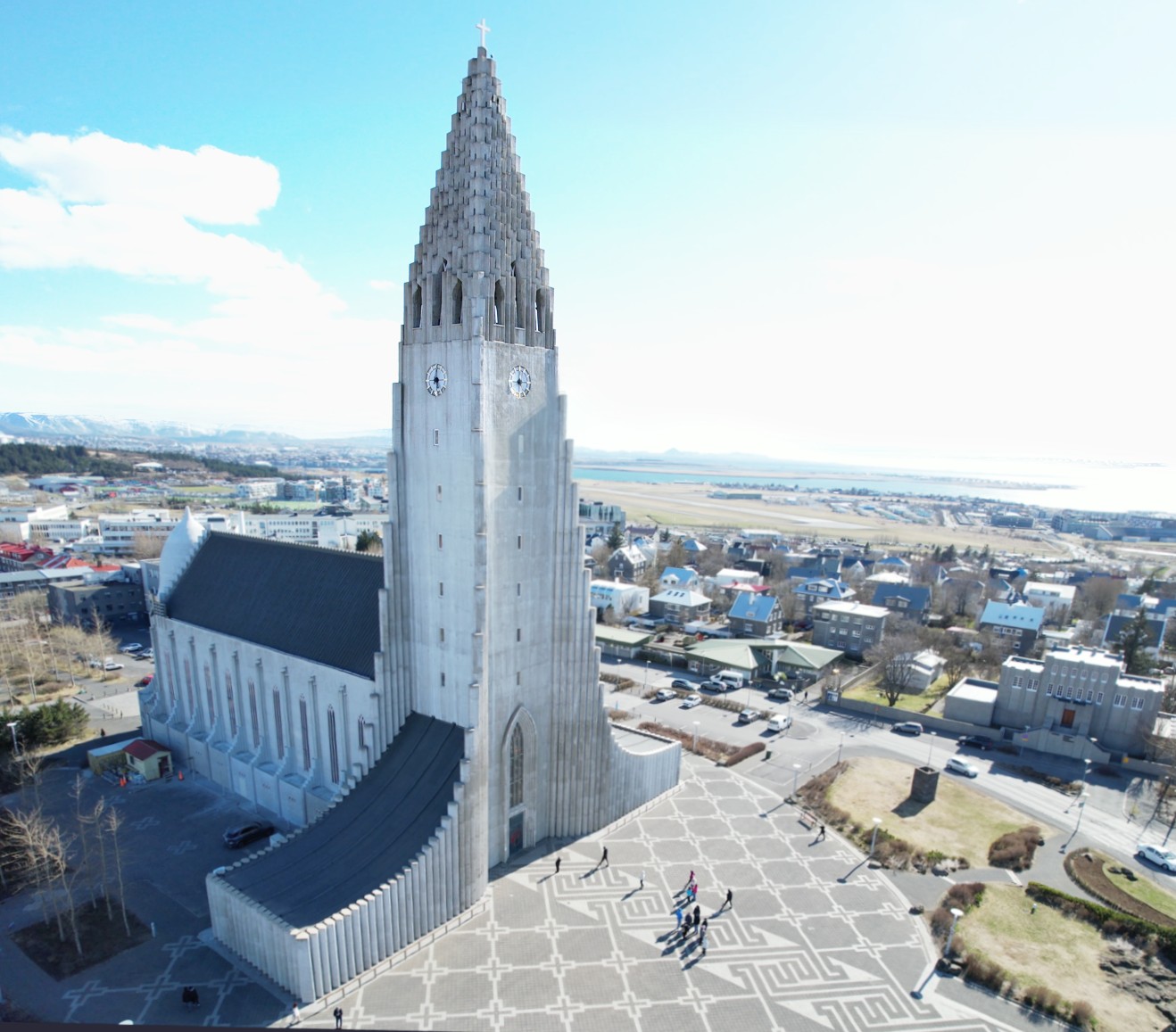
Hallgrímskirkja is a Lutheran parish church in Reykjavík, Iceland, and one of the country's most recognizable landmarks. Its dramatic, sweeping facade and towering spire make it a striking presence on the city's skyline. The church stands 74.5 meters (244 feet) tall, making it the largest church in Iceland and the second-tallest building in the country. It was designed by state architect Guðjón Samúelsson, who drew inspiration from the basalt lava flows that shape Iceland's dramatic landscapes. Construction began in 1945 and took over four decades to complete, with the church finally consecrated in 1986. The building is named after Hallgrímur Pétursson, a 17th-century Icelandic poet and minister best known for his Passion Hymns.
While Hallgrímskirkja is primarily a place of worship for the Church of Iceland, it also serves as a major tourist attraction. Visitors can take an elevator to the top of the tower for panoramic views of Reykjavík and the surrounding mountains. The church's distinctive architecture has made it a symbol of Icelandic national identity, and it has been featured in countless photographs, films, and artworks.
Mission
Hallgrímskirkja serves as a living parish church, providing regular worship services, pastoral care, and a vibrant community for its congregation. Beyond its religious role, it opens its doors to thousands of visitors each year, offering a space for reflection, cultural events, and a panoramic view of the capital. The church strives to be a welcoming landmark, bridging faith, history, and Icelandic heritage.
History
The idea for a grand church on the Skólavörðuholt hill took shape in the early 20th century, and Guðjón Samúelsson, Iceland's State Architect, was commissioned to design it. His design, inspired by the hexagonal basalt columns found in Icelandic landscapes such as Svartifoss, was approved in 1937. Construction began in 1945, but progress was slow due to funding constraints and the lengthy construction process. The crypt was completed in 1948, the nave in 1962, and the tower in 1974, just in time for Iceland's 1,100th anniversary of settlement. The church was consecrated on October 26, 1986, marking the completion of over four decades of work.
Named for the 17th-century poet and minister Hallgrímur Pétursson, the church has always carried a deep cultural resonance. Pétursson's Passion Hymns, a cycle of 50 poems on the Passion of Christ, have been central to Icelandic Lutheran devotional life for centuries. The church's design, echoing the volcanic basalt formations that define Iceland's landscape, makes it a physical embodiment of the nation's natural heritage.
Notable People
Guðjón Samúelsson
Architect · 1937-1950
Designed Hallgrímskirkja and other major Icelandic landmarks
Hallgrímur Pétursson
Namesake · 1614-1674
Author of the Passion Hymns, cornerstone of Icelandic Lutheran spirituality
Milestones
1937
Design by Guðjón Samúelsson approved
1945
Construction begins
1948
Crypt completed
1962
Nave completed
1974
Tower completed
1986
Church consecrated on October 26
1992
Great organ installed
Sources
Organization Info
- Founded
- 1986-10-26
- Headquarters
- Hallgrímstorg 1, 101 Reykjavík, Iceland
- Country
- Iceland
- Parent
- Church of Iceland
- Type
- Religious
- Height
- 74.5 meters
- Architect
- Guðjón Samúelsson
- Organ
- 5,275 pipes, 72 stops
Official Website
www.hallgrimskirkja.is/
Join the community
fans discussing