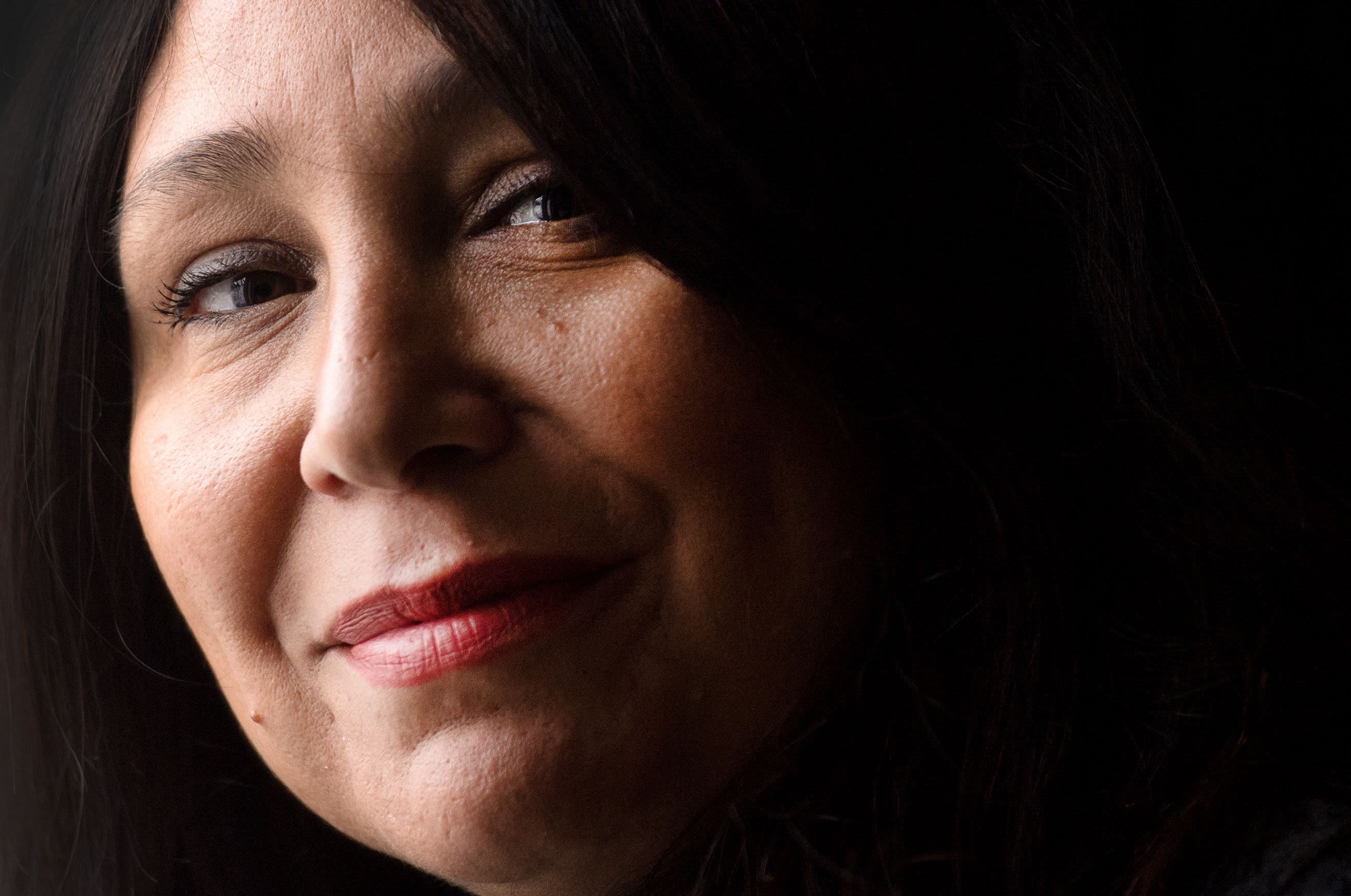
Haifaa al-Mansour
 Saudi Arabia
Also known as: Haifaa Al Mansour
Birthday
August 10, 1974
Birth Sign
Leo
Birthplace
Al Zulfi governorate, Saudi Arabia
Age
52 years old
About
Haifaa al-Mansour is a Saudi Arabian film director and screenwriter who made history as the first female filmmaker to direct a feature film in her home country. Born on August 10, 1974, in the Al Zulfi governorate, she has spent her career navigating strict gender segregation to tell stories about women's agency within Saudi society. Her work often explores themes of tradition versus modernity and individual freedom.
As of 2026, al-Mansour remains an active force in global cinema, balancing her role as a cultural pioneer with her ongoing projects. She is best known for her 2012 debut Wadjda, which opened doors for future generations of Saudi artists, and her recent 2026 thriller Unidentified. Her influence extends beyond directing; she serves as a vocal advocate for women in the industry and a symbol of the Kingdom's rapid cultural transformation.
Early Life & Background
Haifaa al-Mansour was born into a family in Al Zulfi, a town located north of Riyadh in Saudi Arabia. Growing up during a period defined by rigid gender roles and limited cultural expression for women, she found her early escape in literature. The restrictions placed on women at the time meant that opportunities for creative pursuits were scarce, yet she pursued her education with determination. She eventually traveled to Egypt to attend the American University in Cairo, where she earned a Bachelor of Arts degree in English Literature.
This academic background became the foundation for her narrative style, heavily influencing her approach to character-driven dramas. Before turning her attention to the camera, she honed her storytelling skills through writing and reading. Her early interest in documenting the lives of people around her led her to pick up a camera for the first time in the early 2000s. She began creating short documentaries to explore identity and social issues, starting with Who Am I? in 2004. These early works allowed her to develop a voice that could operate within the constraints of her environment while still pushing boundaries. By 2009, she had completed the feature-length documentary Women Without Shadows, which examined the hidden lives of women in Saudi Arabia. This body of short work prepared her for the monumental task of directing a full-length narrative feature.
Career Growth
The breakthrough moment for Haifaa al-Mansour arrived in 2012 with the release of Wadjda. This drama told the story of a young girl dreaming of buying a bicycle, a simple desire that challenged the conservative norms of her neighborhood. The production required clandestine measures; because women were not legally permitted to drive at the time, al-Mansour drove the camera crew herself, often concealing her identity from authorities. The film became the first feature shot entirely within Saudi Arabia and the first directed by a woman. It premiered at the Cannes Film Festival in the Un Certain Regard section and served as Saudi Arabia's official submission for the Best Foreign Language Film Oscar.
Following this success, al-Mansour expanded her reach into international television, directing episodes of the anthology series The Cut in 2014 and the Starz series American Gods in 2017. She returned to feature films in 2019 with The Perfect Candidate, a comedy-drama about a female doctor running for municipal council. This film further cemented her reputation as a chronicler of social change. In 2026, she released Unidentified, a murder mystery thriller exploring femicide and justice in contemporary Saudi Arabia. While reviews for this latest project were mixed compared to her earlier acclaim, it marked a significant shift toward darker genres in Saudi cinema and demonstrated her continued relevance in the evolving landscape of the region's film industry.
Career Timeline
Public Image & Style
Haifaa al-Mansour is portrayed as a courageous and visionary leader in the arts. Media coverage emphasizes her role as a bridge between traditional Saudi culture and modern global cinema. She is viewed as a symbol of hope and progress for women in the Middle East. Her signature style is professional and understated; she is rarely seen in the spotlight for fashion, preferring to let her work speak. Critics describe her as an auteur whose connection to the world is forged through her films rather than celebrity performance.
Fame & Fandom
Haifaa al-Mansour commands a distinct sphere of global attention, recognized not merely as a filmmaker but as a definitive cultural marker within her nation and the broader industry. Her standing is quantified by the iFANN Global Fame Rankings, which place her at the 16th most famous person from Saudi Arabia, a rank she has held steady through recent cycles. This placement reflects a sustained profile derived from extensive media coverage, search activity, and consumption signals worldwide, cementing her status as a pivotal figure in cinematic history. While her work resonates deeply with critics and scholars, her relationship with the public lacks the organized fervor typical of pop culture icons. There is no documented official name for any fanbase associated with her; her audience consists primarily of film enthusiasts and industry observers rather than a mobilized legion engaged in rituals or campaigns. She operates as an auteur whose connection to the world is forged through her films rather than celebrity performance, meaning her supporters engage with her legacy through critical discourse and appreciation of her art rather than through fan-driven phenomena.
Interesting Facts and Legends
During the filming of Wadjda, Haifaa al-Mansour famously drove the camera crew to locations because women were banned from driving in Saudi Arabia. She would often wear a niqab and sit in the back of the car to avoid detection by local police. This act of defiance became a foundational myth in Saudi cinematic history. Another iconic moment was the premiere of Wadjda at the Cannes Film Festival, which drew global attention to the kingdom's cultural awakening. Her work is widely credited with helping to pave the way for the opening of cinemas in Saudi Arabia in 2018. She also holds the distinction of being named one of the most influential people in the Middle East by Time magazine in 2012.
Notable Quotes
“I wanted to make a film that showed the world that we are not just victims, but we are people with dreams.”
“Filmmaking in Saudi Arabia has changed dramatically. We can now tell our own stories without hiding.”
“Saudi Arabia is a different place now. The silence is broken.”
Family & Personal Life
Haifaa al-Mansour maintains a notably private personal life and rarely discusses her family in public interviews. There are no verified records of her parents' names or professions in available sources, nor are there details about siblings. She has never publicly confirmed a spouse or children, and reports indicate she remains single as of 2026. Her focus has remained almost exclusively on her professional output and advocacy for women in the film industry. Unlike many public figures, she does not use social media to share personal updates about her household or relationships.
Notable Connections
Relationships & Dating History
Haifaa al-Mansour maintains a notably private personal life and does not frequently discuss her romantic relationships in interviews or on social media. There are no verified records of marriage, engagement, or publicized long-term partners in credible sources. She has never publicly confirmed a spouse or boyfriend. As of 2026, she is reported to be single. No children have been publicly attributed to her. Her focus remains almost exclusively on her professional output and advocacy for women in the film industry.
Salary, Net Worth In 2026
$5 Million
iFANN Editorial Team estimate
iFANN currently estimates Haifaa al-Mansour's net worth at approximately $5 million. This figure reflects her earnings from directing fees for major productions like Wadjda and The Perfect Candidate, as well as her executive producing roles and international distribution deals. Unlike many celebrities who rely on endorsements, her wealth stems primarily from film production and equity in her ventures. Specific financial details remain private due to her low profile regarding personal assets. Estimates vary based on speculative models, with some outlets suggesting a range between $1 million and $5 million, while industry analysts note her potential value as a key asset for Saudi Vision 2030 cultural projects may push her total closer to the higher end of that spectrum.
Awards Won (4)
Haifaa al-Mansour has received numerous nominations and honors, with her record of competitive award wins being modest but impactful. She won the Best Director Award at the Dubai International Film Festival and the Audience Award at the Toronto International Film Festival for Wadjda. She also received a Special Mention at the Berlin International Film Festival and the Best Arab Film award at the Fajr International Film Festival. She has been honored with honorary degrees and lifetime achievement awards for her contribution to cinema.
2012 · Dubai International Film Festival
Wadjda
2012 · Toronto International Film Festival
Wadjda
Known For
Wadjda
2012 · Director
The Perfect Candidate
2019 · Director
Unidentified
2026 · Director
Keywords
Sources
Quick Facts
- Profession
- film director, screenwriter
- Born
- August 10, 1974
- Birthplace
- Al Zulfi governorate
- Gender
- Female
- Birth Sign
- Leo
Personal Details
- Children
- Education
- Bachelor of Arts in English Literature, American University in Cairo
Filmography
8
Total
5
Film
3
TV
Frequently Asked Questions
Is Haifaa al-Mansour married?
How many movies has Haifaa al-Mansour directed?
What is Haifaa al-Mansour's net worth?
Did Haifaa al-Mansour drive the camera crew in Wadjda?
What is Haifaa al-Mansour's latest movie?
Similar People
Join the community
fans discussing