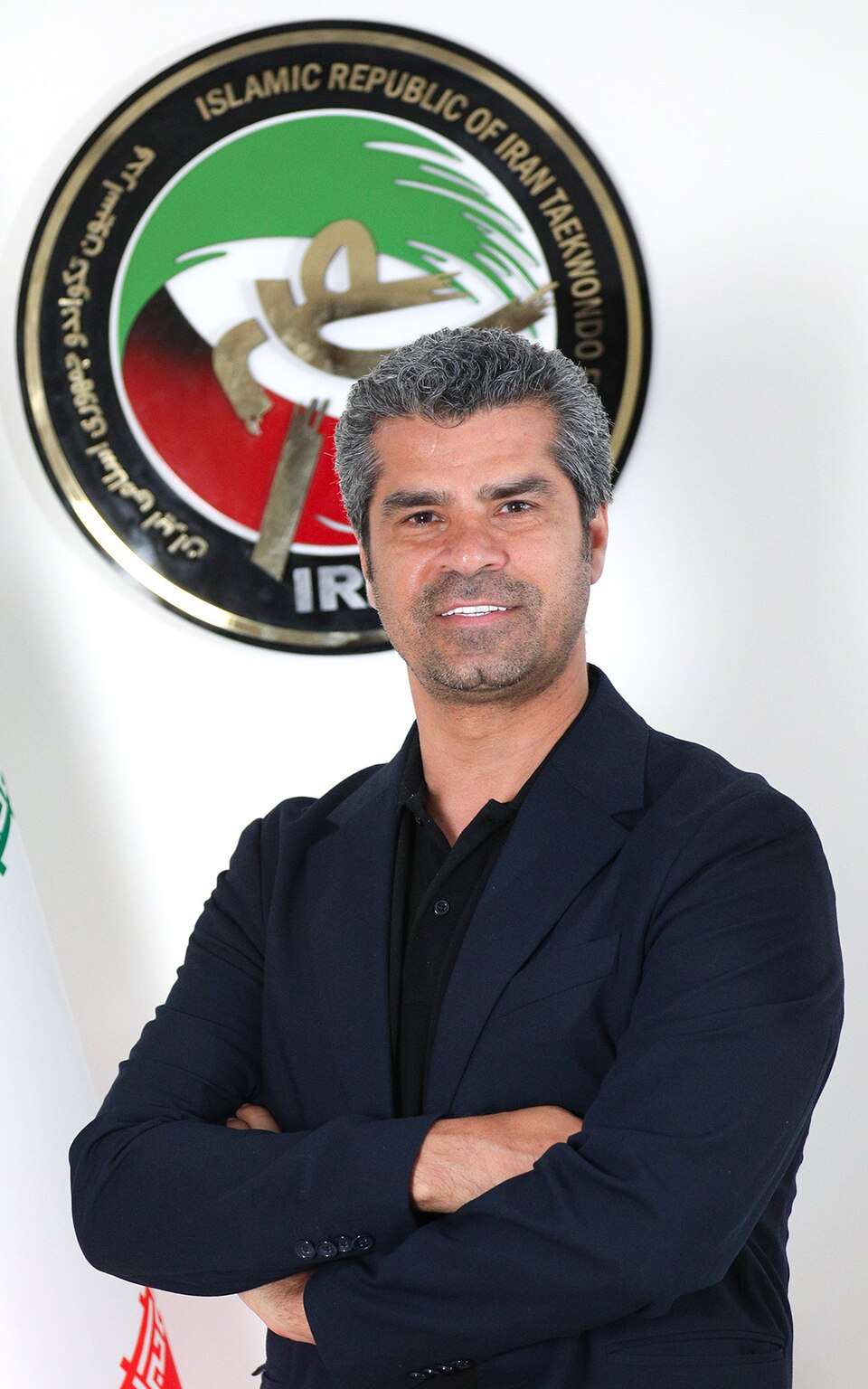
Hadi Saei
 Iran
IranTaekwondo athlete and sports administrator
Also known as: Hadi Saei Bonehkohal
Birthday
June 10, 1976
Birth Sign
Gemini
Birthplace
Ray, Iran
Age
50 years old
About
Hadi Saei is an Iranian former taekwondo athlete and sports administrator, widely regarded as the most successful Iranian Olympian in history. He won three Olympic medals, including gold at the 2004 Athens Games and the 2008 Beijing Games, along with a bronze at the 2000 Sydney Games. His two world championship titles, four World Cup victories, and a world Olympic qualification tournament win make him one of the most decorated taekwondo practitioners globally.
Today, Saei is a prominent figure in taekwondo governance. He served as president of the Iran Taekwondo Federation from 2022 to 2026 and currently chairs the Iran National Olympic Committee Athletes' Committee. His transition from elite athlete to administrator has been marked by a commitment to developing the sport in Iran and across Asia.
Early Life & Background
Hadi Saei was born on June 10, 1976, in Ray, a historic city south of Tehran. Growing up in the aftermath of the Iran–Iraq War, he lost family members and witnessed the destruction of his hometown, an experience he credits with shaping his resilience and character. He began training in taekwondo at a young age, quickly rising through the ranks as one of Iran's most promising young competitors.
His international breakthrough came at the 2000 Sydney Olympics, where he secured a bronze medal in his first Olympic appearance. That result established him as a world-class athlete and set the stage for his later dominance. Before Sydney, he had already claimed early victories on the national circuit, but the Olympic podium was his true arrival on the global stage.
Career Growth
After his bronze in Sydney, Saei's career soared. At the 2004 Athens Olympics, he won gold in the welterweight division, becoming Iran's first Olympic taekwondo champion. Four years later in Beijing, he defended his Olympic title in the middleweight category, defeating Italy's Mauro Sarmiento in a dramatic comeback that observers described as coming out of nowhere. That victory made him one of only three taekwondokas to win two Olympic golds, and one of two, alongside American Steven Lopez, to earn three Olympic medals in the sport.
Beyond the Olympics, Saei collected two world championship titles, four World Cup victories, and a world Olympic qualification tournament win. After retiring from competition, he moved into public service, winning a seat on the Tehran City Council in 2006 and serving a second term from 2013. In 2022, he became president of the Iran Taekwondo Federation, a role he held until 2026. He also joined the Asian Taekwondo Union Executive Board in 2025 and now chairs the Iran NOC Athletes' Committee.
Career Timeline
Public Image & Style
In Iranian sports culture, Saei is revered as a national hero and a symbol of athletic excellence. Internationally, he is celebrated as a trailblazer in taekwondo, with World Taekwondo calling him a living legend. His public persona blends fierce competitiveness with humility, and his post-retirement work in administration has reinforced his image as someone dedicated to the sport's future. An article reflecting on his career noted that he kept his word about reinventing himself beyond competition, a philosophy that resonates with fans.
Fame & Fandom
Hadi Saei stands as a towering figure in the global consciousness of combat sports, yet his presence on the broader celebrity radar operates differently than modern pop stars. As of August 2026, iFANN has evaluated this athlete's standing and determined that he does not currently hold a placement in the published Global Top 1,000 rankings or any scope-specific top lists. This absence from the numbered hierarchy reflects a unique trajectory where fame is anchored in specific national reverence rather than broad digital saturation. While millions worldwide consume entertainment through algorithms and trending hashtags, Saei's legacy bypasses these metrics to reside in the quiet, enduring respect of a nation that views him as a foundational pillar of their sporting history. His reputation is built on verified athletic feats rather than viral moments or curated social media personas. The Iranian public regards him as a national hero, a status that transcends typical athlete-fan dynamics. Unlike celebrities who cultivate organized fanbases with formal names and ritualistic campaigns, Saei's audience consists of citizens celebrating a living legend whose mythology is defined by unprecedented Olympic success. He secured two gold medals and a bronze, making him Iran's most decorated Olympian, a fact that cements his place in history without needing the validation of a ranked list. His transition from elite competitor to high-level administrator further solidifies his image as a steward of the sport rather than a celebrity chasing headlines. There are no documented fan clubs, birthday billboards, or crowdfunding projects dedicated to his name; instead, his influence flows through institutional power and the collective memory of his dramatic comebacks. In the realm of international recognition, World Taekwondo labels him a living legend, a title earned through grit and consistency rather than marketing campaigns. This distinction separates him from the fleeting fame of internet personalities, grounding his significance in tangible achievement.
Interesting Facts and Legends
Hadi Saei's full family name, Bonehkohal, remains rarely used in media coverage despite his global stature. He joins an exclusive club alongside Steven Lopez as one of only two taekwondo athletes to win three Olympic medals. His competitive record is staggering: 79 wins from 89 registered fights across 27 tournaments. A defining moment in his legendary career occurred during the 2008 Beijing final against Mauro Sarmiento. Saei trailed early in the match before mounting a dramatic comeback to seize victory, a narrative that has become a staple of his mythos. Beyond the canvas, his story extends into governance. In October 2025, he fulfilled a long-held promise by being elected President of the Iranian Taekwondo Federation. By August 2026, he had expanded his influence by chairing the Iran National Olympic Committee Athletes' Committee and joining the Asian Taekwondo Union Executive Board. These roles have transformed him from a solitary champion into a key architect of Iran's recent Olympic success, often cited alongside Alireza Dabir as the 'two men behind Iran's success.' Stories about him emphasize his longevity, proving that true victory lies in transcendence as he moved seamlessly from elite competition to the highest levels of sports administration.
Family & Personal Life
Details about Hadi Saei's family remain private. He was born in Ray, Iran, and lost family members during the Iran–Iraq War, an experience that profoundly shaped him. He has not publicly shared information about his parents, siblings, or his own household. His continued role as a councilor from Ray suggests lasting ties to his birthplace.
Notable Connections
Hadi Saei is often compared to American taekwondo legend Steven Lopez, the only other athlete to win three Olympic medals in the sport. His 2008 Olympic final opponent, Mauro Sarmiento of Italy, remains a notable rival. In his administrative role, Saei appointed Payam Khanlarkhani as head coach of the Iran Para-Taekwondo team and Zahra Hajivand as coach of the women's para-taekwondo team.
Relationships & Dating History
No public information is available regarding Hadi Saei's dating history, romantic relationships, or marital status. Extensive searches of available sources reveal no documented relationships, engagements, or marriages. This is consistent with the private nature of public figures in Iranian sports culture, where personal lives are typically not publicized. As of 2026, his relationship status remains undocumented.
Salary, Net Worth In 2026
$5 Million
iFANN Editorial Team estimate
iFANN currently estimates Hadi Saei's net worth at $5 Million as of 2026, though precise figures remain elusive due to the private nature of his finances. His income stems primarily from his roles in public service and sports administration, including his tenure as president of the Iran Taekwondo Federation and his position on the Tehran City Council. Unlike many Western athletes, Saei has not pursued major commercial endorsements, instead focusing on governance and development of the sport. His financial standing reflects a career dedicated to athletics and public service rather than commercial ventures.
Awards Won (5)
Hadi Saei won two Olympic gold medals and one bronze, making him Iran's most decorated Olympian. He also claimed two World Championship titles and four World Cup victories, solidifying his status as one of taekwondo's greatest champions.
2008 · Middleweight
Beijing Olympics
2004 · Welterweight
Athens Olympics
2000 · Taekwondo
Sydney Olympics
Known For
Olympic Gold Medalist
2004 · Taekwondo Welterweight
Olympic Gold Medalist
2008 · Taekwondo Middleweight
Keywords
Sources
Quick Facts
- Profession
- Taekwondo athlete and sports administrator
- Born
- June 10, 1976
- Birthplace
- Ray, Iran
- Gender
- Male
- Birth Sign
- Gemini
- Olympic Medals
- 3 (2 gold, 1 bronze)
- World Titles
- 2 World Championships, 4 World Cups
Personal Details
- Full Name
- Hadi Saei Bonehkohal
Frequently Asked Questions
How many Olympic medals has Hadi Saei won?
What is Hadi Saei doing now?
Is Hadi Saei the most successful Iranian Olympian?
Who did Hadi Saei beat in the 2008 Olympic final?
How old is Hadi Saei?
Similar People
Join the community
fans discussing