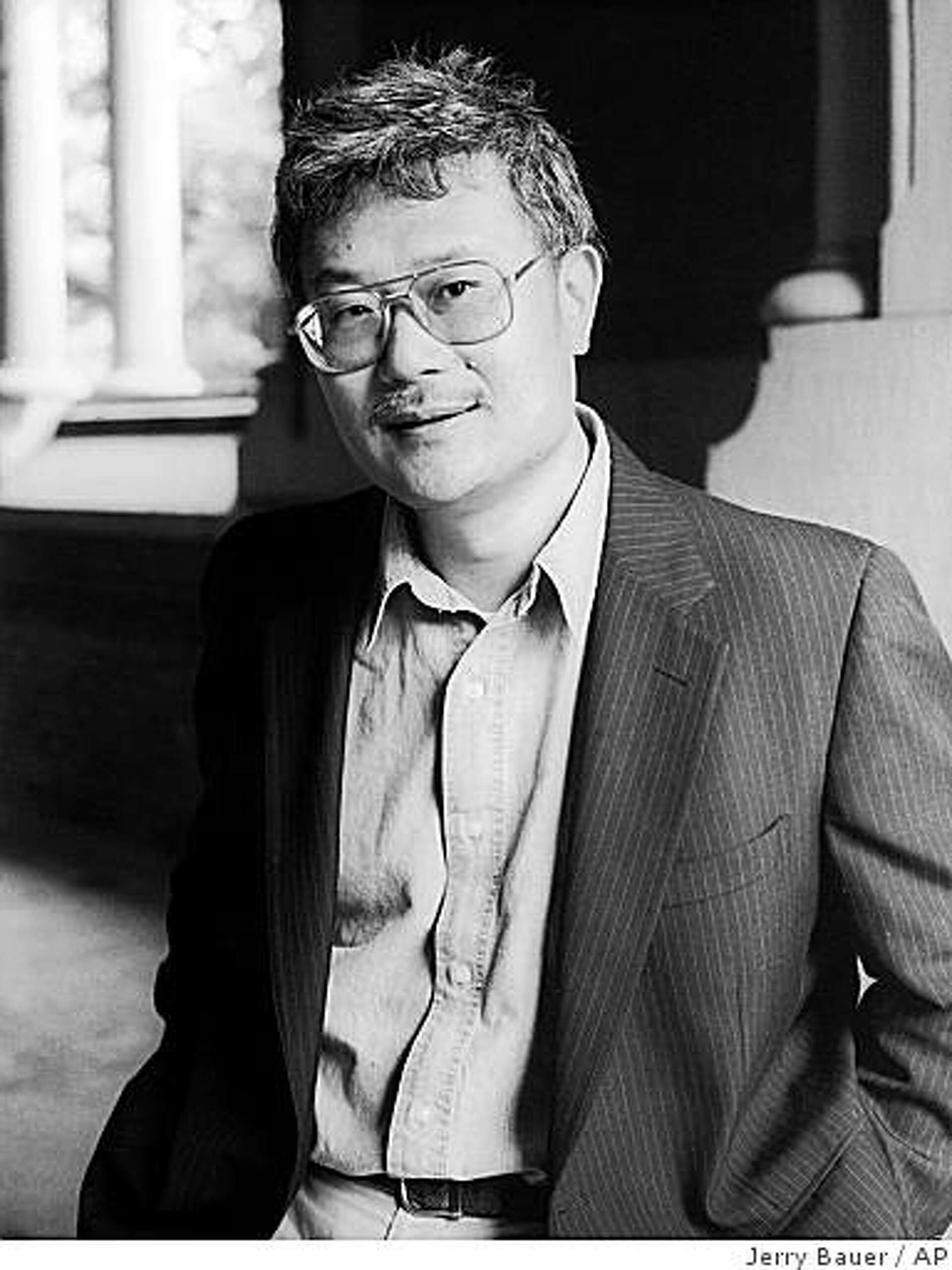
Ha Jin
 China
Chinapoet•short story writer•novelist
Also known as: Jin Xuefei, Hajin, Xuefei Jin
Birthday
February 21, 1956
Birth Sign
Pisces
Birthplace
Jinzhou, Liaoning Province, China
Age
70 years old
Height
5 ft 8 in (173 cm)
About
Ha Jin is a Chinese American poet and novelist whose spare, precise prose has earned him some of the highest honors in American literature. Born Jin Xuefei in 1956, he writes under a pen name drawn from Harbin, a city he admires. He is best known for his novel Waiting, which won both the National Book Award and the PEN/Faulkner Award in 1999, a rare double for a single work.
Since 2002, he has taught creative writing at Boston University, where he holds a named professorship. His fiction often explores exile, identity, and the lingering effects of political ideology on ordinary lives. With more than fifteen books to his name, including War Trash and A Free Life, he has become a defining voice in contemporary immigrant literature.
Early Life & Background
Ha Jin grew up in Jinzhou, a city in northeastern China's Liaoning Province, during a period of intense political upheaval. As a young man, he served in the People's Liberation Army, an experience that would later inform much of his writing. After his military service, he pursued higher education, earning an undergraduate degree from Heilongjiang University in 1982 and a master's degree from Shandong University in 1984.
His early literary ambitions were rooted in poetry, and he became associated with the Misty Poetry movement that emerged in China in the late 1970s. In 1985, he moved to the United States to study at Brandeis University, where he completed a PhD in 1993. His doctoral dissertation examined the work of Modernist poets including Pound, Eliot, Auden, and Yeats. During these years, he made the pivotal decision to abandon writing in Chinese and commit himself to English, a transition he later described as both painful and liberating. He published his first English-language poetry collection, Between Silence, in 1990, marking the true start of his literary career in the West.
Career Growth
Ha Jin's breakthrough came in 1996 with the publication of his short story collection Ocean of Words, which won the PEN/Hemingway Award. That same year, his first novel, In the Pond, appeared. In 1999, Waiting catapulted him to international prominence, winning both the National Book Award for Fiction and the PEN/Faulkner Award, making him the first writer to take home both honors for the same book.
He followed with The Bridegroom (2000), which earned the Asian American Literary Award, and War Trash (2004), a finalist for the Pulitzer Prize. His later novels, including A Free Life (2007), Nanjing Requiem (2012), and A Map of Betrayal (2014), continued to explore themes of displacement and moral complexity. In 2008, he was shortlisted for the Man Booker International Prize. His most recent work, the novella Looking for Tank Man, appeared in 2025 to critical acclaim. In June 2026, Boston University hosted a tribute event celebrating his career.
Career Timeline
Public Image & Style
Ha Jin is regarded as a serious, contemplative literary figure, often described as a writer's writer. His public persona is one of quiet dignity and intellectual rigor. He is known for his spare, precise prose and his exploration of exile, identity, and the human cost of ideology. His readership skews toward academics, students of Chinese American literature, and devoted readers of literary fiction. He does not maintain a social media presence, and his fans connect with him through his books and public readings. His reputation has been built on the strength of his craft and the moral seriousness of his themes, rather than on celebrity or self-promotion.
Fame & Fandom (iFAMOUS Rankings)
Ha Jin's fanbase is a quiet, devoted community of literary readers, academics, and students of Chinese diaspora literature. There is no formal fandom name, no organized fan clubs, and no documented campaigns or rituals, his influence is measured through his books, his awards, and his teaching. His readers connect with him through his sparse, precise prose and his unflinching exploration of exile and ideology, often discovering him in university courses or through word-of-mouth among serious fiction lovers.
His public appearances are intimate literary events, readings, lectures, and interviews, where he is known to be genial and approachable, offering deep insights into his craft. The 'legends' surrounding him are biographical and literary: his decision to write in English after the Tiananmen Square massacre, his pen name drawn from Harbin, and his transformation from a soldier's son to a National Book Award winner. These stories are retold in profiles and interviews, forming a personal mythology that his readers cherish.
In terms of global fame, iFANN's Global Fame Engine has evaluated Ha Jin, but as of August 2026, he does not hold a placement in the published rankings, neither the Global Top 1,000 nor any Top-100 scope list. This reflects his status as a critically acclaimed but not mass-market author, whose renown is concentrated in literary circles rather than mainstream celebrity.
Interesting Facts and Legends
Ha Jin served in the People's Liberation Army before becoming a writer, an experience that shaped his worldview. He chose his pen name from Harbin, his favorite Chinese city, and the name is deliberately short and memorable. He is one of only a handful of writers to have won both the National Book Award and the PEN/Faulkner Award for the same novel. His doctoral dissertation at Brandeis focused on Modernist poets such as Pound, Eliot, Auden, and Yeats. He was a figure in the Misty Poetry movement in China before moving to the United States. His novel Waiting was inspired by the real experiences of Chinese military doctors he knew.
One of the most significant stories in his personal mythology is his connection to the Tiananmen Square massacre: he was in the U.S. in 1989, and after the events, he decided to remain in exile and began writing in English, a decision that defined his career. In 2025, he published Looking for Tank Man, a novel that returns to that historical moment, reasserting his role as a literary voice on one of the most sensitive topics in modern Chinese history. Another foundational tale is his 'literary improbability', from a military family in Maoist China to a celebrated English-language author, a story fans still retell.
Notable Quotes
“I had to make a choice, either to continue writing in Chinese and remain a minor voice, or to write in English and reach a wider audience. I chose English.”
“An exile lives with a divided heart. You belong to two places and fully to neither.”
“Writing is a way of understanding the world, not just describing it.”
Family & Personal Life
Ha Jin is married to Lisha, a former teacher who now manages their household. They met in China and married in the 1980s, before his move to the United States. Lisha later joined him in America, and their son, Wen, was born there. Ha Jin has spoken warmly of his wife's support during the difficult years of his transition to writing in English. The family lives in the Boston area, where Ha Jin has taught for over two decades. Despite his public literary success, he keeps his family life private, rarely sharing personal details in interviews.
Notable Connections
Relationships & Dating History
Ha Jin's personal life has been remarkably private, and his only documented relationship is his marriage to Lisha. The couple met in China and married in the 1980s, before his immigration to the United States. Lisha, a former teacher, later joined him in America, and they have one son, Wen. Ha Jin has spoken of his wife's unwavering support during his transition to writing in English. As of 2026, he remains married to Lisha, and there are no reports of any other romantic relationships in his life.
- MarriedLisha Jin1980 - presentCurrentMet in China, married in the 1980s, and have one son, Wen.
Salary, Net Worth In 2026
$3 Million
iFANN Editorial Team estimate
iFANN currently estimates Ha Jin's net worth at $3 million. His income derives from book royalties, his professorial salary at Boston University, speaking fees, and translation rights. His works have been translated into more than twenty languages, generating steady international royalties. As a full professor, his academic salary is believed to be in the range of $150,000 to $200,000 annually. While he has not achieved the commercial success of blockbuster authors, his literary prestige and consistent output have secured a comfortable financial standing.
Awards Won (6)
Ha Jin has received some of the most prestigious honors in American letters. His novel Waiting won both the National Book Award for Fiction and the PEN/Faulkner Award in 1999, a rare double. He also won the PEN/Hemingway Award for Ocean of Words, the Flannery O'Connor Award for Under the Red Flag, and the Asian American Literary Award for The Bridegroom. He has been elected to the American Academy of Arts and Letters and the American Academy of Arts and Sciences.
1999 · Fiction
Waiting
1999 · Fiction
Waiting
Known For
Waiting
1999 · Author
War Trash
2004 · Author
A Free Life
2007 · Author
Ocean of Words
1996 · Author
Keywords
Sources
Quick Facts
- Profession
- poet, short story writer, novelist
- Born
- February 21, 1956
- Birthplace
- Jinzhou, Liaoning Province, China
- Gender
- Male
- Birth Sign
- Pisces
- Height
- 5 ft 8 in (173 cm)
- Spouse
- Lisha Jin
- Children
- 1 son (Wen)
- Education
- Heilongjiang University (BA, 1982), Shandong University (MA, 1984), Brandeis University (PhD, 1993)
- Net Worth
- $3 Million
Personal Details
- Full Name
- Jin Xuefei
- Height
- 5 ft 8 in (173 cm)
- Spouse
- Lisha Jin
- Children
- 1 son (Wen)
- Education
- Heilongjiang University (BA, 1982), Shandong University (MA, 1984), Brandeis University (PhD, 1993)
Frequently Asked Questions
Is Ha Jin Chinese or American?
Why did Ha Jin change his name?
What is Ha Jin's most famous book?
Does Ha Jin write in Chinese or English?
Where does Ha Jin teach?
Similar People
Join the community
fans discussing