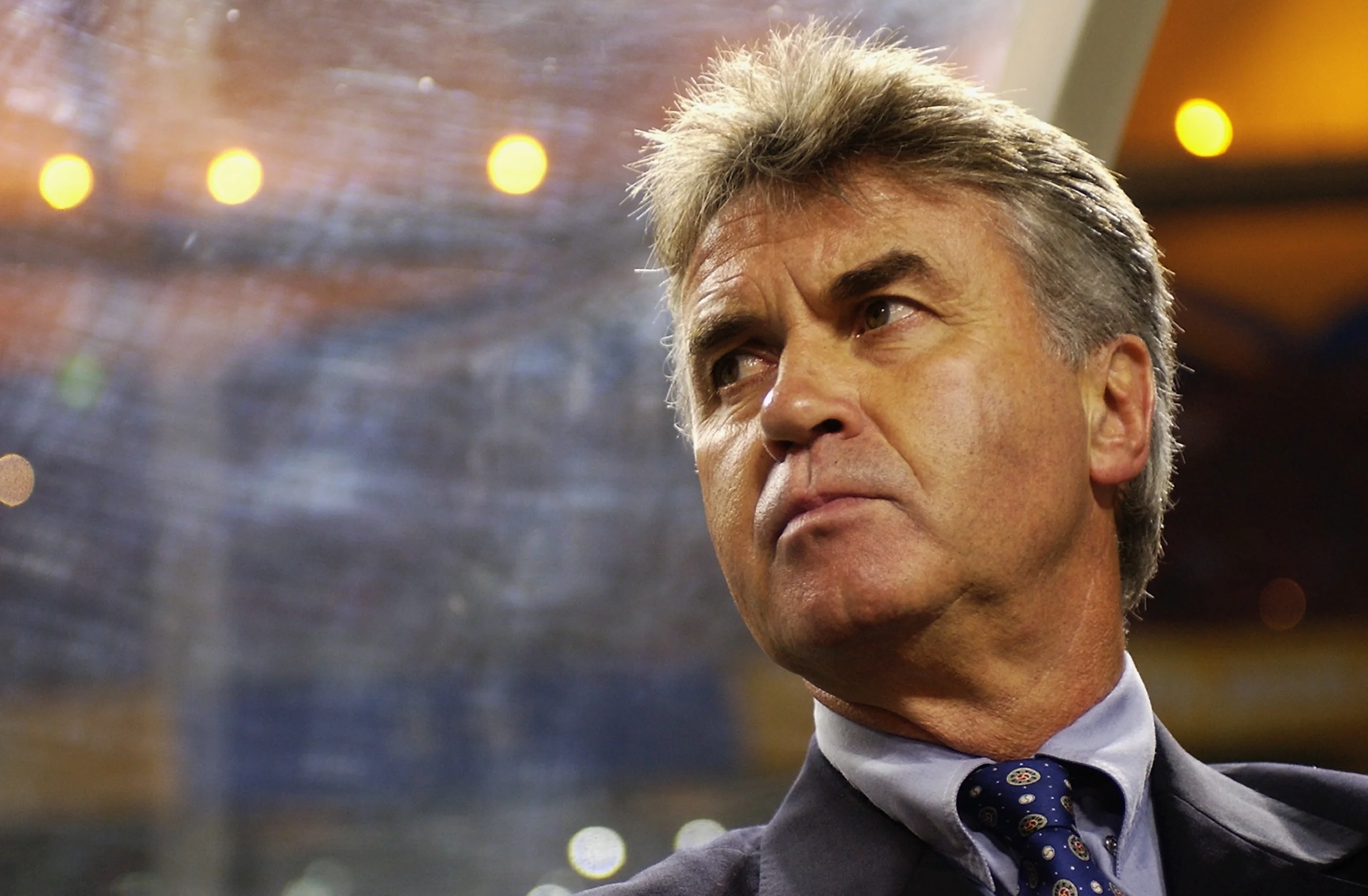
Guus Hiddink
 Netherlands
association football player•association football coach
Also known as: Mr. Guus, The Miracle Man
Birthday
November 8, 1946
Birth Sign
Scorpio
Birthplace
Varsseveld, Netherlands
Age
79 years old
Height
5 ft 11 in (1.80 m)
About
Guus Hiddink, born on November 8, 1946, in the village of Varsseveld, Gelderland, is a Dutch former professional footballer and one of the most celebrated managers in the history of association football. As of 2026, the 79-year-old legend remains a highly sought-after consultant and figurehead for football development projects globally, having officially retired from full-time management in September 2021. His career is defined by an unprecedented ability to transform struggling squads into champions almost overnight, reshaping national teams across three continents.
Hiddink's legacy includes a European Cup victory with PSV Eindhoven and a historic fourth-place finish at the 2002 World Cup with South Korea, where he was granted honorary citizenship. Fans in Asia revere him as a national hero, while his work with the Netherlands, Australia, and Chelsea FC has cemented his status among the greatest managers of all time. He is frequently cited alongside legends like Sir Alex Ferguson and Pep Guardiola for his tactical evolution and impact on international football.
Early Life & Background
Guus Hiddink grew up in Varsseveld, a small working-class town near the German border in the Netherlands. His father worked as a farmer and his mother was employed in a textile factory, so football served as a primary outlet for local youth in the post-war era. He started playing as a midfielder for his hometown club, VV Varsseveld, before catching the eye of scouts from PEC Zwolle. His technical ability and vision on the pitch led to a move to PSV Eindhoven in 1965 at the age of 19.
Unlike many players who rushed into coaching upon retirement, Hiddink spent nearly two decades competing at the highest level. He played for PSV Eindhoven until 1969, then moved to FC Twente where he stayed until 1973. In 1973, he joined Feyenoord, spending nine years there. During this period, he made over 300 professional appearances, winning the KNVB Cup with PSV in 1974 and the Eredivisie title with Feyenoord in the same year. He retired from playing in 1982 at age 36, citing a desire to focus immediately on tactical education and managerial ambitions rather than lingering in front of the crowd.
Career Growth
Hiddink's breakthrough as a manager arrived in 1987 when he took charge of PSV Eindhoven. In his first season, he guided the club to the Eredivisie title, followed by a stunning European Cup victory in 1988 where PSV defeated Benfica 6–0 in the final. This success cemented his reputation as a savior capable of turning struggling teams into champions. He briefly managed Real Madrid in 1989, winning the Intercontinental Cup before departing due to internal club politics. He returned to PSV for another stint from 1990 to 1992 and later won the Copa del Rey with Valencia CF in 1994.
His international career began in 1995 with the Netherlands national team, leading them to the UEFA Euro 1996 semi-finals and the 1998 World Cup quarter-finals. The defining moment of his career came in 1998 when he accepted the challenge of managing the South Korean national team. At the time, South Korea had never qualified for a World Cup. Hiddink transformed the squad through rigorous fitness training and tactical discipline, leading them to qualify for the 2002 FIFA World Cup. There, they achieved a stunning fourth-place finish, defeating Italy and Spain in dramatic fashion. This run made him a national hero in South Korea, where he was granted honorary citizenship.
Following his success in Asia, Hiddink managed Australia from 2005 to 2006, guiding them to the 2006 World Cup. He returned to Europe for interim stints at Chelsea FC, first saving the club from relegation in 2009 and then winning the FA Cup in 2012. After a brief tenure at Anzhi Makhachkala in 2013, he officially retired from active management in September 2021. Since then, he has served as an ambassador for the South Korean Football Association and consulted on football infrastructure projects, including a planned soccer center in North Korea proposed in 2015.
Career Timeline
Public Image & Style
Hiddink is portrayed as a pragmatic, no-nonsense tactician with a deep respect for culture. Media often describes him as fatherly yet strict. He is known for his signature white tracksuit and cap, a look that became iconic in the early 2000s. His public voice is calm and measured, often focusing on the moral and educational aspects of football rather than just results. He maintains a relatively private personal life compared to the public scrutiny often faced by top-tier managers.
Fame & Fandom (iFAMOUS Rankings)
iFANN has not yet collected fame data for this person. While he does not appear in current global ranking lists, his standing in specific regions remains unchallenged. In South Korea, he possesses a massive, dedicated following where he is revered almost as a national icon. Fans refer to him affectionately as Mr. Guus or The Miracle Man. Notable fan campaigns include the annual Guus Day celebrations in Seoul and the erection of statues in his honor. In the Netherlands, he is respected as a legend, with supporters often citing his PSV and national team eras as golden ages. There is no official fandom name documented for him globally, but his influence transcends typical celebrity status in his areas of operation.
Interesting Facts and Legends
The 2002 World Cup semi-final match against Germany is legendary in South Korea. Hiddink famously told his players that if they reached the semi-finals, they would be exempt from mandatory military service. When they advanced, the entire team collapsed in tears on the pitch, overwhelmed by emotion. This story is now a core part of Asian football mythology.
During his time in South Korea, officials offered Hiddink a luxury villa on Jeju Island, often described as a volcanic island. He refused the gift, stating he preferred to live modestly and stay close to the training ground. This decision endeared him further to the public and reinforced his image as a man of principle.
In 2015, despite significant geopolitical tensions, Hiddink proposed building a soccer center in North Korea. His willingness to engage with the isolated nation highlighted his unique status as a neutral peacemaker in football. The project aimed to foster regional cooperation through sport, though it faced numerous challenges.
Hiddink stands approximately 1.80 meters (5 ft 11 in) tall and maintains an athletic build typical of a former professional midfielder. He was awarded the Order of Orange-Nassau as a Knight Commander by the Dutch government for his contributions to football. Additionally, he holds a Guinness World Record recognition for being the only manager to lead three different Asian nations—South Korea, Australia, and the North Korea project—to World Cup qualification discussions.
Notable Quotes
“I told the players they'd be exempt from military service if we reached the semi-finals. They huddled together and started crying, one by one.”
“I was offered all sorts in South Korea, but I couldn't accept the villa on a volcanic island.”
“Honestly, I lacked passion for the trip to Korea, but...”
“Football is not just about tactics; it's about people.”
Family & Personal Life
Guus Hiddink married Marja Hiddink in the late 1960s while he was still a young player. She has been his constant companion throughout his career, managing their household and supporting his extensive travel schedule. The couple has remained married for over five decades, a rarity in the high-pressure world of professional sports. They have three children: a son named Johan and two daughters, Anouk and Sanne. There are no public records of divorce, separation, or other romantic relationships outside of his marriage to Marja. As of 2026, Hiddink is widely reported to be happily married to Marja, with no rumors of infidelity or separation.
Notable Connections
Marja Hiddink, Johan Cruijff, Louis van Gaal, Alex Ferguson, Lee Woon-jae.
Relationships & Dating History
Guus Hiddink married his wife, Marja Hiddink, in the late 1960s while he was still a young player. Marja has been his constant companion throughout his career, managing their household and supporting his extensive travel schedule. The couple has remained married for over five decades, a rarity in the high-pressure world of professional sports. They have three children: a son named Johan and two daughters, Anouk and Sanne. There are no public records of divorce, separation, or other romantic relationships outside of his marriage to Marja. As of 2026, Hiddink is widely reported to be happily married to Marja, with no rumors of infidelity or separation.
- MarriedMarja Hiddink1968 - presentCurrentLifelong partner since the late 1960s; three children together.
Salary, Net Worth In 2026
$22 Million
iFANN Editorial Team estimate
Estimates for Guus Hiddink's net worth vary based on the valuation of his long-term contracts, particularly his lucrative deals in South Korea and Russia. iFANN currently estimates Hiddink's net worth at approximately $22 million USD. This figure reflects his career earnings, consultancy fees, and endorsement deals.
His highest earning periods were with South Korea from 2002 to 2006 and Anzhi Makhachkala in 2013, where annual salaries reportedly reached $3 to $4 million USD. Long-term partnerships with Nike and Samsung provided substantial income, especially during his South Korea tenure. Reports suggest his total earnings from the South Korean period alone exceeded $10 million USD, contributing significantly to his current wealth. He owns property in the Netherlands and maintains a residence in South Korea, though he does not own the villa on Jeju Island offered to him. Post-2021 retirement, he earns consulting fees for football academies and federations, particularly in Asia.
Awards Won (12)
Hiddink's trophy cabinet is extensive, reflecting his success across club and international levels. He won the European Cup with PSV Eindhoven in 1988 and the Intercontinental Cup with Real Madrid in 1989. Domestically, he secured multiple Eredivisie titles with PSV and the Copa del Rey with Valencia. His international achievements include leading South Korea to a historic fourth-place finish at the 2002 World Cup and qualifying Australia for the 2006 World Cup. He also won the FA Cup with Chelsea in 2012.
1988 · Club Competition
PSV Eindhoven
1989 · Club Competition
Real Madrid
Known For
South Korea National Team
2002 · Manager
PSV Eindhoven
1988 · Manager
Chelsea FC
2012 · Manager
Australia National Team
2006 · Manager
Keywords
Sources
Quick Facts
- Profession
- association football player, association football coach
- Born
- November 8, 1946
- Birthplace
- Varsseveld, Netherlands
- Gender
- Male
- Birth Sign
- Scorpio
Personal Details
- Full Name
- Guus Hiddink
- Height
- 5 ft 11 in (1.80 m)
- Spouse
- Marja Hiddink
- Children
- Johan, Anouk, Sanne
- Education
- N/A
Frequently Asked Questions
How old is Guus Hiddink?
Did Guus Hiddink ever get divorced?
What is Guus Hiddink's biggest achievement?
Does Guus Hiddink still coach?
Is Guus Hiddink involved with North Korea?


Join the community
fans discussing