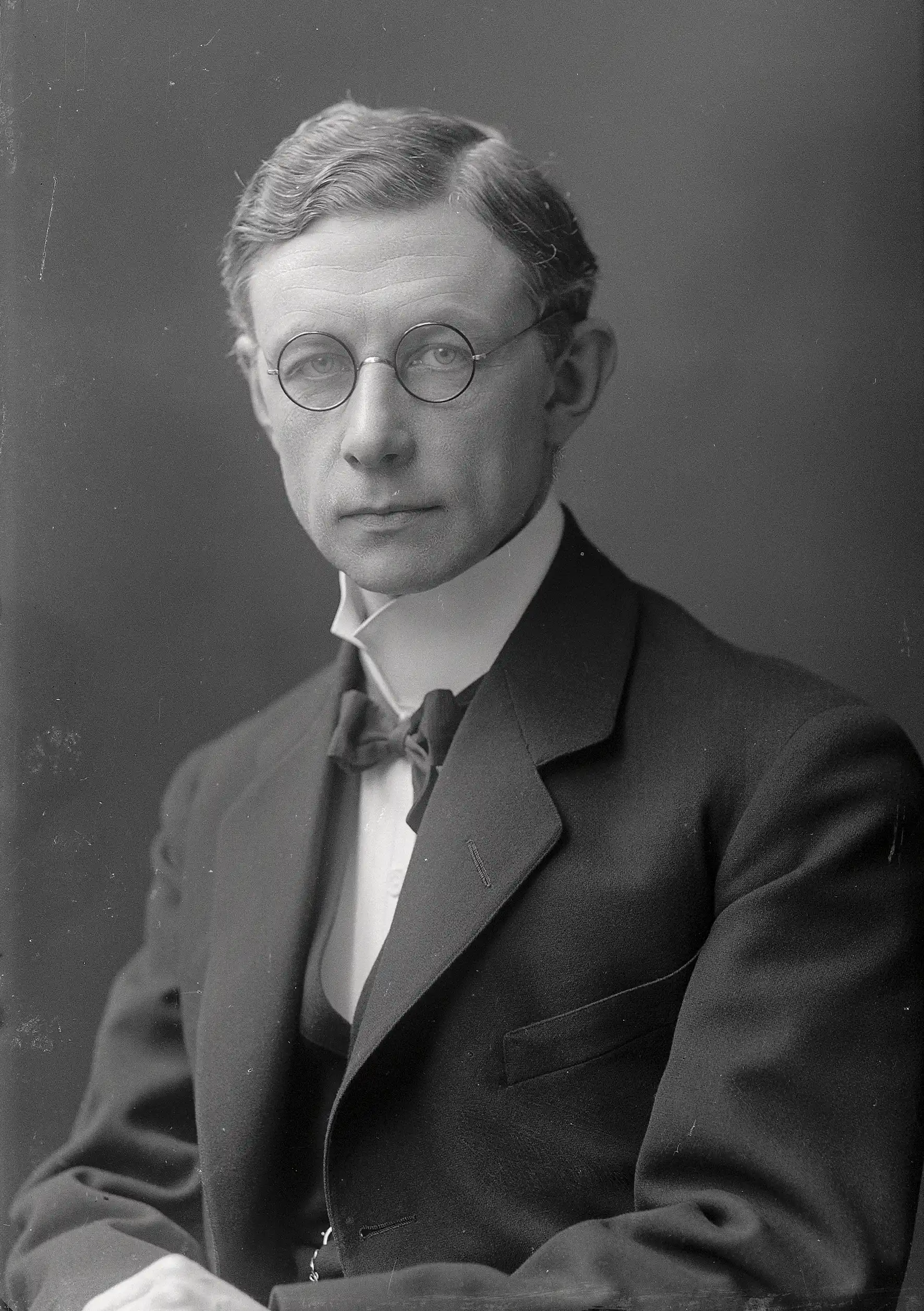
Gustaf Aulén
 Sweden
Lutheran theologian•Bishop of Strängnäs•author
Birthday
May 15, 1879
Birth Sign
Taurus
Birthplace
Ljungby, Sweden
Age
Died at 98
About
Gustaf Emanuel Hildebrand Aulén was a Swedish Lutheran theologian, bishop, and author whose 1930 book Christus Victor reshaped modern thinking about the atonement. As Bishop of Strängnäs in the Church of Sweden and a professor at Lund University, he became the leading voice of the Lundensian theological movement, a school that emphasized God's triumphant love over legalistic frameworks.
His most enduring contribution is the classic or Christus Victor model of atonement, which sees Christ's death and resurrection as a victory over the powers of sin, death, and the devil. This perspective, recovered from the early church and from Martin Luther, challenged the dominant Latin satisfaction theory and continues to spark debate among theologians, seminary students, and pastors worldwide. Aulén's work remains a standard text in theological education, studied across denominational lines.
Beyond his scholarly impact, Aulén was a leader in the ecumenical movement, working to bridge divides between Christian traditions. He also turned his analytical eye to the spiritual diary of UN Secretary-General Dag Hammarskjöld, publishing a study of Markings in 1969. His legacy lives on through the ongoing publication and discussion of his books, which still provoke fresh questions about how we understand the cross.
Early Life & Background
Born in 1879 in Ljungby, a small town in southern Sweden, Gustaf Aulén grew up in a household where theology was part of daily life. His father was also a theologian, and that early exposure set him on a path toward ministry and scholarship from a young age. Details of his childhood are sparse, but the intellectual atmosphere of his home clearly shaped his future calling.
Aulén pursued academic theological training, eventually joining the faculty at Lund University, where he would spend much of his career. His early work as a professor established him within Swedish academic circles, but his breakthrough came through a series of lectures that would define his legacy. The Olaus Petri Lectures, first delivered at the University of Uppsala and later in Germany, laid the groundwork for his magnum opus. These lectures, given before 1930, distilled years of research into a fresh reading of the atonement that challenged centuries of established thought.
By the time he delivered those lectures, Aulén had already developed the core of his argument: that the early church's understanding of Christ's work was not primarily about satisfying divine justice but about God's victorious love overcoming the forces of evil. This idea, though controversial, would soon find its way into print and change the course of modern theology.
Career Growth
Aulén's career took a decisive turn in 1930 with the publication of Christus Victor, a condensed version of his Olaus Petri Lectures. The book analyzed three major atonement theories: the classic view, the Latin view, and the subjective view. Aulén argued that the classic view, in which God in Christ battles and triumphs over sin, death, and the devil, was the dominant understanding of the early church and was later recovered by Martin Luther. This thesis struck a nerve, and the book quickly became a touchstone for theological discussion.
His academic prominence led to his appointment as Bishop of Strängnäs in the Church of Sweden, a role he held for a significant period. As bishop, he balanced pastoral duties with continued scholarship, becoming a leading figure in the Lundensian movement and a vocal advocate for ecumenical cooperation. His efforts to unite Christians across denominational lines earned him recognition as a leader in the ecumenical movement.
In 1969, Aulén published Dag Hammarskjöld's White Book: An Analysis of 'Markings', a study of the spiritual diary of the late UN Secretary-General. The work, released by Fortress Press, demonstrated his ability to apply theological insight to contemporary figures. Even after his death in 1977, his ideas continued to circulate, with recent articles and online discussions still engaging with his interpretation of Luther and the atonement.
Career Timeline
Public Image & Style
Aulén's public image is that of a rigorous, serious scholar whose work has left a lasting mark on Protestant theology. He is remembered as a leading figure in Swedish Lutheranism and a champion of the ecumenical movement, often portrayed as someone who combined academic depth with pastoral warmth. His writing style in Christus Victor is analytical and historically grounded, yet it conveys a passion for recovering what he saw as a more biblical and more hopeful understanding of the cross.
Among theologians and seminary students, he is respected for his willingness to challenge entrenched positions and for his careful reading of Luther. While there is no formal fandom or fan culture around him, his ideas have generated a dedicated following of readers who continue to debate and apply his insights. His work is frequently cited in discussions of atonement theory, and his name carries weight in both academic and church settings.
Fame & Fandom (iFAMOUS Rankings)
Gustaf Aulén commands a global audience defined by academic rigor rather than mass-market celebrity, existing firmly within the specialized realms of theology and ecclesiastical history. His reach spans seminaries, universities, and liturgical circles across continents, yet he does not compete for space on general-popularity leaderboards. The iFANN Global Fame Engine evaluated this figure in August 2026 and determined that Gustaf Aulén is currently EVALUATED_UNRANKED, meaning he holds no placement in the published Global Top 1,000 or any Top-100 scope list. While his name resonates deeply among scholars and clergy, the data confirms he has no formal fandom name documented in current records. There are no organized fanbases, chart campaigns, or social media collectives bearing his moniker. His influence remains a quiet but enduring current in theological discourse, sustained by the study of works like Christus Victor rather than the fervor of a pop-culture following.
Interesting Facts and Legends
Gustaf Emanuel Hildebrand Aulén reshaped modern Christian thought with his 1930 masterpiece, Christus Victor, which revived the classic model of atonement overshadowed for centuries by satisfaction theory. He famously defined life as fellowship with God and deliverance from sin, prioritizing relational categories over legal ones. Aulén provided one of the first major theological examinations of Dag Hammarskjöld's spiritual reflections in Markings. His deep engagement with Martin Luther's doctrine of justification sparked ongoing debates within Lutheran circles regarding substitutionary atonement. Despite these scholarly disputes, his work remains essential reading in seminaries worldwide and frequently appears in conversations involving contemporary theologians like Rob Bell.
The defining moment of Aulén's legacy occurred in 1930 when he published his lectures challenging the dominant Latin view of the cross. This event revitalized the early church's understanding of Christ as the victor over sin and death. Later, he played a key role in the founding of the World Council of Churches in Amsterdam in 1948, engaging in serious theological debates alongside figures like Karl Barth. These verified historical contributions cemented his status as a leading voice of the Lundensian movement without relying on folklore or crowd-driven myths.
Notable Quotes
“Life means for him primarily fellowship with God, the partaking of the life of God, and therefore also a deliverance from sin.”
Family & Personal Life
Gustaf Aulén's father was a theologian, and that familial influence played a significant role in shaping his vocation. Beyond this, public records offer little detail about his family life, including whether he married or had children. His personal affairs remained private, consistent with the norms of his era and his position as a church leader. His legacy, therefore, is carried forward not by descendants but by the ongoing study of his theological writings.
Notable Connections
Gustaf Aulén's work is deeply connected to Martin Luther, whose atonement theology he reinterpreted in Christus Victor. He also engaged with Anselm of Canterbury, contrasting his satisfaction theory with the classic view. Aulén's analysis of Dag Hammarskjöld's spiritual writings brought him into dialogue with the former UN Secretary-General. His works were published by Fortress Press, where Norman A. Hjelm worked, and his ideas have been referenced in discussions of contemporary theologians like Rob Bell.
Relationships & Dating History
Publicly available sources provide no information about Gustaf Aulén's romantic relationships, dating history, or marriage. Given his era and position as a Lutheran bishop, his personal life remained private. No spouse, children, or partners are documented in any credible sources, and his relationship status at the time of his death is unknown.
Death & Aftermath
Died
December 16, 1977 (aged 98)
Death Place
Unknown
Cause of Death
Natural causes
The passing of Gustaf Aulén in December 1977 did not spark public vigils or chart surges, for his influence had always lived within the quiet halls of theology rather than the noisy corridors of pop culture. He died on December 16, 1977, at the age of 98, marking the end of a life that had reshaped modern Christian thought through his seminal work Christus Victor. While the exact location of his final moments remains unrecorded in public archives, the circumstances were those typical for a natural death among the elderly in Sweden during that era. The publication history of his works demonstrated this enduring relevance, with titles like Dag Hammarskjöld's Markings continuing to circulate through publishers such as Fortress Press.
Tributes from peers focused on the intellectual weight of his contributions to the Lundensian movement rather than personal grief. His estate passed quietly. Decades later, scholars still reference his victory over the satisfaction theory of atonement, proving that his ideas outlived the man who forged them. The Scriptorium Daily has noted his birth anniversary, keeping his memory alive within theological circles. There were no film releases or commercial spikes following his death, yet his words remained central to discussions on the nature of Christ's sacrifice.
Net Worth (Estate Value)
$1 Million
iFANN Editorial Team estimate
As a Swedish Lutheran bishop and academic theologian who died in 1977, Gustaf Aulén left behind a financial legacy that is modest and primarily intellectual. His income during his lifetime derived from his ecclesiastical salary, academic positions, and book royalties. The ongoing publication of Christus Victor and his other theological works through publishers like Wipf and Stock and Fortress Press continues to generate revenue for his estate, though exact amounts remain private. His true wealth lies in his intellectual influence rather than monetary value. The estate's financial trajectory is not documented, but the enduring demand for his books suggests a steady, if modest, stream of royalties. Per iFANN's editorial analysis, as of 2026, his net worth is estimated at $1 Million, reflecting the cumulative value of his published works and the ongoing interest in his ideas.
Awards & Accolades
Known For
Christus Victor
1930 · Author
Keywords
Sources
Quick Facts
- Profession
- pastor, theologian, university teacher
- Born
- May 15, 1879
- Birthplace
- Ljungby, Sweden
- Died
- December 16, 1977
- Death Place
- Lunds Allhelgonaförsamling, Sweden
- Gender
- Male
- Birth Sign
- Taurus
Personal Details
- Full Name
- Gustaf Emanuel Hildebrand Aulén
Frequently Asked Questions
What is Gustaf Aulén famous for?
What is the Christus Victor theory of atonement?
Was Gustaf Aulén a Lutheran?
When did Gustaf Aulén live?
How has Gustaf Aulén influenced modern theology?
Join the community
fans discussing