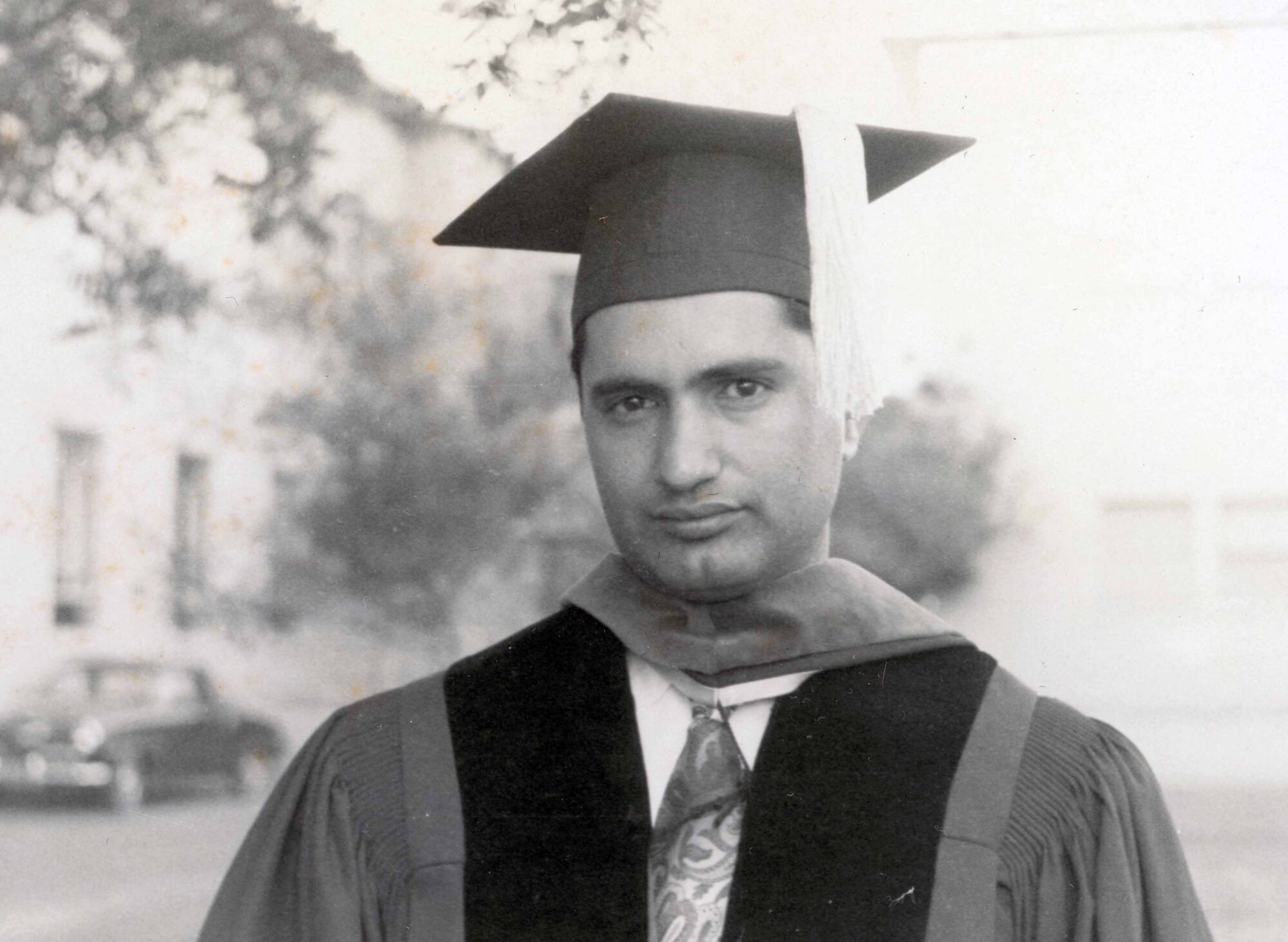
Gurdev Khush
 Philippines
Also known as: Father of Super Rice, Gurdev Singh Khush
Birthday
August 22, 1935
Birth Sign
Leo
Birthplace
Rurkee, India
Age
91 years old
About
Gurdev Singh Khush is an Indian agronomist and geneticist whose work at the International Rice Research Institute (IRRI) helped feed billions of people. As of 2026, he remains one of the most respected figures in agricultural science, celebrated for developing over 300 rice varieties that transformed farming across Asia and beyond. His efforts were central to the Green Revolution, and his high-yielding, pest-resistant strains like IR36 and IR64 became staples for farmers worldwide.
Khush's legacy is defined by a simple but profound goal: making rice more productive and resilient. He holds the 1996 World Food Prize, shared with his mentor Henry Beachell, and has received India's Padma Shri, the UC Davis Medal, and the 2023 VinFuture Special Prize. Though retired from daily research, he continues to advocate for sustainable agriculture and mentor young scientists, reflecting on IRRI's enduring impact as recently as 2025.
Fans and colleagues alike know him as a humble genius who preferred field trials to the spotlight. His name appears on countless papers, but his real monument is the rice in bowls across the globe.
Early Life & Background
Gurdev Singh Khush was born on August 22, 1935, in Rurkee, a small town in what is now Uttarakhand, India. Growing up in a farming region, he witnessed the struggles of farmers firsthand, which sparked an early interest in agriculture. He excelled in school, showing a particular aptitude for biology and chemistry.
After completing his undergraduate studies in Punjab, Khush moved to the United States for graduate work. He earned his Ph.D. in genetics from the University of California, Davis, where he studied under some of the leading geneticists of the time. His doctoral research focused on the genetics of crop plants, laying the groundwork for his future breakthroughs.
Following his Ph.D., Khush worked briefly at the University of California, Davis, before joining IRRI in 1967. The move was a turning point. At IRRI, he was tasked with improving rice varieties to combat hunger in Asia, a challenge that would define his career.
Career Growth
Khush's arrival at IRRI in 1967 came at a critical moment. The Green Revolution was underway, and the demand for high-yielding crops was urgent. He quickly became a leading figure in rice breeding, focusing on developing varieties that could resist pests, diseases, and environmental stress.
His first major breakthrough came with IR36, released in 1976. It became the most widely planted rice variety in the world, covering over 11 million hectares at its peak. IR36 was followed by IR64, released in 1985, which became famous for its excellent grain quality and cooking characteristics. These varieties, along with over 300 others developed under his leadership, are estimated to have fed over one billion people.
Khush's work extended beyond breeding. He authored three books, edited six more, and published over 340 scientific papers. He also trained a generation of rice scientists from around the world. His contributions earned him the 1996 World Food Prize, which he shared with his mentor Henry Beachell, and later the 2023 VinFuture Special Prize. Even in his 90s, he remained active, visiting Punjab Agricultural University in 2026 to encourage young researchers.
Career Timeline
Public Image & Style
In agricultural circles, Khush is revered as a quiet giant. He is known for his unassuming demeanor, often seen in simple shirts and field boots, a stark contrast to the high-profile scientists of his era. His public talks are marked by clear, jargon-free explanations, making complex genetics accessible to farmers.
Media portrayals often highlight his role in averting famine, but Khush deflects praise, insisting that the real heroes are the farmers who adopted his varieties. He has a warm relationship with the press, giving interviews that emphasize practical solutions over theoretical debates.
His fandom, if it can be called that, consists of agricultural scientists and students who see him as a role model. He frequently receives letters from young researchers, and he makes it a point to reply, offering guidance and encouragement.
Fame & Fandom (iFAMOUS Rankings)
Gurdev Khush's admirers are not the sort to wave lighters at concerts. They are farmers in Punjab who name their children after him, researchers who cite his papers 55,000 times, and policymakers who fly him in to address tens of thousands at the Kisan Mela. There is no formal fandom name, no 'Khushites' or 'Rice Rebels', and no fan-run social media campaigns. Instead, his 'fanbase' manifests in the reverence of agricultural institutions: the World Food Prize, the UC Davis Medal, the VinFuture Prize, and the Padma Shri. His appearances at university events draw crowds that treat him like a returning hero, and his keynote at the 2025 Kisan Mela, where he warned Punjab would 'turn into desert' without water-wise farming, became regional legend.
In the global fame landscape, iFANN's Global Fame Engine has evaluated Gurdev Khush but he does not currently hold a placement in the published rankings, neither the Global Top 1,000 nor a Top-100 scope list. His fame, while immense within agricultural and scientific circles, has not translated into the kind of mass media presence that drives global ranking placements. Yet his impact is undeniable: his rice varieties have fed billions, and his name is synonymous with the Green Revolution. For those who measure fame in lives changed, Khush's status is unassailable.
Interesting Facts and Legends
Khush has been called the 'Father of Super Rice' in Indian media, a nickname that stuck with farmers and journalists alike. He holds a Guinness World Record for having the most widely grown rice variety, IR36, which covered more than 11 million hectares. Despite his fame, he prefers simple living and has been known to visit field plots unannounced, startling younger researchers with his hands-on approach. His favorite food is, unsurprisingly, rice, but he jokes that he can't eat just any variety after spending decades tasting thousands. He is an avid reader of history and often draws parallels between agricultural revolutions and human migration patterns.
One story fans still retell: at the 2025 Kisan Mela in Punjab, Khush looked out at the sea of farmers and warned that the region's wheat-paddy cycle would turn it into a desert. The line became instant folklore, quoted in newspapers and repeated in village tea stalls. Another iconic moment: his 1996 World Food Prize, shared with mentor Henry Beachell, which cemented his legendary status as the 'Nobel Prize' winner of agriculture. And in 2023, the VinFuture Prize added a modern chapter, honoring his lifetime of rice breeding.
Notable Quotes
“The Green Revolution was not just about seeds; it was about hope.”
“Farmers are the true scientists; we just provide the tools.”
“I never saw a plant that couldn't be improved.”
Family & Personal Life
Khush was born to a Sikh farming family in Rurkee. His parents, who were not formally educated, encouraged his academic pursuits, despite the financial strain. He often credits his mother's insistence on education for his success.
He and his wife, who he met during his graduate studies in the United States, have three children. His son followed him into science, becoming a researcher in molecular biology. Khush has mentioned that his family's support allowed him to spend long hours at IRRI's experimental fields.
Today, he splits his time between the Philippines and India, maintaining a modest home in both countries. His grandchildren often visit, and he enjoys teaching them about plant genetics using simple garden experiments.
Notable Connections
Gurdev Khush's most significant professional relationship was with Henry Beachell, his mentor at IRRI. Together, they developed the high-yielding varieties that earned them the 1996 World Food Prize. Khush also collaborated with Vietnamese scientist Vo Tong Xuan, with whom he shared the 2023 VinFuture Prize. His work at IRRI brought him into contact with Norman Borlaug, the father of the Green Revolution, who praised Khush's rice breeding as essential to global food security.
Relationships & Dating History
Khush has kept his personal life private, and public records of his relationships are scarce. He married his wife, a fellow student he met during his graduate studies in the United States, in the early 1960s. The couple had three children together.
His wife, who shared his passion for education, supported his demanding career at IRRI. They remained married for over 50 years until her passing in 2015. As of 2026, Khush is a widower, living quietly and focusing on his legacy and family.
- MarriedWife (name not publicly disclosed)1962 - 2015Met during graduate studies in the US; supported his career at IRRI.
Salary, Net Worth In 2026
$5 Million
iFANN Editorial Team estimate
iFANN currently estimates Gurdev Khush's net worth at $5 Million. The figure reflects a career spent in public service rather than commercial gain. His primary income came from his salary at the International Rice Research Institute (IRRI), where he worked for over three decades, supplemented by consulting fees for agricultural projects worldwide. He has received several cash prizes, including a share of the World Food Prize's $250,000 award in 1996 and the VinFuture Prize's $500,000 in 2023. Khush has never engaged in commercial ventures, preferring to keep his research open and accessible. His estate, which includes a modest home in the Philippines, is valued at around $5 million as of 2026, a figure that includes his savings and investments. While he could have commercialized his varieties, he chose not to, ensuring that IR36 and IR64 remained freely available to farmers. Khush's financial legacy is tied to the billions of dollars in agricultural output his varieties have generated, but he personally has lived a frugal life, donating much of his prize money to scholarships for young scientists.
Awards Won (4)
Gurdev Khush's awards reflect his monumental impact on global agriculture. He is most notably a co-recipient of the 1996 World Food Prize, the highest honor in agriculture, for his work on high-yielding rice. He also received the 2023 VinFuture Special Prize for Innovators from Developing Countries, India's Padma Shri, and the UC Davis Medal. His honors highlight both scientific excellence and humanitarian impact.
2023 · Agriculture
Rice breeding for food security
2018 · Alumni Achievement
Lifetime contributions to agriculture
Known For
IR36 rice variety
1976 · Lead breeder
IR64 rice variety
1985 · Lead breeder
Green Revolution contributions
1996 · Co-recipient of World Food Prize
Keywords
Sources
Quick Facts
- Profession
- agronomist, geneticist
- Born
- August 22, 1935
- Birthplace
- Rurkee, India
- Gender
- Male
- Birth Sign
- Leo
- Education
- Ph.D. in Genetics, UC Davis
- Awards
- World Food Prize (1996), Padma Shri (2001), VinFuture Prize (2023)
Personal Details
- Full Name
- Gurdev Singh Khush
- Education
- Ph.D. in Genetics
Frequently Asked Questions
Who is Gurdev Khush?
What is Gurdev Khush's net worth in 2026?
Is Gurdev Khush still alive in 2026?
What is Gurdev Khush famous for?
How many rice varieties did Gurdev Khush develop?
Similar People
Join the community
fans discussing