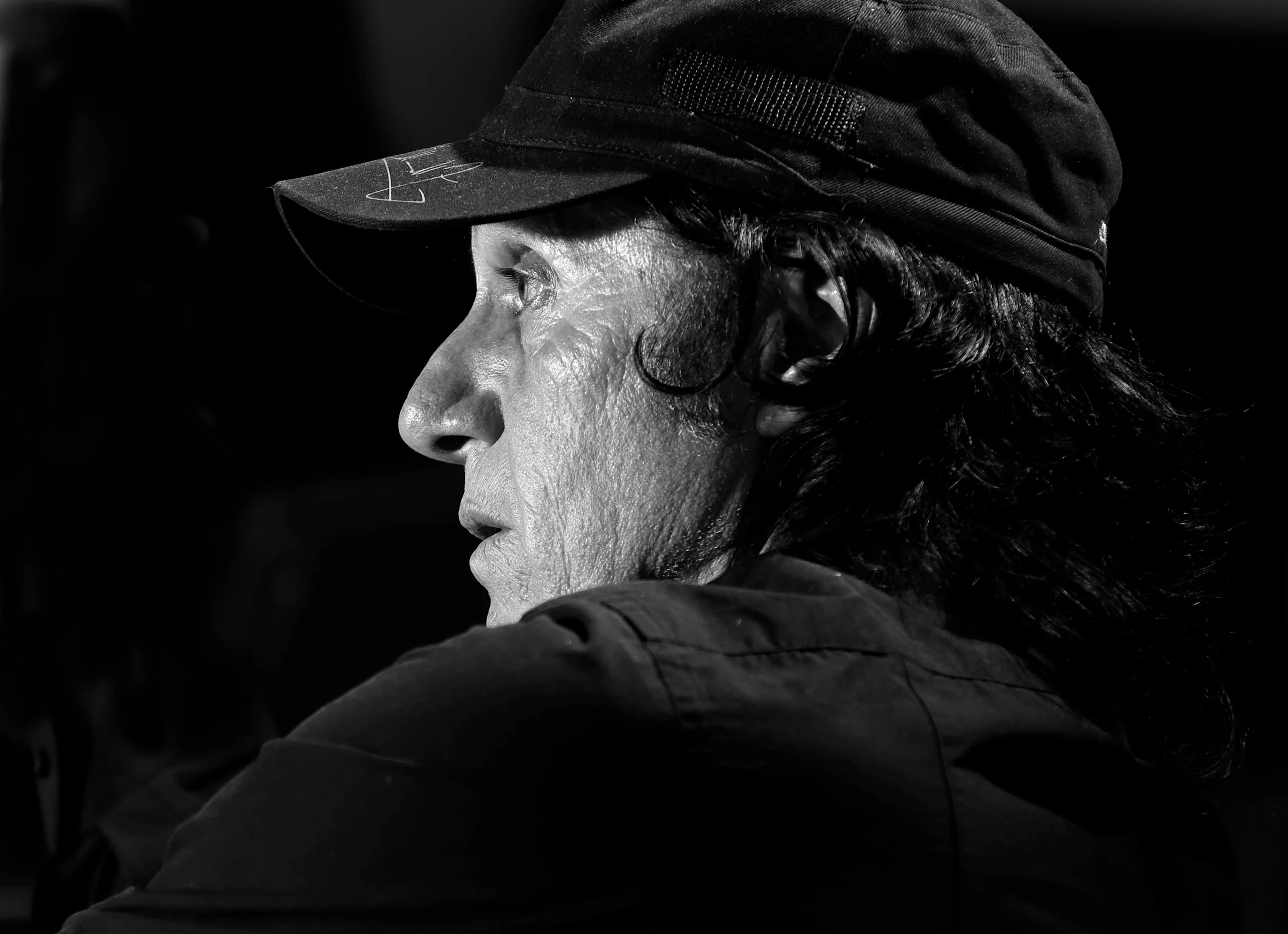
Guillermo Vilas
 Argentina
Also known as: Guillermo Vilas
Birthday
August 17, 1952
Birth Sign
Leo
Birthplace
Mar del Plata, Argentina
Age
74 years old
Height
6 ft 0 in (183 cm)
About
Guillermo Vilas is an Argentine former professional tennis player, the first South American man to win a Grand Slam singles title and one of the most successful clay-court competitors the sport has produced. He won four major singles championships: the French Open and US Open in 1977, and the Australian Open in 1977 and 1979. His career totals of 62 ATP singles titles and 16 doubles titles place him among the most prolific champions of the Open Era, and his 650-plus clay-court match wins remain an all-time record.
Vilas was ranked No. 2 in the world for 83 weeks, a position he first reached in April 1975. He never officially held the No. 1 ranking, though a statistical study published in 2015 argued he should have. That grievance, and the campaign around it, has followed him for decades and became the subject of a 2020 Netflix documentary. He was inducted into the International Tennis Hall of Fame in 1991.
Now 74, Vilas has kept a low public profile in recent years. Reports since 2023 have described health difficulties, and his family has not disclosed details. He remains a revered figure in Argentina and among followers of the clay game, and the Vilas Tennis Academy continues to operate under his name.
Early Life & Background
Guillermo Vilas was born on August 17, 1952, in Mar del Plata, a coastal city in Buenos Aires Province, Argentina. His father ran a sporting-goods business, and the family was comfortable enough that young Guillermo could play tennis regularly, a pursuit far from universal in mid-century Argentina. The city's red-clay courts, slow and demanding, shaped the game he would carry to the top: heavy topspin off a left-handed forehand, deep baseline positioning, and a willingness to outlast opponents rather than overpower them.
He was a serious junior competitor by his teens, and he turned professional in 1969 at 17. The early 1970s were spent on the South American clay circuit, where he learned to construct points over long rallies and to manage the physical toll of week-long tournaments on the surface. By 1974 he had broken into the upper tier of the world game, a rise that owed as much to conditioning as to shot-making. Contemporary accounts describe a young man who read widely and wrote in private, an unusual habit among touring players of the period.
That literary bent would later surface in published poetry and fiction, but in the early years it mostly set him apart in the locker room. He was not a showman. He was a grinder with a book in his bag, and the combination made him difficult to categorize long before he won anything of consequence.
Career Growth
The breakthrough came in 1974, when Vilas won the Masters Grand Prix, the year-end championship, and was named ITF Grand Prix world No. 1 for the season. He repeated the ITF honor in 1975 and reached No. 2 in the ATP computer rankings in April of that year, a position he would occupy for a record 83 weeks. The ranking peak, and the absence of a No. 1 beside it, became the defining tension of his career.
Then came 1977, the season that made his reputation. Vilas won the French Open at Roland Garros and the US Open, then played on clay at Forest Hills, and added 14 more singles titles for a total of 16 on the year. He also assembled a 53-match clay-court winning streak, the longest in the Open Era at the time. The French Open was the title he had wanted most; he later said he had won it a hundred times in his dreams. He took the Australian Open in 1977 and again in 1979, giving him four major singles championships in all.
Team success followed. In 1980 he partnered José Luis Clerc to win the ATP World Team Cup for Argentina, and in 1981 he helped his country reach the Davis Cup final. He retired from the tour for the first time in 1989 and was inducted into the International Tennis Hall of Fame in 1991. In retirement he has remained connected to the game through the Vilas Tennis Academy, and his record on clay, 650-plus match wins, has not been matched.
Career Timeline
Public Image & Style
Vilas cut an unusual figure on the 1970s tour: a left-handed clay-courter with a literary reputation, given to reading and writing while his peers were otherwise occupied. His public image has always been that of the thoughtful competitor rather than the showman. On court he was methodical, even severe, and off it he was reserved to the point of reticence. The adidas gear he wore in his prime became visually associated with him, and photographs from the 1977 season remain among the most reproduced images in Argentine sport.
In later life his image has shifted toward that of an elder statesman, invoked in arguments about ranking systems and historical greatness. The health reports since 2023 have added a note of concern to his public presence, though he has not spoken about them himself. He is not active on social media and has never cultivated a personal brand in the modern sense.
Fame & Fandom (iFAMOUS Rankings)
iFANN has not yet collected fame data for Guillermo Vilas, so no ranking placement is available for him. He is not on the September 2026 iFAMOUS Rankings flagship list. His fame rests instead on a specific and durable record: four Grand Slam singles titles, more than 650 clay-court match wins, and a ranking controversy that has kept his name in circulation for half a century.
The following is a traditional tennis audience rather than a formal fandom. No fan name exists in the iFANN data or in the published record, and there are no organized campaigns of the kind modern fanbases mount. What does exist is a persistent, informal constituency, strongest in Argentina and among followers of clay-court tennis, that returns to the No. 1 question whenever the subject of historical rankings comes up. The 2020 Netflix documentary gave that constituency a focal point, and petitions and social-media pushes tied to the film have kept the argument alive. In 2026, comments from Mats Wilander and Ion Țiriac renewed it again. Vilas himself has never campaigned publicly for the recognition.
Interesting Facts and Legends
Vilas is a published poet and fiction writer, a rarity among elite tennis players of any era. He was also known for his powerful arms and shoulders, a frequent topic of curiosity among fans, developed through a fitness regimen that was unusually rigorous for the 1970s tour. He won the US Open in 1977 when the tournament was still played on clay at Forest Hills, a detail that surprises readers who know it only as a hard-court event. And he was the first South American man to win a Grand Slam singles title, a fact often overshadowed by his later clay-court records.
The story fans still retell is the No. 1 that wasn't. A 2015 study by journalist Eduardo Puppo and mathematician Marian Ciulpan concluded that Vilas should have been ranked No. 1 for seven weeks in 1975 and 1976. The ATP declined to recognize the finding, and the dispute became the subject of a 2020 Netflix documentary, Guillermo Vilas: Settling the Score. In February 2026, Mats Wilander renewed the call, saying every day that passes is a greater injustice. In May 2026, Ion Țiriac went further and called Vilas the greatest tennis player of all time. Neither claim has changed the official record.
Notable Quotes
“I had won Roland Garros a hundred times in my dreams.”
Family & Personal Life
Vilas was born to a middle-class family in Mar del Plata; his father ran a sporting-goods business. He has kept the rest of his family life out of the public record. No marriage or children are documented in credible sources, and he has not discussed parents or siblings in any detail in the interviews available. In recent years, as reports of health difficulties have circulated, family members have remained private about his condition, issuing no public statements beyond what has appeared in the Argentine press. He lives in Argentina.
Notable Connections
José Luis Clerc, his Davis Cup and World Team Cup partner; Eduardo Puppo, the journalist whose 2015 study argued for his No. 1 ranking; Marian Ciulpan, the mathematician who co-authored it; Mats Wilander and Ion Țiriac, who have publicly advocated for his recognition; and Princess Caroline of Monaco, his most famous partner.
Relationships & Dating History
Vilas has been consistently private about his personal life, and the documented record is thin. The relationship that defined his public romantic image was with Princess Caroline of Monaco, whom he dated in the late 1970s. The pairing drew tabloid attention across Europe and is still recalled as one of tennis's more unlikely glamour stories. It ended in the early 1980s without leading to marriage; Caroline later married Stefano Casiraghi.
Beyond that relationship, no partner is publicly documented. No marriage and no children appear in the credible sources, and Vilas has not discussed his private life in interviews to any meaningful extent. As of 2026 he is understood to be single, with no current partner confirmed publicly.
- DatedPrincess Caroline of Monaco1978 - 1982A widely reported glamour pairing of the late 1970s that ended without marriage; Caroline later married Stefano Casiraghi.
Salary, Net Worth In 2026
$18 Million
iFANN Editorial Team estimate
Guillermo Vilas competed in an era when tennis prize money bore little resemblance to today's figures, and his fortune reflects that. His career earnings came from tournament purses during the 1970s and 1980s, endorsement arrangements (most visibly with adidas, whose Vilas-era equipment remains identifiable), and later business interests. The Vilas Tennis Academy, which continues to operate, is the most visible of those ventures. Argentine real estate holdings are also understood to form part of his assets.
Estimates of his wealth vary. Celebrity net-worth aggregators and search-surfaced figures cluster in a range of roughly $10 million to $20 million, with no verified number published by a major financial outlet. The iFANN Editorial Team's review of those estimates points to approximately $18 million as of 2026. That figure is iFANN's own editorial estimate, not a figure taken from any single source, and it should be read as an approximation rather than an audited total.
His financial trajectory has been steady rather than dramatic. There were no major catalog sales or late-career windfalls of the kind that reshape athletes' balance sheets, and his public profile in retirement has been quiet. The academy provides ongoing income, and his property holdings have likely appreciated over time. Given the health concerns reported since 2023, the long-term management of his affairs is a matter for his family, about which nothing public is known.
Awards Won (10)
Vilas won four Grand Slam singles titles: the French Open and US Open in 1977 and the Australian Open in 1977 and 1979. He was ITF Grand Prix world No. 1 in 1974, 1975, and 1977, won the 1974 Masters Grand Prix, and took the 1980 ATP World Team Cup with José Luis Clerc. He was inducted into the International Tennis Hall of Fame in 1991.
1991 · Inductee
Career
1980 · Team
Argentina (with José Luis Clerc)
Known For
1977 French Open
1977 · Champion
1977 US Open
1977 · Champion
1977 Australian Open
1977 · Champion
1979 Australian Open
1979 · Champion
53-match clay-court winning streak
1977 · Record holder
Keywords
Sources
Quick Facts
- Profession
- tennis player, poet
- Born
- August 17, 1952
- Birthplace
- Mar del Plata, Argentina
- Gender
- Male
- Birth Sign
- Leo
- Height
- 6 ft 0 in (183 cm)
- Grand Slam singles titles
- 4
- ATP singles titles
- 62
- Highest ATP ranking
- No. 2
- Hall of Fame induction
- 1991
Personal Details
- Full Name
- Guillermo Vilas
- Height
- 6 ft 0 in (183 cm)
Frequently Asked Questions
How many Grand Slams did Guillermo Vilas win?
Was Guillermo Vilas ever world No. 1?
Is Guillermo Vilas still alive in 2026?
Who is Guillermo Vilas's wife?
What is Guillermo Vilas's net worth in 2026?
Similar People
Join the community
fans discussing