The Kelly Family
A multi-generational family band that conquered Europe with rock, pop, and folk.
13
Members
About
The Kelly Family stands as a unique phenomenon in music history, blending American heritage with a deeply European identity. While they originated in New York City, the group's career trajectory shifted dramatically after their parents moved the family to Spain in 1969. This relocation laid the groundwork for a sound that would eventually dominate the charts in Germany, Austria, and across the continent. The group consists of multiple generations of the Kelly clan, typically featuring nine siblings performing together, occasionally joined by their parents John Sr. and Maureen in the early days.
Known for their versatility, the band performs a wide array of styles including rock, pop, folk, and Latin rhythms. They are one of the few Western acts to achieve massive commercial success singing simultaneously in English, German, Spanish, and Basque. Their sales figures exceed 20 million albums globally, making them one of the best-selling acts in German history. Despite this immense success, they remain largely unknown in their country of origin, the United States.
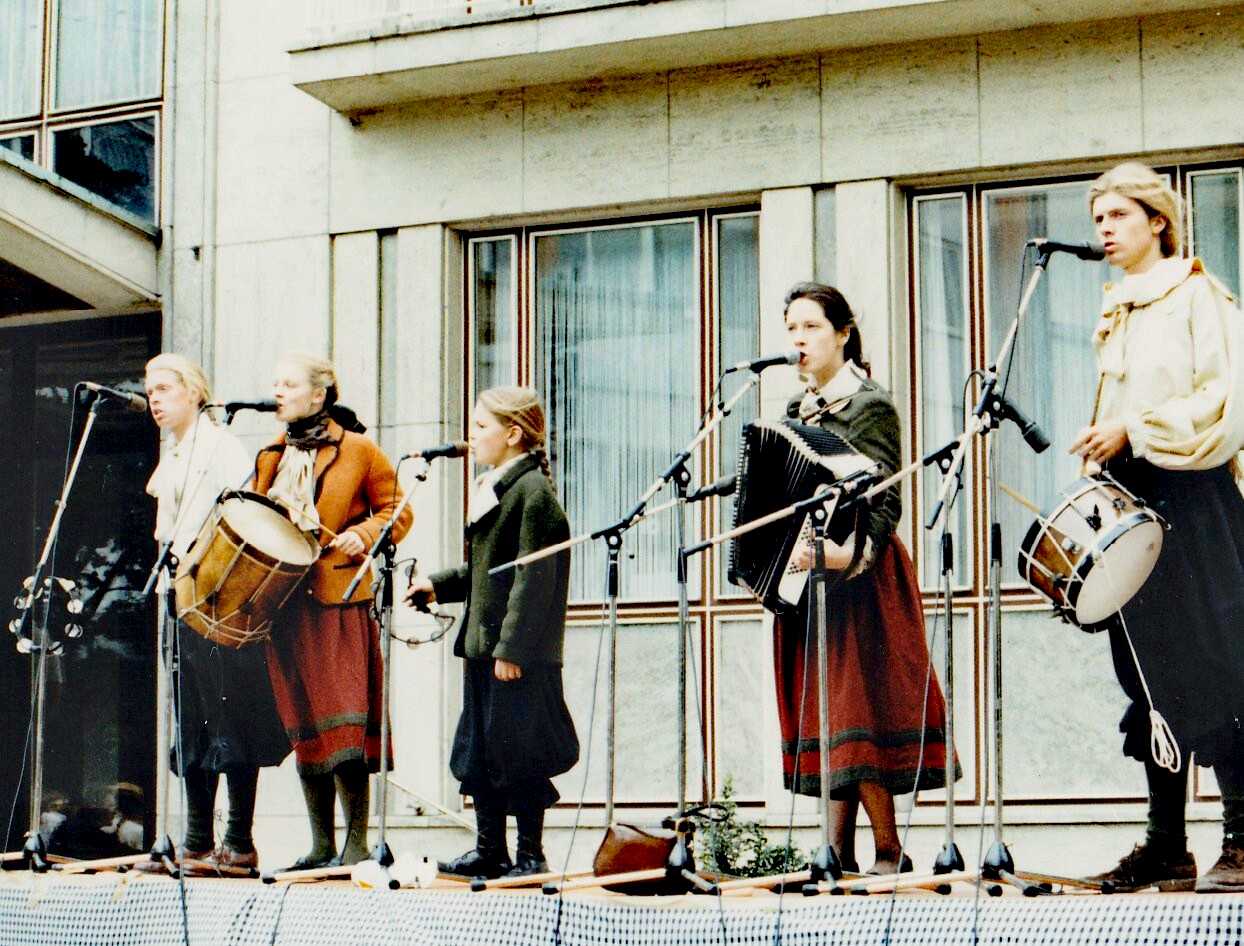
Their visual identity evolved from a bohemian ragamuffin aesthetic to a polished mainstream look. In the mid-1980s through the late 1990s, the members traveled in a double-decker bus and a houseboat, cultivating a reputation for authenticity and a nomadic lifestyle. The group effectively split around the year 2000 due to internal conflicts and individual ambitions, though members continue to perform individually or in small reunions.
Formation Story
The story of The Kelly Family begins in New York City, where parents John Kelly Sr. and Maureen Kelly raised thirteen children. Seeking a better life and an escape from the economic struggles of the time, the family relocated to Spain in 1969. The transition was not immediate; the parents initially worked various jobs while the children grew up in a multicultural environment. The musical journey started informally when the parents began singing with their offspring at local venues in Spain, blending Irish folk traditions with the sounds of their new home.
By the mid-1970s, the family had established themselves as a performing unit. They adopted a distinct visual style that set them apart from the polished pop acts of the era. Long hair, colorful and often handmade clothing, and a rugged appearance became their trademark. This ragamuffin image reflected their lifestyle as itinerant performers who traveled extensively across Europe. They performed in small clubs and on the streets, honing their craft and building a loyal following through sheer persistence.
The official debut album Home arrived in 1980, marking the start of their professional recording career. However, their breakthrough into the mainstream occurred later. Throughout the 1980s, they continued to tour relentlessly, often living out of a converted double-decker bus. This period solidified their reputation as a hardworking family act rather than a manufactured pop group. By the late 1980s, hits like An Angel propelled them to stardom in Germany, where they would spend the next decade dominating the airwaves.
Members
Musical Style
The musical evolution of The Kelly Family spans three distinct eras. The first phase, lasting from the late 1970s to the mid-1980s, was rooted in acoustic folk and traditional Irish ballads. Their early work featured raw, intimate arrangements that highlighted their vocal harmonies and reflected their street performance origins. Songs from this period often included covers of classic rock tracks and original compositions with a strong folk influence.
The second era, from the mid-1980s to the late 1990s, marked their golden age. During this time, the group incorporated synthesizers, drum machines, and polished production techniques into their sound. They created a blend of emotional balladry and upbeat dance-rock that resonated with audiences across Europe. Hits like Fell in Love with an Alien showcased this shift toward a more commercial Euro-pop style. They also experimented with Latin rhythms, releasing Spanish-language albums that topped charts in Spain and Latin America.
In the third era, starting around 2000, the remaining members adopted a more conventional mainstream pop and adult contemporary sound. The rustic ragamuffin image was discarded in favor of a cleaner, more polished look. The music became less experimental and focused on radio-friendly melodies and sentimental ballads. Despite these changes, the core element of multi-part vocal harmonies remained a constant throughout their career.
Discography
| Title | Year |
|---|---|
| Almost Heaven | 1999 |
| Good Neighbor | 1996 |
| Live in Vienna | 1995 |
| One World | 1990 |
| Rock 'n' Roll | 1988 |
| Naked | 1987 |
| Over the Hump | 1985 |
| The Kelly Family | 1983 |
| Home | 1980 |
Tours
The Rock 'n' Roll Tour
1988 · 45 shows
One World Tour
1990 · 60 shows
Live in Vienna Concert
1995 · 1 shows
Good Neighbor Tour
1996 · 120 shows
Cultural Impact
The Kelly Family played a significant role in shaping the European music landscape of the 1990s. They demonstrated that a non-English speaking market could embrace a family band that sang in multiple languages, breaking down linguistic barriers in a way few other acts managed. Their success paved the way for other family-oriented acts and influenced the development of the Euro-dance and pop-rock genres during that decade.
Their visual presentation challenged the manufactured aesthetics of 1980s pop culture. By presenting a ragged, authentic image, they offered an alternative to the highly produced boy bands and girl groups emerging at the time. This approach resonated with fans who valued perceived authenticity over glamour. The group also became a cultural touchstone in Germany, where they were ranked as the sixth most popular music act in the 1990s.
Even after the group split, their influence persisted through the solo careers of individual members. Angelo Kelly, for instance, continued to perform and record, keeping the family name alive in the public consciousness. Their extensive touring history and ability to connect with diverse audiences across continents established a template for international success that relied on genuine connection rather than marketing hype.
Fandom Culture
The Kelly Family does not have a universally recognized official fandom name like those found in modern K-pop. Fans are generally referred to simply as "Kelly Family Fans" or by country-specific designations such as "Kelly-Fans" in Germany. There is no single lightstick or official fan color associated with the group, although green and white are sometimes linked to their branding.
Despite the lack of formal organization, the fanbase remains dedicated and active. Communities exist online where fans share recordings, discuss discography details, and organize meetups. Reunion concerts draw large crowds of longtime supporters who attend en masse to celebrate the group's legacy. The emotional connection to songs like Who'll Come With Me, written as a tribute to a deceased sibling, has fostered a deep sense of shared experience among listeners.
Awards Won (24)
The Kelly Family received numerous accolades primarily in Germany and Austria, where they were household names. They won multiple Echo Awards, considered among the most prestigious music awards in the German-speaking world, including categories for Best Pop Group and Best National Act. The group also received the Goldene Stimmgabel and the Bambi Award for their contributions to music and entertainment. Their pan-European success led to recognition at the European Music Awards, cementing their status as a major force in continental pop culture.
Best National Group
for: Good Neighbor
Best Pop Group
for: Live in Vienna
Best National Act
for: Rock 'n' Roll
Pop Group
for: One World
Pop
for: An Angel
Music
for: Career Achievement
Best European Act
for: Fell in Love with an Alien
Best International Group
for: The Kelly Family
Best International Band
for: The Kelly Family
Milestones
Release of debut album Home.
Release of hit single An Angel.
Peak commercial success begins in Germany.
Release of Who'll Come With Me (David's Song).
Official split of the original group lineup.
Trivia
The family lived and traveled in a converted double-decker bus and a houseboat for over a decade, which became a symbol of their unique lifestyle., The song "Who'll Come With Me" was written as a tribute to David Kelly, a sibling who died young, adding a layer of emotional depth to their music., Despite selling millions of albums, the group remains virtually unknown in the United States, their country of origin., They are one of the few Western acts to achieve top-tier success singing in English, German, Spanish, and Basque simultaneously., The group sold over 20 million albums worldwide, making them one of the best-selling acts in German history.
Keywords
Sources
Quick Facts
- Origin
- Europe
- Label
- BMG Rights Management, Bertelsmann Music Group, Ariola, Universal Music Group, EMI, Polydor Records
- Genres
- pop music, pop rock
- Members
- 13
- Status
- Active
Group Info
- Formed
- 1970s
- Debut
- 1980
- Debut Song
- Home
- Origin
- New York City, USA (based in Europe)
- Company
- Independent / BMG Rights Management
- Label
- Ariola Records, BMG, Universal Music Group, EMI, Polydor Records
- Status
- Active
Also Known As
Join the community
fans discussing