 United States
About
As of 2025, the First Edition is long disbanded, but its legacy has found a new audience. In March 2025, eight of the band's albums were released on streaming platforms for the first time, introducing their genre-blending catalog to a generation raised on digital music. The group is remembered primarily for its run of socially conscious singles and for launching Kenny Rogers, who would become one of the best-selling country artists of all time. The band's sound, equal parts psychedelic pop, folk storytelling, and country-rock, still sounds distinctive, and songs like "Ruby, Don't Take Your Love to Town" remain staples of classic radio.
Formation Story
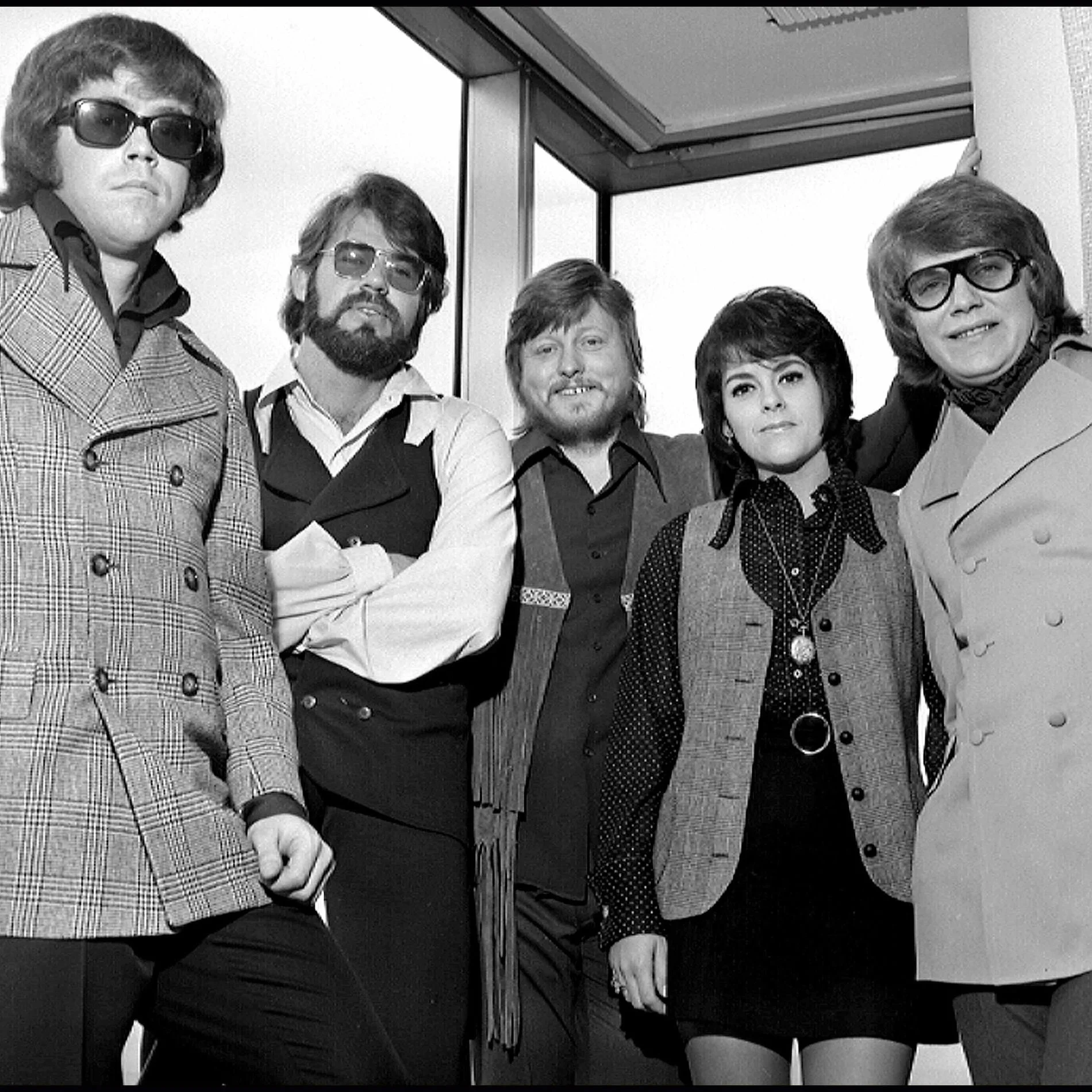
The First Edition grew out of frustration. In 1967, several members of the New Christy Minstrels, a large folk ensemble, felt creatively boxed in by the group's wholesome, mainstream sound. Mike Settle, whose songwriting was taking on rock characteristics, conceived a new band that would allow for more experimentation. He recruited fellow Minstrels Kenny Rogers, Terry Williams, and Thelma Camacho. The only non-Minstrel was drummer Mickey Jones, who had toured with Bob Dylan on his first electric world tour. The group's name came from the flyleaf of a book, and they adopted a striking black-and-white visual motif, wearing only monochrome clothing and performing on black-and-white sets. Terry Williams' mother worked for producer Jimmy Bowen, and through that connection the band secured a deal with Reprise Records in 1967. Their debut single, "I Found a Reason," barely sold, but the follow-up, "Just Dropped In (To See What Condition My Condition Was In)," hit No. 5 on the Billboard Hot 100 in early 1968 and put them on the map.
Members
Musical Style
The First Edition's music evolved rapidly. Early on, they rode the psychedelic wave with the trippy, effects-laden "Just Dropped In." By 1969, they had pivoted to narrative-driven songs with a social conscience: "Ruby, Don't Take Your Love to Town" told the story of a disabled Vietnam War veteran, while "Reuben James" addressed racial prejudice. "Something's Burning," written by Mac Davis, pushed boundaries with sexually charged lyrics. The band's sound was a hybrid of Rogers' warm, soulful baritone, Jones' rock-solid drumming, and layered harmonies. Their 1972 concept album The Ballad of Calico was their most ambitious project, a thematic song cycle about a California ghost town. Throughout, the band resisted easy categorization, mixing country, folk, rock, and pop in a way that made them hard to market, their singles sold well, but albums lagged behind.
Discography
| Title | Year |
|---|---|
| The Ballad of Calico | 1972 |
| Transition | 1971 |
| Tell It All Brother | 1970 |
| Something's Burning | 1970 |
| Ruby, Don't Take Your Love To Town | 1969 |
| The First Edition '69 | 1969 |
| The First Edition's 2nd | 1968 |
| The First Edition | 1967 |
Tours
Reunion Tour
2013
Reunion Performances
2010
Cultural Impact
The First Edition helped pave the way for the country-rock crossover that would dominate the 1970s. By blending folk storytelling with rock instrumentation and pop hooks, they anticipated the sound that Kenny Rogers would perfect as a solo artist. The band was also uncommonly willing to tackle controversial subjects. "Ruby, Don't Take Your Love to Town" addressed the trauma of disabled veterans at a time when the Vietnam War was deeply divisive. "Reuben James" confronted racism head-on. "Just Dropped In" became a cultural touchstone when it was featured in the 1998 film The Big Lebowski, introducing the song to a new generation. The band's monochrome aesthetic and theatrical stage shows also influenced the visual presentation of later country and rock acts.
Fandom Culture
The First Edition did not cultivate the kind of organized fandom seen in later pop groups. There was no official fan club, lightstick, or designated fan color. Fans were simply record buyers and radio listeners. What the band did inspire was a loyal following that persisted long after their breakup. Reunion shows in 2010 and 2013-2014 drew enthusiastic crowds, and a 2015 panel at the Country Music Hall of Fame, where surviving members performed together for the first time in 44 years, earned a standing ovation from an audience of 600. The band's fan base has been sustained by classic-rock radio and, more recently, by the 2025 streaming release of their catalog.
Awards & Accolades
Milestones
Band formed; signed with Reprise Records
First major hit 'Just Dropped In (To See What Condition My Condition Was In)' reaches No. 5 on US charts
Thelma Camacho departs; Mary Arnold joins; band renamed Kenny Rogers and the First Edition
'Ruby, Don't Take Your Love to Town' reaches No. 6 US, No. 2 UK
Official name change to Kenny Rogers and the First Edition
Band disbands; Kenny Rogers launches solo career
Country Music Hall of Fame panel discussion and surprise performance
Catalog released on streaming platforms for the first time
Trivia
The band's name was taken from the flyleaf of a book. Mickey Jones was the only member who had not been in the New Christy Minstrels; he had been Bob Dylan's drummer on his first electric tour. Terry Williams' mother helped the band get their record deal by working for producer Jimmy Bowen. The B-side of "Something's Burning" was Rogers' own "Momma's Waitin'," which packed mother, prison, death, God, and coming home into a single song. Keyboardist John Hobbs was in the group so briefly that he never appeared on any album covers or publicity photos.
Keywords
Sources
Quick Facts
- Origin
- United States
- Label
- Reprise Records
- Genres
- country rock, psychedelic pop, folk rock
- Years Active
- 1967–1976
Group Info
- Formed
- 1967
- Debut
- 1967
- Debut Song
- I Found a Reason
- Origin
- United States
- Label
- Reprise Records
- Status
- Disbanded (1976)
Also Known As
Join the community
fans discussing