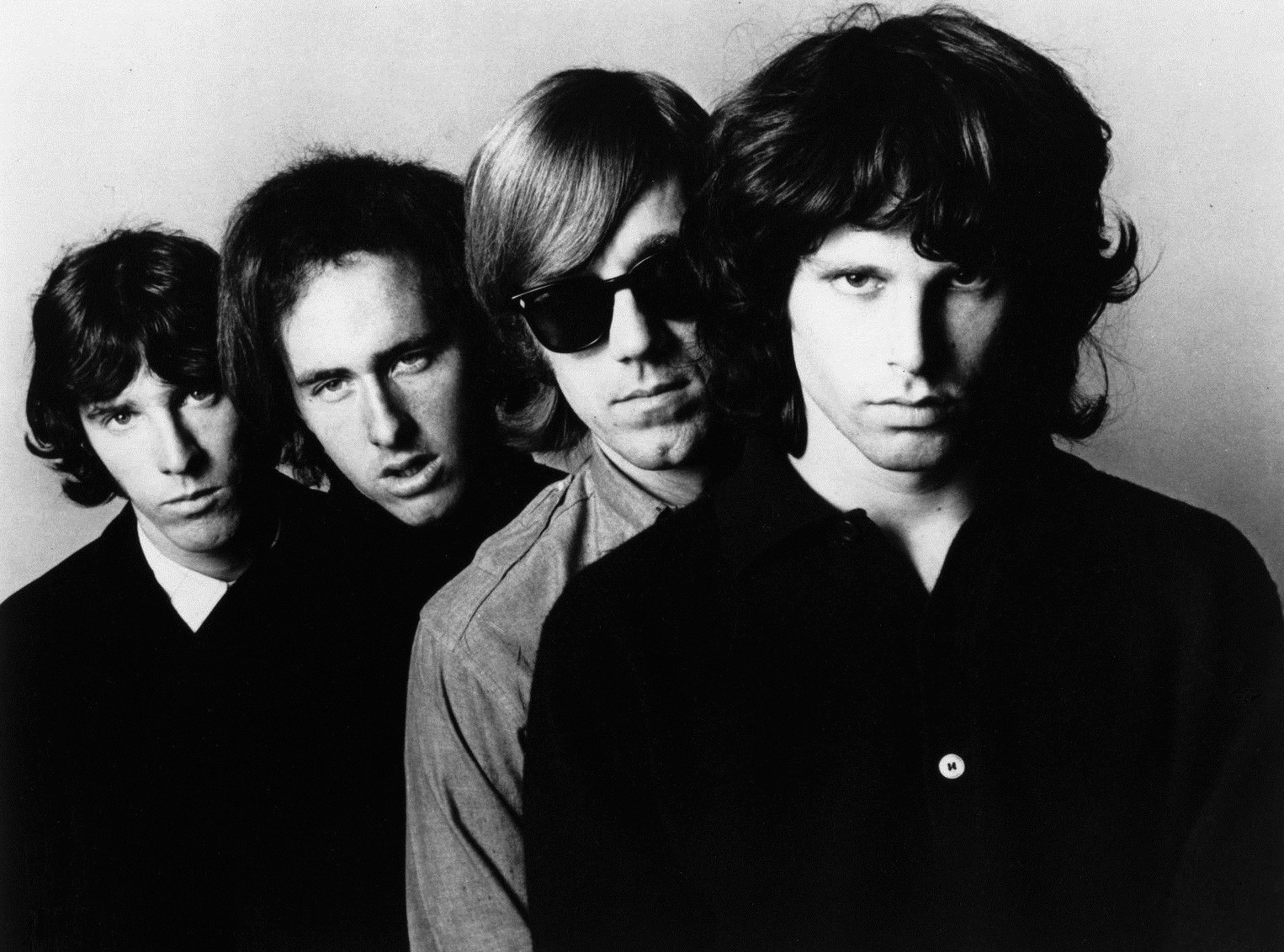
The Doors
 United States
The self-styled 'erotic politicians' who turned rock into poetry.
Doors fans
Fandom
4
Members
About
The Doors are an American rock band, widely recognized for their distinctive blend of rock, blues, and psychedelic music. Having sold over 100 million records worldwide, they remain an influential force in the music industry, with their songs continuing to resonate with new generations through streaming, film, and television. The band was inducted into the Rock and Roll Hall of Fame in 1993, a testament to their enduring legacy. Currently, the surviving members occasionally perform together, keeping the spirit of The Doors alive for fans around the world.
Formation Story
The Doors formed in Los Angeles, California, USA, in July 1965, when Jim Morrison and Ray Manzarek, both UCLA film school alumni, had a chance encounter on Venice Beach. Morrison, then 21 and living on a rooftop, was primarily writing poetry. Manzarek, 26, was a keyboardist who had been playing in a surf-rock band called Rick & the Ravens. When Morrison mentioned he had been writing songs, Manzarek asked to hear one. Morrison sang "Moonlight Drive" in a low voice, and Manzarek was immediately struck by the lyrics' imagery, later recalling that he got chills. This powerful impression led Manzarek to propose they form a band with Morrison as the singer.
Manzarek quickly recruited John Densmore, a drummer he had met at a Maharishi Mahesh Yogi meditation lecture. Densmore, in turn, suggested Robby Krieger, a guitarist he had played with in a band called the Psychedelic Rangers. Krieger, who had studied flamenco guitar, brought a distinct fingerpicking style that would become a signature element of the band's sound. The four clicked instantly during their first rehearsal in August 1965, working out arrangements for "Moonlight Drive," "Summer's Almost Gone," and other early Morrison lyrics in a small room above a Venice bar. They spent months playing small clubs, honing their sound and developing their unique improvisational chemistry. Their first paid gig came in May 1966 at the London Fog on Sunset Strip, a nearly empty club where they performed five sets a night, six nights a week, for $10 each, often playing just for tips.
By the summer of 1966, The Doors had become the house band at the Whisky a Go Go, where their sets sometimes stretched for hours, allowing them to further refine their tight, improvisational style. Their big break arrived when Elektra Records president Jac Holzman saw them perform in August 1966. Impressed by their captivating live show, Holzman signed them after a single performance. The band, managed by Bill Siddons Management, entered the studio that fall to record their debut album. The Doors was released on January 4, 1967, introducing the world to their distinctive sound with tracks like "Break On Through (To the Other Side)."
Members
Musical Style
The Doors' sound was built on a foundation of blues and jazz, but they twisted those genres into something darker and more theatrical. Manzarek's keyboard was the band's most distinctive element: he played a Vox Continental organ and a Fender Rhodes piano bass simultaneously, covering both the harmonic and low-end roles. This meant the band had no dedicated bassist, which gave their music a hollow, open feel. Krieger's guitar work drew from flamenco, blues, and Indian raga, adding intricate fingerpicked lines. Densmore's drumming was jazz-influenced and syncopated, avoiding standard rock backbeats.
Morrison's lyrics were the band's secret weapon. He was deeply influenced by French symbolist poets like Arthur Rimbaud and by Friedrich Nietzsche's philosophy. His words often explored themes of death, sex, freedom, and madness, delivered in a rich, theatrical baritone. Songs like "The End" and "When the Music's Over" were epic, improvisational pieces that could stretch past ten minutes in concert. The band's early albums leaned heavily on psychedelic rock, but by Morrison Hotel and L.A. Woman they had pared back to a raw, bluesy sound, as heard on "Roadhouse Blues" and "Riders on the Storm."
Discography
| Title | Year |
|---|---|
| Full Circle | 1972 |
| Other Voices | 1971 |
| L.A. Woman | 1971 |
| Morrison Hotel | 1970 |
| The Soft Parade | 1969 |
| Waiting for the Sun | 1968 |
| Strange Days | 1967 |
| The Doors | 1967 |
Tours
Final Tour
1971 · 12 shows
American Tour
1970 · 40 shows
American Tour
1969 · 35 shows
World Tour
1968 · 60 shows
American Tour
1967 · 50 shows
Cultural Impact
The Doors were at the center of the 1960s counterculture, and their music became a soundtrack for the era's rebellion. Jim Morrison's persona as the Lizard King, a leather-clad poet who taunted authority, inspired a generation of rock frontmen from Iggy Pop to Eddie Vedder. The band's fusion of poetry and rock helped legitimize rock lyrics as a literary form, influencing artists like Patti Smith and Lou Reed.
Their impact extended beyond music. Morrison's arrest in Miami in 1969 for indecent exposure became a flashpoint in the culture wars over free speech and obscenity. The band's music was used in Oliver Stone's 1991 film The Doors, which introduced them to a new generation and sparked a revival of interest. Their songs have appeared in hundreds of movies, TV shows, and commercials. The Doors were inducted into the Rock and Roll Hall of Fame in 1993 and received a Grammy Lifetime Achievement Award in 2007. Jim Morrison's grave at Pere Lachaise Cemetery in Paris has become a pilgrimage site for fans from around the world.
Fandom Culture
Doors fans don't have an official name or lightstick, but they have traditions that go back decades. At concerts, fans have long held up lighters or phone lights during "Light My Fire," creating a sea of tiny flames. The band's aesthetic is black and white, drawn from the stark design of their debut album cover and Morrison's preference for dark clothing.
Morrison's grave in Paris is the most famous fan destination. Fans leave notes, poems, and bottles of whiskey at his tombstone. July 3, the anniversary of his death, is observed as a day of remembrance with listening parties and tribute events. The Doors' official fan club, which started in the 1960s, was revived online in 2017. Fan projects include the restoration of Morrison's 1971 Paris recordings and flash mob performances of "Light My Fire" in major cities.
Awards Won (8)
The Doors have won two major lifetime honors: induction into the Rock and Roll Hall of Fame in 1993 and a Grammy Lifetime Achievement Award in 2007. They have never won a competitive Grammy, MTV VMA, or Billboard Music Award.
Hall of Fame
for: "Riders on the Storm"
Lifetime Achievement Award
for: Themselves
Hall of Fame
for: The Doors
Hall of Fame
for: "Light My Fire"
Tommy Vance "Inspiration" Award
for: Themselves
National Recording Registry
for: The Doors
Milestones
Inducted into the Rock and Roll Hall of Fame
Received Grammy Lifetime Achievement Award
Debut album added to National Recording Registry
Fame & Fandom (iFAMOUS Rankings)
Trivia
Robby Krieger wrote "Light My Fire" after being inspired by a line from the Rolling Stones' "Play with Fire." He initially thought the song was too long for radio, but Morrison's insistence on keeping the full version paid off when it became a number one hit.
Jim Morrison never learned to play an instrument. All his contributions were vocal and lyrical.
The band's name came from Aldous Huxley's book The Doors of Perception, which Morrison had read. Huxley had taken the phrase from William Blake.
John Densmore and Ray Manzarek sued each other repeatedly over the years regarding the use of the band's name and music. In 2013, Densmore won a lawsuit blocking Manzarek and Krieger from touring as "The Doors of the 21st Century."
The Doors' debut album was recorded in six days for about $10,000.
Keywords
Quick Facts
- Type
- Rock Band
- Formed
- 1965
- Origin
- Los Angeles
- Label
- Elektra
- Genres
- psychedelic rock, blues rock, classic rock
- Members
- 4
- Status
- Inactive
Group Info
- Fandom
- Doors fans
- Formed
- 1965-07
- Debut
- 1967-01-04
- Debut Song
- Break On Through (To the Other Side)
- Origin
- Los Angeles, California, USA
- Company
- Bill Siddons Management
- Label
- Elektra Records
- Status
- Disbanded (1973-03)
Join the community
fans discussing