The Cure
 United Kingdom
Cureheads
Fandom
5
Members
About
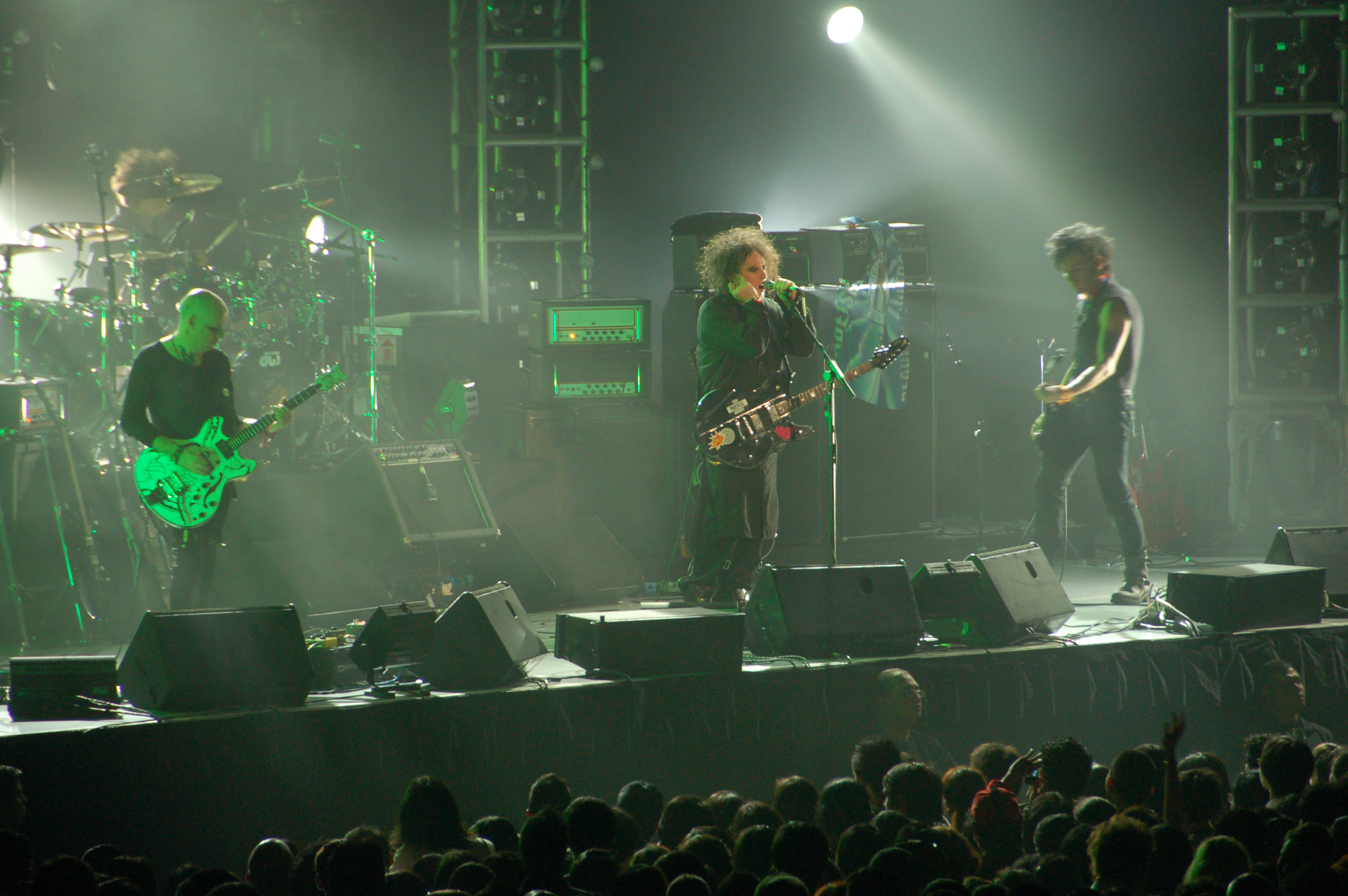
The Cure are an English rock band, a defining force in gothic rock and alternative music. Built around the singular vision of frontman Robert Smith, they are instantly recognizable by Smith's plaintive, quavering voice and iconic image. Musically, they are remarkable for their range, balancing stark, brooding atmospheres with bright, irresistible pop singles. Their sprawling, melancholic masterpiece Disintegration is widely regarded as one of the greatest albums of its kind. Over decades the band has retained a devoted, multigenerational following while continuing to tour and record. Smith has become a beloved elder statesman of alternative music admired for his integrity and loyalty to fans. Inducted into the Rock and Roll Hall of Fame, they remain hugely influential, regarded as one of the most important and beloved bands in alternative rock.
Formation Story
The foundational story of The Cure began in 1976, rooted in the town of Crawley, West Sussex, England. It was there, within the halls of Notre Dame Middle School, that a group of close friends – Robert Smith, Michael Dempsey, and Lol Tolhurst – first came together with a shared musical vision. Driven by an enthusiasm for the raw energy of punk and the innovative sounds of the emerging post-punk scene, they started playing music. Their initial moniker was The Easy Cure, a name derived from a particular phrase in a song that resonated with them. However, it was Robert Smith, whose singular artistic vision would become the band's enduring hallmark, who soon decided to streamline their identity. He advocated for shortening the name simply to The Cure, perceiving it as concise and carrying a distinctly positive connotation. Crucially, the band's early development was an entirely organic process, shaped by their deep friendships and collective musical exploration rather than any formal audition structure or guided training period.
With their sound steadily evolving, the trio began performing at local gigs, building a following within their community. A pivotal step came in 1977 when they recorded a demo tape, which notably featured a track titled "Killing an Arab." This demo proved instrumental, quickly capturing the discerning ear of Fiction Records, leading to the band's signing and their entry into the professional music world. The Cure officially made their debut in December 1978 with the release of their first single, "Killing an Arab". This was swiftly followed by the arrival of their debut album, Three Imaginary Boys, in May 1979. Emerging directly into the vibrant and experimental landscape of the post-punk era, The Cure immediately distinguished themselves, laying the groundwork to become one of the period's most influential and enduring musical groups.
Members
Former Members
Lol Tolhurst (Laurence Andrew Tolhurst)
Drums, Keyboards · 1976–1989
Michael Dempsey (Michael Dempsey)
Bass Guitar · 1976–1979
Matthieu Hartley (Matthieu Hartley)
Keyboards · 1979–1980
Phil Thornalley (Phil Thornalley)
Bass Guitar · 1983–1984
Andy Anderson (Andrew Anderson)
Drums · 1983–1984
Boris Williams (Boris Peter Williams)
Drums · 1984–1994
Porl Thompson (Paul Thompson)
Guitar, Keyboards · 1976–1978, 1984–1993, 2005–2010
Perry Bamonte (Perry Bamonte)
Guitar, Keyboards · 1990–2005
Musical Style
The Cure's music evolved dramatically over their career, defying easy categorization. Their early work, from 1979 to 1981, was stark post-punk with minimalist guitar lines and detached vocals, as heard on albums like Three Imaginary Boys and Seventeen Seconds. With 1982's Pornography, they plunged into a dense, claustrophobic sound that became a blueprint for gothic rock, characterized by deep bass, swirling keyboards, and Smith's anguished delivery. The mid-1980s saw a shift towards pop accessibility, with albums like The Head on the Door and Kiss Me, Kiss Me, Kiss Me incorporating catchy melodies, flamenco guitars, and even funk rhythms. The 1989 masterpiece Disintegration combined lush, layered production with themes of loss and longing, creating a sound that was both grand and intimate. The 1990s brought more experimentation, from the shoegaze textures of Wish to the eclectic, electronic-tinged Wild Mood Swings. Lyrically, Smith's songs often explore melancholy, love, and existential angst, delivered with a distinctive quavering voice that conveys deep emotion.
Discography
| Title | Year |
|---|---|
| 4:13 Dream | 2008 |
| The Cure | 2004 |
| Bloodflowers | 2000 |
| Wild Mood Swings | 1996 |
| Wish | 1992 |
| Disintegration | 1989 |
| Kiss Me, Kiss Me, Kiss Me | 1987 |
| The Head on the Door | 1985 |
| The Top | 1984 |
| Pornography | 1982 |
| Faith | 1981 |
| Seventeen Seconds | 1980 |
| Three Imaginary Boys | 1979 |
Tours
Lost World Tour
2023 · 50 shows
The Cure Tour
2008 · 70 shows
The Bloodflowers Tour
2000
The Wish Tour
1992 · 80 shows
The Prayer Tour
1989
Disintegration Tour
1989 · 100 shows
Cultural Impact
The Cure's influence extends far beyond their record sales. They are widely credited with defining the gothic rock genre, shaping the sound and aesthetic of countless bands that followed, from Depeche Mode and Nine Inch Nails to My Chemical Romance and The 1975. Robert Smith's visual style, pale skin, smeared lipstick, and disheveled black hair, became an iconic look that permeated fashion and subculture. The band also helped popularize alternative rock in the mainstream, particularly in the United States, where Disintegration and Wish achieved significant commercial success. Their music has been used in numerous films and television shows, and they have been cited as a major influence by artists across genres including indie, metal, and electronic. Beyond music, the band has supported charitable causes, including Teenage Cancer Trust, and Smith has been outspoken on issues such as ticket pricing and music industry practices.
Fandom Culture
The Cure's fanbase, known as Cureheads, is one of the most dedicated in alternative music. Fans often dress in gothic fashion at concerts, creating a sea of black clothing, and it is a tradition to hold up lighters or phones during the song Pictures of You. The band's official fan colour is black, and while they do not have a conventional lightstick, fans use glowsticks or simply raise their hands during performances. The Cure are known for marathon live shows, often lasting over three hours, and fans travel from around the world to see them. The community is deeply loyal, with many fans following the band for decades and passing their love down through generations.
Awards Won (36)
The Cure have won multiple BRIT Awards, including Best British Band (1991), Best British Group (1995), Best British Live Act (1997), and the Outstanding Contribution to Music Award (2019). They have also won an MTV Video Music Award (Best Video from a Film, 1997 for Wrong Number), several NME Awards (Best Band in 1989 and 1992, Best Album in 1990 for Disintegration, Best Live Band in 1992), Q Awards (Best Album 1992 for Wish, Best Band 1995, Classic Song 2004 for Boys Don't Cry), and an Ivor Novello Award for International Achievement (1995). They have been nominated for Grammys but have not won.
Best Video from a Film
for: Wrong Number
Outstanding Contribution to Music
Best British Live Act
Best British Group
Best British Band
for: Disintegration
for: "Lullaby"
for: The Cure
International Achievement
Best Album
for: Disintegration
Best Band
Milestones
Inducted into the Rock and Roll Hall of Fame
First UK #1 album with Wish
First US Top 10 single with Lovesong (peaked at #2)
First UK Top 10 album with Pornography
Fame & Fandom
Trivia
Robert Smith once said the band's name was chosen because it was short and punchy. Smith is the only person to have played on every Cure album. Disintegration was initially considered a commercial risk by the record label but became their biggest-selling album. The band has a tradition of playing concerts lasting three hours or more. Smith wrote Lovesong for his wife Mary as a wedding gift. The 1984 single The Caterpillar was inspired by a children's book. Smith has a famous dislike of being photographed smiling. The band has had over 20 members throughout its history.
Keywords
Quick Facts
- Formed
- 1976
- Origin
- Crawley, England
- Label
- Fiction Records, Geffen Records
- Genres
- alternative rock, gothic rock, post-punk, new wave
- Members
- 5
- Status
- Active
Group Info
- Fandom
- Cureheads
- Formed
- 1976
- Debut
- December 1978
- Debut Song
- Killing an Arab
- Origin
- Crawley, West Sussex, England
- Company
- Fiction Records
- Label
- Fiction Records, Geffen Records
- Fan Color
- Black
- Status
- Active
Join the community
fans discussing