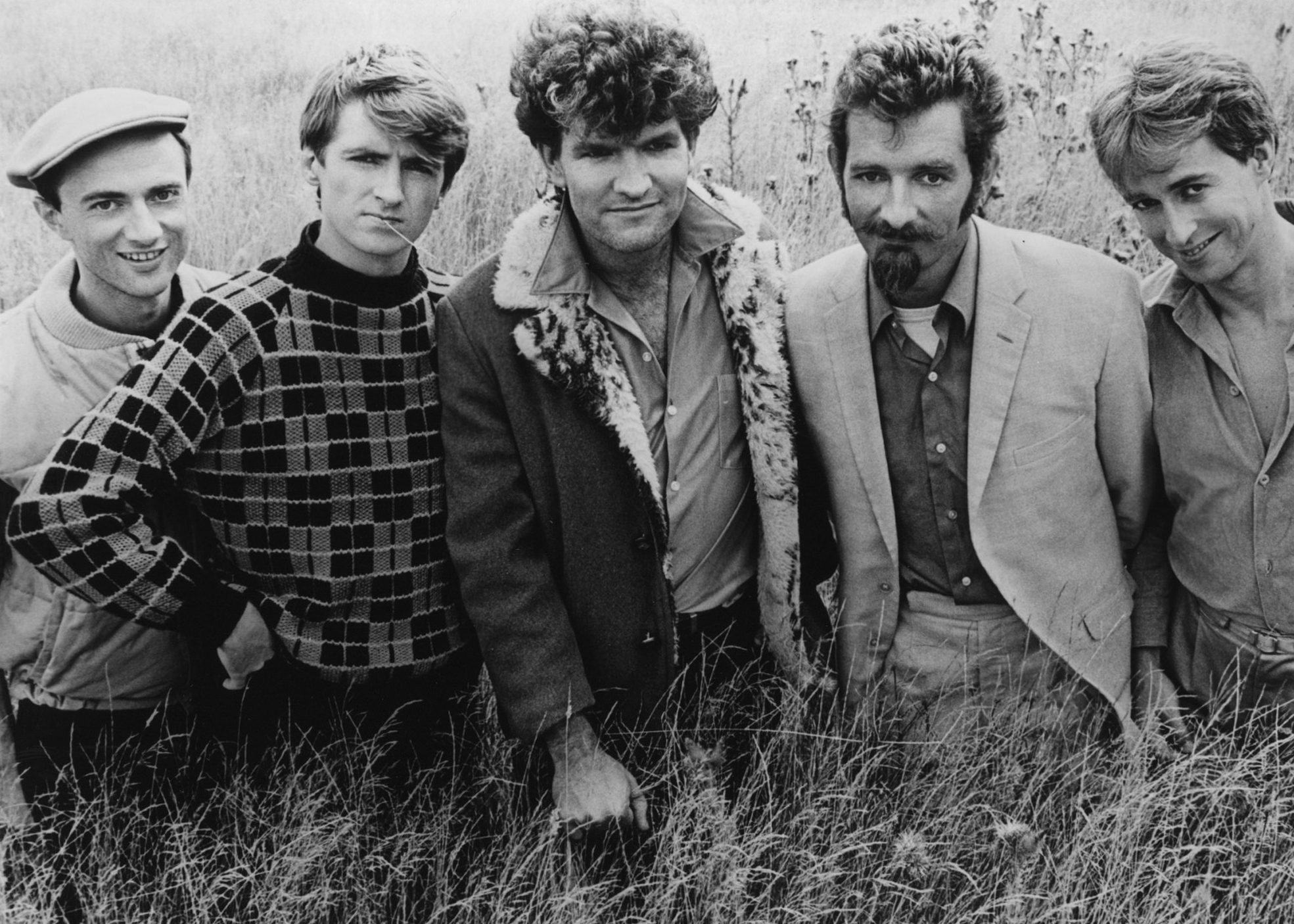
Split Enz
 New Zealand
The pioneers of New Zealand rock, from eccentric art-rock to global new wave hits.
Frenz
Fandom
5
Members
About
Split Enz emerged from Auckland, New Zealand, in 1972, quickly establishing themselves as pioneers for Kiwi bands aiming for international recognition. Initially, they were known for a distinctive art-rock and progressive sound, paired with an outlandish visual aesthetic and theatrical stage shows that drew comparisons to bands like Roxy Music. This early period, marked by albums like Mental Notes (1975) and Dizrythmia (1977), showcased their experimental leanings and unique artistic vision.
The band's trajectory shifted significantly with the arrival of Neil Finn in 1977 and a subsequent move towards a more polished, pop-oriented new wave sound. This evolution culminated in their most commercially successful era, producing chart-topping albums such as True Colours (1980), Waiata (1981), and Time and Tide (1982). Hit singles like "I Got You," "History Never Repeats," and "Message to My Girl" brought Split Enz international fame, particularly in Australia and Canada. Their distinctive use of vibrant colours, especially on the True Colours album, became a signature visual element.
Despite numerous lineup changes throughout their career, the core of the band, particularly the Finn brothers, maintained a strong creative output. Split Enz officially disbanded in 1984, but their legacy endured. The members went on to other projects, most notably Tim and Neil Finn forming the highly successful Crowded House. The band has reunited for several tours since their initial breakup, most recently reforming in 2026 for the Electric Avenue Festival and a subsequent tour across New Zealand and Australia, proving their lasting appeal.
Formation Story
The story of Split Enz began in 1972 at the University of Auckland, where Tim Finn and Phil Judd, both students, decided to form a musical duo. Initially calling themselves Split Ends, they soon expanded their lineup and changed the spelling to "Enz" to stand out. An early iteration of the band included bassist Jonathan Michael "Johnny" Chunn and drummer Mike Chunn, who also served as the band’s manager for a time. Their very first public performance took place in December 1972. The early days were a whirlwind of creative exploration, with the band rapidly developing their unique art-rock sound and flamboyant visual style, laying the groundwork for their distinctive identity.
The band’s lineup solidified further with the addition of Eddie Rayner on keyboards in 1973, a move that significantly shaped their sonic palette. Early recordings like their debut single "For You" in 1973 and the album Mental Notes in 1975 showcased this experimental phase. However, the band’s journey was far from smooth; internal tensions and Phil Judd’s increasingly eccentric behaviour led to his departure in 1977. It was during this critical juncture that Tim Finn’s younger brother, Neil Finn, joined the band, bringing a fresh perspective and a songwriting talent that would soon propel Split Enz to international stardom.
Members
Former Members
Phil Judd (Philip John Judd)
Guitar, vocals, songwriter · 1972–1977
Mike Chunn (Michael Mark Chunn)
Bass, backing vocals, manager · 1972–1977
Jonathan Michael "Johnny" Chunn (Jonathan Michael Chunn)
Drums · 1972–1975
Rob Gillies (Rob Gillies)
Saxophone, clarinet, backing vocals · 1973–1977
Paul "Crow" Crowther (Paul Crowther)
Drums · 1975–1977
Malcolm Green (Malcolm Green)
Drums · 1977–1979
Andrew "André" Brown (Andrew Brown)
Guitar · 1979–1980
Mark Hough (Mark Hough)
Drums · 1979
Paul Hester (Paul Hester)
Drums · 1983–1984
Musical Style
Split Enz's musical journey was one of constant evolution, moving from the avant-garde to mainstream appeal. In their initial phase, from 1972 to around 1977, the band embraced a progressive and art-rock sound. Albums like Mental Notes featured complex song structures, unusual time signatures, and a theatrical, almost whimsical delivery that drew inspiration from bands like Genesis and Roxy Music. Their visual presentation was equally extravagant, with outlandish costumes and makeup complementing the adventurous music.
By the late 1970s and early 1980s, Split Enz began to refine their sound. The album Frenzy (1979) hinted at a shift towards a more accessible new wave style. This transition fully bloomed with True Colours (1980), which became their biggest success. Here, the band embraced catchy melodies, prominent synthesizers, and pop sensibilities, while still retaining a unique lyrical edge and artistic flair. This new wave and pop-rock direction continued through albums like Waiata (1981) and Time and Tide (1982), producing their most enduring international hits. Their final album, See Ya 'Round (1984), continued this polished pop sound.
Discography
| Title | Year |
|---|---|
| See Ya 'Round | 1984 |
| Conflicting Emotions | 1983 |
| Time and Tide | 1982 |
| Six Months in a Leaky Boat | 1982 |
| Dirty Creature | 1982 |
| Waiata | 1981 |
| History Never Repeats | 1981 |
| True Colours | 1980 |
| I Got You | 1980 |
| Frenzy | 1979 |
| I See Red | 1978 |
| Dizrythmia | 1977 |
| Another Great Divide | 1976 |
| Mental Notes | 1975 |
| For You | 1973 |
| Split Enz | 1972 |
Tours
Split Enz Reunion Tour
2009
Enz of an Era Tour
2000
Reunion Concerts
1986
See Ya 'Round Tour
1984
Conflicting Emotions Tour
1983
Time and Tide Tour
1982-1983
Waiata Tour
1981-1982
True Colours Tour
1980-1981
Frenzy Tour
1979
Dizrythmia Tour
1977
Mental Notes Tour
1975-1976
Reformation Tour
2026
Cultural Impact
Split Enz played an instrumental role in paving the way for New Zealand artists on the international stage. They were among the very first bands from their country to achieve significant chart success in Australia and Canada, and later, to gain some traction in the United States and the UK. Their bold visual style, which included elaborate costumes, makeup, and performance art, was way ahead of its time and influenced a generation of musicians who weren't afraid to experiment with their image and stage presence. This theatricality set them apart and helped redefine what a rock band could be.
Musically, their evolution from experimental art-rock to infectious new wave pop demonstrated a remarkable adaptability that resonated widely. The songwriting prowess of Tim and Neil Finn became a cornerstone of Australasian music. The band's success also directly led to the formation of Crowded House, a group that would go on to achieve massive global success in its own right, carrying forward the Finn brothers' distinctive songwriting legacy. Split Enz's impact can be seen not just in music charts, but in the broader cultural landscape, inspiring confidence and creativity in artists from New Zealand and beyond.
Fandom Culture
The devoted fanbase of Split Enz was officially known as "Frenz," a name that perfectly captured their enthusiastic following. While the band predates the modern K-pop era of elaborate lightsticks and official fan colours, the Frenz were incredibly active, especially through their official fan club. They were known for their passion and dedication, often mirroring the band's own theatricality by dressing up in colourful, eccentric outfits for concerts, particularly during reunion shows. The fan club produced newsletters and organized events, fostering a strong sense of community among followers who appreciated the band's unique artistic vision and music.
Awards Won (46)
Split Enz garnered significant recognition within New Zealand and Australia, winning numerous awards throughout their career. They were consistently honoured at the New Zealand Music Awards and the Countdown Australian Music Awards, frequently taking home accolades for Best Group, Album of the Year, and Best Single. While they achieved international success, their major award wins were primarily concentrated in their home regions.
Hall of Fame
Best Original Cast/Show Recording
for: Enz of an Era (live album)
Inductee
Most Performed Work in New Zealand
for: History Never Repeats
Most Performed Work in New Zealand
for: I Got You
Best Single
for: History Never Repeats
Best Album
for: Waiata
Best Group
Most Outstanding Achievement
for: True Colours
Best Single
for: Message to My Girl
Milestones
Reformed for Electric Avenue Festival and subsequent New Zealand/Australia tour.
Inducted into the New Zealand Music Hall of Fame.
Inducted into the ARIA Hall of Fame.
First reunion concerts held.
Band officially disbands.
Time and Tide reaches #1 in Australia and New Zealand.
Waiata reaches #1 in Australia and New Zealand.
Music video for "I Got You" featured on MTV.
True Colours reaches #1 in Australia and New Zealand; "I Got You" becomes an international hit.
True Colours released on coloured vinyl, a notable first.
First major hit single "I See Red" released.
Neil Finn joins the band.
Debut album Mental Notes released.
Debut single "For You" released.
Band formed in Auckland, New Zealand.
Trivia
The band's name, Split Enz, was originally "Split Ends," but they altered the spelling to "Enz" to avoid confusion with a hair salon and to give it a more distinctive, New Zealand-flavoured identity.
,Phil Judd, a founding member, was known for his intense creative vision and eccentric behaviour, which eventually led to his departure from the band in 1977 due to creative differences and personal struggles.
,True Colours (1980) made history not just for its chart success but also for being one of the first albums commercially released on multiple coloured vinyl discs – green, red, yellow, and blue – making it a sought-after collector's item.
,The title of the 1981 album, Waiata, is a Māori word that translates to "song" or "to sing," reflecting the band's connection to their homeland.
,The music video for their international hit "I Got You" was one of the earliest music videos to be featured on MTV when the channel launched in the US in 1981, highlighting the band's global reach.
Keywords
Quick Facts
- Formed
- 1972
- Origin
- Auckland, New Zealand
- Record Label
- Mushroom Records, A&M Records
- Musical Genres
- New Wave, Pop Rock, Progressive Rock, Art Rock
- Current Status
- Active (reformed 2026)
Group Info
- Fandom
- Frenz
- Formed
- 1972
- Debut
- 1973
- Debut Song
- For You
- Origin
- Auckland, New Zealand
- Company
- Mushroom Records (ANZ), A&M Records (International)
- Label
- Mushroom Records, A&M Records
- Status
- Disbanded (1984)
Social Media
Join the community
fans discussing