Satyricon
 Norway
Norwegian black metal's enduring architects
Satyricon faithful
Fandom
2
Members
About
Satyricon is a Norwegian black metal institution, active since 1991 and still going strong. The duo of Satyr and Frost has been the creative engine since 1993, and they remain the only official members. Known for a sound that evolved from raw, atmospheric black metal to a more polished and heavy metal-infused style, they have sold hundreds of thousands of records worldwide and continue to headline major festivals.
Their 2024 conceptual album Satyricon & Munch drew on the works of Edvard Munch, and they remain a major draw in the metal world, as evidenced by their 2026 arena show in Oslo with Dimmu Borgir and Enslaved. Fans know them for their uncompromising artistic vision and their ability to bridge the underground and the mainstream without losing their edge.
Formation Story
Satyricon began in Oslo in 1991, when drummer Kjetil Manheim and bassist Jørn Inge Tunsberg started jamming. Soon after, Sigurd Wongraven, who would take the stage name Satyr, joined on vocals and guitar. The trio recorded a demo in 1992, and through a connection with the underground label Moonfog Productions, they released their debut album Dark Medieval Times in 1994. The album's raw, medieval-tinged black metal immediately placed them in the forefront of the Norwegian scene.
In 1993, Manheim left the drum stool, and Frost (Kjetil Manheim, same name as the original drummer but a different person) took over. With Frost's powerful drumming, the band solidified its lineup. Their second album, Nemesis Divina (1996), became a landmark of the genre. That same year, they made history by signing with EMI, becoming the first black metal band on a major label. The signing was a bold move that drew both praise and criticism from the underground.
Through the late 1990s, Satyricon refined their sound, moving away from the lo-fi aesthetic. By 1997, Satyr and Frost were the only members, and they have remained the core ever since. Their evolution continued with Rebel Extravaganza (2002), which incorporated traditional heavy metal elements, and later albums like The Age of Nero (2008) and Deep Calleth Upon Deep (2013) showcased a more mature and progressive approach. The band's journey from raw beginnings to genre-defying artistry is a testament to their endurance and vision.
Members
Former Members
Musical Style
Satyricon's musical style has undergone a clear evolution. Their early work, particularly Dark Medieval Times and Nemesis Divina, is characterized by raw, tremolo-picked guitar riffs, shrieked vocals, and a cold, atmospheric production that defined Norwegian black metal. The lyrics often touch on themes of nature, mysticism, and anti-Christianity.
Starting with Antichrist (1998) and Rebel Extravaganza (2002), the band began to incorporate elements of traditional heavy metal, with cleaner production and more complex song structures. This shift was controversial among purists but expanded their appeal. In the modern era, albums like Deep Calleth Upon Deep and Now, Diabolical blend the aggression of black metal with a more polished, almost progressive approach. Their 2024 release Satyricon & Munch goes even further, integrating classical motifs inspired by Edvard Munch, creating a work that transcends genre boundaries.
Throughout, Satyr's distinctive vocals and songwriting have been the constant, while Frost's powerful drumming provides the backbone. Their sound is instantly recognizable, yet they continue to evolve.
Discography
| Title | Year |
|---|---|
| Satyricon & Munch | 2024 |
| Now, Diabolical | 2017 |
| Deep Calleth Upon Deep | 2013 |
| The Age of Nero | 2008 |
| Rebel Extravaganza | 2002 |
| Antichrist | 1998 |
| Nemesis Divina | 1996 |
| Dark Medieval Times | 1994 |
Tours
Unholy Trinity Halloween Show
2026 · 1 shows
Cultural Impact
Satyricon played a pivotal role in bringing black metal from the underground to a wider audience. Their signing with EMI in 1996 was a watershed moment, proving that the genre could be commercially viable without compromising its essence. They have inspired countless bands in black metal and beyond, and their music has been featured in films and documentaries.
Their collaboration with Edvard Munch's art on their 2024 album demonstrated the genre's capacity for high art, and they have been recognized by the Norwegian government as cultural ambassadors. Satyricon's influence extends to fashion and aesthetics, with their imagery and stage presence helping to define the visual language of black metal.
Fandom Culture
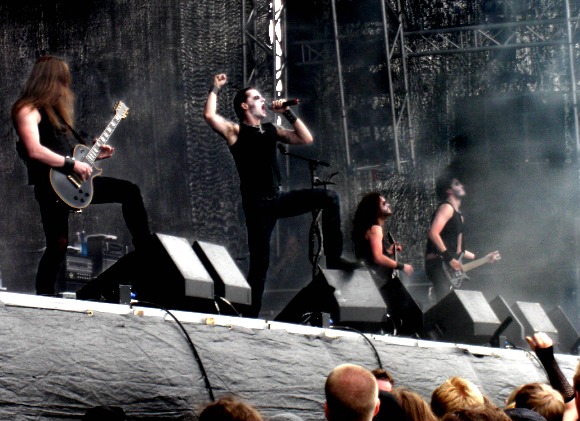
Satyricon fans are a dedicated lot, often referred to as the "Satyricon faithful." There is no official fandom name, lightstick, or color, as is typical for black metal, which rejects such pop-culture trappings. Instead, fans express their devotion through wearing black, donning corpse paint at shows, and engaging in intense moshing.
The community is known for its deep knowledge of the band's lore and the broader black metal scene. Fan projects include tribute albums and online forums where the band's evolution is debated with passion. The band's concerts are ritualistic affairs, with fans traveling from around the world to witness their performances.
Awards Won (10)
Satyricon has won five major awards, all in the metal genre. They have received the Spellemannprisen (Norwegian Grammy) for Best Metal Album three times, for Nemesis Divina (1995), Deep Calleth Upon Deep (2014), and Now, Diabolical (2018). They also received a Lifetime Achievement Award from Metal Hammer Golden Gods in 2014 and an honorary award from P3 Gull in 2014.
Best Metal Album
for: Now, Diabolical
Best Metal Album
for: Deep Calleth Upon Deep
Best Metal Album
for: Nemesis Divina
Lifetime Achievement Award
Honorary Award
Milestones
Band formed in Oslo
Debut album Dark Medieval Times released
Signed with EMI, first black metal band on a major label
Satyr and Frost become sole members
Rebel Extravaganza marks stylistic evolution
Won Spellemannprisen for Deep Calleth Upon Deep
Released Satyricon & Munch
Headline Oslo Spektrum with Dimmu Borgir and Enslaved
Trivia
The band's name comes from Federico Fellini's 1969 film Satyricon, which itself is based on the ancient Roman novel by Petronius.
Satyr is also the frontman of the industrial/electronic project Necromon, a side project that showcases his versatility.
Early recordings featured session drummers before Frost fully committed to the band.
Despite the genre's reputation, Satyricon has avoided overt political extremism, focusing instead on philosophical and artistic themes.
Their 2026 Oslo Spektrum show with Dimmu Borgir and Enslaved was dubbed the "Super Bowl of Black Metal" by fans and press.
Keywords
Sources
Quick Facts
- Formed
- 1991
- Origin
- Oslo
- Label
- Napalm Records
- Genres
- black metal, heavy metal
- Members
- 2
- Status
- Active
Group Info
- Fandom
- Satyricon faithful
- Formed
- 1991
- Debut
- 1994
- Debut Song
- Dark Medieval Times
- Origin
- Oslo, Norway
- Label
- Napalm Records
- Fan Color
- Black
- Status
- Active
Social Media
Join the community
fans discussing