 United States
About
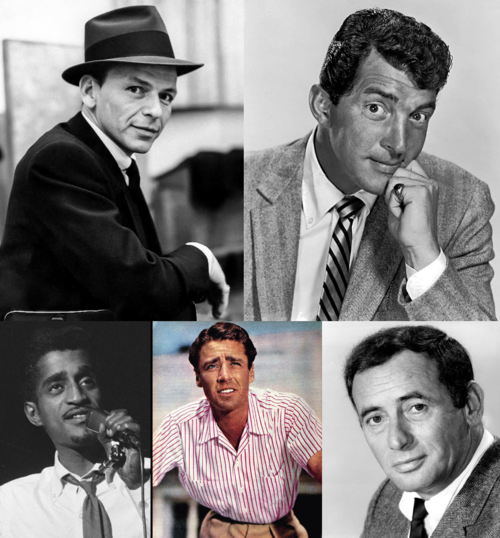
Today, the Rat Pack is remembered as the ultimate symbol of mid-century cool. Though the group disbanded in the 1960s as members pursued solo careers and passed away, their legacy endures through iconic films, recordings, and the mystique of their Las Vegas heyday. The core five, Sinatra, Martin, Davis, Bishop, and Lawford, are celebrated for their effortless chemistry, sharp suits, and whiskey-soaked swagger. Their performances at the Sands Hotel and Copa Room set the template for the modern Vegas residency, blending stand-up, crooning, and impromptu banter. Fans and historians still pore over grainy footage of their late-night sets, marveling at how five egos could mesh so seamlessly. The Rat Pack represents a bygone era of entertainment, but their influence on pop culture, from Ocean's Eleven reboots to retro fashion, remains unmistakable.
Formation Story
The Rat Pack began not as a musical group but as a social circle. In the late 1940s, Hollywood stars Humphrey Bogart and Lauren Bacall hosted gatherings at their Holmby Hills home. The regulars included Frank Sinatra, Judy Garland, Errol Flynn, Nat King Cole, and Mickey Rooney. Bogart dubbed the group the "Rat Pack" after his wife said they looked like a pack of rats. After Bogart's death in 1957, Sinatra became the de facto leader, and the lineup shifted. By 1960, the core was Sinatra, Dean Martin, Sammy Davis Jr., Joey Bishop, and Peter Lawford. They first performed together in Las Vegas at the Sands Hotel, where their shows became legendary for their loose structure. The group's chemistry clicked during the filming of Ocean's 11 (1960), a heist movie that doubled as a Rat Pack reunion. Lawford was expelled in 1962 after a falling-out with Sinatra, and Bing Crosby replaced him in Robin and the 7 Hoods (1964). The collective gradually dissolved as members focused on solo projects, but their brief, intense collaboration left an indelible mark.
Members
Musical Style
The Rat Pack's sound was rooted in traditional pop and vocal jazz, with each member bringing a distinct flavor. Sinatra's phrasing and emotional depth, Martin's easygoing croon, and Davis's dynamic showmanship blended into a seamless whole. Their performances were less about rehearsed arrangements and more about spontaneous interplay. A typical set might include Sinatra belting "I've Got You Under My Skin," Martin slurring through "That's Amore," and Davis tapping through "Candy Man." They often traded verses, cracked jokes, and invited audience participation. Their recordings, such as the live album The Rat Pack Live at the Sands, capture this electric, unrehearsed energy. Lyrically, they celebrated nightlife, romance, and living large, reflecting the hedonistic spirit of early 1960s Las Vegas.
Discography
| Title | Year |
|---|---|
| The Rat Pack Live at the Sands | 1963 |
| The Rat Pack: Live and Swingin' | 1998 |
| Ultimate Rat Pack Collection | 2002 |
Cultural Impact
The Rat Pack redefined what it meant to be a male entertainer. They presented an image of effortless cool, sharp suits, cigarettes, and martinis, that became aspirational for millions. Their Las Vegas residencies helped transform the city from a gambling outpost into a world-class entertainment hub. They also broke racial barriers: Sammy Davis Jr., as a Black man in a predominantly white industry, performed alongside Sinatra and Martin at a time when segregation was still legal. Davis's presence, though often tokenized, challenged norms and paved the way for future Black entertainers. The group's films, especially Ocean's 11, popularized the heist genre and influenced countless movies and TV shows. Their casual, improvisational style on stage and screen inspired later comedy troupes and supergroups, from the Beatles' playful banter to the Hangover franchise.
Fandom Culture
The Rat Pack didn't have an official fandom name or lightstick, but their fans were fiercely devoted. Known as "bobby-soxers" in Sinatra's early days, the audience evolved into a sophisticated, cocktail-sipping crowd that filled the Sands showroom nightly. Fan culture centered on live performances, where devotees would shout requests and toss napkins. After the group's peak, nostalgia-driven revivals kept the flame alive. In the 1990s and 2000s, tribute acts like the Rat Pack Is Back! toured the world. Modern fans connect through social media pages dedicated to vintage photos and rare recordings, celebrating the Rat Pack as the epitome of a lost golden age.
Awards & Accolades
Milestones
Release of Ocean's 11, starring the core five members.
Peter Lawford expelled from the group after a falling-out with Sinatra.
Release of Robin and the 7 Hoods, with Bing Crosby replacing Lawford.
Trivia
The term "Rat Pack" was originally used by Lauren Bacall to describe her husband's friends. Sinatra hated the name at first. The group's favorite table at the Sands was in the Copa Room, where they'd hold court after shows. Sammy Davis Jr. converted to Judaism in 1961, partly influenced by Sinatra. Dean Martin famously never rehearsed, he'd learn songs on the spot. Peter Lawford's connection to the Kennedy family (he was married to Patricia Kennedy) gave the Rat Pack political cachet, but also led to his expulsion after a dispute with Sinatra over a canceled performance.
Keywords
Quick Facts
- Origin
- United States
- Genres
- pop music, traditional pop, vocal jazz
- Members
- 5 (core)
- Status
- Disbanded
Group Info
- Formed
- Late 1940s
- Origin
- United States
- Status
- Disbanded (Mid-1960s)
Join the community
fans discussing