 United Kingdom
About
Pulp are currently active and enjoying a vibrant new chapter in their long career. The band released their eighth studio album, More, in June 2025, which quickly climbed to number one on the UK Albums Chart, marking their first chart-topping record since This Is Hardcore in 1998. This recent success has reinvigorated their global touring schedule, taking their distinct sound to fans across the UK, Europe, and North America.
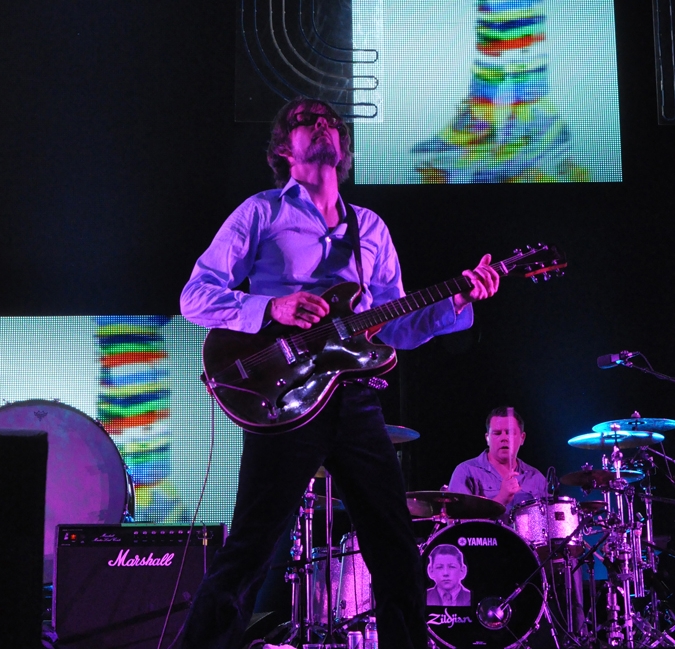
The group's identity remains firmly rooted in the lyrical genius of Jarvis Cocker, whose keen observations on everyday life, social class, and human relationships continue to resonate. Their live presence is as engaging as ever, with the current touring lineup featuring core members Cocker, Candida Doyle, Nick Banks, and Mark Webber, joined by Leo Abrahams on guitar and keyboards, alongside other session musicians. Fans deeply connect with Pulp's blend of witty narratives, memorable melodies, and an underlying sense of British grit, making each new release and performance a celebrated event.
Formation Story
The story of Pulp begins in Sheffield in 1978, when a fifteen-year-old Jarvis Cocker gathered schoolmates Peter Dalton and David 'Fung' Lockwood to form a band. Initially named 'Arabacus Pulp', they soon shortened it to just Pulp. The group spent the entire 1980s working tirelessly in relative obscurity, navigating a shifting lineup and releasing independent singles like "Everybody's Problem" in 1979 and albums such as 1983's It, which did not make a major commercial splash.
Through these formative years, the band's sound evolved, and key members joined. Candida Doyle, who had never played keyboards before, became a fixture in 1984, learning her instrument on stage. Bassist Steve Mackey joined in 1989, replacing Lockwood, and Russell Senior on guitar and violin, along with drummer Nick Banks, solidified what would become the classic lineup. This stable configuration, completed by guitarist Mark Webber, allowed their unique artistic vision to truly blossom.
Their persistent effort started to pay off in the early 1990s with singles like "Babies" in 1992, which saw them enter the UK Top 50. This momentum built steadily, leading to their breakthrough album, His 'n' Hers, in 1994. That record earned a Mercury Prize nomination and reached number nine on the UK charts, finally bringing Pulp into the mainstream spotlight after years of dedication and refining their craft.
Members
Former Members
Musical Style
Pulp's musical style is a rich tapestry woven from alternative rock, Britpop, and indie rock, characterized by its detailed storytelling and strong melodic hooks. During their early years, the band experimented with various sounds, moving from a more art-rock and post-punk aesthetic on albums like It and Freaks to a more synth-pop influenced direction in the late 1980s.
By the mid-1990s, with albums such as Different Class, their signature sound had crystallized. This era saw a sophisticated blend of guitar-driven rock, orchestral arrangements, and prominent keyboard lines, often creating a cinematic atmosphere. Jarvis Cocker's lyrics became the focal point, delivering what fans affectionately call 'kitchen sink dramas' – vivid narratives about ordinary British life, class divides, sexual encounters, and feelings of alienation, all delivered with wry wit and emotional depth.
Production on their major albums often balanced raw energy with polished arrangements, allowing both the intricate instrumentation and Cocker's distinctive vocal delivery to shine. Even with their recent album More, the band continues to refine this approach, demonstrating a consistent commitment to lyrical substance and musical innovation within their established framework.
Discography
| Title | Year |
|---|---|
| More | 2025 |
| My Sex | 2025 |
| Spike Island | 2025 |
| After You | 2013 |
| Bad Cover Version | 2002 |
| We Love Life | 2001 |
| Sunrise / The Trees | 2001 |
| This Is Hardcore | 1998 |
| Party Hard | 1998 |
| A Little Soul | 1998 |
| This Is Hardcore | 1998 |
| Help the Aged | 1997 |
| Something Changed | 1996 |
| Different Class | 1995 |
| Disco 2000 | 1995 |
| Sorted for E's & Wizz / Mis-Shapes | 1995 |
| Common People | 1995 |
| His 'n' Hers | 1994 |
| Do You Remember the First Time? | 1994 |
| Lipgloss | 1993 |
| Razzmatazz | 1993 |
| Babies | 1992 |
| Separations | 1992 |
| Countdown 1992–1983 | 1992 |
| Masters of the Universe | 1987 |
| Freaks | 1987 |
| It | 1983 |
Tours
More Tour
2025
Pulp 2022 Reunion Tour
2022 · 20 shows
Reunion Tour
2011–2013 · 40 shows
We Love Life Tour
2001–2002
This Is Hardcore Tour
1998–1999
Different Class Tour
1995–1996
His 'n' Hers Tour
1994
Cultural Impact
Pulp left an undeniable mark on British culture, becoming a defining voice of the Britpop era with their intelligent, socially conscious lyrics. Jarvis Cocker's ability to articulate the nuances of working-class life and social observation, particularly in songs like "Common People," resonated deeply and helped shape the lyrical landscape of 1990s pop music. That particular track has been covered by numerous artists and remains an anthem about class and aspiration.
Beyond music, the band influenced fashion, with Cocker's distinctive look, NHS glasses, thrift-store suits, and a theatrical stage presence, becoming emblematic of 1990s indie style. Candida Doyle's calm, focused keyboard playing also offered a distinct visual counterpoint. The group's impact also extended to memorable cultural moments, such as Cocker's impromptu protest at the 1996 Brit Awards, which generated widespread discussion and became one of the most talked-about incidents in the event's history.
Pulp's connection to their hometown of Sheffield is also a significant part of their legacy. Jarvis Cocker, in particular, has been an ambassador for the city's music scene, even receiving an honorary doctorate from Sheffield Hallam University in 2004. Their 2025 documentary, Pulp: What Do You Do for an Encore?, further cemented their artistic and cultural standing, offering a retrospective look at their enduring influence.
Fandom Culture
Pulp's fanbase, affectionately known as the "Pulp People" (though not an official designation), shares a deep, almost familial connection with the band. There isn't an official lightstick or fan color, which feels fitting for a group that has always championed authenticity over manufactured pop aesthetics. Instead, fans at concerts often wave Union Jack flags or raise lighters and phones during emotional moments, especially during "Common People."
Fan traditions include singing along with immense enthusiasm to every word at shows, creating an almost communal experience. Many attendees at reunion gigs embrace 1990s Britpop fashion, donning parkas, vintage dresses, and distinctive glasses as a nod to the band's heyday. Confetti is often thrown during the upbeat "Disco 2000" to celebrate the song's joyous energy.
In 2025, ahead of a homecoming show in Sheffield, fans organized a massive sing-along of "Common People" outside Sheffield City Hall, demonstrating their collective spirit and enduring loyalty. This kind of spontaneous, heartfelt engagement highlights the unique and personal bond Pulp has forged with its audience over the decades.
Awards Won (37)
Pulp has received a remarkable array of awards throughout their career, particularly during their peak in the mid-1990s. Their album Different Class was a standout, earning them the prestigious Mercury Prize in 1995. This record also secured multiple accolades at the NME Awards, Brit Awards, Q Awards, and the South Bank Show Awards. Their hit single "Common People" was frequently recognized, winning Best Single and Best Video at the NME Awards, and an Ivor Novello Award for Best Song Musically and Lyrically.
Beyond group achievements, Jarvis Cocker was personally honored with the Godlike Genius Award at the NME Awards in 2012. More recently, their live performances continue to be celebrated, with the band taking home the Best Headline Performance award at the UK Festival Awards for their surprise Glastonbury set in 2025.
Best UK & Ireland Act
Best British Video
for: Common People
Best British Album
for: Different Class
Best British Group
Best Headline Performance
for: Glastonbury 2025
Godlike Genius Award
for: Jarvis Cocker
Best Dressed
for: Jarvis Cocker
Best Video
for: Common People
Best Album
for: Different Class
Best Single
for: Common People
Trivia
The band was originally called "Arabacus Pulp" before they decided on the simpler "Pulp."
Jarvis Cocker once mentioned that the inspiration for "Common People" came from a conversation with a fellow art student who expressed a desire to "live like common people."
Candida Doyle joined Pulp in 1984 when she was just fourteen, having no prior experience playing keyboards, and learned as the band performed.
Bassist Steve Mackey stepped in to replace original member David "Fung" Lockwood in 1989, after Lockwood decided to pursue a path to become a rabbi.
Russell Senior chose to leave the group in 1997, feeling the band's direction had become too commercial, and later transitioned into a career as a music teacher.
Sources
Group Info
- Fandom
- Pulp People
- Formed
- 1978
- Debut
- 1979
- Debut Song
- Everybody's Problem
- Origin
- Sheffield, England, United Kingdom
- Label
- Island Records, Fire Records
- Status
- Active
Join the community
fans discussing