About
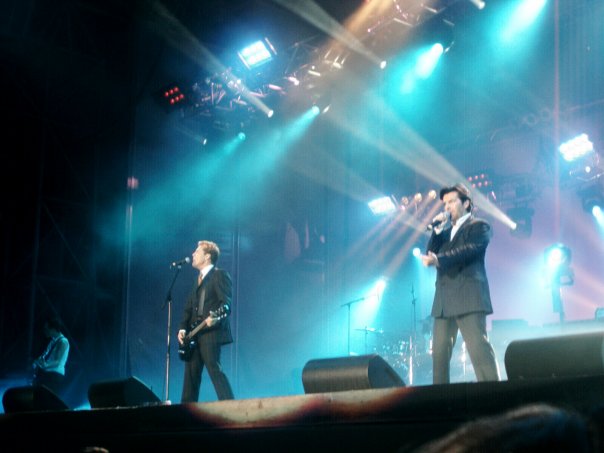
Modern Talking stands as one of the most commercially successful musical acts from Germany. The duo operated in two distinct periods: the first from 1984 to 1987 and the second from 1998 to 2003. Their music blends synthesizer-driven melodies with catchy pop hooks, creating a signature sound that defined the Eurodisco genre. Throughout their active years, they released eight studio albums and numerous singles that topped charts across Europe, particularly in Germany, Austria, Switzerland, and France.
Their legacy is built on massive sales figures rather than Western awards. With over 120 million records sold globally, they rank among the best-selling music groups in history. The group disbanded permanently in 2003 due to creative differences between the two members. Since then, both Thomas Anders and Dieter Bohlen have pursued solo careers, with Anders continuing to perform internationally and Bohlen finding fame as a television judge.
Formation Story
Dieter Bohlen conceived the idea for Modern Talking in 1983 while working at Hansa Records in Berlin. He sought a vocalist who could deliver a specific emotional tone that matched his production style. After auditioning several singers, Bohlen selected Thomas Anders, whose voice possessed the unique clarity and range required for the project. Unlike many K-pop or boy bands that undergo years of rigorous training, Anders joined the project directly after being discovered, with no formal agency training period involved.
The duo officially debuted on July 26, 1984, with the single "You're My Heart, You're My Soul." The track became an immediate sensation, reaching number one in multiple countries within weeks. This rapid success allowed them to release their debut album, The First Album, later that year. They followed this with Ready for Romance in 1985, solidifying their status as a major force in European pop music. However, internal tensions regarding creative control and artistic direction grew over time. These disagreements led to their initial split in 1987, ending their first era after four albums.
Bohlen continued producing for other artists during the hiatus but eventually felt the need to reunite the project. In 1998, he convinced Anders to return, leading to a comeback tour and new recordings. The reunion was met with renewed enthusiasm, resulting in hits like "Atlantis Is Calling (S.O.S. for Love)" and "Geronimo's Cadillac." The second era lasted until 2003, when the duo announced their final breakup. Their return demonstrated the enduring appeal of their formula, proving that their sound resonated strongly with audiences even after a six-year absence.
Members
Musical Style
The sonic identity of Modern Talking relies heavily on synthesized instrumentation and polished production techniques characteristic of the mid-1980s. Early tracks featured prominent drum machines, sequenced basslines, and lush string arrangements that created a sweeping, cinematic atmosphere. Vocals were often layered with harmonies, giving the songs a rich, full texture. The lyrical themes frequently explored romance, longing, and dramatic storytelling, delivered with Anders' emotive baritone.
During their 1998 reunion, the duo updated their sound to reflect contemporary dance trends. They incorporated elements of Eurodance and house music, utilizing more aggressive beats and electronic effects while maintaining their melodic core. Collaborations with American rapper Eric Singleton added a rhythmic layer to tracks like "We Are Ready." Despite these updates, the fundamental structure of their songs remained consistent, prioritizing catchy choruses and accessible pop structures that appealed to a broad demographic.
Discography
| Title | Year |
|---|---|
| The First Album | 1985 |
| Ready for Romance | 1985 |
| Romantic Warriors | 1987 |
| Let's Talk About Love | 1998 |
| Back for Good | 1998 |
| Alone | 1999 |
| Victory | 2002 |
| America | 2003 |
Tours
The Greatest Hits Tour
1998 · 100 shows
Cultural Impact
Modern Talking played a pivotal role in popularizing Eurodisco across Europe and beyond. Their success paved the way for future German producers and acts to achieve international recognition. The duo's visual aesthetic, characterized by Anders' flamboyant fashion and Bohlen's distinctive mustache, became iconic symbols of the era. Their music influenced countless artists in the Europop and dance genres, with many citing their work as a primary inspiration.
Their ability to sell millions of records without significant radio play in English-speaking markets highlights the strength of the European market during the 1980s and 1990s. The duo's catalog has been covered in numerous languages, demonstrating the universal appeal of their melodies. Even decades after their disbandment, their songs remain staples in dance clubs and nostalgia playlists, ensuring their continued presence in popular culture.
Fandom Culture
Unlike modern K-pop groups, Modern Talking did not cultivate an organized fandom structure during their peak. There was no official fan club name, lightstick, or designated fan color associated with the duo. Fans primarily engaged through record purchases, concert attendance, and radio requests. The lack of structured fan culture reflects the era in which they operated, where artist-fan interaction was less centralized and digital.
Awards Won (2)
Modern Talking did not win major international awards such as the Grammy Awards or MTV Video Music Awards during their career. Their recognition came primarily through sales certifications and regional honors within Europe. They received multiple Goldene Europa awards and were inducted into the German Dance Award Hall of Fame. Despite their commercial dominance, the duo's focus on the European market meant they largely bypassed the major Western award circuits.
World's Best Selling German Artist
for: Back for Good
Best National Rock/Pop Group
for: Back for Good
Milestones
Debut with "You're My Heart, You're My Soul"
First disbandment
Reunion and comeback with "Atlantis Is Calling"
Final disbandment
Fame & Fandom (iFAMOUS Rankings)
Trivia
The original version of "You're My Heart, You're My Soul" was recorded in 1983 but delayed until 1984 to allow time for marketing preparation., Dieter Bohlen chose the name "Modern Talking" because he wanted a title that sounded international and avoided any specific language association., The duo holds the record for the most number-one hits by a non-German speaking act in Germany during their first era., Thomas Anders and Dieter Bohlen reunited in 1998 after a six-year separation, driven by Bohlen's desire to capitalize on the nostalgia market., Despite their massive sales, the duo never won a Grammy Award or appeared on the US Billboard Hot 100.
Keywords
Sources
Quick Facts
- Type
- Duo
- Formed
- 1983
- Origin
- Berlin, Hamburg
- Label
- Hansa Records, Bertelsmann Music Group, Sony Music
- Genres
- synth-pop, Eurodisco, Europop, dance-pop, new wave, Eurodance
- Members
- 2
- Disbanded
- 2003
Group Info
- Formed
- 1983
- Debut
- July 26, 1984
- Debut Song
- You're My Heart, You're My Soul
- Origin
- Berlin, Hamburg
- Company
- Bertelsmann Music Group
- Label
- Hansa Records, Arista, BMG
- Status
- Disbanded (2003)
Also Known As
Join the community
fans discussing