 United States
About
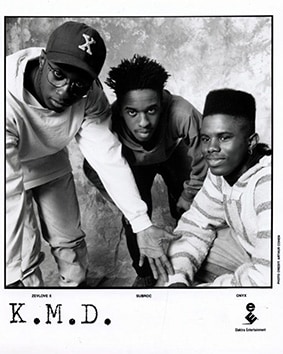
KMD is remembered today as the early vehicle for the talents of Daniel Dumile, who would later achieve legendary status as MF DOOM. Though the group's active years were brief, their two albums occupy distinct spaces in hip hop history. Mr. Hood is a warm, sample-heavy record that draws from children's educational records and Afrocentric themes, while Black Bastards is a darker, more abrasive work that was suppressed by its label for over six years. The group's legacy is inextricably tied to the tragedy of DJ Subroc's death and the subsequent rise of MF DOOM, whose solo work has influenced generations of alternative hip hop artists. As of 2025, KMD's music remains available on streaming platforms, and the group is studied by fans and scholars interested in the golden age's underground currents.
Formation Story
KMD began in the late 1980s in Long Beach, New York, as a family affair. Brothers Daniel Dumile (Zev Love X) and Dingilizwe Dumile (DJ Subroc) grew up immersed in hip hop culture, with Daniel already writing rhymes and Dingilizwe developing production skills. They recruited a childhood friend, Jade 1, to round out the trio. The group's name, Kausing Much Damage, reflected their ambition to disrupt the rap scene. They recorded early demos and performed at local venues, catching the attention of Elektra Records. Before signing, Jade 1 left and was replaced by Onyx the Birthstone Kid, a rapper and hype man from the same Long Island network. Elektra signed KMD in 1990, and the group entered the studio to record their debut. There was no formal training period; the brothers' organic chemistry and shared vision drove the project. The debut single Peachfuzz was released in 1991, followed by the album Mr. Hood on April 23 of that year. The album's eclectic sampling and positive, Afrocentric lyrics set them apart from the harder-edged rap of the era.
Members
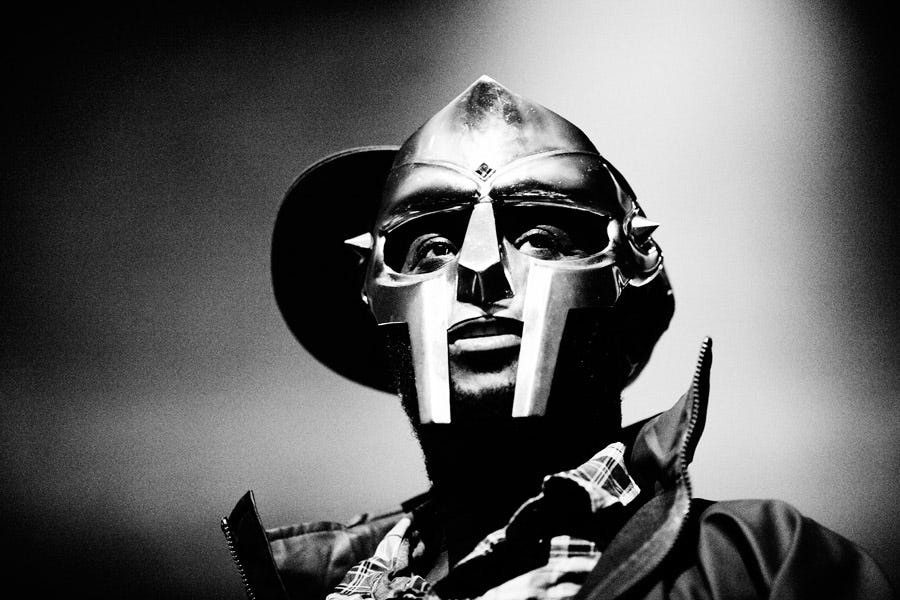
Zev Love X
Daniel Dumile
Creative Leader
DJ Subroc
Dingilizwe Dumile
Younger brother of Zev Love X
Onyx the Birthstone Kid
Replaced Jade 1
Former Members
Jade 1 (Rodan)
Original Third Member · 1988-1990
Musical Style
KMD's sound evolved dramatically between their two albums. On Mr. Hood, they employed a light, jazz-inflected production style built around samples from obscure children's records and soul music. Zev Love X's delivery was buoyant and playful, with rhymes that touched on social issues, black pride, and everyday life. The album's tone was educational and uplifting, earning comparisons to De La Soul's 3 Feet High and Rising. In contrast, Black Bastards (recorded 1993) was a stark departure. The production became denser and more aggressive, with heavy basslines, eerie samples, and abstract, confrontational lyrics. Zev Love X's flow grew more complex and cryptic, foreshadowing his MF DOOM persona. The album's themes were darker, dealing with censorship, street life, and existential angst. This shift reflected the group's frustration with the music industry and the personal turmoil following DJ Subroc's death. KMD's style thus straddles two eras of hip hop: the playful golden age and the gritty, introspective underground of the mid-90s.
Discography
| Title | Year |
|---|---|
| Black Bastards | 2000 |
| Mr. Hood | 1991 |
Cultural Impact
KMD's cultural impact is largely indirect but significant within underground hip hop. The shelving of Black Bastards due to its cover art (depicting a hanged blackface caricature) became a cause célèbre, highlighting corporate censorship and racism in the music industry. The album's eventual release in 2000 on independent labels cemented KMD's status as a cult act. More importantly, the group served as the foundation for MF DOOM's career. DOOM's later innovations in abstract lyricism, masked persona, and lo-fi production owe a debt to the experimental seeds planted in KMD. The group's story, a promising act cut short by tragedy, has been romanticized in hip hop lore, influencing artists like Earl Sweatshirt and Tyler, the Creator, who have cited DOOM and, by extension, KMD as inspirations. Though KMD never achieved mainstream success, their music continues to be discovered by new listeners through streaming and reissues.
Fandom Culture
KMD did not have an official fandom name, lightstick, or fan color. Their fanbase was small and underground, consisting primarily of hip hop heads and early MF DOOM enthusiasts who sought out the group's back catalog. Fan projects are minimal, but online forums and social media groups dedicated to MF DOOM often discuss KMD's role in his development. The group's music is frequently shared on Reddit (r/mfdoom) and YouTube comment sections, where fans debate the merits of Mr. Hood versus Black Bastards. A handful of tribute mixtapes and remixes exist, created by producers who sample KMD's work. The lack of formal fan culture is consistent with the group's brief, pre-internet career.
Awards & Accolades
Milestones
KMD formed in Long Beach, New York.
Debut album Mr. Hood released on Elektra Records.
DJ Subroc died on April 23.
Elektra dropped KMD and shelved Black Bastards.
Black Bastards released independently.
MF DOOM released two new KMD singles, signaling a revival.
MF DOOM died on October 31; KMD revival ended.
Trivia
1. The acronym KMD originally stood for Kausing Much Damage but was later reinterpreted as A Positive Kause in a Much Damaged Society. 2. The track What a Niggy Know? from Mr. Hood samples a children's educational record called The Wonder of Science. 3. DJ Subroc died on April 23, 1993, exactly two years after the release of Mr. Hood. 4. The cover art for Black Bastards was drawn by Daniel Dumile himself. 5. KMD's song Peachfuzz appeared in the 1991 film New Jack City but was not included on the official soundtrack.
Keywords
Quick Facts
- Type
- Trio
- Origin
- United States
- Label
- Elektra
- Genres
- hip-hop
- Members
- 3
- Status
- Disbanded
Group Info
- Formed
- 1988
- Debut
- April 23, 1991
- Debut Song
- Peachfuzz
- Origin
- Long Beach, New York, United States
- Label
- Elektra Records
- Status
- Disbanded (1994)
Join the community
fans discussing