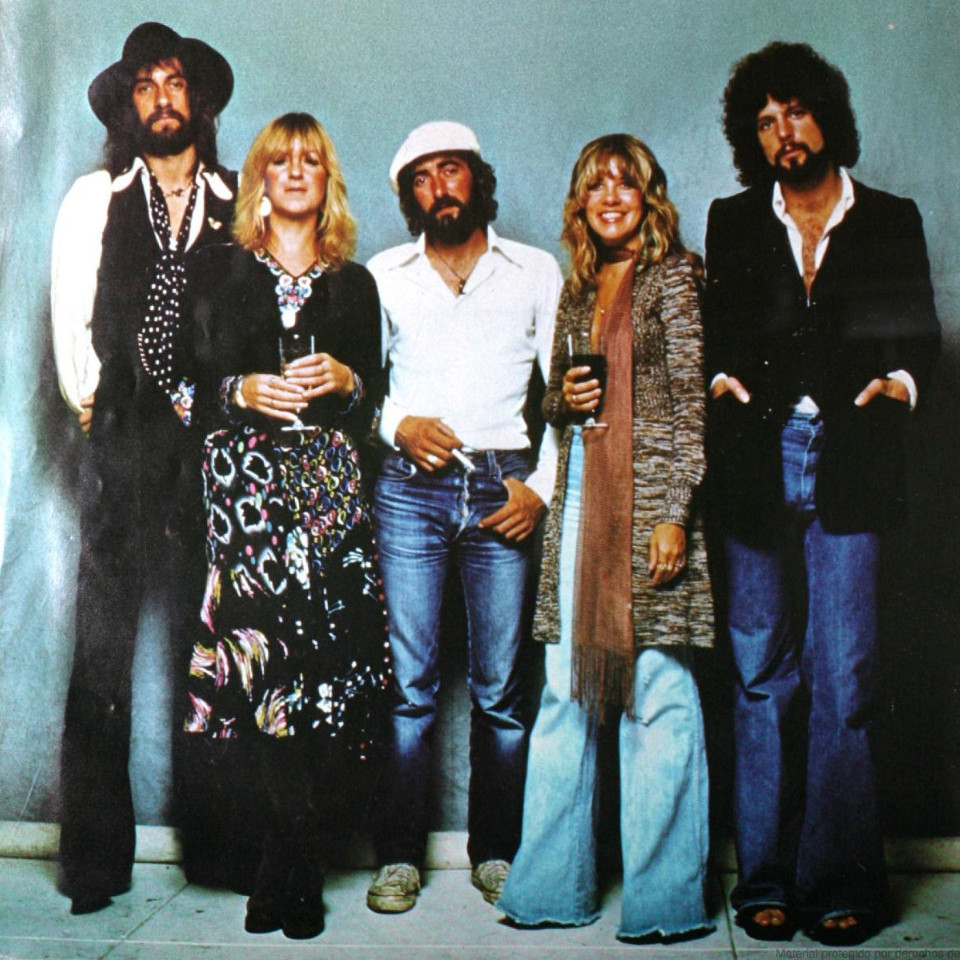
Fleetwood Mac
 United Kingdom
5
Members
About
Fleetwood Mac is a British-American rock band celebrated for their distinctive blend of pop, rock, and soft rock, achieving massive global success. With over 100 million records sold worldwide, they are renowned for seminal albums such as Rumours (1977), which won a Grammy for Album of the Year, and Fleetwood Mac (1975). The band's enduring appeal lies in their sophisticated songwriting, layered vocal harmonies, and iconic members who have shaped their evolving sound across decades. Though members have changed over time, including the recent passing of Christine McVie in 2022, Fleetwood Mac's influence on music is cemented by their 1998 induction into the Rock and Roll Hall of Fame and a Brit Award for Outstanding Contribution to Music. They continue to be celebrated for their rich musical catalog and their significant impact on the landscape of popular music.
Formation Story
Fleetwood Mac's genesis can be traced to London, England, in July 1967, when esteemed guitarist and singer Peter Green departed from John Mayall & the Bluesbreakers. Green, envisioning a new musical venture, sought to form a band anchored by the rhythm section of drummer Mick Fleetwood and bassist John McVie, both of whom he had played with in the Bluesbreakers. The band's distinctive name was created by combining the surnames of these two musicians. Mick Fleetwood readily joined Green in this new endeavor. John McVie, however, initially declined Green's invitation, only to join later in 1967 after he was fired from the Bluesbreakers, thus completing the rhythm section Green desired. With Peter Green on lead guitar and vocals, Mick Fleetwood on drums, John McVie on bass, and the addition of slide guitarist Jeremy Spencer, the initial lineup was complete. The newly formed group, managed by Clifford Davis from 1967 to 1975, made its public debut on August 13, 1967, performing at the Windsor Jazz and Blues Festival under the moniker 'Peter Green's Fleetwood Mac featuring Jeremy Spencer.'
Building on their debut, the band released their first single, 'I Believe My Time Ain't Long,' in November 1967. This was swiftly followed by their debut album, Fleetwood Mac, also known as Peter Green's Fleetwood Mac, in February 1968, released on Blue Horizon Records. The band's early work was deeply rooted in British blues, characterized by Peter Green's soulful guitar and Jeremy Spencer's distinctive slide guitar playing. Their burgeoning talent quickly garnered attention, leading to hits such as the instrumental "Albatross" (1968), which soared to the #1 spot on the UK Singles Chart. In 1968, Danny Kirwan joined the lineup, further evolving their sound by incorporating softer rock elements into their blues foundation.
The band navigated a significant transition with Peter Green's departure in 1970. Following this, Christine McVie, who had previously contributed as a session musician, joined Fleetwood Mac as a full member, bringing her talents as a keyboardist and vocalist, along with a melodic pop influence that began to broaden the band's musical scope. The early 1970s saw Fleetwood Mac endure numerous lineup changes, as they continued to refine their sound and identity. In 1971, Bob Welch became a key addition, contributing significantly to albums such as Future Games (1971) and Bare Trees (1972). This period marked a crucial evolutionary phase, laying the groundwork for the band's eventual breakthrough while moving beyond their initial blues roots.
Members
Former Members
Peter Green (Peter Allen Greenbaum)
Lead guitar, vocals · 1967–1970
Jeremy Spencer (Jeremy Cedric Spencer)
Slide guitar, piano, vocals · 1967–1971
Danny Kirwan (Daniel David Kirwan)
Guitar, vocals · 1968–1972
Bob Welch (Robert Lawrence Welch Jr.)
Guitar, vocals · 1971–1974
Lindsey Buckingham (Lindsey Adams Buckingham)
Guitar, vocals, primary songwriter · 1975–1987, 1993, 1997–2018
Christine McVie (Christine Anne Perfect)
Keyboards, vocals, songwriter · 1970–1998, 2014–2022
Sub-Units
Buckingham Nicks (1973–1974)
Lindsey Buckingham, Stevie Nicks
The Mick Fleetwood Blues Band (1990s)
Mick Fleetwood, Peter Green, others
The Mac (1993–1995)
Billy Burnette, Bekka Bramlett, Dave Mason
Fleetwood Mac featuring Peter Green (1998–1999)
Peter Green, Mick Fleetwood, others
Musical Style
Fleetwood Mac's musical style has evolved significantly over their career. They began as a hard-driving British blues band, influenced by Chicago blues, with albums like Fleetwood Mac (1968), Mr. Wonderful (1968), and Then Play On (1969) showcasing raw, improvisational blues. The instrumental 'Albatross' (1968) marked an early departure with its dreamy, atmospheric sound. After Peter Green's departure, Christine McVie joined, bringing a more melodic, pop-influenced songwriting style, and the band started moving away from pure blues towards a more polished rock sound, as heard on Kiln House (1970) and Penguin (1973). The addition of Lindsey Buckingham and Stevie Nicks in 1975 transformed Fleetwood Mac into a pop rock powerhouse. Their albums Fleetwood Mac (1975) and Rumours (1977) blended folk, rock, and pop, with layered harmonies, confessional lyrics, and impeccable production. Tusk (1979) was experimental and eclectic, incorporating punk and world music influences, while Mirage (1982) returned to a more accessible pop sound. Tango in the Night (1987) embraced 1980s synthesizers and drum machines. Later albums like Say You Will (2003) featured a mix of Buckingham's experimental rock and Nicks' folk-rock.
Discography
| Title | Year |
|---|---|
| Fleetwood Mac | 1968 |
| Mr. Wonderful | 1968 |
| Then Play On | 1969 |
| Kiln House | 1970 |
| Future Games | 1971 |
| Bare Trees | 1972 |
| Penguin | 1973 |
| Mystery to Me | 1973 |
| Heroes Are Hard to Find | 1974 |
| Fleetwood Mac | 1975 |
| Rumours | 1977 |
| Tusk | 1979 |
| Mirage | 1982 |
| Tango in the Night | 1987 |
| Behind the Mask | 1990 |
| Time | 1995 |
| Say You Will | 2003 |
Tours
Fleetwood Mac Tour
1975 · 80+ shows
Rumours Tour
1977 · 120+ shows
Tusk Tour
1979 · 110+ shows
Mirage Tour
1982 · 70+ shows
Tango in the Night Tour
1987 · 100+ shows
Behind the Mask Tour
1990 · 60+ shows
The Dance Tour
1997 · 80+ shows
Say You Will Tour
2003 · 100+ shows
Unleashed Tour
2009 · 40+ shows
Fleetwood Mac Live 2013 Tour
2013 · 30+ shows
On with the Show Tour
2014 · 80+ shows
An Evening with Fleetwood Mac
2018 · 80+ shows
Cultural Impact
Fleetwood Mac has had a profound impact on the music industry, with their albums Fleetwood Mac and Rumours in particular becoming defining records of the 1970s. Rumours won Album of the Year at the 1978 Grammys and has sold over 20 million copies in the US alone. Their fusion of blues, pop, and rock influenced countless bands and created a template for confessional songwriting in popular music. The band's songwriting and musicianship have been widely recognized, earning them five Grammy Awards, including Best Pop Performance for 'Go Your Own Way' (1978) and 'The Chain' (1998). They were inducted into the Rock and Roll Hall of Fame in 1998 and received the Brit Award for Outstanding Contribution to Music the same year. Their 1997 live album The Dance won a Grammy and topped the Billboard 200. Fleetwood Mac's influence extends beyond music, with their album covers and fashion choices becoming iconic. Their 2014-2015 On with the Show Tour grossed over $100 million, demonstrating their lasting appeal. The band's ability to navigate personal and professional challenges set a precedent for future generations of musicians.
Fandom Culture
Fleetwood Mac's dedicated fanbase, known for their enduring support and passion for the band's music, has created a vibrant fandom culture. Fans often gather at concerts, engage in online discussions, and create fan art celebrating the band's legacy. Fleetwood Mac's music has also inspired fan projects and cover bands, further testament to their impact on popular culture. Notable fan activities include tribute concerts, such as the 'Rumours of Fleetwood Mac' tribute band tours, and active online communities on platforms like Reddit and Facebook. The band's 2020 TikTok resurgence of 'Dreams' introduced their music to a new generation, with the song reaching #1 on Digital Song Sales. Fans also celebrate key anniversaries, such as the 40th anniversary of Rumours in 2017, which included reissues and special events.
Awards Won (24)
Fleetwood Mac has won 11 awards, including 5 Grammy Awards, 2 American Music Awards, and the Brit Award for Outstanding Contribution to Music.
Best Pop Instrumental Performance
for: Planets of the Universe
Best Pop Performance by a Duo or Group with Vocal
for: The Chain
Album of the Year
for: Rumours
Best Pop Performance by a Duo or Group with Vocal
for: Go Your Own Way
Best Album Package
for: Rumours
Favorite Pop/Rock Band/Duo/Group
for: Fleetwood Mac
Favorite Pop/Rock Band/Duo/Group
Favorite Pop/Rock Band/Duo/Group
Favorite Pop/Rock Album
for: Rumours
Outstanding Contribution to Music
Milestones
Sold-out shows at Madison Square Garden, New York
The Dance Tour grossed over $36 million from 80 shows
On with the Show Tour grossed $100+ million, including multiple nights at arenas worldwide
Final tour leg in Australia and New Zealand
Fame & Fandom
Trivia
First UK number one single: Albatross (1968), Best-selling album: Rumours (1977), one of the best-selling albums of all time, Grammy Awards Won: 5 Grammy Awards, including Album of the Year for Rumours, Rock and Roll Hall of Fame Induction: Inducted in 1998, Hollywood Walk of Fame Star: Received in 1979
Keywords
Quick Facts
- Type
- Rock Band
- Formed
- +1967
- Origin
- London
- Label
- Sanctuary Records, Sire, Columbia Records, Epic Records, CBS Records, Reprise Records, Warner Bros. Records, Blue Horizon
- Genres
- rock music, instrumental rock, blues rock, pop music, pop rock, hard rock, blues
- Status
- Active
Group Info
- Formed
- July 1967
- Debut
- August 13, 1967
- Origin
- London, England
- Company
- Clifford Davis (1967–1975)Mick Fleetwood (self-managed in later years)Irving Azoff (1990s–present)
- Label
- Blue Horizon (1967–1969)Reprise Records (1969–1975)Warner Bros. Records (1975–1995)CBS Records (1970s, international)Epic Records (1995–1999)Sire Records (1999–2003)Sanctuary Records (2003–2005)Columbia Records (2005–present)
- Status
- Active
Join the community
fans discussing