 United States
About
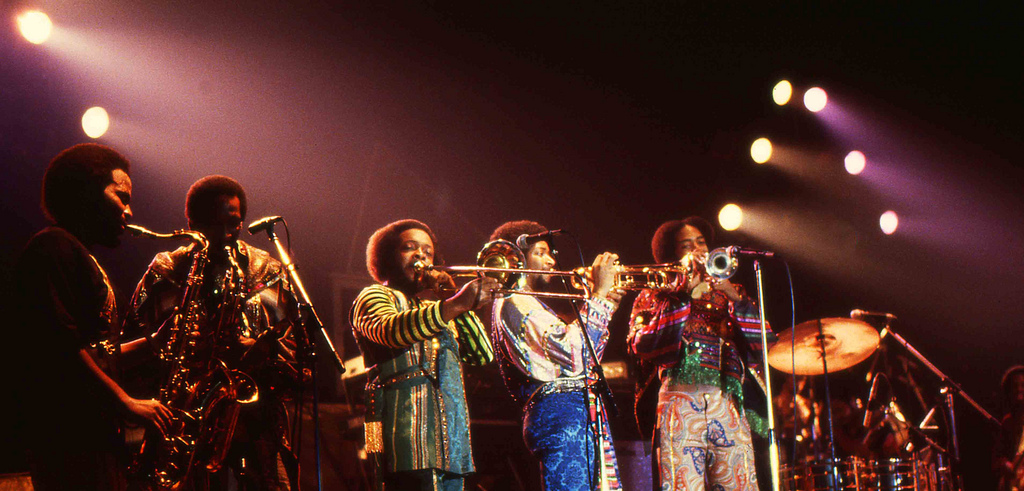
Earth, Wind & Fire maintains an active presence in the music world, with core members Verdine White, Philip Bailey, and Ralph Johnson continuing to perform and tour. The band's current identity is rooted in its enduring sound, characterized by intricate arrangements, the distinctive kalimba, a powerful horn section, and the interplay between Bailey's clear falsetto and the group's harmonious vocals. They are recognized for their ability to blend multiple genres seamlessly, creating music that appeals across diverse audiences and generations.
The scale of their success is substantial, with global record sales exceeding 90 million units. Their live concerts remain a cornerstone of their appeal, known for high energy and visual spectacle. Fans connect with Earth, Wind & Fire through their uplifting lyrical themes and the consistent quality of their musicianship. The group's legacy is not just in their catalog of hits, but in their ongoing ability to deliver engaging performances, solidifying their place as a dynamic and influential force in popular music.
Formation Story
Earth, Wind & Fire began its journey in Chicago in 1969, under the guidance of Maurice White. Before this, White had a notable career as a session drummer for Chess Records, working with artists like Etta James and Fontella Bass. His tenure with the Ramsey Lewis Trio introduced him to the African kalimba, an instrument that would later become a signature element of his own group's sound. White initially formed a band called The Salty Peppers, which included himself, Wade Flemons, and Don Whitehead, and later added singer Sherry Scott, percussionist Yackov Ben Israel, and his younger brother Verdine White on bass.
After the Salty Peppers disbanded, Maurice White relocated to Los Angeles and secured a recording contract with Warner Bros. Records. He then embarked on a series of auditions in Los Angeles, bringing in trumpeter Leslie Drayton, guitarist Michael Beal, tenor saxophonist Chester Washington, and trombonist Alex Thomas, alongside six other musicians from Chicago. The name "Earth, Wind & Fire" was chosen to reflect the elements of Maurice White's astrological sign, Sagittarius, which is primarily a fire sign but also possesses earth and air characteristics. The band's self-titled debut album, Earth, Wind & Fire, was released in March 1971, featuring their first top 40 hit, "I Think About Lovin' You."
A significant shift occurred in 1972 when Maurice White restructured the entire lineup, retaining only his brother Verdine. He rebuilt the group with new talent, including Philip Bailey on vocals and percussion, Jessica Cleaves on vocals, Ronnie Laws on flute and saxophone, Roland Bautista on guitar, Larry Dunn on keyboards, and Ralph Johnson on percussion. This new configuration caught the attention of Clive Davis, who signed them to Columbia Records after seeing them perform. Their debut with Columbia, the album Last Days and Time, was released in 1972, marking the beginning of a new era for the band.
Members
Former Members
Maurice White (Maurice White)
Founder, Lead Vocals (Tenor), Drums, Kalimba, Bandleader · 1969-2016
Fred White (Fred White)
Drums
Wade Flemons (Wade Flemons)
Vocals, Keyboards
Roland Bautista (Roland Bautista)
Guitar
Jessica Cleaves (Jessica Cleaves)
Vocals
Larry Dunn (Larry Dunn)
Keyboards, Musical Director · 1972-1983
Ronnie Laws (Ronnie Laws)
Flute, Saxophone
Al McKay (Al McKay)
Guitar
Andrew Woolfolk (Andrew Woolfolk)
Saxophone
Sonny Emory (Sonny Emory)
Drums
Sheldon Reynolds (Sheldon Reynolds)
Guitar
Freddie Ravel (Freddie Ravel)
Keyboards
Morris Pleasure (Morris Pleasure)
Keyboards
Robert Brookins (Robert Brookins)
Keyboards
Daniel de los Reyes (Daniel de los Reyes)
Percussion
Kim Johnson (Kim Johnson)
Vocals
Greg Moore (Greg Moore)
Guitar
Musical Style
Earth, Wind & Fire's musical style is a rich tapestry woven from jazz, R&B, soul, funk, disco, pop, Latin, and Afro-pop. A defining characteristic of their sound is the prominent use of the kalimba, an African thumb piano, which Maurice White integrated after his time with the Ramsey Lewis Trio. The band’s dynamic horn section contributes significantly to their energetic arrangements, providing powerful brass flourishes and intricate melodic lines. Another key element is the vocal contrast between Philip Bailey's soaring falsetto and Maurice White's soulful tenor, which, combined with layered group harmonies, gave them a distinct sonic signature.
The band’s sound evolved over their career. Their early work in 1971 and 1972, heard on albums like Earth, Wind & Fire and The Need of Love, showcased a more free-flowing jazz-fusion with touches of psychedelia. By the mid-1970s, with albums such as Head to the Sky and Open Our Eyes, they refined their fusion of jazz, rock, and soul, achieving their first gold and platinum certifications. The peak commercial era from 1975 to 1979, spanning albums like That's the Way of the World, All 'n All, and I Am, saw them mastering a polished, upbeat funk-soul sound that dominated charts with hits like "September" and "Boogie Wonderland." Even after a hiatus in the mid-1980s, their later albums like Millennium continued to build on their established blend while incorporating contemporary production techniques.
Discography
| Title | Year |
|---|---|
| Holiday | 2014 |
| Now, Then & Forever | 2013 |
| Illumination | 2005 |
| The Promise | 2003 |
| In the Name of Love | 1997 |
| Millennium | 1993 |
| Heritage | 1990 |
| Touch the World | 1987 |
| Electric Universe | 1983 |
| Powerlight | 1983 |
| Let Me Talk | 1981 |
| Raise! | 1981 |
| Faces | 1980 |
| After the Love Has Gone | 1979 |
| Boogie Wonderland | 1979 |
| I Am | 1979 |
| September | 1978 |
| Fantasy | 1978 |
| All 'n All | 1977 |
| Serpentine Fire | 1977 |
| Spirit | 1976 |
| Gratitude | 1975 |
| Shining Star | 1975 |
| That's the Way of the World | 1975 |
| That's the Way of the World | 1975 |
| Open Our Eyes | 1974 |
| Head to the Sky | 1973 |
| Last Days and Time | 1972 |
| Earth, Wind & Fire | 1971 |
| I Think About Lovin' You | 1971 |
| The Need of Love | 1971 |
Tours
2025 Tour
2025
Co-headlining tours with Chicago
Multiple years
Millennium Tour
1993
Raise! Tour
1981–1982
I Am Tour
1979
All 'n All Tour
1977–1978
Spirit Tour
1976
That's the Way of the World Tour
1975
Cultural Impact
Earth, Wind & Fire has significantly influenced both the music industry and broader cultural trends. Their elaborate costumes and meticulously choreographed live performances set new benchmarks for stage shows, inspiring countless artists to elevate the visual aspect of their concerts. The band's commitment to universal themes of positivity, love, and spiritual enlightenment resonated widely, offering a message of hope that transcended musical genres.
Their crossover appeal allowed them to bridge gaps between different musical communities, bringing their unique blend of funk, soul, jazz, and pop to mainstream audiences. The group's music has been a staple at events and celebrations globally, with songs like "September" becoming an enduring anthem. Beyond entertainment, Earth, Wind & Fire also played a role in cultural diplomacy, performing at the White House during the administration of Barack Obama, and at major sporting events like the opening of the US Open in August 2008, showcasing their broad appeal and cultural relevance.
Fandom Culture
While Earth, Wind & Fire does not have an officially designated fandom name, a specific lightstick, or an official fan color, their deep connection with listeners is undeniable. The band's music has fostered a devoted community that celebrates their rich catalog and enduring message. One of the most notable fan traditions revolves around the song "September," which experiences a significant surge in popularity and celebratory social media activity each year as the calendar turns to the ninth month. This particular track has become an intergenerational touchstone, prompting spontaneous celebrations and shared moments among fans.
The consistent touring by the current lineup ensures that new generations are introduced to their music and performance style, allowing the band to cultivate new admirers while retaining their long-standing fanbase. Fan projects often center around commemorating key anniversaries of albums or songs, or celebrating the birthdays of band members, particularly Maurice White's legacy. This organic, tradition-based engagement highlights the lasting emotional resonance of their work.
Awards Won (46)
Earth, Wind & Fire has accumulated a noteworthy collection of awards throughout their career, including six Grammy Awards from seventeen nominations. They received their first Grammy in 1975 for "Shining Star" in the Best R&B Vocal Performance by a Duo or Group category. Over the years, the band earned additional Grammys for albums like All 'n All and songs such as "After the Love Has Gone" and "Let Me Talk." The Recording Academy further recognized their lasting impact with a Grammy Lifetime Achievement Award in 2016. In addition to their Grammy success, the group has won four American Music Awards, including multiple honors for Favorite Soul/R&B Band/Duo/Group and Favorite Soul/R&B Album. Other significant accolades include a BET Lifetime Achievement Award in 2002, the Congressional Horizon Award in 2012, and the prestigious Kennedy Center Honors in 2019.
Lifetime Achievement Award
for: Overall career
for: Earth, Wind & Fire
Best R&B Vocal Performance by a Duo or Group
for: Let Me Talk
Best R&B Vocal Performance by a Duo or Group
for: After the Love Has Gone
Best R&B Instrumental Performance
for: Runnin'
Best R&B Vocal Performance by a Duo or Group
for: All 'n All
Best R&B Vocal Performance by a Duo or Group
for: Shining Star
Recipient
for: Overall contribution to American culture
Achievement in Arts and Culture
for: Overall career
Lifetime Achievement Award
for: Overall career
Milestones
Former drummer Fred White passed away
Received Kennedy Center Honors
Maurice White passed away at age 74
Began hiatus (until 1987)
Single "September" released, selling over 3 million copies
Achieved first #1 album (That's the Way of the World), first #1 single (Shining Star), and first Grammy Award
Released first platinum album, Open Our Eyes
Released first gold album, Head to the Sky
Signed to Columbia Records after Clive Davis saw them perform
Debut album Earth, Wind & Fire released
Band formed in Chicago by Maurice White
Fame & Fandom
Trivia
Maurice White, the founder of Earth, Wind & Fire, was born in Memphis, Tennessee, on December 19, 1941, and spent his early years being raised by his grandmother in the Foot Homes housing project. He began his musical journey at age six, joining a church gospel choir, which later fueled his interest in percussion and drumming. The band's distinctive name itself was inspired by Maurice's astrological sign, Sagittarius, which embodies fire, earth, and air qualities.
Prior to joining Earth, Wind & Fire, Philip Bailey was deeply impressed by the band's debut album, commenting on its unique sound compared to other Black groups he had heard. The band's elaborate live performances were not only musical but also theatrical, featuring illusions like floating pianos, spinning drum kits, and vanishing artists. These magical feats were initially engineered by Doug Henning and his then-unknown assistant, David Copperfield.
Sources
Group Info
- Formed
- 1969
- Debut
- March 1971
- Debut Song
- I Think About Lovin' You
- Origin
- Chicago, Illinois, United States
- Label
- Warner Bros. Records
- Status
- Active
Social Media
Also Known As
Join the community
fans discussing