Dead Can Dance
 Australia
Pioneers of neoclassical darkwave, blending medieval and world music into a timeless, ethereal sound.
2
Members
About
Dead Can Dance are an active duo today, still creating music that defies easy categorization. Lisa Gerrard's otherworldly contralto, often sung in her own invented language, pairs with Brendan Perry's deep baritone and intricate instrumental work to craft soundscapes that span centuries and continents. Their albums, from the baroque drama of Within the Realm of a Dying Sun to the ritualistic pulse of Dionysus, have sold steadily for decades, and they remain one of 4AD's most revered acts.
Their 2026 singles, "Our Day Will Come" and "The Cicadas," arrived after a five-year silence, showing a band still pushing forward. While they never chased mainstream fame, their music has permeated film, television, and the wider alternative consciousness. Fans continue to pack venues across Europe, North America, and Australia, drawn to a live experience that feels like a sacred ceremony.
Formation Story
Dead Can Dance began in a Melbourne art collective in 1981, where Brendan Perry and Lisa Gerrard found each other through a shared obsession with music from distant times and places. Perry, born in London but raised in New Zealand and Australia, had been playing in local post-punk bands. Gerrard, a Melbourne native with a voice that seemed to carry ancient echoes, was exploring her own vocal experiments. They discovered a natural chemistry and began writing together almost immediately.
Within a year, the pair moved to London, a city teeming with post-punk energy. They sent a demo to 4AD, the label that had released records by Cocteau Twins and This Mortal Coil. Label founder Ivo Watts-Russell was captivated and signed them. Their self-titled debut arrived in 1984, a brooding, gothic-tinged record that hinted at their ambitions. But it was with 1985's Spleen and Ideal that they began to carve out their own territory, layering church organ, strings, and Gerrard's soaring vocals over Perry's baritone.
The duo's early rise was not a straight line. They faced the challenge of being neither fully gothic nor easily marketable, and their music often felt out of step with the times. Yet they persisted, refining their sound through the late 1980s with Within the Realm of a Dying Sun and The Serpent's Egg, albums that drew on medieval and Renaissance sources. The breakthrough came with 1993's Into the Labyrinth, which reached the Billboard 200 and made them 4AD's best-selling act. After a period of tension, they disbanded in 1998, only to reunite for a triumphant world tour in 2005.
Members
Musical Style
Dead Can Dance's music resists simple labels. Early on, they were filed under gothic rock, but they quickly moved beyond that, weaving together baroque orchestration, church organ, and classical strings. The 1987 album Within the Realm of a Dying Sun became a touchstone of neoclassical darkwave, with Gerrard's operatic vocals and Perry's deep, resonant lines creating a sound that felt both sacred and melancholic.
Over time, they expanded their palette to include medieval, Renaissance, and world music traditions. Aion (1990) drew on early music, while Into the Labyrinth and Spiritchaser incorporated North African, Middle Eastern, and Balkan elements, often using traditional instruments alongside modern electronics. Their 2012 album Anastasis added electronic textures, and 2018's Dionysus was a concept album built around field recordings and primal percussion, inspired by ancient Greek ritual. Lyrical themes often explore spirituality, mythology, and the natural world, delivered in a mix of English, Latin, and invented languages.
Discography
| Title | Year |
|---|---|
| Dionysus | 2018 |
| Anastasis | 2012 |
| Spiritchaser | 1996 |
| Into the Labyrinth | 1993 |
| Aion | 1990 |
| The Serpent's Egg | 1988 |
| Within the Realm of a Dying Sun | 1987 |
| Spleen and Ideal | 1985 |
| Dead Can Dance | 1984 |
Tours
Dionysus Tour
2018
Anastasis World Tour
2012
Reunion World Tour
2005
Into the Labyrinth World Tour
1993
Cultural Impact
Dead Can Dance have left a deep mark on alternative music, influencing gothic, darkwave, and ambient artists for decades. Their fusion of medieval and world music with ethereal vocals anticipated the world fusion movement by years. Their aesthetic, from album art to stage design, shaped the visual language of darkwave and neoclassical genres.
Their music has appeared in films like Baraka, where "The Host of Seraphim" became iconic, and in countless TV shows and documentaries. Lisa Gerrard's solo work on Gladiator won an Oscar, further spreading their influence. The band's 2026 single "Our Day Will Come" showed their political side, with proceeds supporting humanitarian causes. Their ability to evoke ancient, mystical atmospheres has made them a touchstone for fans of world music and ambient sound alike.
Fandom Culture
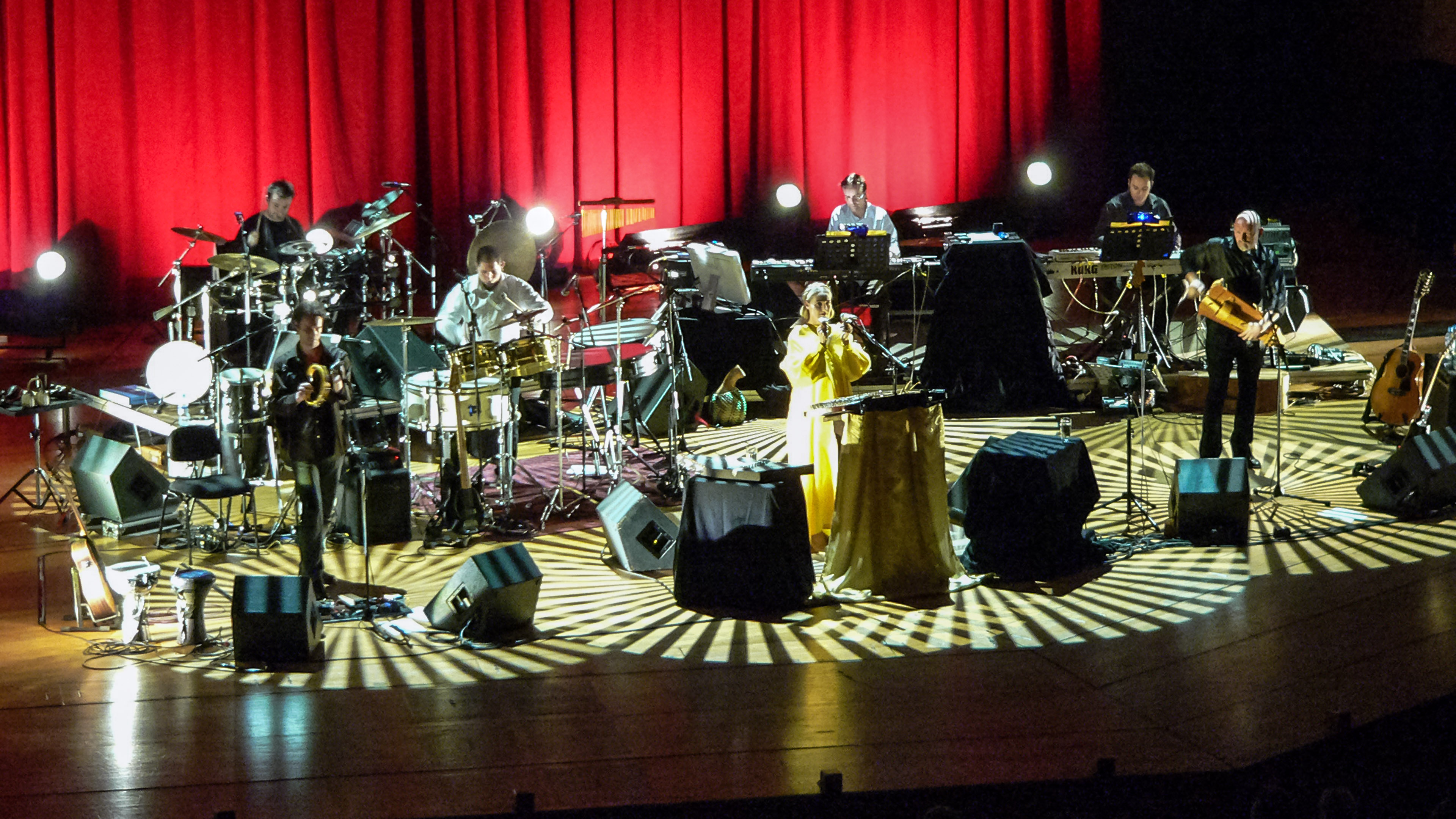
Dead Can Dance don't have a fandom name, lightstick, or official fan colors. Instead, their fans form a devoted global community bound by a love for the band's spiritual and mythological depth. They gather online to dissect lyrics, share live recordings, and celebrate anniversaries of albums like Within the Realm of a Dying Sun, which turned 39 in July 2026. Fan projects include tribute albums, art inspired by the music, and annual listening parties. The band's live shows often feel like communal rituals, with audiences sitting in reverent silence before erupting in applause.
Awards Won (2)
Dead Can Dance have received limited mainstream awards, reflecting their independent, art-focused career. Their most notable win came in 1994 when Into the Labyrinth earned the ARIA Award for Best World Music Album. Lisa Gerrard has also won personal awards for her film work, including a Golden Globe and an Academy Award for the score of Gladiator, though these are credited to her solo career.
Best World Music Album
for: Into the Labyrinth
Milestones
Formed in Melbourne by Brendan Perry and Lisa Gerrard.
Relocated to London and signed with 4AD.
Released self-titled debut album.
Released 'Within the Realm of a Dying Sun', a landmark of neoclassical darkwave.
'Into the Labyrinth' became their commercial breakthrough and 4AD's highest-selling album.
Temporary disbandment.
Reunited for a world tour.
Released 'Anastasis' after an 11-year studio hiatus.
Released 'Dionysus', topping the Billboard New Age Albums chart.
Toured Europe.
Released new singles 'Our Day Will Come' and 'The Cicadas'.
Trivia
Lisa Gerrard sings in a personal invented language called "glossolalia," which she developed as a child. The band's name was inspired by a New Guinea ritual mask representing the spirits of the dead dancing. "The Host of Seraphim" was used to devastating effect in the 1992 documentary Baraka. The 2018 album Dionysus was originally composed for the Ruhrtriennale arts festival in Germany. Brendan Perry lives in a converted 19th-century church in County Cavan, Ireland, where he built a home studio called Quivvy Church.
Keywords
Sources
Quick Facts
- Type
- Duo
- Formed
- 1981
- Origin
- Melbourne
- Label
- 4AD
- Genres
- ethereal wave, neoclassical dark wave, world music
- Members
- 2
- Status
- Active
Group Info
- Formed
- 1981
- Debut
- February 1984
- Debut Song
- The Host of Seraphim
- Origin
- Melbourne, Australia
- Company
- 4AD
- Label
- 4AD
- Status
- Active
Social Media
Also Known As
Join the community
fans discussing