“It's a film that feels both timeless and timely, a reminder of the past that speaks to the present.”
Ann Hornaday
The Washington Post
 United States
"A journey of a thousand miles begins with a single step."
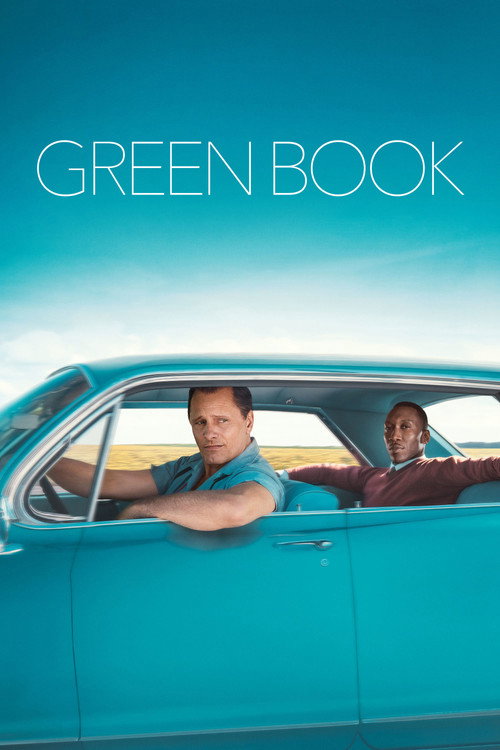
In 1962 New York City, Tony Vallelonga, better known as Tony Lip, works as a bouncer at the Copacabana nightclub. When the club closes for renovations, he needs quick cash. A chance interview leads him to Dr. Don Shirley, a world-class pianist of African American descent, who is planning a concert tour through the Deep South. The catch: Tony will drive and protect Don, relying on a guide called The Negro Motorist Green Book for safe lodging and dining options. Peter Farrelly, known for broad comedies like Dumb and Dumber, directs this dramatic comedy with a budget of $23 million. It went on to earn over $321 million worldwide.
Viggo Mortensen plays Tony with a thick New York accent, while Mahershala Ali brings quiet dignity to Don Shirley. The film balances humor with the harsh realities of segregation, earning an 8.2 rating from over 12,000 votes. It won the Academy Award for Best Picture, sparking conversations about race and representation. The screenplay, co-written by Nick Vallelonga (Tony's son), drew from real events but faced criticism for its simplified portrayal of racism and a perceived white savior narrative.
Stream
Availability and pricing can change. Confirm on the provider's site before purchasing.
Tony Vallelonga, a quick-tempered Italian-American bouncer from the Bronx, finds himself out of work when the Copacabana closes for two months of renovations. With a wife and two sons to support, he takes a job driving Dr. Don Shirley, a refined African American pianist, on an eight-week concert tour through the Midwest and Deep South. The year is 1962, and segregation laws are still in force. Shirley's record label supplies Tony with a copy of The Negro Motorist Green Book, a guide listing hotels, restaurants, and gas stations that serve Black customers safely.
The two men could not be more different. Tony is loud, pragmatic, and holds casual prejudices; he once threw away glasses that Black workmen drank from. Don Shirley lives alone in a lavish apartment above Carnegie Hall, speaks multiple languages, and maintains a formal, dignified demeanor. Their journey begins awkwardly, with Tony smoking in the car and Don correcting his grammar. As they drive south, they encounter escalating indignities: Don is denied access to a whites-only bathroom, forced to change in a storage closet before a concert, and refused service at a whites-only restaurant. Tony learns to stand up for Don, using his fists and his wits to defuse tense situations.
During stops, Tony writes letters home to his wife Dolores, dictated by Don, who transforms Tony's rough prose into poetic love letters. This deepens their bond. Tony discovers that Don has performed for presidents but is still treated as a second-class citizen. Don, in turn, sees Tony's loyalty and growing respect. At one point, Don helps Tony write a letter that moves Dolores to tears. The tour includes stops in Louisville, Memphis, and other cities, each presenting new challenges. Tony confronts his own biases, while Don begins to open up about his loneliness, estranged from his brother, divorced, and isolated by his race and his classical training.
The Green Book becomes a symbol of the world they navigate: a practical tool for survival but also a reminder of the systemic racism that makes it necessary. The film follows their evolving relationship as they share meals, argue about music (Don prefers Chopin; Tony loves Little Richard), and face threats from local police. By the final leg of the tour, the two have forged a genuine friendship, but the most difficult test still lies ahead.
Official Trailer
Critical Consensus
Green Book offers a heartwarming, if somewhat conventional, story of friendship that overcomes racial divides. While its approach to sensitive themes has drawn some criticism, the performances of its lead actors are widely praised, making it an engaging and feel-good experience.
“It's a film that feels both timeless and timely, a reminder of the past that speaks to the present.”
Ann Hornaday
The Washington Post
“While the movie has been criticized for its conventionality and perceived 'white savior' narrative, it's undeniably a crowd-pleaser that works on the strength of its lead performances.”
Brian Tallerico
RogerEbert.com
“The film is a buddy comedy that happens to be about race, and it's often quite funny and touching.”
David Ehrlich
IndieWire
“Mahershala Ali and Viggo Mortensen have a winning chemistry that anchors the film, even when the script treads familiar ground.”
Justin Chang
Los Angeles Times
“Peter Farrelly's direction is surprisingly nuanced, balancing humor with the gravity of the subject matter.”
Todd McCarthy
The Hollywood Reporter
Viggo Mortensen
Tony Lip
Mahershala Ali
Dr. Don Shirley
Linda Cardellini
Dolores
Sebastian Maniscalco
Johnny Venere
Iké Awipi
Dr. Don Shirley's lawyer
Dimiter D. Marinov
Oleg
Mike Hatton
George
P.J. Byrne
Record Exec
Joe Cortese
Gio Loscudo
Don Stark
Jules Podell
Director
Peter Farrelly
Writers
Brian Hayes Currie, Nick Vallelonga, Peter Farrelly
Composer
Kris Bowers
Cinematographer
Sean Porter
Producers
Brian Hayes Currie, Peter Farrelly, Nick Vallelonga, Jim Burke, Charles B. Wessler
Academy Awards (2019)
Best Picture: Won
Academy Awards (2019)
Best Supporting Actor: Won
Academy Awards (2019)
Best Original Screenplay: Won
Academy Awards (2019)
Best Actor: Nominated
Academy Awards (2019)
Best Film Editing: Nominated
Golden Globe Awards (2019)
Best Motion Picture – Musical or Comedy: Won
Golden Globe Awards (2019)
Best Supporting Actor – Motion Picture: Won
Golden Globe Awards (2019)
Best Screenplay: Won
Golden Globe Awards (2019)
Best Actor – Motion Picture Musical or Comedy: Nominated
BAFTA Awards (2019)
Best Film: Nominated
BAFTA Awards (2019)
Best Actor in a Leading Role: Nominated
BAFTA Awards (2019)
Best Original Screenplay: Nominated
Join the community
fans discussing