 Mali
MaliAbout
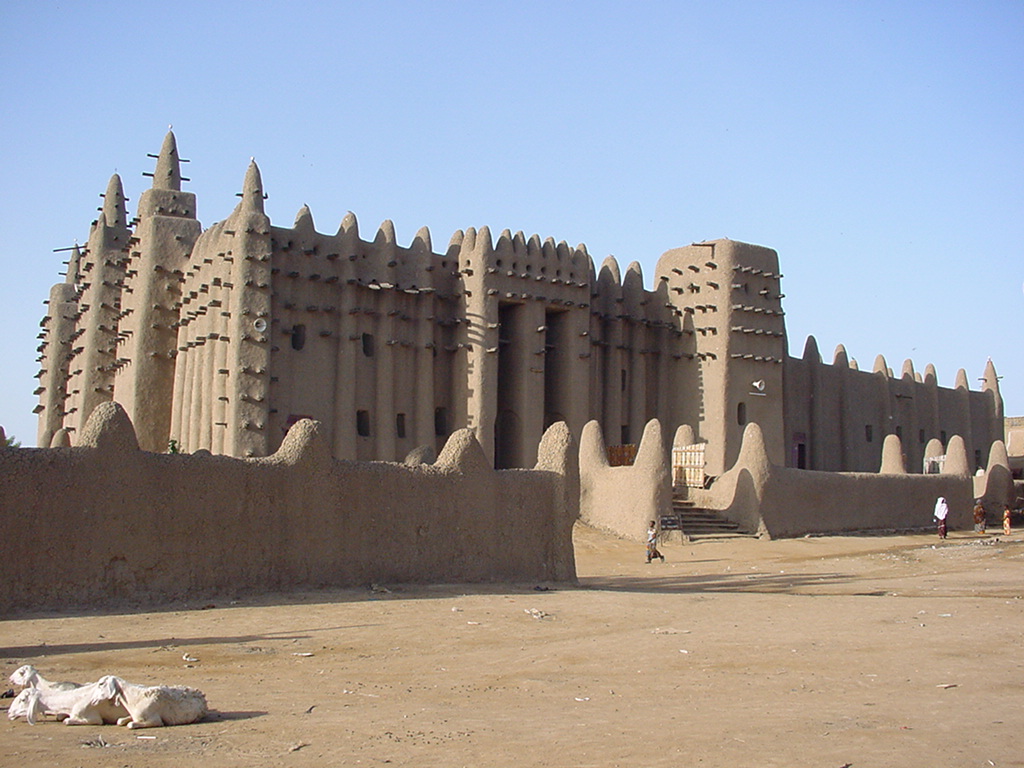
Rising from the flood plain of the Bani River, the Great Mosque of Djenné is a monumental work of Sudano-Sahelian architecture and the largest adobe building on Earth. Its thick mud-brick walls, tapering wooden beams, and three towering minarets create a skyline that has defined this corner of Mali for over a century. The current structure was rebuilt in 1906–1907, but the site's religious significance stretches back to the 13th century, when the first mosque was raised here. For the people of Djenné, the mosque is not just a place of prayer; it is the beating heart of the town, hosting a bustling weekly market in its vast courtyard and serving as a stage for festivals and communal gatherings.
The building is a collective creation. Its walls, up to 40 centimeters thick, are made from sun-dried mud bricks held together by a mud mortar, and its roof is supported by a forest of palm-wood beams. Each year, the community comes together for the Crépissage, a ritual re-plastering that sees thousands of residents smear a fresh layer of mud over the entire structure, protecting it from the rains and ensuring its survival. This tradition, which in May 2024 drew thousands despite the region's insecurity, is a vivid demonstration of how the mosque belongs to everyone. In 1988, the mosque, along with the Old Towns of Djenné, was inscribed on the UNESCO World Heritage List, cementing its status as a global cultural treasure.
Yet the mosque's future is far from secure. Political instability and conflict in central Mali have put the site on UNESCO's List of World Heritage in Danger since 2022. The annual re-plastering has continued, but the risks are real: the fragile mud structure requires constant care, and the violence that has displaced many residents threatens the very community that sustains it. Despite these challenges, the Great Mosque remains an active place of worship and a powerful symbol of resilience, its image familiar to people around the world through photography, documentaries, and travel features.
Mission
The Great Mosque of Djenné serves as the principal place of worship for the Muslim community of Djenné, providing a space for daily prayers, Friday congregational worship, and religious education. Beyond its spiritual function, the mosque is a civic anchor, hosting weekly markets, community meetings, and festivals that reinforce social bonds and cultural identity. Its ongoing preservation is a collective responsibility, carried out by the local masons' guild and volunteers who annually re-plaster the building to protect it from the elements, ensuring that this architectural heritage endures for future generations.
History
The story of the Great Mosque begins in the 13th century, when the city of Djenné emerged as a major trading hub on the trans-Saharan routes. The first mosque on this site, built around 1240, was a modest structure of mud and timber, but it established Djenné as a center of Islamic learning and commerce. Over the centuries, the mosque was rebuilt and expanded, reflecting the growing wealth and piety of the city. The current edifice, however, owes its form to a dramatic reconstruction that took place from 1906 to 1907, under the supervision of the French colonial administration and the local mason Ismaïla Traoré. This version, with its bold geometric silhouette and towering minarets, drew on the region's traditional building techniques while also incorporating new structural elements, such as the use of fired bricks in the core of the walls for added stability.
Throughout the 20th century, the mosque became a symbol of Sudano-Sahelian identity, admired by architects, artists, and travelers. In 1988, UNESCO recognized its universal value by inscribing the Old Towns of Djenné, including the mosque, on the World Heritage List. The annual re-plastering festival, known as the Crépissage, gained international attention, drawing photographers and journalists to witness the extraordinary sight of the entire community working together to renew the building. But the new millennium brought new challenges. In 2012, the conflict in northern Mali spilled into the center of the country, and by 2022, UNESCO had placed Djenné on its List of World Heritage in Danger. The re-plastering in May 2024, attended by thousands despite the security threats, was a powerful statement of the community's determination to preserve its heritage. The mosque that stands today is a living link to the past, a structure that is never truly finished, always being repaired, always being reborn.
Subdivisions
Prayer Hall
A vast, roofed space supported by palm-wood columns, capable of accommodating thousands of worshippers.
Courtyard
A large open area in front of the mosque, used for the weekly market and large gatherings.
Minarets
Three towering mud-brick spires, the tallest of which frames the qibla wall and is a defining feature of the structure.
Milestones
1240
The first mosque is built on the site, establishing Djenné as a center of Islamic worship and trade.
1906
The current structure is constructed, replacing the earlier mosque and giving the building its iconic form.
1988
The Great Mosque and the Old Towns of Djenné are inscribed on the UNESCO World Heritage List.
2022
UNESCO adds Djenné to the List of World Heritage in Danger due to insecurity in central Mali.
2024
Thousands participate in the annual re-plastering ceremony despite ongoing conflict, underscoring the community's commitment to preservation.
Sources
Organization Info
- Founded
- 1906
- Headquarters
- Djenné, Mali
- Country
- Mali
- Type
- Religious
- UNESCO World Heritage
- 1988
- Largest adobe building
- Yes
Join the community
fans discussing