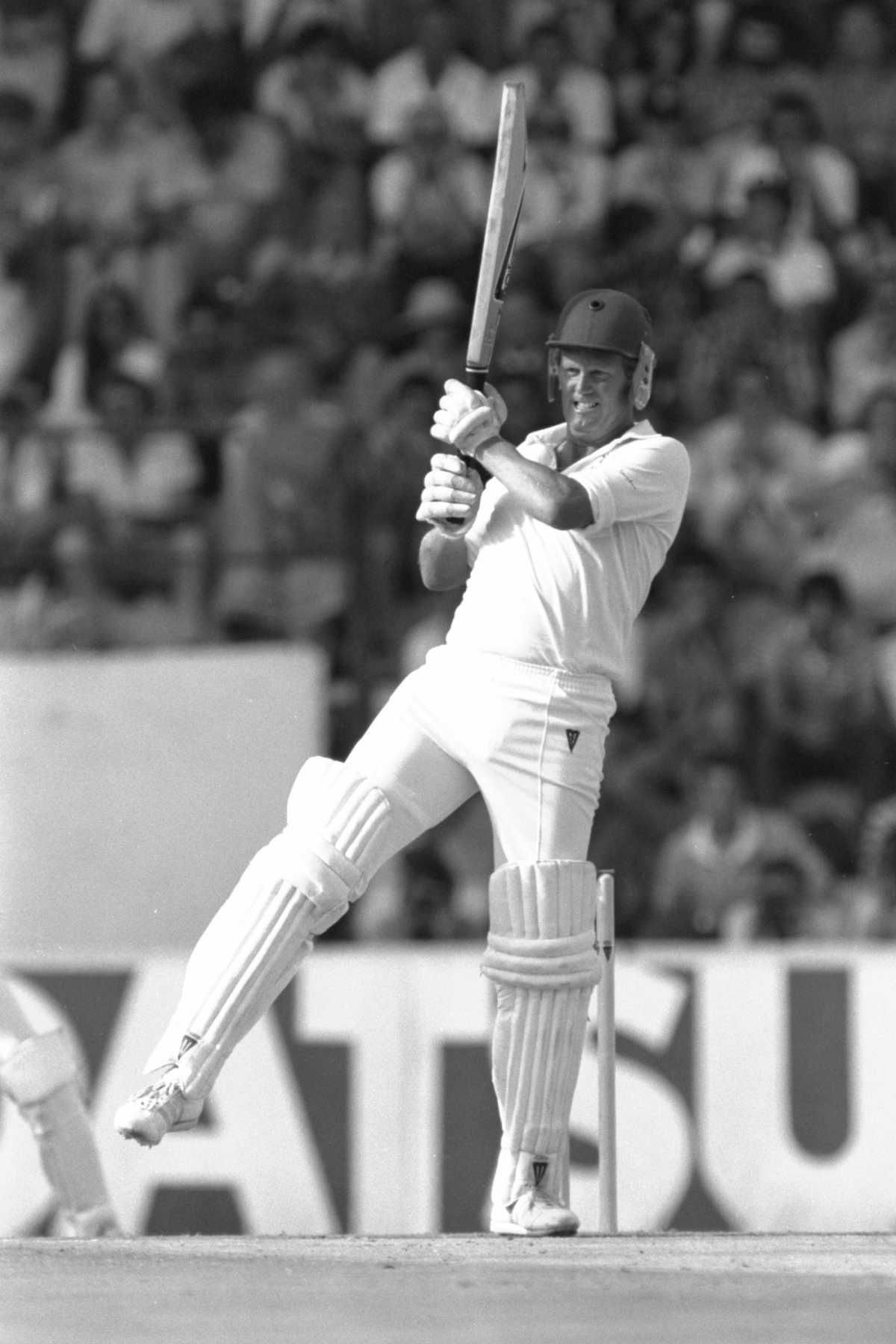
Graeme Pollock
 South Africa
Also known as: Robert Graeme Pollock, The Left-Handed Genius
Birthday
February 27, 1944
Birth Sign
Pisces
Birthplace
Durban, South Africa
Age
82 years old
About
Robert Graeme Pollock is a South African former cricketer, widely regarded as one of the greatest left-handed batsmen in the history of the game. His Test batting average of 60.97 ranks third all-time, behind only Don Bradman and Adam Voges, a remarkable feat given his career spanned just 23 matches. Pollock's international career was cut short at the age of 26 by the sporting boycott of apartheid South Africa, yet in that brief window he produced innings that still echo through cricket lore. He is revered in his homeland as a national treasure and a symbol of what might have been on the world stage.
Pollock's elegance and power at the crease earned him the admiration of peers, including Don Bradman, who rated him alongside Garfield Sobers as the finest left-handers he ever saw. Today, he remains a beloved figure in South African cricket, celebrated for his achievements and the grace with which he carried himself. His legacy is kept alive by fans and historians who argue that, had he played in a different era, his name would be spoken in the same breath as the game's immortals.
Early Life & Background
Born in Durban on 27 February 1944, Graeme Pollock grew up in a home where cricket was the lifeblood. His older brother, Peter, was already a promising fast bowler, and the household revolved around the game. Graeme's talent was unmistakable from a young age; he was a teenager when he made his first-class debut for Transvaal, and it didn't take long for selectors to notice.
At just 17, he was handed his Test cap against England in 1961, making him one of the youngest players ever to represent South Africa. The cricket world saw glimpses of his genius early on, but it was in the following years that he truly blossomed. His upbringing, steeped in the sport and supported by a fiercely competitive sibling, forged a batsman of extraordinary poise and confidence.
Career Growth
Pollock's breakthrough came in the mid-1960s. In the 1964 Adelaide Test against Australia, he was part of a monumental partnership that helped South Africa secure a famous victory. The performance was so significant that The Cricket Monthly later dedicated a feature to it, titled "Massive in Adelaide." By 1966, he was named a Wisden Cricketer of the Year, and Wisden retrospectively crowned him the Leading Cricketer in the World for both 1967 and 1969.
The crowning moment of his career arrived in 1970 at Kingsmead, Durban, when he smashed 274 against Australia, the highest Test score by a South African at the time, a record that stood for decades. Batting alongside the young Barry Richards, Pollock's innings was a masterclass in controlled aggression. That proved to be his final Test; the sporting boycott of apartheid South Africa ended international cricket for the nation, and Pollock, at just 26, never played Test cricket again. In all, he scored 2,256 runs in 23 Tests at an average of 60.97, with seven centuries. In first-class cricket, he amassed over 20,000 runs for Transvaal and Eastern Province, cementing his status as a domestic giant. He was named South Africa's Cricketer of the Century in 1999 and inducted into the ICC Cricket Hall of Fame in 2009.
Career Timeline
Public Image & Style
Pollock is remembered as "the left-handed genius", a batsman whose timing was so pure that he made the game look deceptively simple. Cricket media consistently portray him as one of the sport's great "what ifs," a player whose career was tragically truncated by politics. In South Africa, he is revered as a national icon, with tributes pouring in on his 82nd birthday in February 2026. One social media post called him "South Africa's GOAT," reflecting the deep affection fans hold for him. His legacy is one of elegance, power, and unfulfilled potential, and he remains a symbol of what South African cricket could have achieved on the international stage.
Fame & Fandom (iFAMOUS Rankings)
Graeme Pollock stands as a towering figure in cricket history, his name synonymous with the sport's most haunting 'what ifs.' Despite a career truncated by political boycotts at age 26, his statistical dominance ensures he remains a household name among cricket purists. iFANN has evaluated his global standing and determined that while his legacy is immense within the sporting world, he currently does not hold a placement in the published Global Top 1,000 or any Top-100 scope list. This absence of a specific numeric rank reflects the unique nature of his fame: deeply revered in South Africa and among cricket historians, yet less ubiquitous globally compared to modern superstars who dominate search algorithms and social media feeds daily. The scale of his influence is measured not in viral trends but in the enduring respect for an average of nearly 61 runs per innings, a feat achieved in just 23 Test matches. His fanbase lacks a formal, documented name, operating instead as a diffuse community of admirers united by admiration for his technique rather than organized campaigns or rituals. There are no recorded fan-funded projects, subway ads, or specific birthday billboards attributed to him, distinguishing his following from the hyper-organized movements seen in pop culture today. Instead, the audience interacts through the retelling of his story: the genius silenced too soon. Fans remember the image of him signing for Kerry Packer's World Series Cricket in 1977, clutching bundles of cash in Port Elizabeth, a moment that cemented his status as a player who chose financial opportunity over official representation during a politically charged era. While crowds have never shut down streets for him, the reverence shown on his 82nd birthday in February 2026 speaks to a deep, quiet affection that transcends the noise of modern celebrity.
Interesting Facts and Legends
Pollock could bowl effective legspin, a handy secondary skill that he rarely needed to deploy during his brief international tenure. His Test career spanned only seven years across 23 matches, yet he maintained an average of nearly 61 runs per innings. All but one of those Tests came against England and Australia, meaning he never faced the great West Indian or subcontinental bowling attacks of his era. His record-breaking 274 against Australia in 1970 remained the highest score by a South African for decades. The Pollock family produced three generations of Test cricketers, a dynastic achievement unmatched in South African sport. A widely told legend frames his career as the ultimate example of a sporting life cut short by politics, with his final Test coming at just 26 years old. Fans often recount the dominant display at Kingsmead in 1970, where he batted alongside Barry Richards against Australia; this match is described as a moment where 'the emperor reigns,' indicating a performance that left the Australian team struggling. Another pivotal moment captured in lore is his signing for Kerry Packer's World Series Cricket in 1977, immortalized in a famous photograph where he is seen holding bundles of cash in Port Elizabeth, highlighting his transition into rebel tours.
Notable Quotes
“I just tried to watch the ball and hit it. It was a simple game then.”
“The boycott was a tragedy for South African cricket, but I accepted it as part of the fight against apartheid.”
“I never thought about averages. I just wanted to score runs for my team.”
Family & Personal Life
Graeme Pollock comes from one of South Africa's most storied cricketing families. His older brother, Peter Pollock, was a Test fast bowler who took 116 wickets in 28 Tests and also averaged 21 with the bat. Peter's son, Shaun Pollock, went on to become one of the country's greatest all-rounders and a former national captain. The family's cricketing pedigree spans three generations, with Graeme's own father, Andrew, also involved in the sport at a high level. Pollock has remained a beloved figure within the family, often appearing alongside Shaun at cricket functions, including a Chairman's XI match in Perth in November 1997. Details of his personal household are not publicly documented, but his bond with his brother and nephew is well known in cricket circles.
Notable Connections
Graeme Pollock's career intersected with some of cricket's greatest names. Don Bradman, the legendary Australian, publicly praised Pollock as one of the best left-handed batsmen he had ever seen. His brother Peter Pollock was a Test fast bowler, and his nephew Shaun Pollock became a legendary all-rounder and captain of South Africa. Barry Richards partnered him in that famous 1970 innings at Kingsmead. Garfield Sobers was the other left-hander Bradman mentioned alongside Pollock.
Relationships & Dating History
Graeme Pollock has kept his personal life remarkably private. Public records of romantic relationships are virtually nonexistent, and he has never been the subject of tabloid speculation. As of 2026, his relationship status remains unknown, and he appears to have been married at some point, though details are scarce. His focus has always been on cricket and family, and he has maintained a dignified silence about his personal affairs.
Salary, Net Worth In 2026
$1 Million
iFANN Editorial Team estimate
iFANN currently estimates Graeme Pollock's net worth at $1 Million as of 2026. Unlike modern cricketers, Pollock played in an era when international players earned modest match fees, and there are no records of major endorsement deals or business ventures. His income post-retirement has come from commentary, administrative roles, and public appearances. While his cricketing legacy is priceless, his financial standing reflects the amateur era in which he played.
Awards Won (5)
Graeme Pollock's trophy cabinet is a testament to his genius. He was named Wisden Cricketer of the Year in 1966 and retrospectively crowned the Leading Cricketer in the World for 1967 and 1969. In 1999, he was chosen as South Africa's Cricketer of the Century, and in 2009 he was inducted into the ICC Cricket Hall of Fame.
2009 · Hall of Fame
Career
1999 · National Award
Career
Known For
Test Cricket
1961-1970 · Batsman
First-Class Cricket
1961-1987 · Batsman for Transvaal and Eastern Province
Keywords
Sources
Quick Facts
- Profession
- cricketer
- Born
- February 27, 1944
- Birthplace
- Durban, South Africa
- Gender
- Male
- Birth Sign
- Pisces
- Test Average
- 60.97
- Tests Played
- 23
Personal Details
- Full Name
- Robert Graeme Pollock
Frequently Asked Questions
What was Graeme Pollock's Test batting average?
Why did Graeme Pollock's career end so early?
How is Graeme Pollock related to Shaun Pollock?
What was Graeme Pollock's highest Test score?
What awards did Graeme Pollock win?
Similar People
Join the community
fans discussing