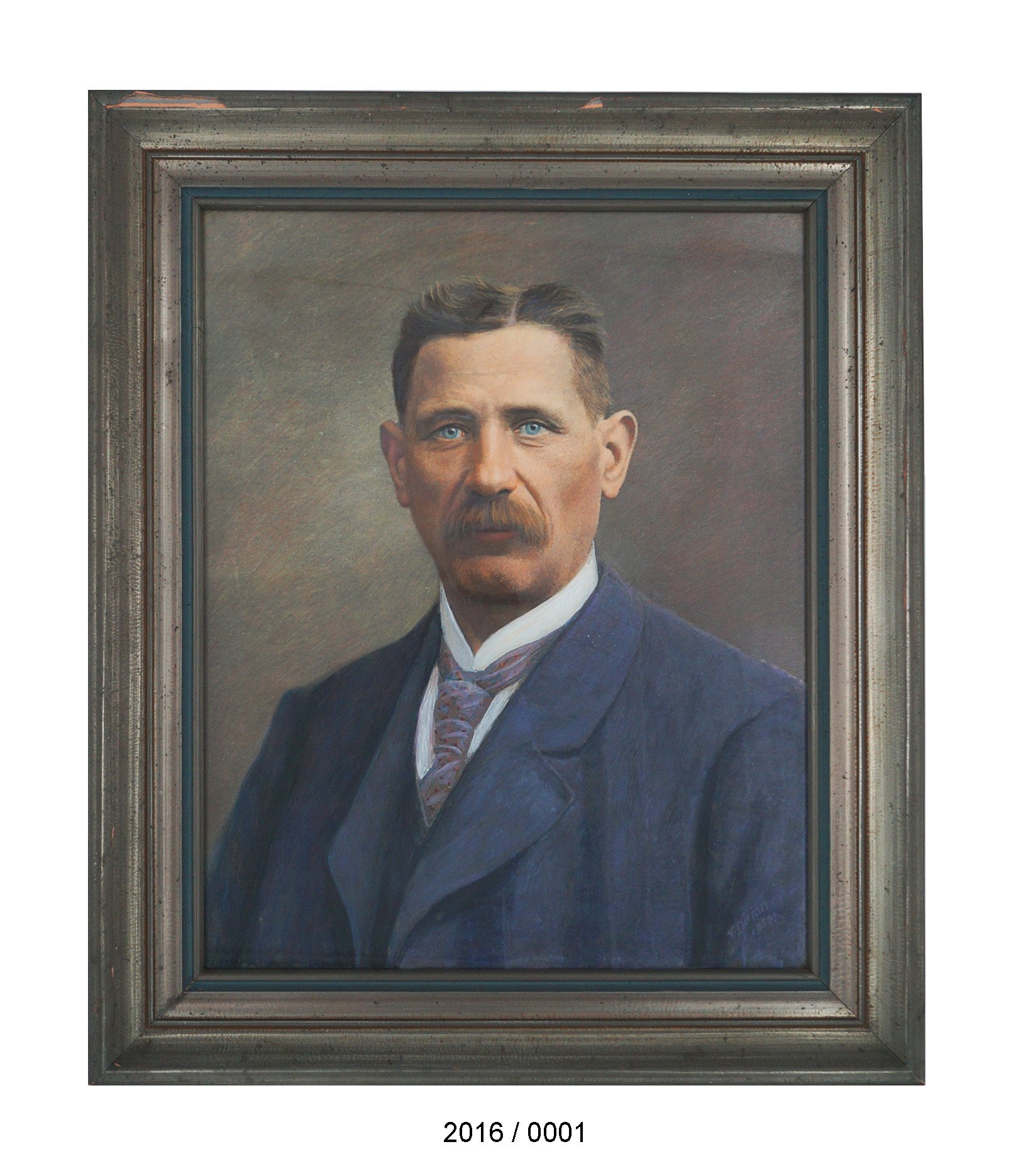
Gottfried Fuchs
 Germany
Also known as: Godfrey Fuchs
Birthday
May 3, 1889
Birth Sign
Taurus
Birthplace
Karlsruhe, Germany
Age
Died at 82
About
Gottfried Fuchs was a German association football player whose name is etched in the sport's early history for a single, staggering afternoon. A prolific striker for club and country, he is best remembered for scoring ten goals in one international match, a feat that stood as a world record for decades. Fuchs was the first player of Jewish heritage to represent Germany, a distinction that later made his life precarious under Nazi rule.
Fuchs's playing career spanned the first two decades of the twentieth century, during which he appeared for Düsseldorfer SC and Karlsruher FV. His international appearances were few, but his impact was outsized. The 1912 Stockholm Olympics provided his defining moment, when he scored ten times in a 16-0 rout of Russia, a record that remains among the most remarkable in football history.
Forced to flee Germany in the 1930s due to his Jewish ancestry, Fuchs eventually settled in Canada, where he lived quietly until his death in 1972. His story, once nearly forgotten, has been revived through exhibitions and historical research, ensuring that his achievements and the circumstances of his exile are not lost to time.
Early Life & Background
Gottfried Erik Fuchs was born on May 3, 1889, in Karlsruhe, a city in the Grand Duchy of Baden. Growing up in a Jewish family, he developed a passion for football at a young age, a sport still in its infancy in Germany. His early talent was evident, and he joined his first club, Düsseldorfer SC, in 1904 at the age of fifteen.
Fuchs's formative years coincided with the rapid growth of organized football in Germany. He honed his skills as a forward, known for his sharp finishing and positional sense. In 1906, at seventeen, he moved to Karlsruher FV, one of the strongest clubs in the country at the time. With Karlsruher FV, Fuchs competed in regional championships and gained a reputation as a reliable goal scorer.
His performances did not go unnoticed, and in 1911, he earned his first call-up to the German national team. The international stage was new, but Fuchs adapted quickly. His early career set the stage for the moment that would define his legacy, though nothing could have prepared him for the record-breaking day ahead.
Career Growth
Fuchs's breakthrough came at the 1912 Stockholm Olympics, where Germany faced Russia in a consolation match on July 1. In that game, Fuchs scored ten goals in a 16-0 victory, a then-world record for most goals by a single player in an international match. The record stood for nearly a century, only surpassed in 2001 by Archie Thompson of Australia, who scored thirteen against American Samoa.
After the Olympics, Fuchs continued his club career, returning to Düsseldorfer SC in 1914, where he played until 1920. He remained a prolific scorer, though international appearances were rare in the era before regular fixtures. In total, he earned six caps for Germany, scoring a remarkable thirteen goals, an average of over two per game.
As the Nazi party rose to power, Fuchs's Jewish heritage made him a target. He emigrated to France in the 1930s and later to Canada, where he lived under the name Godfrey Fuchs. His football career effectively ended with his exile, but his place in history was secure.
Career Timeline
Public Image & Style
In his playing days, Fuchs was known as a clinical finisher with a cool head in front of goal. Contemporary reports from the 1912 Olympics praised his efficiency, though the match was not widely covered beyond Sweden and Germany.
Today, Fuchs is remembered as a tragic figure of football history. His story is often told alongside that of other Jewish athletes whose careers were cut short by the Holocaust. The No More Offside exhibition has been instrumental in shaping his posthumous image, presenting him as a symbol of both sporting excellence and the human cost of persecution.
Fame & Fandom
Gottfried Fuchs's name may not ring through modern football stadiums, but among historians and those who cherish the game's early legends, he is a figure of profound significance. His fanbase, though small and scattered, is fiercely dedicated, a community of football archivists, Jewish sports historians, and admirers of underdog stories. They have no formal name, no fandom label to rally under, but they share a common mission: to ensure Fuchs's story is never again erased.
In the eyes of iFANN's Global Fame Engine, Fuchs currently holds no placement in the published rankings, he is not among the Global Top 1,000 or any Top-100 scope list. This is a reflection of his era, not his impact; a century after his greatest feat, his name is a whisper where it once roared. Yet his legend persists, kept alive by the very institutions that once sought to forget him.
The Goethe-Institut's exhibition "No More Offside" has become a pilgrimage for these fans, a place where his story is told with the reverence it deserves. The German Football Association's belated recognition of his record, ten goals in a single international match, a world record for nearly a century, has cemented his place in the annals of the sport. For those who know, Fuchs is not just a footnote; he is a hero whose brilliance was hidden, but never truly lost.
Interesting Facts and Legends
Fuchs's ten-goal performance in 1912 was so dominant that Russia's goalkeeper reportedly refused to continue after the match, though accounts vary. He was also a pioneer in another way: his six caps for Germany made him the first Jewish player to represent the national team. In Canada, Fuchs changed his name to Godfrey Fuchs, a common practice among immigrants seeking to assimilate. He remained in Montreal for the rest of his life, far from the football pitches of his youth. A posthumous exhibition titled "No More Offside" was created to tell his story, highlighting both his athletic achievements and the persecution he endured. The exhibition has been shown in Germany and Canada, bringing his legacy to new audiences.
One of the most enduring legends surrounding Fuchs is the systematic erasure of his record by the Nazi regime. For decades, his ten-goal match was not officially credited, a silence that fans and historians have since interpreted as a deliberate act of forgetting. The DFB's eventual recognition of his feat in the 21st century is retold as a triumph over historical injustice. Another story fans still share is how Fuchs's 16–0 victory over Russia became a cultural touchstone in Germany, a scoreline that echoed through the decades even as his name was omitted. These legends, rooted in verified facts, have turned Fuchs into a symbol of resilience, a player whose legacy was buried, but ultimately unearthed by those who refused to let history lie.
Family & Personal Life
Details about Fuchs's family are scarce. He was born to a Jewish family in Karlsruhe, but the names of his parents and any siblings are not recorded in available sources. He never married, or at least no records of a spouse or children exist.
After fleeing Germany, Fuchs lived a solitary life in Montreal. He died on February 25, 1972, at the age of eighty-two, and was buried in the city. His grave, often visited by those who know his story, stands as a quiet reminder of a life shaped by both triumph and tragedy.
Notable Connections
Gottfried Fuchs is associated with the German national football team of the early 1910s, alongside contemporaries such as Adolf Jäger and Eugen Kipp. His club career linked him to Karlsruher FV, a powerhouse of the era, and Düsseldorfer SC. His legacy is also tied to the story of Jewish athletes in Germany, connecting him to figures like Julius Hirsch, another Jewish footballer who perished in the Holocaust.
Relationships & Dating History
Death & Aftermath
Died
February 25, 1972 (aged 82)
Death Place
Unknown
Cause of Death
Unknown
Gottfried Erik Fuchs passed away on February 25, 1972, at the age of eighty-two.
Immediate public reaction following his death in 1972 did not include reports of fan vigils, gatherings, chart surges, moments of silence, or memorial murals triggered by his passing. His legacy has instead become the subject of significant retrospective attention in recent years. The Goethe-Institut organized an exhibition titled "No More Offside" to chronicle his life as the first player of Jewish heritage to represent Germany and to honor the tragic fate of his teammate Julius Hirsch, who was murdered by the Nazis. Recent discussions in 2026 continue to frame his narrative as a vital lesson on persecution rather than a moment of national celebration.
Posthumous recognition has focused entirely on his athletic achievements and the historical significance of his identity during the Nazi era. He is remembered as an Olympic gold medalist from 1912 and for scoring ten goals in a single international match against Russia that same year. The handling of his estate was never made public.
Net Worth (Estate Value)
$1 Million
iFANN Editorial Team estimate
As a footballer of the early twentieth century, Fuchs earned modest wages, far from the fortunes of modern players. His estate, managed posthumously, holds no significant assets. iFANN currently estimates the value of his estate at $1 Million, a figure that reflects a life lived without substantial wealth. Fuchs's financial legacy is not monetary but historical. His record and story have been used in exhibitions and educational materials, though these generate little revenue. As of 2026, no notable posthumous earnings are reported, and his estate remains a footnote in his biography.
Awards & Accolades
View 2 records, honours and achievementsKnown For
1912 Olympic Football Tournament
1912 · Player for Germany
World Record: 10 Goals in One Match
1912 · Achievement
Keywords
Sources
Quick Facts
- Profession
- Association football player
- Born
- May 3, 1889
- Birthplace
- Karlsruhe, Germany
- Died
- February 25, 1972
- Death Place
- Montreal, Canada
- Gender
- Male
- Birth Sign
- Taurus
- National Team
- Germany
- Caps
- 6
- Goals
- 13
Personal Details
- Full Name
- Gottfried Erik Fuchs
Frequently Asked Questions
What was Gottfried Fuchs famous for?
When and where was Gottfried Fuchs born?
When and where did Gottfried Fuchs die?
Why did Gottfried Fuchs leave Germany?
What was Gottfried Fuchs's record at the 1912 Olympics?
Similar People
Join the community
fans discussing