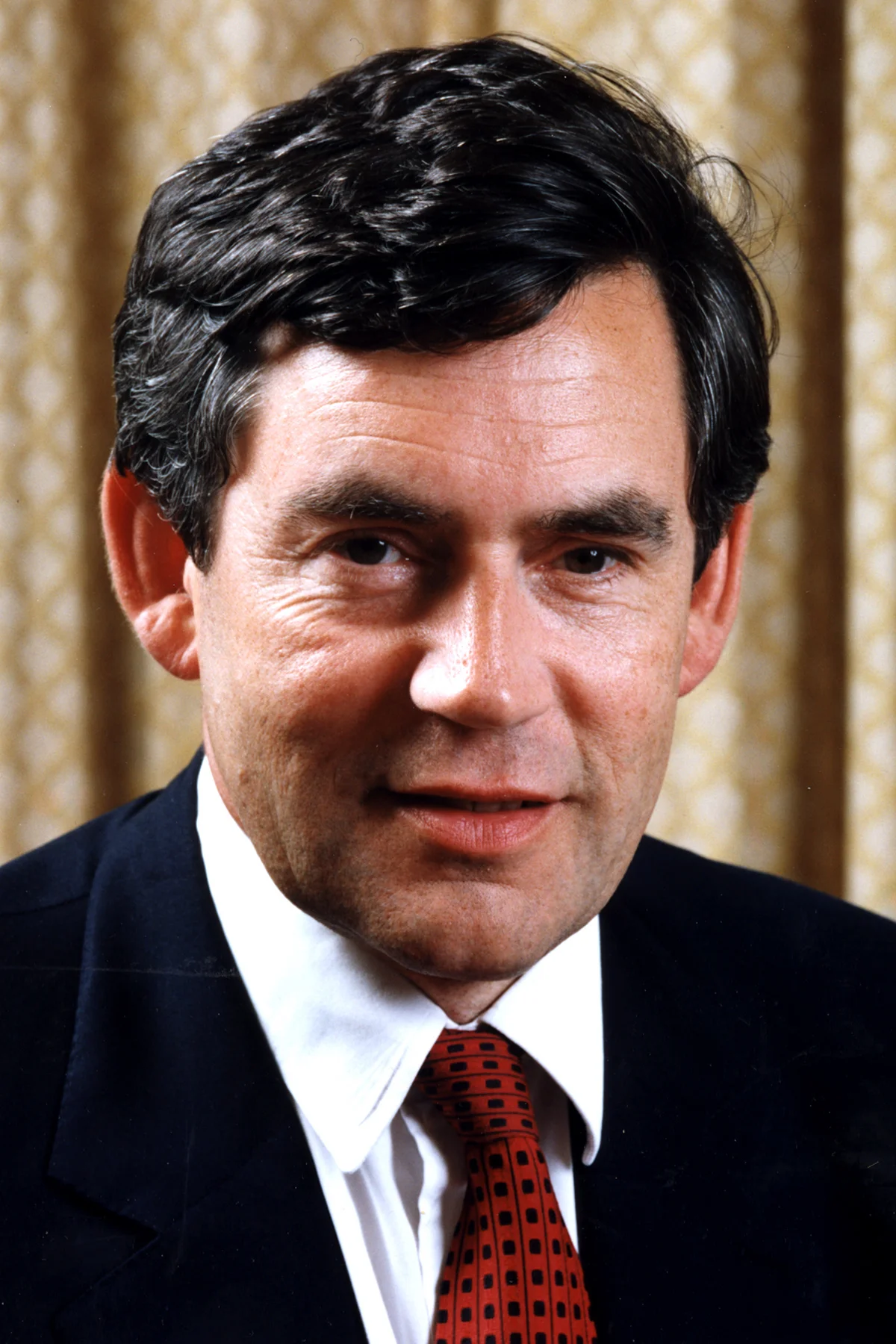
Gordon Brown
 United Kingdom
politician•journalist•biographer
Birthday
February 20, 1951
Birth Sign
Pisces
Birthplace
Giffnock, Scotland
Age
75 years old
Height
5 ft 11 in (180 cm)
About
Gordon Brown, born in Giffnock on February 20, 1951, is a British politician who served as Prime Minister of the United Kingdom from 2007 to 2010. Before that, he spent a decade as Chancellor of the Exchequer under Tony Blair, from 1997 to 2007. He represented Dunfermline East and later Kirkcaldy and Cowdenbeath as a Member of Parliament from 1983 to 2015. Today, he works globally as a UN Special Envoy for Global Education and a WHO Ambassador for Global Health Financing. In 2026, Prime Minister Keir Starmer appointed him as a Special Envoy on Global Finance and Cooperation.
Brown is widely recognized for his intellectual depth and his role in steering the UK through the 2008 financial crisis. His time as Chancellor saw the longest period of sustained economic growth in modern British history. He also introduced landmark legislation, including the Climate Change Act 2008 and the Equality Act 2010. After leaving office, he remained active in public life, particularly in the 2014 Scottish independence referendum, where he campaigned for the union. In 2024, he was appointed to the Order of the Companions of Honour for his public and charitable service.
Brown's current work focuses on global education and health financing. He has written extensively, including biographies and political commentary. His reputation among economists and historians is mixed: his premiership is often rated average, but his chancellorship is considered highly successful for its economic stewardship.
Early Life & Background
Gordon Brown grew up in Kirkcaldy, Scotland, where his father was a Church of Scotland minister and his mother a schoolteacher. He was a bright child, skipping a grade and entering the University of Edinburgh at just 16. He earned a Master of Arts in history in 1972 and a PhD in 1982, writing his dissertation on the Labour Party and political change. During university, he became involved in student politics and was elected Rector of the University of Edinburgh, a ceremonial role that put him on the university court.
Before entering Parliament, Brown worked as a lecturer at Edinburgh University and as a television journalist for BBC Scotland and Scottish Television. He also wrote for the Scotsman and other publications. His first attempt to enter Parliament came in 1979, when he stood for election in Edinburgh South but lost to the Conservative candidate. He tried again in 1983, this time winning the safe Labour seat of Dunfermline East. That victory launched his parliamentary career, but the early years were marked by tragedy: in 1977, he suffered a detached retina while playing rugby, leading to permanent blindness in his left eye. He later had surgery that saved partial vision in his right eye.
Brown's early political influences included his father, a minister who instilled a sense of social justice, and his own reading of Labour history. He was a keen debater and a member of the Labour Club at university. His PhD thesis examined the relationship between the Labour Party and the working class, a topic that would shape his political philosophy. By the time he entered the Commons, he was already known as a serious intellectual with a deep grasp of economics.
Career Growth
Brown's breakthrough came in 1992 when he was appointed Shadow Chief Secretary to the Treasury. Two years later, after John Smith's death, he became Shadow Chancellor under Tony Blair. When Labour won the 1997 election, Brown became Chancellor of the Exchequer, a role he held for a decade. His first major act was to grant the Bank of England operational independence over interest rates, a move that boosted credibility and was widely praised. He also established the Financial Services Authority to regulate banking, though this system later faced criticism during the 2008 crisis.
As Chancellor, Brown presided over a period of steady growth, low inflation, and falling unemployment. He introduced the minimum wage, increased spending on health and education, and lifted many low-income families out of poverty through tax credits. However, his decision to sell 395 tonnes of UK gold reserves between 1999 and 2002, at near 20-year lows, later proved costly as gold prices soared. He also kept the UK out of the euro by setting five economic tests that were not met.
In 2007, Brown succeeded Blair as Prime Minister. His early months were promising, but the global financial crisis hit in 2008. His government responded with a £500 billion bank bailout package, nationalizing parts of Northern Rock and RBS. He also led international efforts for coordinated stimulus, earning praise from figures like Barack Obama. Domestically, his government passed the Climate Change Act, the first legally binding emissions reduction target in the world. However, a recession and rising debt eroded public confidence. Brown called a general election in 2010, which resulted in a hung parliament. After failing to form a coalition with the Liberal Democrats, he resigned as Prime Minister and Labour leader.
After leaving office, Brown remained an MP until 2015. He then focused on global roles: UN Special Envoy for Global Education (2012–present), WHO Ambassador for Global Health Financing (2021–present), and in 2026, UK Special Envoy on Global Finance and Cooperation. He also played a key role in the 2014 Scottish independence referendum, helping to secure a No vote by promising more devolved powers.
Career Timeline
Public Image & Style
Brown is often described as serious, intellectual, and somewhat dour, but those who know him say he is warm and funny in private. His public persona was shaped by his reputation as a policy wonk with a deep command of economics. During his premiership, he was sometimes seen as less charismatic than Blair, but his handling of the financial crisis earned him respect internationally. His fashion is typically formal: dark suits and ties, rarely casual. After leaving office, his image softened, and he became known as a global statesman focused on education and health. He is active on X (Twitter) under the handle @OfficeGSBrown, where he posts about global development and current events. His fandom is largely among Labour supporters and those who admire his intellectual approach. Critics point to his perceived indecisiveness and the gold sale controversy.
Fame & Fandom
Gordon Brown commands global attention as a statesman of significant historical weight rather than a figure of pop culture celebrity. His influence spans decades of high-level diplomacy, economic policy, and international advocacy, yet this stature does not translate into the metrics that define contemporary fame rankings. iFANN has evaluated his standing within its Global Fame Engine for August 2026 and determined that he currently holds no placement in the published rankings, including the Global Top 1,000 or any scope-specific lists. This absence of a numeric rank reflects his status as a serious political actor whose public engagement is measured by legislative impact and diplomatic protocol rather than viral consumption or entertainment metrics. Consequently, there is no formal or unofficial name for his supporters; his base consists of political constituents, party members, and international partners rather than a dedicated fandom with rituals or monikers. While figures in the entertainment industry often generate organized fan campaigns and chart-driven visibility, Brown's legacy is defined by institutional achievements such as the Climate Change Act and his tenure as the longest-serving Chancellor of the Exchequer in modern British history. The distinction between his political gravity and celebrity fame remains absolute, with no evidence of fan-funded projects or crowd phenomena associated with his name.
Interesting Facts and Legends
Born in Giffnock on February 20, 1951, Gordon Brown is the only UK prime minister to hold a PhD, earned from the University of Edinburgh. He maintains an intense work ethic, frequently logging eighteen-hour days, and keeps a framed photograph of Franklin D. Roosevelt in his office. A lifelong supporter of Raith Rovers, he once joked about his school nickname being 'the professor' despite his dour public image. His literary contributions include a biography of James Maxton, the memoir My Life, Our Times, and a volume on the 2014 Scottish referendum titled My Scotland, Our Britain. Beyond these established facts, his political career features several documented moments of historical significance. He oversaw the passage of the world's first Climate Change Act during his premiership, a legislative milestone widely cited in biographical summaries. Additionally, his administration managed the withdrawal of troops from Iraq, a major strategic decision of his era. In more recent years, his role as a Special Envoy has placed him at the center of high-stakes diplomatic inquiries, including reports from April 2026 regarding investigations into Prince Andrew's costs as a trade envoy. These events underscore a career defined by policy substance rather than cultural folklore.
Notable Quotes
“This is a time for Britain to be strong, to be united, and to be resolute.”
“Education is the most powerful weapon which you can use to change the world.”
“I have always believed that the purpose of politics is to improve people's lives.”
“The global financial crisis was a test of our values and our resolve.”
“Scotland's future is best secured as part of the United Kingdom.”
Family & Personal Life
Gordon Brown married Sarah Macaulay in 2000. Sarah is a public relations executive and founder of the charity PiggyBankKids, which supports children's health and education. The couple have two sons: John, born in 2003, and Fraser, born in 2006. Their first child, a daughter named Jennifer Jane, was born prematurely in 2002 and died at 10 days old. Brown's father, John Ebenezer Brown, was a Church of Scotland minister, and his mother, Elizabeth Souter, was a schoolteacher. He has one older brother, John, who is a sports journalist. Brown's family background was modest, with a strong emphasis on education and public service. The family lived in a church manse in Kirkcaldy. Brown has spoken about how his father's work with the poor shaped his own political views.
Notable Connections
Gordon Brown is closely associated with Tony Blair, under whom he served as Chancellor for a decade. Their relationship was often described as a political rivalry, with tensions over policy and leadership. He also worked closely with his wife, Sarah Brown, who runs the charity PiggyBankKids. Internationally, he has collaborated with figures like UN Secretary-General Ban Ki-moon and WHO Director-General Tedros Adhanom Ghebreyesus. In the 2014 Scottish referendum, he worked alongside former Labour Prime Minister John Major and other unionist figures.
Relationships & Dating History
Gordon Brown married Sarah Macaulay in 2000. They met in the 1990s through mutual friends; Sarah was working in PR and later founded the charity PiggyBankKids. Their wedding was a private ceremony in Scotland. The couple had a daughter, Jennifer Jane, who died shortly after birth in 2002. They later had two sons, John (born 2003) and Fraser (born 2006). Brown has no known previous marriages or public relationships before Sarah. As of 2026, the couple remains married and lives primarily in Scotland. Sarah has been a supportive partner, often accompanying him on international trips and managing her own charity work.
- MarriedSarah Brown2000 - presentCurrentMet in the 1990s; married in 2000. They have two sons, John and Fraser.
Salary, Net Worth In 2026
$10 Million
iFANN Editorial Team estimate
Per iFANN's editorial analysis, Gordon Brown's net worth in 2026 stands at $10 Million. This figure represents a cumulative estimate derived from his extensive career in public service, book royalties, and advisory engagements. During his time as Prime Minister and Chancellor, he received a government salary, and since leaving office, his income has been supplemented by a pension and earnings from speaking fees. His publications, specifically My Life, Our Times and My Scotland, Our Britain, have contributed significantly to his financial standing through robust sales. Unlike many former leaders who transition into lucrative corporate board roles, Brown has focused on charitable and international positions, serving as a paid advisor to various organizations without disclosing specific fee structures. His lifestyle remains modest relative to some peers, anchored by a home in Scotland and a flat in London. The stated valuation reflects steady earnings from writing and public service rather than major business ventures or speculative investments.
Awards Won (1)
Gordon Brown has received several honours for his public service. In 2024, he was appointed to the Order of the Companions of Honour (CH), one of the UK's highest civilian awards. He has also been granted honorary degrees from multiple universities, including the University of Edinburgh and the University of Glasgow. In 2008, he was named Time magazine's Person of the Year runner-up. His international work has earned him recognition from the UN and WHO.
2024 · Public and charitable service
Public service
Known For
Prime Minister of the United Kingdom
2007 · Prime Minister
Chancellor of the Exchequer
1997 · Chancellor
Member of Parliament for Kirkcaldy and Cowdenbeath
2005 · MP
UN Special Envoy for Global Education
2012 · Special Envoy
Keywords
Quick Facts
- Profession
- politician, journalist, biographer
- Born
- +1951-02-20
- Birthplace
- Giffnock
- Gender
- Male
- Spouse
- Sarah Brown
- Birth Sign
- Pisces
Personal Details
- Full Name
- James Gordon Brown
- Height
- 5 ft 11 in (180 cm)
- Spouse
- Sarah Brown
- Children
- John, Fraser
- Education
- University of Edinburgh (MA, PhD)
Frequently Asked Questions
How old is Gordon Brown in 2026?
What is Gordon Brown's net worth in 2026?
What is Gordon Brown doing now in 2026?
Is Gordon Brown still married?
What was Gordon Brown's role before becoming Prime Minister?
Social Media
Join the community
fans discussing