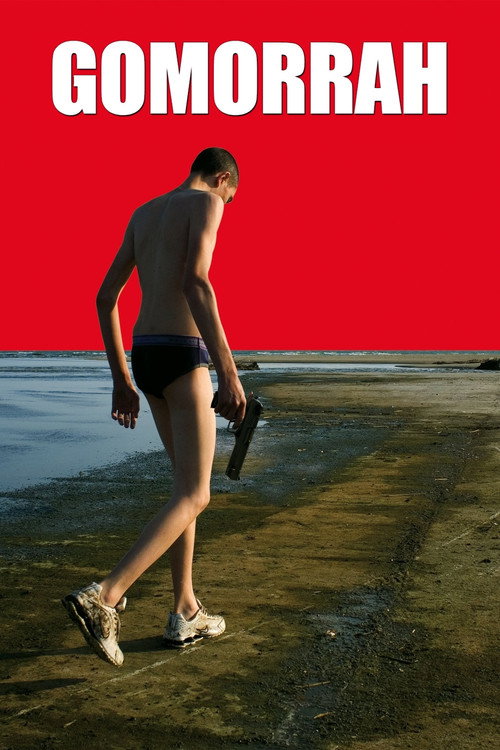
In 2008, Italian director Matteo Garrone took a scalpel to the myth of the glamorous mobster. Adapted from Roberto Saviano's explosive non-fiction book, Gomorrah drops you into the sprawling, decaying housing projects of Scampìa, a suburb of Naples, where the Camorra isn't a shadowy conspiracy but a grinding, everyday reality. The film follows five separate storylines, each a thread in the same suffocating web: a money courier, a young boy, a master tailor, two reckless wannabe gangsters, and a businessman dealing in toxic waste. There are no heroes here, no redemption arcs, just the cold mechanics of a criminal enterprise that touches every corner of life.
Garrone, working with cinematographer Marco Onorato, shoots with a documentary-like detachment that makes the violence feel all the more brutal. The cast is mostly non-professional actors pulled from the streets of Naples, which gives the film an unsettling authenticity. Toni Servillo, the one established star, plays Franco, a man who treats toxic waste as just another commodity. The film won the Grand Prix at Cannes in 2008 and swept the European Film Awards, but its true power lies in its refusal to look away. Gomorrah doesn't just show you the Camorra; it makes you feel the weight of its presence, the way it seeps into concrete and bone.
Availability and pricing can change. Confirm on the provider's site before purchasing.
PlotSpoiler-free
Gomorrah opens with a jolt: a group of overweight mobsters lounging in tanning booths, laughing and admiring themselves, are suddenly gunned down by a crew of blank-faced killers. The hit is carried out with chilling efficiency, a woman holding open a sports bag for the weapons as the shooters climb the stairs. This assassination ignites a turf war between rival factions of the Casalesi clan, a conflict that the film calls a secession. Against this backdrop, five separate stories unfold, each one a different face of the same criminal machine.
Don Ciro is a quiet, unremarkable man who delivers pension payments to the families of imprisoned Camorristi. He moves through the brutalist corridors of Le Vele, a massive housing project in Scampìa, handing out envelopes of cash. But as the war heats up, his job becomes impossible. When he tells a faction leader that war isn't for him, the boss makes it clear: no one gets to stay neutral. He must either set up his clients for hits or face death himself.
Totò is a boy of about twelve, living in the same decaying complex. He yearns to be part of the gang, and he starts small, running errands for a local woman whose husband is away. He earns a few euros, but he wants more. Before long he's selling drugs, as casually as another kid might take up basketball. His youth makes him both vulnerable and useful, and the choices he makes will haunt him.
Pasquale is a master tailor, a man whose skill with a needle is his pride. When his Camorra-backed employer wins a contract to produce 800 gowns at 30 euros each, Pasquale secretly starts working with a rival Chinese gang, teaching them his craft. It's a dangerous move, a betrayal of the system that feeds him, and the Italians don't tolerate competition. His story is a quiet tragedy of a man caught between his art and the world around him.
Marco and Ciro are two brash teenagers, obsessed with Brian De Palma's Scarface. They dream of becoming bosses themselves, and a flukey success stealing cocaine at the beginning only emboldens them. They draw attention with flashy behavior, buying expensive clothes and throwing money around, as if the real mobsters won't notice. Their infatuation with gangster mythology is a suicide note written in slow motion.
Franco is a shrewd businessman, played by Toni Servillo, who runs an illegal toxic waste disposal operation. He hires a young graduate named Roberto to help him close deals with companies in northern Italy, including Venice. Franco's world is one of contracts and cash, but the environmental destruction is real, and Roberto begins to see the cost. The film weaves these five threads together, never letting you forget that they are all part of the same organism, the Camorra, a system that feeds on its own.
Gomorrah is an unflinching, documentary-style look at the Camorra that refuses to glamorize its subjects. With a largely non-professional cast and a detached visual style, it paints a devastating portrait of a criminal ecosystem, earning wide acclaim for its authenticity and moral seriousness.
 Italy
Italy