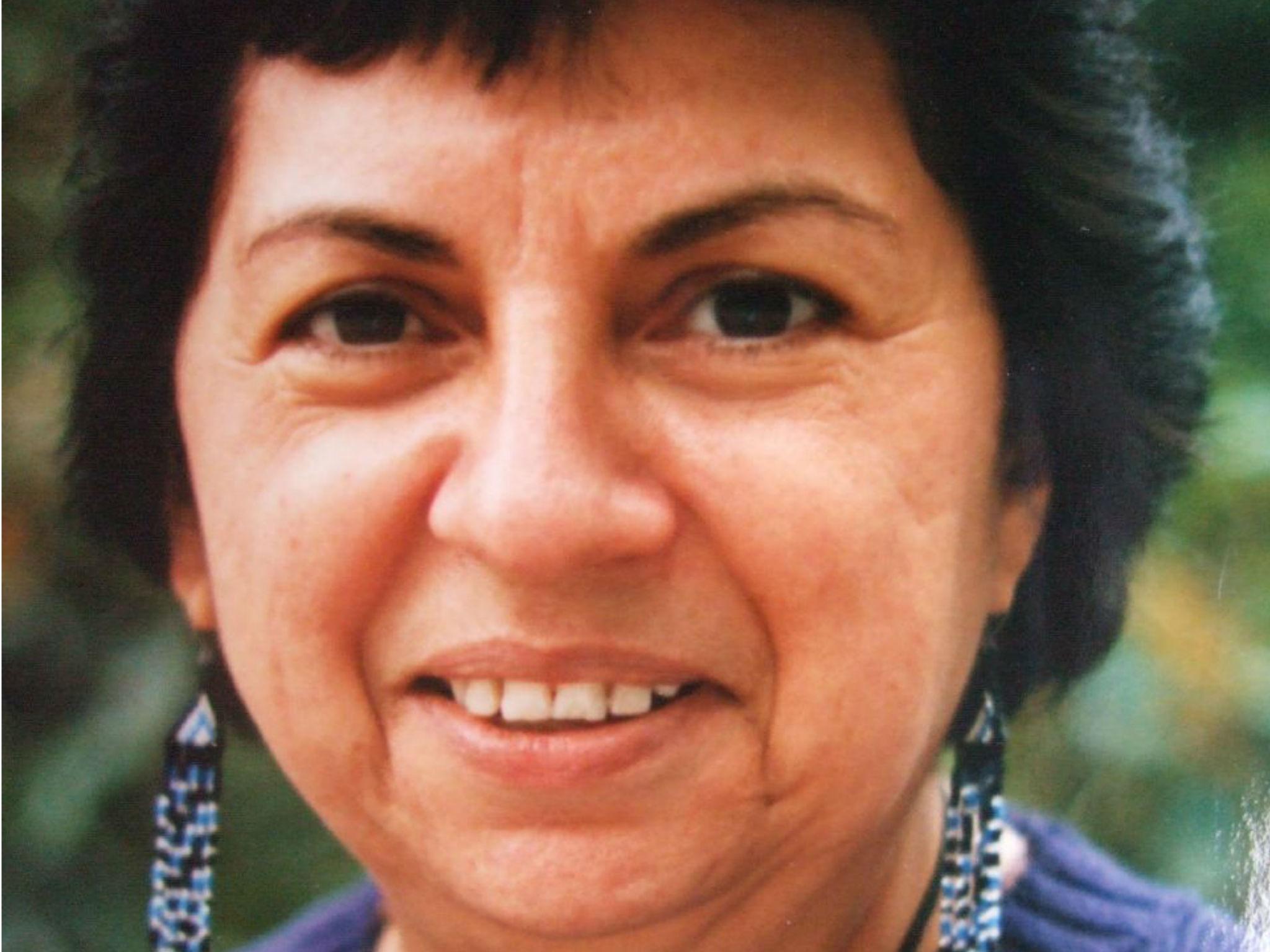
Gloria Anzaldúa
 Mexico
writer•poet•scholar•feminist theorist
Also known as: Gloria E. Anzaldua, Gloria Evangelina Anzaldúa
Birthday
September 26, 1942
Birth Sign
Libra
Birthplace
Rio Grande Valley, Texas
Age
Died at 61
About
Gloria Anzaldúa was an American writer, poet, and scholar whose work reshaped feminist and cultural theory. A sixth-generation Tejana, she is best remembered for Borderlands/La Frontera: The New Mestiza (1987), a genre-defying blend of poetry, autobiography, and theory that introduced the concept of the new mestiza consciousness. Her writing gave voice to those living between cultures, languages, and identities, and she became a foundational figure in Chicana feminism, queer theory, and border studies.
Anzaldúa's influence extends far beyond academia. Her ideas about borders, identity, and hybridity have been taken up by scholars, activists, and artists worldwide. She co-edited the landmark anthology This Bridge Called My Back: Writings by Radical Women of Color (1981), which challenged mainstream feminism to confront racism and classism. Her work continues to be taught in universities and cited by new generations of thinkers.
Anzaldúa died on May 15, 2004, in Santa Cruz, California, from complications of diabetes. She was 61. Her posthumous PhD from UC Santa Cruz and the ongoing publication of her manuscripts attest to the enduring power of her ideas.
Early Life & Background
Gloria Evangelina Anzaldúa was born on September 26, 1942, on the ranchos of Jesus Maria and Los Ranchitos near Hargill, Texas, in the Rio Grande Valley. Her family were farm workers, and she spent much of her childhood laboring in the fields alongside them. This experience of poverty and hard work on the Mexico-Texas border would become the bedrock of her later thinking about borders, exploitation, and survival.
She was the first in her family to attend college, earning a BA in English, Art, and Secondary Education from Pan American University in 1969, followed by an MA in English and Education from the University of Texas at Austin in 1972. During the 1970s, she taught in public schools in Texas and California, but she was already writing and thinking about the intersections of race, class, gender, and sexuality.
Her early life was marked by discrimination and marginalization, experiences she later channeled into her theoretical work. She moved to California in 1977, where she began to immerse herself in feminist and Chicano literary circles. Her first major publication came in 1981, when she co-edited This Bridge Called My Back with Cherríe Moraga, a collection that gave voice to women of color and would become a classic of feminist literature.
Career Growth
Anzaldúa's breakthrough came with the 1981 publication of This Bridge Called My Back, which she co-edited with Cherríe Moraga. The anthology won the Before Columbus Foundation American Book Award in 1986 and became a foundational text in feminist theory, challenging the mainstream movement to confront racism and classism.
Her most famous work, Borderlands/La Frontera: The New Mestiza, appeared in 1987. In it, she developed the concept of the new mestiza consciousness, a way of thinking that embraces contradiction and ambiguity. The book became a cornerstone of Chicana feminism, queer theory, and postcolonial studies, and it remains widely taught and cited.
Throughout the 1990s, Anzaldúa continued to produce influential work. She edited Making Face, Making Soul/Haciendo Caras (1990), a collection exploring identity and resistance. She also wrote two children's books, Friends from the Other Side (1993) and Prietita and the Ghost Woman (1995), which addressed border life and cultural identity for young readers.
In her later years, she developed the idea of conocimiento, a deep knowing that arises from navigating multiple worlds. Her essay “Now Let Us Shift” and her posthumously published dissertation, Light in the Dark/Luz en lo Oscuro, further explored these themes. Her papers are now housed in the Anzaldúa Archives at the University of Texas, and a new collection, Prieta Is Dreaming, was published in 2025.
Career Timeline
Public Image & Style
Anzaldúa is remembered as a radical, inclusive feminist thinker who bridged multiple worlds: queer and straight, Chicana and American, academic and poetic. Her signature aesthetic was intellectual and deeply personal, blending poetry, theory, autobiography, and spirituality in ways that defied traditional genre boundaries.
Her work has inspired a devoted following among scholars, activists, and writers, particularly within Chicana feminism, queer theory, and border studies. She is often described as “a queer, brown, radically inclusive feminist who was taking action, writing and theorizing about the kinds of things we, as a community, still struggle with today.” Her fandom includes academics, students, and activists who apply her theories to contemporary issues of immigration, identity, and social justice.
Anzaldúa's public image is that of a thinker who lived her theories, embodying the borderlands she wrote about. Her legacy continues to grow as new generations discover her work.
Fame & Fandom (iFAMOUS Rankings)
Gloria Anzaldúa's fame is a quiet, enduring force, measured not in viral moments but in the steady, worldwide adoption of her ideas. As of August 2026, iFANN's Global Fame Engine has evaluated her impact and reach, yet she does not currently hold a placement in the published rankings, neither the Global Top 1,000 nor any Top-100 scope list. This absence speaks less to her cultural weight and more to the nature of her legacy: her renown is built in classrooms, archives, and activist circles rather than through mass-media metrics. Still, her presence is unmistakable. Borderlands/La Frontera remains a cornerstone of feminist and Chicana/o studies, assigned in countless university courses across the globe, ensuring her name circulates through generations of new readers. Her concept of the new mestiza consciousness has permeated fields as varied as literary theory, queer studies, and political science, making her a touchstone for scholars who may never have met her but who cite her work as foundational.
Her fanbase is not a formal fandom; there is no documented collective name for her followers, no 'Anzaldúistas' or similar label. Instead, her devoted readership operates within academic and literary networks, scholars, students, poets, and activists who engage with her work through conferences, reading groups, and the Anzaldúa Archives at the University of Texas at Austin. These are fans in the truest sense: deeply committed, institutionally embedded, and fiercely loyal. They organize community read-alongs of her work, like the 2015 Autostraddle series, and make pilgrimages to her grave in Texas, as documented in a 2023 Texas Highways feature. Her posthumous publications, including Light in the Dark and the 2025 Prieta Is Dreaming, continue to be devoured by this audience, keeping her voice alive in ongoing conversations about identity, borders, and belonging.
Interesting Facts and Legends
Anzaldúa was a sixth-generation Tejana, with ancestors who had lived in the border region for generations. She was the first person in her family to attend college. She worked as a farm laborer in her youth, an experience that directly shaped her writing about border life. Her dissertation was awarded posthumously in 2005, a rare honor. She wrote children's books in addition to her academic and theoretical works. Her concept of conocimiento has been adopted by scholars across multiple disciplines. A Google Doodle celebrated her 75th birthday in 2017, honoring her ability to live across borders.
One of the most touching legends to emerge from her life involves a young woman who, in the mid-1990s, asked Anzaldúa for personal advice and received a response that shaped her path. Nearly thirty years later, in 2023, that same woman visited Anzaldúa's grave to thank her, a story shared in Texas Highways. Fans still retell this as a reflection of Anzaldúa's personal generosity, how she made time for readers who reached out, offering guidance that lingered for decades. Another iconic moment is the publication of Borderlands/La Frontera in 1987, which transformed from an academic text into a cultural touchstone, a book that readers treat almost as a sacred text, passed from hand to hand in classrooms and community circles.
Notable Quotes
“To survive the Borderlands / you must live sin fronteras / be a crossroads.”
“I am a turtle, wherever I go I carry 'home' on my back.”
“The new mestiza copes by developing a tolerance for contradictions, a tolerance for ambiguity.”
Family & Personal Life
Anzaldúa was born into a family of farm workers in the Rio Grande Valley. Her parents worked the fields, and she grew up in poverty, laboring alongside them from a young age. She was a sixth-generation Tejana, with deep ancestral roots in the region. Her family life was marked by the hardships of migrant labor and the discrimination faced by Mexican Americans in South Texas.
Anzaldúa never married and had no children. She was openly queer, and her identity as a lesbian informed much of her work. In her later years, she lived in the Santa Cruz, California area, where she was part of a community of feminist writers and scholars. Her personal life remained largely private, and she did not publicize details of her intimate relationships.
Notable Connections
Anzaldúa's most significant collaboration was with Cherríe Moraga, with whom she co-edited This Bridge Called My Back. She also influenced contemporary artists and scholars, including Emilio Rojas, whose work engages with her borderlands concepts. Her legacy is carried forward by recipients of the Gloria Anzaldúa Book Prize, such as Dr. Omer Aijazi in 2025.
Relationships & Dating History
Public records of Anzaldúa's romantic relationships are extremely limited. She was openly queer and identified as a lesbian, but she kept her intimate life private. She never married and had no documented children.
She had significant personal and intellectual relationships with fellow feminist writers and scholars, including her co-editor Cherríe Moraga, though the specific nature of these relationships has not been publicly documented as romantic. Anzaldúa lived and worked in the Santa Cruz, California area during the last years of her life. She was unmarried at the time of her death in 2004.
Death & Aftermath
Died
May 15, 2004 (aged 61)
Death Place
Unknown
Cause of Death
Complications related to diabetes
Gloria Evangelina Anzaldúa passed away on May 15, 2004, at the age of 61 following complications related to diabetes. Tributes poured in immediately from peers and institutions who recognized her as a guiding force within the Chicano/Chicana movement and a foundational leader in lesbian and queer theory. Her grave in Texas has since become a site of pilgrimage for fans and scholars, with visitors often traveling there on significant anniversaries to honor her memory. The posthumous era saw immediate recognition of her intellectual contributions when the University of California, Santa Cruz awarded her a PhD in 2005 for her dissertation, Light in the Dark/Luz en lo Oscuro.
This academic milestone was followed by the establishment of the Gloria E. Anzaldua Foundation, which actively manages her estate to preserve and expand her legacy through ongoing publications and archival projects. The foundation continues to ensure her theories remain central to contemporary discussions on race, gender, and identity, with new collections appearing in recent years. Celebrations of her life persist decades later, such as the El Retorno event held in Edinburg, Texas, in 2024 to mark the twentieth anniversary of her passing.
Net Worth (Estate Value)
$5 Million
iFANN Editorial Team estimate
iFANN currently estimates Gloria Anzaldúa's estate to be worth $5 million, reflecting the enduring academic and cultural demand for her work. The estate continues to generate income through book royalties, posthumous publications, and archival holdings. Her seminal work, Borderlands/La Frontera, remains widely assigned in university courses, ensuring a steady stream of royalties. The posthumous collection Prieta Is Dreaming (2025) and her dissertation Light in the Dark/Luz en lo Oscuro have added to the estate's earnings. The estate is managed by her literary executors, who oversee the publication and scholarly use of her materials. Her papers are housed at the University of Texas, which manages access and licensing, further contributing to the estate's financial foundation.
Awards Won (4)
Anzaldúa received several significant honors during her lifetime. Her co-edited anthology This Bridge Called My Back won the Before Columbus Foundation American Book Award in 1986. She also received the Sappho Award of Distinction, a National Endowment for the Arts Fiction Award, and the American Studies Association Lifetime Achievement Award. Her posthumous PhD from UC Santa Cruz in 2005 recognized her groundbreaking dissertation.
1986 · Anthology
This Bridge Called My Back
Lesbian Literature
Known For
Borderlands/La Frontera: The New Mestiza
1987 · Author
This Bridge Called My Back
1981 · Co-editor
Keywords
Sources
Quick Facts
- Profession
- writer, poet, scholar, feminist theorist
- Born
- September 26, 1942
- Birthplace
- Rio Grande Valley, Texas
- Died
- May 15, 2004
- Death Place
- Santa Cruz, California
- Gender
- Female
- Birth Sign
- Libra
- Education
- BA, Pan American University; MA, University of Texas at Austin; PhD (posthumous), UC Santa Cruz
- Known For
- Borderlands/La Frontera
Personal Details
- Full Name
- Gloria Evangelina Anzaldúa
- Education
- BA in English, Art, and Secondary Education from Pan American University (1969); MA in English and Education from the University of Texas at Austin (1972); PhD (posthumous) from University of California, Santa Cruz (2005)
Frequently Asked Questions
What is Gloria Anzaldúa most famous for?
What was Gloria Anzaldúa's cause of death?
Was Gloria Anzaldúa queer?
Did Gloria Anzaldúa have children?
What is the Gloria Anzaldúa Book Prize?
Similar People
Join the community
fans discussing