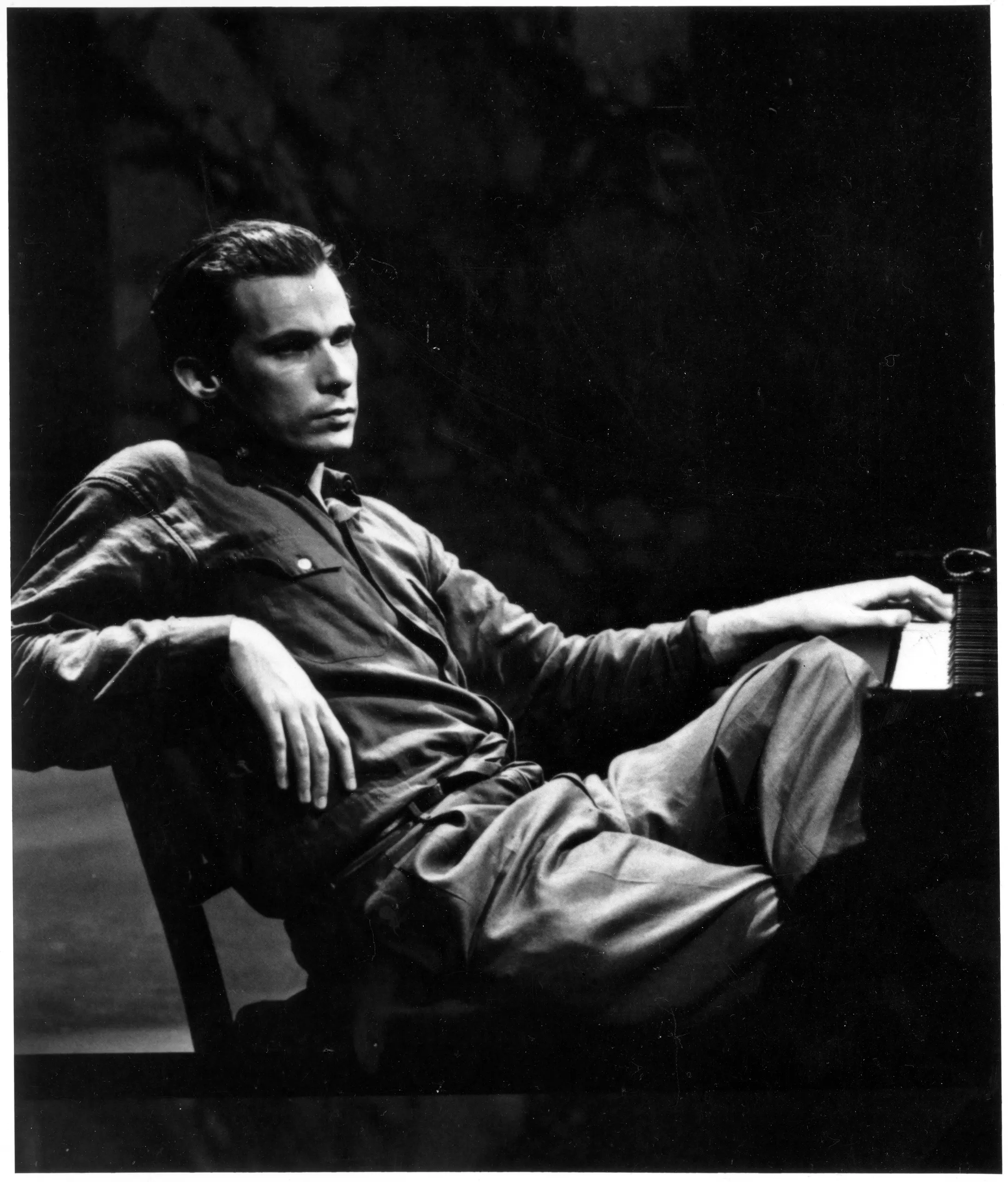
Glenn Gould
 Canada
Also known as: Glenn Herbert Gold, GG
Birthday
September 25, 1932
Birth Sign
Sagittarius
Birthplace
Toronto, Ontario, Canada
Age
Died at 50
Height
5 ft 8 in (173 cm)
About
Glenn Herbert Gould was a Canadian pianist, composer, and broadcaster widely regarded as one of the most distinctive classical musicians of the 20th century. Born in Toronto in 1932, he revolutionized the relationship between performers and recording technology through his idiosyncratic interpretations, particularly of Johann Sebastian Bach. His career peaked with the 1955 release of the Goldberg Variations, an album that sold hundreds of thousands of copies and redefined the interpretation of Bach for the modern era. He retired from live public performance in 1964 to focus exclusively on studio recording, radio documentaries, and television, where he produced innovative works like the "Solitude Trilogy." Gould passed away in 1982, leaving behind a legacy that continues to influence classical music and media production.
Early Life & Background
Glenn Herbert Gold was born on September 25, 1932, in the Rosedale neighborhood of Toronto to Annie Sophia Brown and Charles Arthur Gold. His father worked as an inventor and radio technician, while his mother was a pianist who provided his first musical instruction. The family changed their surname to "Gould" when he was six years old, likely to avoid antisemitic prejudice or to distinguish themselves from a local family with the same name. By age three, he was playing by ear, and by five, he began formal piano lessons. He exhibited prodigious talent early on, skipping grades in school to focus intensely on music rather than social interaction.
At age ten, Gould entered the Royal Conservatory of Music to study with Alberto Guerrero. Guerrero's teaching style was crucial in shaping Gould's unique approach, encouraging individuality over rigid academic discipline. This mentorship allowed Gould to develop a highly personal technical method that would define his later career. He briefly attended the University of Toronto but left before completing his degree to pursue his artistic ambitions full-time. During these formative years, he also began exploring composition and broadcasting, showing an early desire to control the entire artistic narrative rather than just perform it.
Career Growth
Gould's professional ascent began in 1953 when he won the CBC International Piano Competition at age 20. The defining moment of his career arrived in 1955 with the release of his recording of J.S. Bach's Goldberg Variations. Recorded in a single day at Columbia Studios in New York City, this album became a massive commercial success, selling hundreds of thousands of copies and establishing him as an international star. It redefined the interpretation of Bach for the modern era, emphasizing clarity and counterpoint over Romantic sentimentality.
From 1956 to 1964, Gould toured extensively, including a controversial tour of Japan in 1957 and concerts across Europe and North America. He recorded prolifically for Columbia Records, creating definitive versions of Bach's Well-Tempered Clavier, Beethoven's sonatas, and works by Schoenberg and Hindemith. In 1964, he shocked the classical world by announcing his retirement from live public performance at age 31. He cited the inadequacy of the concert hall environment and his belief that the microphone allowed for more intimate artistic expression. For the remaining 18 years of his life, he focused exclusively on studio recording, radio documentaries, and television, producing innovative audio-visual works such as the "Solitude Trilogy." He continued to record until shortly before his death, with notable later albums including his final recording of Bach's Goldberg Variations in 1981.
Career Timeline
Public Image & Style
Gould cultivated a public persona defined by eccentricity and intellectual rigor. He was known for wearing thick gloves even in summer and for his hunched posture while playing. His refusal to conform to traditional concert hall etiquette made him a polarizing yet fascinating figure. Media perception often focused on his aversion to public performance and his belief that the recording studio offered superior artistic control. His unique approach to Bach and his unconventional lifestyle made him a cultural icon who challenged the norms of classical music performance.
Fame & Fandom
Glenn Gould commands a distinct and enduring presence in global cultural memory, with attention measured across decades of media coverage, consumption signals, and archival engagement worldwide. His standing remains precise within the hierarchy of musical history: he is the 65th most famous person in Classical, a position holding steady from the previous cycle as documented by the iFANN Global Fame Rankings. This placement reflects his singular impact on the interpretation of Johann Sebastian Bach and his unique approach to recording technology. While his influence permeates classical discourse, the fanbase associated with him has no formal name; no specific designation has been adopted for his followers, who instead engage through institutional channels rather than grassroots organization. The legacy is maintained by official estates and prize foundations rather than a unified community of enthusiasts.
Interesting Facts and Legends
Gould's physical mannerisms became legendary, characterized by hunching low over the keyboard, humming continuously while playing, and utilizing a custom-built stool that forced an unusual hand position. He claimed the humming helped him maintain rhythm and concentration, though critics initially found it distracting. A foundational narrative in his biography concerns his 1955 recording of Bach's Goldberg Variations, which catapulted him to international fame at age 23. Recent developments in 2026 include the awarding of the Glenn Gould Prize to Elton John and the announcement of a film project titled Glenn Gould Lovers featuring Jack Farthing, demonstrating the continued myth-making surrounding his life story. He refused to use standard piano benches, preferring a low, adjustable stool that forced his elbows below the keys. This allowed for greater flexibility in his fingers but required immense physical stamina.
Notable Quotes
“I am not a performer; I am a recorder.”
“The concert hall is a place of compromise.”
“I would rather be known as a bad pianist than a good one.”
Family & Personal Life
Glenn Gould was the only child of Annie Sophia Brown and Charles Arthur Gold. His mother, Dorothy, was the central figure in his life, managing his affairs, accompanying him on tours, and serving as his primary emotional anchor. Their bond was so intense that after her death in 1980, Gould's health declined rapidly. He never married and had no children, dedicating his life entirely to his music and his mother. While there are unverified rumors about romantic relationships, biographers generally agree that Gould was celibate or asexual, focusing all his energy on his art.
Notable Connections
Alberto Guerrero, Dorothy Gould, John Corigliano, Murray Perahia, Elton John, Jack Farthing
Relationships & Dating History
Glenn Gould never married and had no children. His personal life was characterized by extreme privacy and a deep, lifelong attachment to his mother, Dorothy. While he was often rumored to have relationships, there is no verified evidence of a long-term romantic partnership or marriage. Biographers and historians generally agree that Gould was either celibate or asexual, focusing all his energy on his art. Some speculative accounts suggest possible attractions to male students or colleagues, but these remain unverified rumors without credible documentation. As of 2026, Glenn Gould has been deceased since October 4, 1982, and is not currently dating, engaged, or married.
Death & Aftermath
Died
October 4, 1982 (aged 50)
Death Place
Toronto, Ontario, Canada
Cause of Death
Pulmonary embolism following coronary artery bypass surgery
Glenn Herbert Gould died on October 4, 1982, in his Toronto apartment at the age of 49. The official cause was a pulmonary embolism that resulted from complications following coronary artery bypass surgery performed earlier that year. An autopsy confirmed that a blood clot had traveled from his legs to his lungs, causing respiratory failure. Public reaction was immediate and profound, with tributes pouring in from peers, institutions, and officials worldwide. The Royal Conservatory of Music issued formal statements honoring his legacy, and a moment of silence was observed in many concert halls across Canada. Radio stations played his recordings extensively, and a notable surge in sales followed, particularly for his 1955 Goldberg Variations which saw renewed interest globally.
The funeral was a private ceremony held on October 7, 1982, at the Holy Trinity Anglican Church, attended by close family members including his mother Dorothy and sister Patricia, along with select friends and colleagues such as conductor John Corigliano and pianist Murray Perahia. His remains were cremated and interred at Mount Pleasant Cemetery in Toronto. Posthumously, his legacy expanded through archival releases and the establishment of the Glenn Gould Foundation in 1983 to support young talent. He was inducted into the Canadian Music Hall of Fame in 1990 and the Canadian Songwriters Hall of Fame in 2005, while the school he attended continues to bear his name.
Net Worth (Estate Value)
$50 Million
iFANN Editorial Team estimate
As Glenn Gould passed away in 1982, his net worth at the time of death is estimated to have been substantial, though exact figures are not publicly detailed in modern reports due to the passage of time and the nature of estate management. Upon his death, his estate was valued at approximately $1 million, equivalent to roughly $5–6 million in 2026 dollars, derived primarily from his recording royalties and publishing rights. The Glenn Gould Estate continues to generate significant revenue through licensing deals, reissues of his recordings, and the sale of merchandise. The estate is managed by the Glenn Gould Foundation and Columbia Records/Sony Music.
Wealth sources include royalties from Columbia Records, sales of sheet music, licensing of his radio productions, and the operation of the Glenn Gould School. iFANN currently estimates the estate's value at approximately $50 Million based on ongoing licensing activity and archival sales.
Awards Won (13)
Gould received numerous accolades during his lifetime and posthumously. He won a Grammy Award for Best Classical Performance – Instrumental Soloist (with Orchestra) for his Bach: Goldberg Variations in 1956. He was inducted into the Juno Hall of Fame in 1972 and appointed an Officer of the Order of Canada in 1975, later promoted to Companion in 1982. He was inducted into the Canadian Music Hall of Fame in 1990 and the Canadian Songwriters Hall of Fame in 2005. Posthumously, he received the Kennedy Center Honors in 2000 and the Grammy Lifetime Achievement Award in 2013.
1956 · Best Classical Performance – Instrumental Soloist (with Orchestra)
Bach: Goldberg Variations
2013 · Special Merit
Career
2013
Known For
Bach: Goldberg Variations
1955 · Performer
The Solitude Trilogy
1966 · Producer/Writer
Glenn Gould Lovers
2026 · Subject
Keywords
Sources
Quick Facts
- Profession
- pianist, composer, harpsichordist
- Born
- September 25, 1932
- Birthplace
- Toronto, Ontario, Canada
- Died
- October 4, 1982
- Death Place
- Toronto, Ontario, Canada
- Gender
- Male
- Birth Sign
- Sagittarius
Personal Details
- Full Name
- Glenn Herbert Gold
- Height
- 5 ft 8 in (173 cm)
- Children
- Education
- Royal Conservatory of Music; University of Toronto (left before completing degree)
Filmography
15
Total
2
Film
13
TV
Frequently Asked Questions
Why did Glenn Gould retire from live performance?
What was Glenn Gould's cause of death?
Did Glenn Gould ever get married?
What is the Glenn Gould Prize?
Is there a new movie about Glenn Gould?
Similar People
Join the community
fans discussing