Glastonbury Festival
 United Kingdom
"Glastonbury Festival of Contemporary Performing Arts"
9+
Editions
210000
Peak Attendance
About
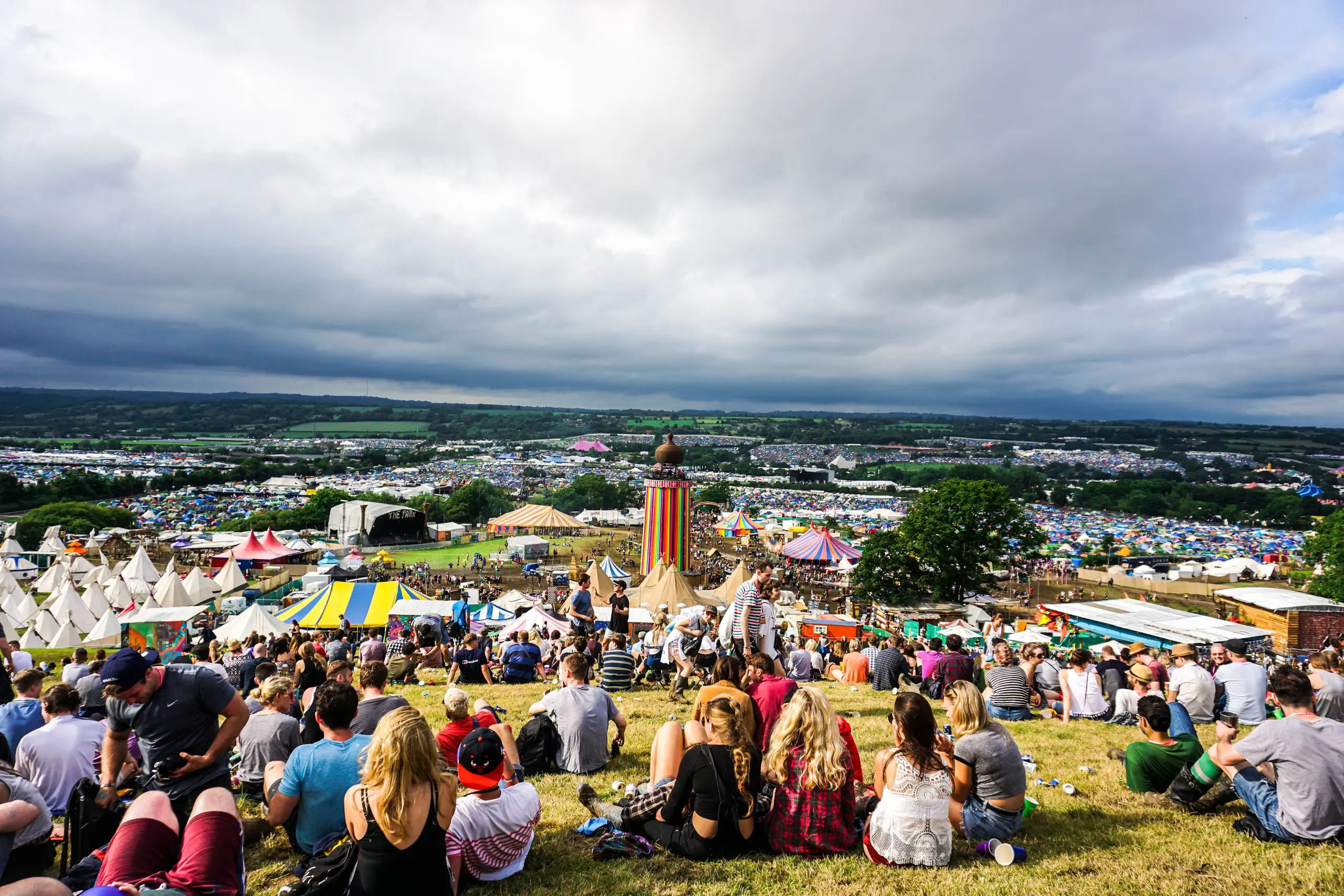
Every June, Worthy Farm in Somerset transforms into a temporary city of over 200,000 people. The Glastonbury Festival, now in its sixth decade, remains one of the world's largest and most eclectic performing arts events. More than 3,000 performances unfold across over 100 stages, from the iconic Pyramid Stage to hidden speakeasies in Block9. The lineup spans rock, pop, hip-hop, electronica, folk, classical, comedy, theatre, and circus. What started as a £1 gathering of 1,500 hippies has become a global pilgrimage for music fans and a career-defining slot for headliners.
The festival retains a countercultural ethos rare for an event of its size. The Green Fields promote environmentalism and spirituality, while the Left Field hosts political debates. Glastonbury raises millions for charities like Oxfam, WaterAid, and Greenpeace each year, and relies on thousands of volunteers. Its fallow years, held roughly every five years, give the land and locals a break. The 2026 fallow year means the next festival is June 23-27, 2027.
Glastonbury's influence extends far beyond music. A headline slot on the Pyramid Stage is a cultural benchmark, think David Bowie in 2000, Beyoncé in 2011, or Stormzy in 2019. The festival has weathered controversies, from the 1990 traveler riots to the 2008 Jay-Z backlash, and has adapted to changing times while keeping its independent spirit. It is, simply, the most famous festival in the world.
History
Michael Eavis, a dairy farmer, attended the Bath Festival of Blues and Progressive Music in 1969 and decided to host his own event. The first Pilton Pop, Folk and Blues Festival took place September 19, 1970, the day after Jimi Hendrix died. The Kinks cancelled upon learning Eavis was a farmer, so Marc Bolan's Tyrannosaurus Rex headlined. About 1,500 people paid £1, which included free camping and milk.
In 1971, the festival was renamed Glastonbury Fayre and moved to the summer solstice. Architect Bill Harkin built the first Pyramid Stage, a one-tenth scale replica of the Great Pyramid, deliberately placed on the Glastonbury-Stonehenge ley line. Attendance swelled to 12,000, and the event was free. Then came an eight-year hiatus. Eavis took out a £20,000 bank loan to revive the festival in 1979, themed the Year of the Child. It lost money but proved the festival could return.
The 1980s saw explosive growth. The festival purchased Cockmill Farm in 1985, expanding the site. In 1990, the name changed to Glastonbury Festival of Contemporary Performing Arts, but that year also brought riots between travelers and security, resulting in 235 arrests and £50,000 in damage. A fallow year followed in 1991. The super fence was built in the 2000s to curb gate-crashing, after unofficial attendance in 1998 reached well over 100,000. By 2008, tickets cost £155 and sold out in hours. Emily Eavis, Michael's daughter, began co-organizing in the 2000s, modernizing the festival while preserving its ethos. The 2019 edition saw Sir David Attenborough speak on the Pyramid Stage about climate change. The 2023 festival attracted over 210,000 people, its highest-ever attendance.
Notable Editions
1970: Tyrannosaurus Rex
1,500 attendeesInaugural festival. The Kinks cancelled; Tyrannosaurus Rex headlined. 1,500 attendees paid £1.
1971: David Bowie, Hawkwind
12,000 attendeesFirst Pyramid Stage built. Renamed Glastonbury Fayre. Free admission. Summer solstice date established.
1979: Peter Gabriel
12,000 attendeesReturn after eight-year hiatus. Three-day event themed 'Year of the Child'. Michael Eavis took out £20,000 loan.
1990: The Cure, Happy Mondays
70,000 attendeesName changed to Glastonbury Festival of Contemporary Performing Arts. Riots broke out between travelers and security.
2008: Jay-Z, The Verve, Kings of Leon
134,000 attendeesFirst hip-hop headliner Jay-Z performed. Controversial beforehand, celebrated afterwards. Super fence in place.
Past Winners / Headliners
| Year | Name |
|---|---|
| 1970 | Tyrannosaurus Rex |
| 1971 | David Bowie |
| 1979 | Peter Gabriel |
| 1985 | The Cure |
| 1990 | The Cure |
| 1992 | Shakespeare's Sister |
| 1994 | R.E.M. |
| 1995 | Pulp |
| 1997 | Radiohead |
| 1998 | Bob Dylan |
Notable Moments
1970
The Kinks cancel
The Kinks pulled out after learning Michael Eavis was a dairy farmer. Tyrannosaurus Rex stepped in.
1971
First Pyramid Stage
Bill Harkin built a one-tenth scale replica of the Great Pyramid, placed on a ley line.
1990
Traveler riots
Clashes between travelers and security led to 235 arrests and £50,000 damage, prompting a fallow year.
1995
Pulp replaces The Stone Roses
The Stone Roses pulled out; Pulp played a legendary set that cemented their stardom.
2008
Jay-Z silences critics
The first hip-hop headliner faced backlash before the festival, then delivered a triumphant set.
2011
Beyoncé's headline
Beyoncé became the first solo female headliner of the Pyramid Stage in over a decade.
2015
The Dalai Lama visits
The Dalai Lama appeared at the festival, speaking about compassion and peace.
2016
Brexit shock
Festival-goers woke to the UK's EU referendum result; artists responded emotionally on stage.
2019
Stormzy makes history
First British grime artist to headline the Pyramid Stage, delivering a politically charged performance.
2023
Elton John's final UK show
Elton John closed the festival with a career-spanning set, his last UK concert.
Cultural Impact
Glastonbury has shaped the modern festival industry. Its model of a multi-arts, multi-stage event with a strong ethical identity has been emulated worldwide. Headlining the Pyramid Stage is a career milestone: David Bowie's 2000 set, Beyoncé's 2011 show, and Stormzy's 2019 performance all became cultural flashpoints. The festival has also been a platform for activism. The Left Field, named after the late Labour MP Tony Benn, hosts political discussions. The Green Fields promote sustainable living. Glastonbury's fallow years and charitable contributions, over £20 million since 2000, set it apart from more commercial events. In British popular culture, the festival is a rite of passage. Its mud-soaked images, from the 1997 deluge to the 2019 sunshine, are instantly recognizable. The festival's influence extends to fashion, with its wellies-and-flower-crown aesthetic imitated globally. Glastonbury remains a uniquely British institution that has become a global benchmark.
Controversies
The 1990 riots remain the festival's most violent episode. On June 25, fights between travelers and security guards escalated, leading to 235 arrests and £50,000 in damage. The following year was declared a fallow year partly in response. In 2008, the booking of Jay-Z as the first hip-hop headliner sparked a public debate about genre representation at the festival, with some critics questioning his suitability. Jay-Z's performance silenced most detractors. Gate-crashing was a persistent issue through the 1990s and early 2000s, with tens of thousands entering without tickets. The construction of the super fence in 2002 largely solved the problem. The festival has also faced environmental criticism given its massive scale, though it offsets this through the Green Fields and partnerships with environmental charities.
Broadcast Partners
Related Events
Keywords
Sources
Event Info
- Founded
- 1970
- Country
- United Kingdom
- Venue
- Worthy Farm, Pilton
- Capacity
- 210,000
- Number of Stages
- 100+
- Charity Donations Since 2000
- £20 million+
Social Media
Join the community
fans discussing