
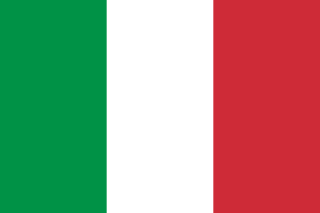
 Italy
ItalyAbout
The Giro d'Italia is an annual multi-stage road cycling race that ranks among professional cycling's three Grand Tours, alongside the Tour de France and the Vuelta a España. First run in 1909, it has been held every year except during the two world wars. The race covers roughly 3,500 kilometers over 21 stages, spread across 23 days with two or three rest days. Each edition features a mix of flat sprints, individual time trials, and punishing mountain climbs through the Alps, Dolomites, and Apennines.
The overall leader wears the maglia rosa, or pink jersey, a color chosen to match the newsprint of La Gazzetta dello Sport, the newspaper that founded the race. Winning the Giro is one of the most coveted achievements in cycling. The race is known for its passionate Italian crowds, dramatic mountain stages, and spectacular scenery, making it a showcase of both athletic excellence and Italy's landscapes.
History
The Giro d'Italia was born in 1909, the brainchild of Tullio Morgagni, a journalist at La Gazzetta dello Sport. The newspaper needed a way to boost circulation, and a cycling race across the recently unified Italy seemed like the perfect vehicle. The first edition started on May 13 from Piazza Loreto in Milan, with eight stages covering 2,448 kilometers. Luigi Ganna of Italy won that inaugural race, taking home a prize of 5,325 lire.
The race quickly grew in popularity. In 1931, the pink jersey was introduced to identify the overall leader, its color matching the paper's distinctive tint. The Giro was halted during World War I and World War II, resuming each time with renewed energy. The post-war years saw the golden era of Italian cycling, defined by the fierce rivalry between Gino Bartali and Fausto Coppi. Their battles in the 1940s and 1950s captivated the nation and elevated the Giro to a national obsession.
Over the decades, the race expanded its reach, occasionally starting or crossing into neighboring countries. The 1970s were dominated by Belgian legend Eddy Merckx, who won five times. In 1988, American Andy Hampsten became the first non-European winner after a legendary stage over the Gavia Pass in a blizzard. More recently, the Giro has started in foreign cities like Amsterdam, Jerusalem, and Copenhagen, attracting a global audience while maintaining its Italian soul.
Notable Editions
1909
First edition, won by Luigi Ganna. Eight stages, 2,448 km.
1949
Fausto Coppi broke a pact with Hugo Koblet not to attack on the Stelvio Pass, soloing to win the stage and the overall race.
1988
Andy Hampsten won after a brutal stage over the Gavia Pass in a blizzard, becoming the first American winner.
2011
Alberto Contador originally won but was stripped of the title due to a doping violation; Michele Scarponi was awarded the victory.
2018
Simon Yates lost the lead on the Zoncolan mountain stage, handing victory to Chris Froome.
Past Champions
| Year | Name |
|---|---|
| 1909 | Luigi Ganna |
| 1910 | Carlo Galetti |
| 1911 | Carlo Galetti |
| 1912 | Team Atala |
| 1913 | Carlo Oriani |
| 1914 | Alfonso Calzolari |
| 1919 | Costante Girardengo |
| 1920 | Gaetano Belloni |
| 1921 | Costante Girardengo |
| 1922 | Giovanni Brunero |
Notable Moments
1949
Coppi Attacks on the Stelvio
Fausto Coppi broke a pact with Hugo Koblet not to attack on the Stelvio Pass, soloing away to win both the stage and the overall race.
1988
Hampsten's Gavia Blizzard
Andy Hampsten rode through a blizzard on the Gavia Pass to secure his overall victory, becoming the first American to win the Giro.
1998
Pantani's Comeback
Marco Pantani won the Giro after a dramatic battle with Alex Zülle, marking his first Grand Tour victory.
2018
Froome's Zoncolan Attack
Chris Froome launched a solo attack on the Zoncolan mountain stage, taking the pink jersey from Simon Yates and winning the race.
2023
Roglič's Time Trial Mastery
Primož Roglič overtook Geraint Thomas in the final time trial to win the Giro by just 14 seconds.
Cultural Impact
The Giro d'Italia is more than a bike race; it is a cultural institution that has helped unify Italy. Conceived in 1909 as a way to promote La Gazzetta dello Sport, the race was deliberately designed to traverse the entire country, connecting disparate regions from the Alps to Sicily. For a nation that had only unified in 1861, the Giro became a rolling celebration of Italian identity.
The race's pink jersey, introduced in 1931, is one of the most recognizable symbols in sports. The Giro has inspired films, books, and songs, and its mountain passes like the Stelvio and the Zoncolan are legendary among cycling fans. The event draws millions of spectators along the route each year, with towns competing to host stage starts and finishes. The Giro also serves as a massive tourism driver, showcasing Italy's landscapes, cuisine, and culture to a global audience.
Controversies
Doping has cast a long shadow over the Giro. In 2011, Alberto Contador originally won the race but was later stripped of the title after testing positive for clenbuterol. The victory was awarded to Michele Scarponi. The 1990s and 2000s saw several high-profile cases involving riders like Marco Pantani, Ivan Basso, and Danilo Di Luca, though Pantani's positive test came after his Giro win.
In the early years, route organization was sometimes chaotic. The 1910 Giro featured a stage where flooding had washed away road markings, leaving riders lost and frustrated. More recently, the 2018 edition saw controversy over the safety of the descent from the Colle delle Finestre during a stage won by Chris Froome.
Broadcast Partners
Sponsors
Related Events
Keywords
Sources
Event Info
- Sport
- Cycling
- Frequency
- Annual
- Founded
- 1909
- Country
- Italy
- Organizer
- RCS MediaGroup
- Most Wins
- Alfredo Binda, Fausto Coppi, Eddy Merckx (5 each)
Join the community
fans discussing