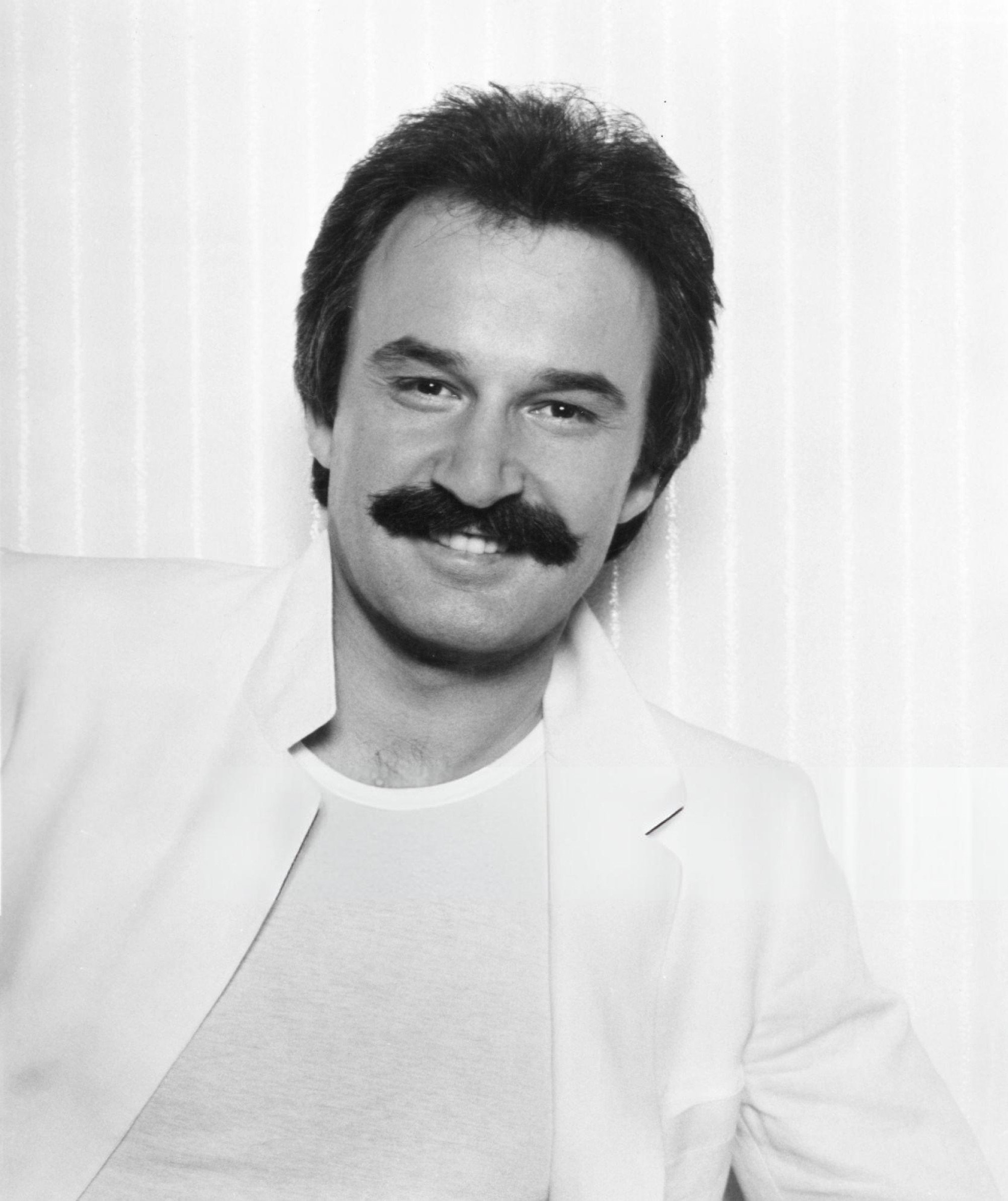
Giorgio Moroder
 Italy
ItalyComposer•record producer•songwriter•DJ
Also known as: Giovanni Giorgio Moroder, Hansjörg Moroder, Father of Disco, Giorgio Prosecco
Birthday
April 26, 1940
Birth Sign
Taurus
Birthplace
Urtijëi, Italy
Age
86 years old
About
Giovanni Giorgio Moroder is an Italian composer, record producer, songwriter, and DJ, widely recognized as the Father of Disco and a pioneering force in electronic dance music. Born in the Dolomite mountains, he transformed pop music with his innovative use of synthesizers and sequencers, bridging the gap between disco and modern EDM. His production work on Donna Summer's "I Feel Love" (1977) is often cited as a watershed moment that laid the groundwork for techno, house, and synth-pop.
Moroder's film scores have earned him three Academy Awards, including for Midnight Express (1978) and "Take My Breath Away" from Top Gun (1986). He also crafted the iconic soundtracks for Scarface and American Gigolo. In 2013, a new generation discovered him through his spoken-word feature on Daft Punk's Random Access Memories, which won the Grammy for Album of the Year in 2014.
As of 2026, Moroder remains active, performing DJ sets worldwide and occasionally revisiting his classic material in live settings. His influence spans generations, from disco-era fans to contemporary electronic music producers who regard him as a foundational figure. He continues to be celebrated for his forward-thinking approach to music technology and his enduring catalog of hits.
Early Life & Background
Giorgio Moroder grew up in Urtijëi, a small town in the South Tyrol region of northern Italy, where he spoke Ladin as his first language. The Dolomite mountains provided a dramatic backdrop to his early years, but the limited local opportunities pushed him to seek a musical career elsewhere. In the early 1960s, he moved to Germany, performing as a guitarist and songwriter in various bands while absorbing the emerging pop and rock scenes.
By the late 1960s, Moroder had settled in Munich, a city that would become his creative base for the next decade. He began producing records for European artists and soon established Oasis Records, a label that later merged with Casablanca Records. In 1970, he founded Musicland Studios, a state-of-the-art facility that attracted major international acts like the Rolling Stones, Led Zeppelin, and Queen. These early ventures gave him both technical expertise and industry connections, but his own artistic direction was still forming.
In the early 1970s, Moroder released several solo singles and albums, experimenting with electronic sounds and dance rhythms. His work caught the attention of a young singer named Donna Summer, and their first collaboration, "The Hostage" (1974), became a hit in Europe. This partnership would soon lead to the groundbreaking records that defined his career, but in those pre-fame years, Moroder was still an ambitious producer searching for a signature sound.
Career Growth
Moroder's breakthrough came in 1975 with "Love to Love You Baby," a seventeen-minute erotic disco track he produced for Donna Summer. The song's hypnotic groove and Summer's breathy vocals made it an international sensation, and Moroder followed it in 1977 with "I Feel Love," a track built entirely around a synthesized bassline and sequencer pattern. The latter is widely regarded as the birth of electronic dance music, influencing everyone from Kraftwerk to Daft Punk.
Riding this momentum, Moroder released his own synthesizer-driven albums, From Here to Eternity (1977) and E=MC2 (1979), and began scoring films. His score for Midnight Express (1978) won the Academy Award for Best Original Score, and its main theme "Chase" became a club staple. He followed with soundtracks for American Gigolo (1980), Flashdance (1983), and Scarface (1983), the latter's synth-heavy score becoming as iconic as the film itself. In 1984, he paired with Philip Oakey of the Human League for "Together in Electric Dreams," a synth-pop classic.
In 1986, Moroder wrote "Take My Breath Away" for Top Gun, a ballad performed by Berlin that won him a second Academy Award. After a period of relative quiet in the 1990s and 2000s, he returned to the spotlight in 2013 with Déjà Vu, his first solo album in decades, featuring collaborations with Britney Spears, Sia, and others. That same year, Daft Punk released Random Access Memories, which included "Giorgio by Moroder," a track where he narrates his own life story. The album won the Grammy for Album of the Year in 2014, introducing Moroder to a new generation. He continues to DJ at festivals and clubs worldwide, and in late 2025 he performed a live recreation of "I Feel Love" at Villa Zegna, nearly fifty years after its original recording.
Career Timeline
Public Image & Style
Moroder's public image is that of a visionary innovator, the elder statesman of electronic music who saw the potential of technology decades before it became mainstream. He is often described as precise and futuristic, both in his production style and his personal aesthetic, favoring sleek, modern attire that matches his forward-looking music. In media portrayals, he is framed as a bridge between disco and modern EDM, and his collaborations with Daft Punk have made him a revered figure among younger electronic music fans.
His fandom spans multiple generations, from those who danced to "I Feel Love" in the 1970s to EDM enthusiasts who discovered him through the Daft Punk tribute. He is universally referred to as the "Father of Disco," a title he has embraced. Moroder's social media presence is modest but active, with his Instagram bio playfully referencing his prosecco brand, showing a dry wit that endears him to followers.
Fame & Fandom (iFAMOUS Rankings)
The community surrounding Giorgio Moroder is less a unified cult and more a dispersed constellation of electronic music devotees, disco revivalists, and film score collectors who share a deep reverence for the man who invented the future. While there is no formal name for this collective, fans simply identify through their love of synth-pop and high-energy dance beats, their connection to Moroder is defined by specific rituals and shared history. Longtime followers celebrate his dual genius as both a sonic architect and an automotive visionary, often discussing the legendary Cizeta-Moroder V16T with the same intensity as they analyze his sequencer work. This devotion manifests in digital spaces where fans actively rediscover archival tracks like "Chase" and gather to honor milestones, such as the recent recreation of "I Feel Love" nearly half a century after its creation. His playful self-referencing as "Giorgio Prosecco" has also become an inside joke that strengthens the bond between the artist and his audience, creating a lighthearted atmosphere around his legacy. This enduring appeal spans generations, from those who remember the Munich studios to new listeners discovering his influence on modern EDM.
Giorgio Moroder's standing in global culture is firmly established across multiple metrics. He holds the position of the 24th most famous person from Italy, a ranking that remains steady within the iFANN Global Fame Rankings. In the specific realm of sound innovation, he is recognized as the 37th most famous person in Electronic / EDM, reflecting his unmatched contribution to the genre. These placements, verified by the iFANN editorial team, confirm his status as a timeless icon whose work continues to resonate worldwide.
Interesting Facts and Legends
Giorgio Moroder co-created the Cizeta-Moroder V16T supercar in the late 1980s, a project born from a rejected Lamborghini design by Marcello Gandini. The car featured a transverse V16 engine and four pop-up headlights, and the prototype is now valued at around $1.8 million at auction. His Instagram bio reads, "My name is Giovanni Giorgio, but everybody calls me Giorgio Prosecco," referencing his prosecco wine brand, @giorgiowines. Moroder was one of the first producers to use a sequencer to create a continuous, unbroken electronic groove, a technique that became a hallmark of his sound. He has a star on the Hollywood Walk of Fame, though the exact year is not widely publicized. His track "I Feel Love" was selected for preservation in the National Recording Registry by the Library of Congress in 2024.
A central legend among fans involves the creation of "I Feel Love," where Moroder produced a track using only a Moog synthesizer to create a pulsating rhythm unheard of in 1977. This moment is so culturally significant that it prompted Moroder to recreate the track nearly 50 years later to celebrate its enduring impact. Another iconic story centers on the theme for the 1978 film Midnight Express, titled "Chase," which became one of the first major instrumental hits to cross over from film scores into mainstream pop radio. The car enthusiast community also reveres the Cizeta-Moroder V16T, viewing it alongside his musical achievements as proof of his multifaceted genius and ability to excel in both sound and speed.
Notable Quotes
“I love DJ-ing. You have 10,000 people singing and clapping. It's almost like becoming Michael Jackson.”
“My name is Giovanni Giorgio, but everybody calls me Giorgio Prosecco.”
Family & Personal Life
Moroder has been married to his wife Francisca since the 1970s, and the couple has one daughter, Alexandra. They have maintained a notably private family life, with few public details about their household. Moroder splits his time between residences in Los Angeles and other locations, but he rarely discusses his family in interviews. The stability of his long marriage is a point of contrast to the often turbulent personal lives of many music industry figures, and he has credited his family with providing a grounding influence throughout his career.
Notable Connections
Moroder's most famous collaboration was with Donna Summer, with whom he created "Love to Love You Baby" and "I Feel Love." He also worked with Philip Oakey on "Together in Electric Dreams" and was featured on Daft Punk's Random Access Memories. In the automotive world, he co-founded Cizeta-Moroder with Claudio Cizeta and worked with designer Marcello Gandini on the V16T supercar.
Relationships & Dating History
Giorgio Moroder has kept his romantic life remarkably private, with no public dating history before his marriage. He married Francisca Moroder in the 1970s, and the couple has been together for over five decades. They have one daughter, Alexandra. There are no known public relationships outside his marriage, and no reports of separation or divorce. As of 2026, Moroder is married to Francisca, and their long-standing union remains stable.
- MarriedFrancisca Moroder1970 - presentCurrentMarried since the 1970s, they have one daughter, Alexandra.
Salary, Net Worth In 2026
$100 Million
iFANN Editorial Team estimate
iFANN currently estimates Giorgio Moroder's net worth at $100 Million as of 2026, derived from decades of royalties, production fees, and catalog ownership. His extensive catalog includes disco anthems like "I Feel Love" and "Love to Love You Baby," film scores for Midnight Express, Scarface, and Top Gun, and collaborations with artists like Donna Summer and Daft Punk. These works continue to generate income through licensing for films, TV shows, commercials, and samples by contemporary artists. Moroder also earns from his DJ performances at festivals and clubs worldwide, commanding high fees for his appearances. His ownership of his publishing catalog ensures a steady stream of royalties, and he has diversified into a prosecco wine brand, Giorgio Prosecco, adding to his income. In 2026, his co-created Cizeta-Moroder V16T prototype is headed to auction with an estimated value of $1.8 million, a testament to his enduring legacy beyond music. Over the years, Moroder's net worth has grown steadily, reflecting the lasting appeal of his music and his continued relevance in the electronic music scene. His financial standing is a result of both his creative output and savvy business decisions, including maintaining control over his master recordings and publishing rights.
Awards Won (27)
Giorgio Moroder has won three Academy Awards, four Golden Globe Awards, and four Grammy Awards throughout his career. His Oscars include Best Original Score for Midnight Express (1979) and Best Original Song for "Take My Breath Away" from Top Gun (1987). He also won a Grammy for Album of the Year as a featured artist on Daft Punk's Random Access Memories (2014).
1987 · Best Original Song
Take My Breath Away (Top Gun)
1979 · Best Original Score
Midnight Express
1987 · Best Original Song
"Take My Breath Away" (from Top Gun)
1984 · Best Original Song
"Flashdance... What a Feeling" (from Flashdance)
1979 · Best Original Score
Midnight Express
Known For
I Feel Love
1977 · Producer
Midnight Express
1978 · Composer
Scarface
1983 · Composer
Take My Breath Away
1986 · Songwriter
Random Access Memories
2013 · Featured Artist
Keywords
Sources
Quick Facts
- Profession
- Composer, Record Producer, Songwriter, DJ
- Born
- April 26, 1940
- Birthplace
- Urtijëi, Italy
- Gender
- Male
- Birth Sign
- Taurus
- Spouse
- Francisca Moroder
- Children
- Alexandra Moroder
- Net Worth
- $100 Million
Personal Details
- Full Name
- Giovanni Giorgio Moroder
- Spouse
- Francisca Moroder
- Children
- Alexandra Moroder
Filmography
100
Total
80
Film
20
TV
Frequently Asked Questions
Is Giorgio Moroder still alive?
How many Oscars did Giorgio Moroder win?
Who is Giorgio Moroder's wife?
What is Giorgio Moroder's net worth?
What is Giorgio Moroder famous for?
Social Media
Similar People
Join the community
fans discussing