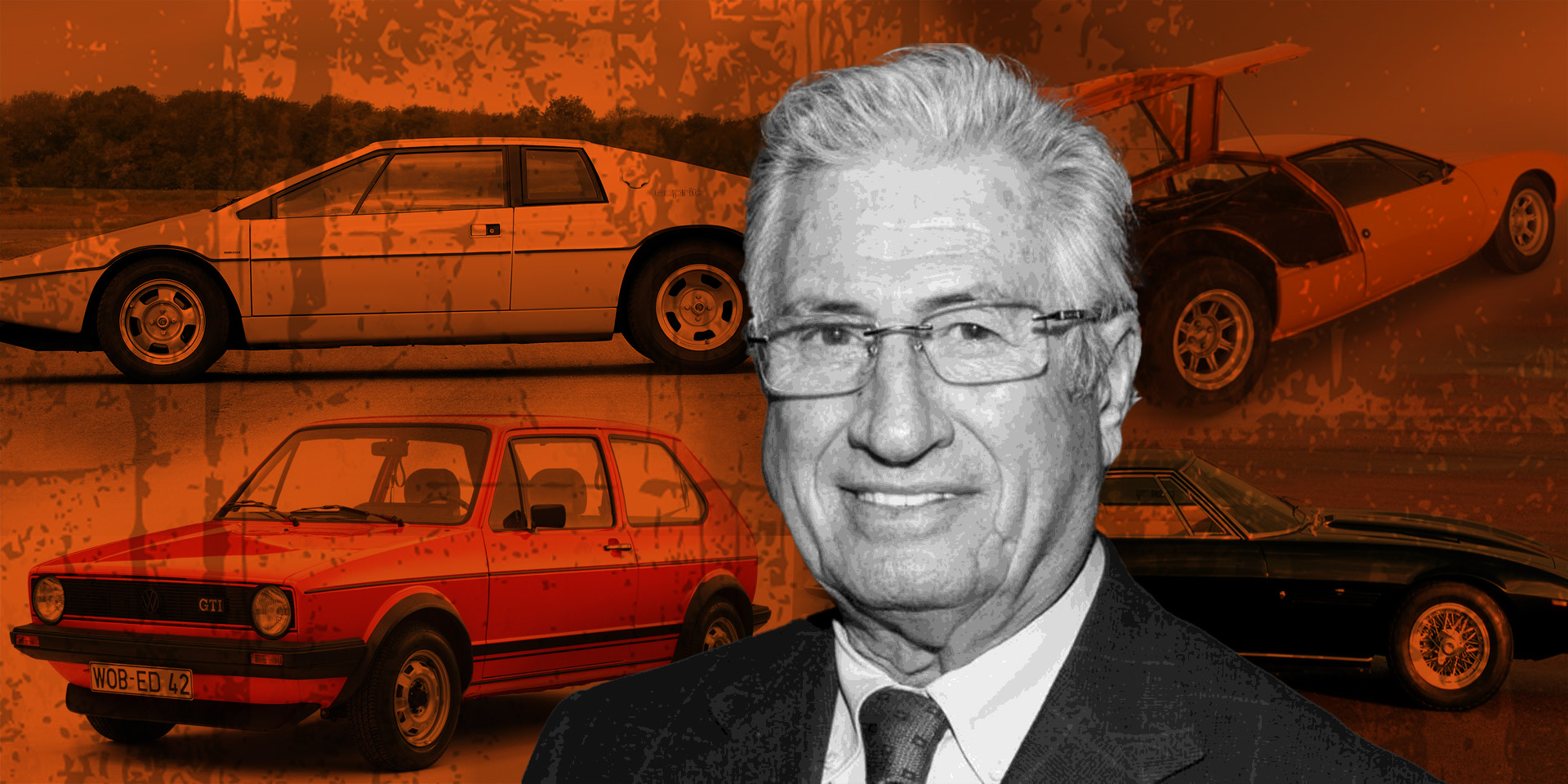
Giorgetto Giugiaro
 Italy
ItalyAutomotive and industrial designer
Birthday
August 7, 1938
Birth Sign
Leo
Birthplace
Garessio, Piedmont, Italy
Age
88 years old
About
Giorgetto Giugiaro is an Italian automotive and industrial designer, widely regarded as one of the most influential figures in car design history. Born in Garessio in 1938, he has shaped the look of over 200 production vehicles, from the Volkswagen Golf to the DeLorean DMC-12. In 1999 he was named Car Designer of the Century, and in 2002 he was inducted into the Automotive Hall of Fame. His work has earned him six Compasso d'Oro awards, Italy's top industrial design honour, including a lifetime achievement award in 1984.
Beyond cars, Giugiaro's portfolio spans cameras, watches, furniture, and even pasta. He designed camera bodies for Nikon, racing chronographs for Seiko, and office furniture for Okamura. In 2003 he created the monumental organ for the Cathedral of Lausanne, with around 7,000 pipes. As of 2026, he remains active in design, running his own independent studio and sharing his philosophy through rare interviews.
Early Life & Background
Born into an artistic family in the Piedmont town of Garessio, Giugiaro grew up surrounded by painting and fresco work. His father and grandfather were both artists, and that visual sensibility stayed with him. He studied at the Accademia di Belle Arti in Turin, where he trained in industrial design and fine arts.
At just 17, in 1955, he joined the Fiat Styling Centre as a junior designer. That early break led to a position at Bertone in 1959, where he worked on the Alfa Romeo Giulietta Sprint and the Ferrari 250 GT. His time at Bertone also produced the Gordon-Keeble GT in 1960, a car that showcased his growing confidence with proportion and line. By the mid-1960s, he had established himself as a prodigy in the Italian coachbuilding world, ready to launch his own venture.
Career Growth
In 1968, Giugiaro co-founded Italdesign with Aldo Mantovani, giving him the freedom to work across the industry. His first concept, the Bizzarrini Manta, set the tone with its clean, wedge-like form. The 1970 Porsche Tapiro pushed that language further, featuring four gullwing doors on a Porsche 914 base.
The 1970s brought a string of landmark production cars. The Maserati Ghibli (1971) and the Volkswagen Golf GTI (1973) demonstrated his range, from grand tourer to practical hatchback. The Lotus Esprit (1976) became famous as James Bond's submarine car in The Spy Who Loved Me. Then came the BMW M1 in 1978, a mid-engine supercar with 273 hp and a top speed of 163 mph, and the DeLorean DMC-12 in 1980, with its stainless-steel gullwing doors.
Later work included the Saab 9000 in 1988. In 2015, he sold his remaining shares in Italdesign to the Volkswagen Group and set up a new independent studio. He continues to consult and design, and in 2025 he was honoured at the International Historic Motoring Awards.
Career Timeline
Public Image & Style
Giugiaro's public image is that of a master craftsman with a restless curiosity. Media outlets have called him the 'world's greatest living car designer' and 'the most influential car designer of all time.' His design philosophy favours clean lines, functionality, and timeless aesthetics over flashy trends. He is respected not just by automotive enthusiasts but by design students and industry professionals worldwide. His interview style is thoughtful and philosophical, as when he told Car Design News that 'design is not democracy. You need a strong point of view.' There is no official fandom, but his name carries weight in every design studio.
Fame & Fandom (iFAMOUS Rankings)
Across the global landscape of design and automotive history, Giorgetto Giugiaro commands a presence that bridges industrial utility with artistic legacy, tracked through a vast array of media coverage, search activity, and cultural consumption signals worldwide. His standing is quantified by the iFANN Global Fame Rankings, which place him as the 71st most famous person from Italy, a position that has shifted slightly down from 70th in the previous cycle. This ranking reflects his enduring status not merely as a historical figure but as an active participant in contemporary design discourse, even at age 87. While his influence permeates every major car manufacturer and design school, his fanbase does not coalesce under a single formal name or organized club. Instead, admiration flows through specific vehicle communities; enthusiasts of the Volkswagen Golf, the Lotus Esprit, or the DeLorean DMC-12 identify with his work rather than forming a dedicated following for the man himself. There are no recorded rituals, street shutdowns, or viral moments of fan frenzy surrounding his public appearances. The reverence he receives is quiet, professional, and sustained, rooted in the sheer volume of iconic machines that populate our roads and museums. This lack of a singular fandom name does not diminish his impact but rather highlights how his legacy is woven into the fabric of everyday objects and high-performance machinery alike.
Interesting Facts and Legends
Giugiaro's creative reach extends far beyond the automobile, encompassing a diverse portfolio that includes camera bodies for Nikon, racing chronographs for Seiko, office furniture, and even a pasta shape named Marille. His architectural contributions include the Navigation promenade in Porto Santo Stefano, finished in 1983, while his musical interests led to the design of the organ in the Cathedral of Lausanne, featuring approximately 7,000 pipes. Family heritage plays a role in his artistic lineage, as both his father and grandfather were painters and fresco artists. A particularly poignant chapter in his mythology involves the Bizzarrini 5300 Aperta Lusso, a vehicle representing a design he conceived sixty years ago that finally reached production recently. In 2005, Ferrari unveiled the GG50 concept on a 612 Scaglietti base to mark 50 years of his career, a rare gesture of ultimate respect from a rival marque. The DeLorean DMC-12 achieved its own form of immortality through its starring role in the Back to the Future films. These stories highlight his longevity, proving that his vision from the 1960s continues to resonate in the current automotive landscape.
Notable Quotes
“Can artificial intelligence do better [than humans]? Maybe, but there always needs to be someone responsible. Design is not democracy. You need a strong point of view.”
Family & Personal Life
Giugiaro keeps his family life private, but his son Fabrizio has followed him into the design business, working at Italdesign. His father and grandfather were painters and fresco artists, which shaped his early visual sensibility. He has been married for many years, though details about his wife are not widely publicized. The family's roots in Piedmont, Italy, remain a quiet backdrop to his global career.
Notable Connections
Relationships & Dating History
Giugiaro has kept his personal life remarkably private. There are no publicly documented dating histories, engagements, or divorces in the available sources. He has been married for many years, though his wife's name has not been widely publicized. His son Fabrizio has been involved in the family design business, working at Italdesign. As of 2026, there is no public information to suggest he is anything other than married, but the current status of his marriage is not documented. His focus has always been on his work, and he has rarely discussed his personal life in interviews.
Salary, Net Worth In 2026
$100 Million
iFANN Editorial Team estimate
iFANN currently estimates Giorgetto Giugiaro's net worth at $100 Million as of 2026. The bulk of his wealth comes from the 2015 sale of his remaining shares in Italdesign to the Volkswagen Group, a transaction that reflected the firm's standing as a global design consultancy. Over decades, his design royalties from mass-produced vehicles like the Volkswagen Golf, one of the best-selling cars in history, generated substantial income. His diverse portfolio, including camera designs for Nikon, watches for Seiko, and furniture for Okamura, added to his earnings. After the sale, he established a new independent studio, continuing to earn from consulting and design work. While no public figure has been confirmed, his financial security is evident from his career longevity and the value of his brand.
Awards Won (3)
Giugiaro has won six Compasso d'Oro awards, Italy's most prestigious industrial design honour, including a lifetime achievement award in 1984. In 1999 he was named Car Designer of the Century, and in 2002 he was inducted into the Automotive Hall of Fame. In 2025 he was honoured at the International Historic Motoring Awards.
2025 · Career Achievement
Lifetime contribution to automotive design
2002 · Hall of Fame
Lifetime contribution to automotive design
Known For
Volkswagen Golf GTI
1973 · Designer
BMW M1
1978 · Designer
DeLorean DMC-12
1980 · Designer
Lotus Esprit
1976 · Designer
Maserati Ghibli
1971 · Designer
Keywords
Sources
Quick Facts
- Profession
- Automotive and industrial designer
- Born
- August 7, 1938
- Birthplace
- Garessio, Piedmont, Italy
- Gender
- Male
- Birth Sign
- Leo
- Nationality
- Italian
- Education
- Accademia di Belle Arti, Turin
- Known for
- Car Designer of the Century (1999)
Personal Details
- Full Name
- Giorgetto Giugiaro
- Children
- Fabrizio Giugiaro
- Education
- Accademia di Belle Arti, Turin
Frequently Asked Questions
What cars did Giorgetto Giugiaro design?
Is Giorgetto Giugiaro still alive?
What is Giorgetto Giugiaro's net worth?
Who founded Italdesign?
Did Giorgetto Giugiaro design the DeLorean?
Similar People
Join the community
fans discussing