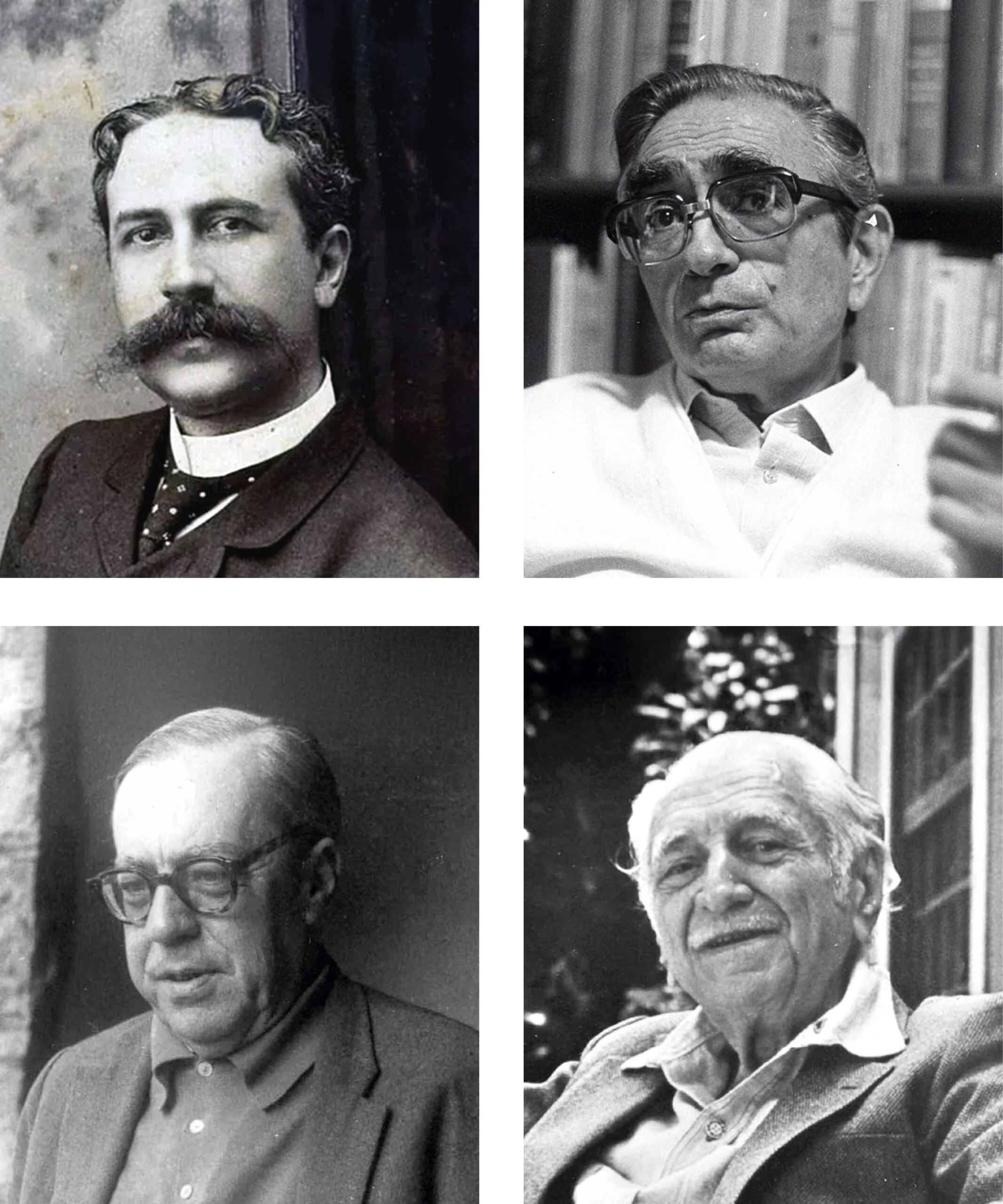
Gilberto Freyre
 Brazil
sociologist•anthropologist•writer•journalist•politician
Also known as: G. Freyre, Gilberto de Mello Freyre
Birthday
March 15, 1900
Birth Sign
Pisces
Birthplace
Recife, Pernambuco, Brazil
Age
Died at 87
About
Gilberto de Mello Freyre stands as a towering figure in 20th-century Brazilian thought, serving as a preeminent sociologist, anthropologist, historian, writer, painter, journalist, and politician. Born into a wealthy sugar plantation family in Recife, he dedicated his life to analyzing the unique social fabric of Brazil. His most enduring contribution is the 1933 masterpiece Casa-Grande & Senzala, which argued that Brazil's identity was forged through the mixing of Portuguese, African, and Indigenous cultures within the patriarchal plantation system. He became a global authority on Latin American sociology, challenging prevailing eugenicist views and proposing a model of racial harmony known as Lusotropicalism.
Though celebrated internationally during his lifetime, Freyre's legacy remains a subject of intense scholarly debate. Critics argue that his romanticization of slavery and colonialism obscured the brutal realities of systemic racism in Brazil. Despite these controversies, his influence on how the world perceives Brazilian culture is undeniable. He spent his later years teaching, writing, and engaging in politics, leaving behind a vast body of work that continues to shape discussions on race, gender, and national identity across the Americas. He was elected to the Brazilian Academy of Letters in 1951, occupying Chair No. 30, and received the Order of the Southern Cross for meritorious service to the nation.
Early Life & Background
Gilberto de Mello Freyre entered the world on March 15, 1900, in Recife, the capital of Pernambuco, a region steeped in the history of colonial sugar production. He was born into a distinguished and affluent family deeply embedded in the local elite. This privileged upbringing exposed the young Gilberto to the stark duality of the plantation system: the opulence of the "great house" and the harsh realities of the "slave quarters." This environment would later become the central theme of his life's work. His childhood was marked by tragedy when he lost his mother at a very young age. Following her death, he was raised partly by his grandmother, who instilled in him a deep appreciation for regional customs, food, folklore, and the domestic sphere.
These formative experiences fostered a lifelong interest in the intimate details of daily life as a site of historical significance. Before he could fully explore his intellectual potential in Brazil, he was sent abroad for higher education. In 1918, at the age of eighteen, he traveled to the United States to study at Columbia University in New York City. There, he pursued studies in sociology, anthropology, and political science, graduating with a Bachelor of Arts degree in 1921. He continued his graduate studies at Columbia, earning a Master of Arts degree in 1922. During this period, he was influenced by the emerging fields of American sociology and the works of Franz Boas, though he later diverged significantly from the American academic consensus on race.
Career Growth
Freyre's breakthrough arrived in 1933 with the publication of Casa-Grande & Senzala. The book was an immediate sensation, selling out its first edition and establishing him as a leading intellectual figure in Brazil. In this treatise, he challenged the prevailing eugenicist narratives of the time, arguing instead that miscegenation was a positive force that created a unique and harmonious Brazilian identity. He posited that the Portuguese were more adaptable to tropical climates and more inclined toward racial mixing than other European colonizers, a theory that became known as "Lusotropicalism." This work fundamentally reshaped the understanding of Brazilian culture and race relations.
Following this success, Freyre expanded his influence through several major projects. He published Sobrados e Mucambos in 1936, analyzing the architectural evolution of the Northeast. In the 1940s, he founded the Department of Sociology and Anthropology at the University of Recife and became a prolific journalist for newspapers like O Globo and Diário de Pernambuco. His political career peaked in 1946 when he was elected as a federal deputy for Pernambuco, serving until 1951 while advocating for educational reform. Throughout the 1950s and 1960s, he traveled extensively, lecturing in Europe, North America, and Africa. His ideas on Lusotropicalism were notably adopted by the Portuguese government under António de Oliveira Salazar to justify its colonial policies in Africa, a connection that later drew significant criticism post-independence.
Career Timeline
Public Image & Style
Freyre is remembered as a charismatic, erudite, and sometimes controversial figure who dared to challenge conventional wisdom about race and culture. The media portrayed him as a visionary statesman of ideas, combining intellectual rigor with a deep love for his country's heritage. His tone was often optimistic and celebratory of Brazilian diversity, though this optimism is now viewed with skepticism by many modern scholars. He cultivated a public persona as a man of the people despite his elite background, often speaking in a style that blended academic depth with accessible language. His image as a painter and gastronome added layers to his reputation as a man of broad cultural interests. Photographs from the mid-20th century depict him as a man of average stature, typically dressed in formal attire suitable for his academic and political roles.
Fame & Fandom (iFAMOUS Rankings)
While he does not have a traditional pop-culture fandom with organized campaigns or fan clubs, he commands a dedicated following among academics, historians, and students of Brazilian culture. This community engages in rigorous debate and analysis of his work, particularly regarding the complexities of his Lusotropicalism thesis. Notable activities include academic conferences, book launches, and digital initiatives to preserve his legacy. Fans of Freyre often refer to themselves simply as students of his work or Lusotropicalists, terms that describe their scholarly engagement rather than an organized group. His influence extends beyond academia into broader cultural discussions on race and identity in Brazil. Official pages for the Gilberto Freyre Foundation maintain profiles on platforms like Facebook and Instagram, sharing content related to his life and work with modest follower counts consisting primarily of academics and enthusiasts.
Interesting Facts and Legends
Gilberto Freyre was not just a writer but also a talented painter, creating watercolors and oils that often depicted scenes from the Brazilian Northeast. His artwork, while less famous than his literary works, is highly regarded by art historians for capturing the region's light and atmosphere. He was also a passionate gastronome who wrote extensively about Brazilian cuisine, believing it to be a crucial element of cultural identity. His culinary essays and recipes are still referenced today by chefs and food historians. Fluent in Portuguese, English, French, and Spanish, Freyre engaged with a wide range of international scholarship, allowing him to synthesize diverse perspectives into his theories.
One lesser-known fact is his deep involvement in the preservation of regional folklore; he collected countless stories and songs from the rural areas of the Northeast, treating them with the same academic rigor as formal historical documents. He traveled extensively throughout Brazil, documenting regional cultures and traditions. While he did not appear on mainstream magazine covers like *Time* or *Vogue*, his image was featured on the cover of *O Cruzeiro* in the 1940s, highlighting his role as a public intellectual.
Notable Quotes
“The Brazilian people is a mixture of races, and this mixture is the source of our strength.”
“The house of the master and the slave's hut are two sides of the same coin.”
“We must understand Brazil not as a copy of Europe, but as a unique creation of the tropics.”
Family & Personal Life
Gilberto Freyre was born into a wealthy family of sugar plantation owners. His father, José Augusto Freyre, served as a magistrate and former mayor of Recife, while his mother, Maria Augusta da Silva Freyre, came from a prominent local lineage. After his mother's early death, he was raised partly by his grandmother, who played a significant role in shaping his character. He attended primary school in Recife before departing for the United States. Upon returning to Brazil in 1923, he worked briefly as a journalist and editor in Recife and Rio de Janeiro. He also taught briefly at the University of Recife, where he began to formulate the ideas that would culminate in his seminal work. These early professional steps laid the groundwork for his future intellectual dominance.
Notable Connections
Relationships & Dating History
Gilberto Freyre was married twice. His first marriage was to Dina D'Ávila in 1924. She was a teacher and a significant supporter of his early intellectual endeavors. Together they had two children: Maria de Lourdes, born in 1925, and Gilberto Jr., born in 1927. Dina's death from illness in 1942 left Freyre widowed at the age of forty-two, a personal tragedy that reportedly deepened his introspective nature and commitment to his work. After a period of mourning and professional focus, Freyre married Nelly Novaes Coelho in 1946. Nelly was a writer and intellectual in her own right, and their marriage was characterized by a shared dedication to cultural and political discourse. They remained together until Freyre's death in 1987. With Nelly, he had no additional children, though he maintained close relationships with his children from his first marriage throughout his life. Nelly Freyre was instrumental in managing his estate and preserving his legacy after his passing.
- MarriedDina D'Ávila1924 - 1942Mother of his two children; died of illness.
- MarriedNelly Novaes Coelho1946 - 1987Writer and intellectual; managed his estate after his death.
Death & Aftermath
Died
July 18, 1987 (aged 87)
Death Place
Recife, Pernambuco, Brazil
Cause of Death
Natural causes due to old age
Gilberto de Mello Freyre died on July 18, 1987, in his hometown of Recife at the age of eighty-seven. The cause was natural, attributed to the general decline associated with advanced age rather than a specific acute illness, though detailed medical records from his final days were not made public. His passing marked the end of an era for Brazilian social sciences, prompting immediate tributes from academic institutions and government bodies that recognized him as a foundational thinker who had fundamentally altered how the nation understood its own history. His funeral was held in Recife, and his remains were interred in the city near his family home.
While specific details about memorial gatherings are scarce in historical archives, the reaction to his death was one of profound respect. Scholars and students alike acknowledged the impact of The Masters and the Slaves, which had challenged eugenicist narratives and redefined the conversation around race in Latin America. Following his death, his estate passed to his heirs, with his intellectual property and book royalties continuing to generate revenue managed by the family and the Gilberto Freyre Foundation. This foundation has since worked to preserve his legacy through seminars and new editions of his work, ensuring that his complex theories on Lusotropicalism and cultural synthesis remain subjects of study and debate decades later. Museums in Recife and Rio de Janeiro occasionally host exhibitions featuring his manuscripts and personal artifacts.
Net Worth (Estate Value)
$5 Million
iFANN Editorial Team estimate
As a public intellectual and academic, Gilberto Freyre did not accumulate wealth in the modern sense of celebrity net worth. His income derived primarily from his salary as a professor, fees from journalism, and royalties from his books. Given the inflation-adjusted value of his estate today, estimates suggest his assets, including real estate in Recife, book rights, and intellectual property, are valued in the millions of dollars, though exact figures are not publicly disclosed. The estate is managed by his descendants, with significant revenue generated from the continuous sales of The Masters and the Slaves and related works. The Gilberto Freyre Foundation also manages some of his intellectual property, ensuring his legacy is financially sustainable.
iFANN currently estimates Gilberto Freyre's estate value at approximately $5 million based on the ongoing commercial viability of his literary works and the value of his historical assets. His financial standing was bolstered by prestigious honors such as the Grand Cross of the Order of Merit from Portugal and the National Order of Scientific Merit. The foundation continues to generate revenue through seminars and new editions of his work, ensuring his legacy remains economically active decades after his passing.
Awards Won (5)
Gilberto Freyre received numerous prestigious honors reflecting his status as a national icon. He was awarded the Order of the Southern Cross, a high Brazilian honor for meritorious service to the nation, and the Grand Cross of the Order of Merit by the Portuguese government for his contributions to Lusophone studies. He received honorary doctorates from several universities, including the University of São Paulo and the University of Coimbra. In 1951, he was elected as a member of the Brazilian Academy of Letters, occupying Chair No. 30, a testament to his literary and cultural impact. He also received the National Order of Scientific Merit and the Key to the City of Recife.
1950 · National Honor
Service to the Nation
1952 · International Honor
Contributions to Lusophone Studies
Known For
Casa-Grande & Senzala
1933 · Author
Sobrados e Mucambos
1936 · Author
Brasil: Uma Análise do Século XX
1951 · Author
Keywords
Sources
Quick Facts
- Profession
- sociologist, anthropologist, writer, journalist, politician
- Born
- March 15, 1900
- Birthplace
- Recife, Pernambuco, Brazil
- Died
- July 18, 1987
- Death Place
- Recife, Pernambuco, Brazil
- Gender
- Male
- Birth Sign
- Pisces
Personal Details
- Full Name
- Gilberto de Mello Freyre
- Spouse
- Nelly Novaes Coelho (1946–1987), Dina D'Ávila (1924–1942)
- Children
- Maria de Lourdes Freyre, Gilberto Jr.
- Education
- Columbia University (BA 1921, MA 1922)
Frequently Asked Questions
What is Gilberto Freyre's most famous book?
Did Gilberto Freyre believe in racial democracy?
How did Gilberto Freyre die?
Was Gilberto Freyre a politician?
What is Lusotropicalism?
Similar People
Join the community
fans discussing