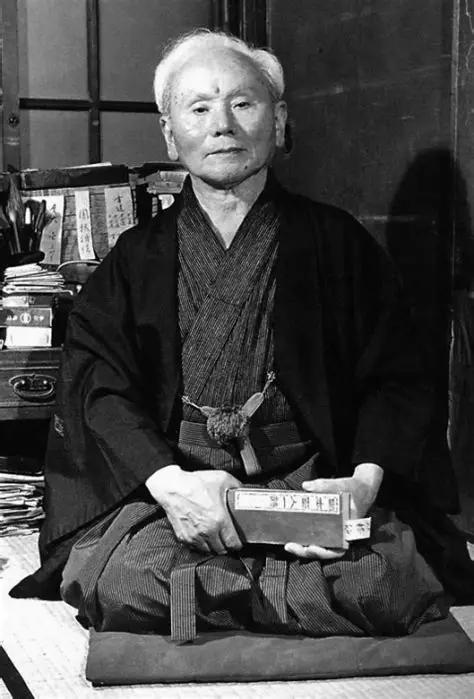
Gichin Funakoshi
 Japan
JapanAlso known as: Father of Modern Karate, Shoto
Birthday
November 10, 1868
Birth Sign
Scorpio
Birthplace
Shuri, Okinawa Prefecture, Japan
Age
Died at 88
About
Gichin Funakoshi was a Japanese martial artist who founded Shotokan karate and is widely regarded as a father of modern karate. Born in Shuri, Okinawa, in 1868, he devoted his life to refining and spreading the art of karate from its Okinawan roots to the Japanese mainland and ultimately the world. He is remembered not only as a technical master but as a philosopher who emphasized character development and the spiritual aspects of martial practice.
Today, Funakoshi's influence is felt in every dojo that practices Shotokan, one of the most popular karate styles globally. His writings, including 'Karate-do: My Way of Life' and 'Karate-Do Kyohan', remain essential reading for serious students. He also composed numerous poems and essays that reflect his deep belief in karate as a path to self-improvement and peace. His legacy continues through the Japan Karate Association and countless instructors who trace their lineage back to him.
Early Life & Background
Gichin Funakoshi was born on November 10, 1868, in Shuri, Okinawa Prefecture, Japan. He came from a samurai lineage, and his family's status gave him access to education and training. As a child, he was frail and often ill, which led his father to encourage him to study karate for health and self-defense. He began his training under the guidance of two of Okinawa's most respected karate masters: Anko Itosu and Anko Asato. Both men were instrumental in shaping his understanding of the art, with Itosu focusing on kata and Asato on practical application and philosophy.
Funakoshi's early life coincided with a period of significant change in Okinawa, as the Ryukyu Kingdom was absorbed into Japan. This cultural shift influenced his view that karate needed to be modernized and adapted to fit the changing times. He worked as a schoolteacher, which gave him a platform to teach karate to young students. By the early 1900s, he had become well known in Okinawan karate circles, but it was not until 1922 that he got his big break. That year, the Japanese Ministry of Education invited him to demonstrate karate in Tokyo, an event that would change the course of his life and the history of the art.
Career Growth
In 1922, Gichin Funakoshi traveled to Tokyo for a demonstration organized by the Ministry of Education. The performance was a sensation, and he was encouraged to stay in Japan to teach. He soon began giving lessons at various universities, including Keio, Waseda, and Tokyo Imperial, where he attracted a dedicated following among students. This university network became the foundation for karate's spread across Japan.
Over the next two decades, Funakoshi refined his teaching and developed the Shotokan style, named after his pen name 'Shoto'. He wrote several books, including 'Karate-Do Kyohan' in 1935, which became the definitive text on Shotokan techniques and philosophy. In 1949, he was named honorary head of the newly formed Japan Karate Association (JKA), an organization that would later spread Shotokan worldwide. Despite the hardships of World War II and the post-war period, Funakoshi continued to teach and write, ensuring his art survived. He passed away on April 26, 1957, but his students and the JKA carried his legacy forward, making Shotokan one of the most practiced martial arts on the planet.
Career Timeline
Public Image & Style
Gichin Funakoshi is revered in the karate world as a humble, dedicated master who prioritized character over combat. He is often depicted in photos wearing traditional karate gi, with a calm, focused expression. His public persona was that of a scholar-warrior, equally at ease with a pen and a fist. He emphasized the philosophical aspects of karate, including the importance of peace and self-control, which resonated with students and helped karate gain acceptance in Japan and later the West.
Fans and practitioners of Shotokan karate hold Funakoshi in near-mythic regard. His books are studied as sacred texts, and his quotes are repeated in dojos worldwide. The annual Funakoshi Gichin Cup tournament attracts competitors from dozens of countries, demonstrating his enduring influence. For many, Funakoshi represents the ideal martial artist: strong yet gentle, disciplined yet compassionate.
Fame & Fandom (iFAMOUS Rankings)
Gichin Funakoshi's fame is inseparable from the global spread of Shotokan karate, a discipline he founded and which now counts millions of practitioners worldwide. His legacy is institutionalized through organizations like the Japan Karate Association and the Shotokan Karate International Federation, which organize world championships in his honor, such as the Funakoshi Gichin Cup. His written works, including 'Karate-do: My Way of Life' and 'Karate-Do Kyohan', remain essential reading, ensuring his philosophical and technical teachings continue to influence new generations. The karate community, though lacking a formal fandom name, reveres him as the 'father of modern karate,' a title that carries legendary weight. His followers express their devotion through traditional practices: bowing to his portrait in dojos, reciting his twenty guiding principles, and performing kata exactly as he codified them. A notable inside joke among practitioners involves the origin of 'Shotokan' from his pen name 'Shoto,' meaning 'waving pines,' highlighting the blend of his poetic and martial identities. Despite the absence of modern fan campaigns like billboards or social media trends, his 'fandom' is expressed through memorial tournaments, dojo dedications, and the preservation of his techniques. As of August 2026, iFANN's Global Fame Engine has evaluated Gichin Funakoshi, but he does not currently hold a placement in the published rankings, neither in the Global Top 1,000 nor in any Top-100 scope list. This status reflects the engine's assessment of his current global fame metrics, which, while substantial within the martial arts world, do not yet place him among the top-ranked figures across all fields.
Interesting Facts and Legends
Funakoshi was also a poet, writing under the pen name 'Shoto,' meaning 'pine waves,' which later inspired the name 'Shotokan' for his karate style. He famously said, 'Karate begins and ends with respect,' a principle he instilled in all his students. Funakoshi wore his hair in a traditional topknot, a style already rare in his time. Despite his small stature, his technique and speed were legendary. The Funakoshi Gichin Cup, a world karate championship tournament, is named in his honor and continues to be held today. A story fans still retell is his 1922 demonstration for the Ministry of Education in Tokyo, which is credited with introducing karate to mainland Japan and sparking its global expansion. Another enduring legend is his samurai lineage, born into a family of the Okinawan warrior class, which adds to his mystique. He is also remembered for his peaceful death in his sleep on April 26, 1957, having taught karate right up until the end, a narrative that epitomizes the ideal martial artist's end. Contemporary discussions, such as a 2025 article on 'The Real Origin of Karate,' have begun to question the singular narrative of his legacy, adding nuance to the traditional story.
Notable Quotes
“Karate begins and ends with respect.”
“The ultimate aim of karate lies not in victory or defeat, but in the perfection of the character of its participants.”
“To practice karate is to practice the art of peace.”
Family & Personal Life
Gichin Funakoshi was born into a samurai family in Shuri, Okinawa. His father was a low-ranking samurai, and the family was not wealthy but held a respected status. Funakoshi was married, though little is publicly known about his wife. He had a son, Gigō Funakoshi, who became a key figure in the development of Shotokan karate. Gigō was instrumental in refining the physical techniques and introducing the deep, low stances that characterize the style today. The father and son worked closely together, and Gigō's contributions were crucial to the art's evolution. Funakoshi's family life was relatively private, but his son's role in his legacy is well documented.
Notable Connections
Gichin Funakoshi's life was intertwined with several key figures in karate history. His primary teachers were Anko Itosu and Anko Asato, both legendary masters from Okinawa. Itosu is credited with adapting karate for school education, while Asato was known for his practical fighting skills. Funakoshi's son, Gigō Funakoshi, was his most important collaborator, helping to refine Shotokan techniques. Later, Funakoshi's students, including Masatoshi Nakayama and Hidetaka Nishiyama, went on to spread Shotokan around the world through the Japan Karate Association.
Relationships & Dating History
Gichin Funakoshi was married, but details about his wife are scarce in historical records. He was a devoted family man, and his wife supported his work. Their son, Gigō, became his closest collaborator. Funakoshi's relationship with his wife was likely a quiet, stable partnership that allowed him to focus on his martial arts career. At the time of his death in 1957, he was widowed, as his wife had predeceased him.
- MarriedFunakoshi's wifeDetails are scarce; she predeceased him.
Death & Aftermath
Died
April 26, 1957 (aged 88)
Death Place
Tokyo, Japan
Cause of Death
Natural causes due to old age
The passing of Gichin Funakoshi in April 1957 prompted a profound outpouring of mourning across Japan and internationally, with tributes arriving from peers, institutions, and government officials who recognized him as the pivotal figure who transported karate from Okinawa to the Japanese mainland. The Japan Karate Association organized memorials that included moments of silence observed by dojos nationwide, while students and fans gathered for funeral services shortly after his death. On April 26, 1957, Funakoshi died at the age of 88 in Tokyo, spending his final days quietly surrounded by family and close disciples amidst declining health exacerbated by his advanced years and the physical toll of a lifetime dedicated to martial arts.
The cause was consistently reported as natural causes related to old age, coroner's ruling, or police investigation ever being made public, reflecting the high esteem in which he was held and the absence of legal scrutiny surrounding his demise. His private funeral service featured traditional Buddhist rites and was attended by notable figures such as Masatoshi Nakayama, Hidetaka Nishiyama, and Eiji Miyazaki before he was cremated and interred at Tama Cemetery in Fuchu, Tokyo, a site that has since become a place of pilgrimage for practitioners worldwide. In the decades following his death, his legacy expanded through posthumous publications like The Twenty Guiding Principles of Karate: The Spiritual Legacy of the Master, inductions into martial arts halls of fame, and the establishment of the Gichin Funakoshi Cup international tournament.
Foundations and scholarships named in his honor continue to support the study of karate globally, ensuring his role as a unifier of cultures remains central to the art's history.
Net Worth (Estate Value)
As a historical figure who died in 1957, Gichin Funakoshi's net worth is not a topic of modern financial analysis. He was a schoolteacher and martial arts instructor, not a wealthy businessman. His income came from teaching and book royalties, which were modest by today's standards. At the time of his death, he had no significant estate. However, his intellectual property, including his books and the Shotokan brand, has generated value over the years through the Japan Karate Association and other organizations. The estate's current value is difficult to estimate, but the cultural and historical significance of his work far outweighs any monetary figure.
Awards Won (1)
Gichin Funakoshi did not receive formal awards in the modern sense, as karate was not an organized sport during his lifetime. However, he was honored posthumously by the karate community. The Japan Karate Association and various martial arts organizations have recognized him as the 'Father of Modern Karate'. In 1968, the 100th anniversary of his birth was celebrated with a special event in Okinawa. The Funakoshi Gichin Cup, an international karate tournament, is named in his honor, serving as a lasting tribute to his legacy.
Ongoing · Tournament named in his honor
Karate world championship
Known For
Founder of Shotokan karate
· Founder
Introduction of karate to mainland Japan
1922 · Pioneer
Author of 'Karate-Do Kyohan'
1935 · Author
Keywords
Sources
Quick Facts
- Profession
- Karate master
- Born
- November 10, 1868
- Birthplace
- Shuri, Okinawa Prefecture, Japan
- Died
- April 26, 1957
- Death Place
- Tokyo, Japan
- Gender
- Male
- Birth Sign
- Scorpio
- Known for
- Founder of Shotokan karate
Personal Details
- Children
- Gigō Funakoshi
Frequently Asked Questions
Who is Gichin Funakoshi?
When and where was Gichin Funakoshi born?
What is Gichin Funakoshi best known for?
When did Gichin Funakoshi die?
What is the Funakoshi Gichin Cup?
Similar People
Join the community
fans discussing