 United States
“Boseman's performance is nothing short of miraculous. He doesn't just mimic Brown; he inhabits him, capturing the physicality and the soul of the man with terrifying precision.”
A.O. Scott
The New York Times
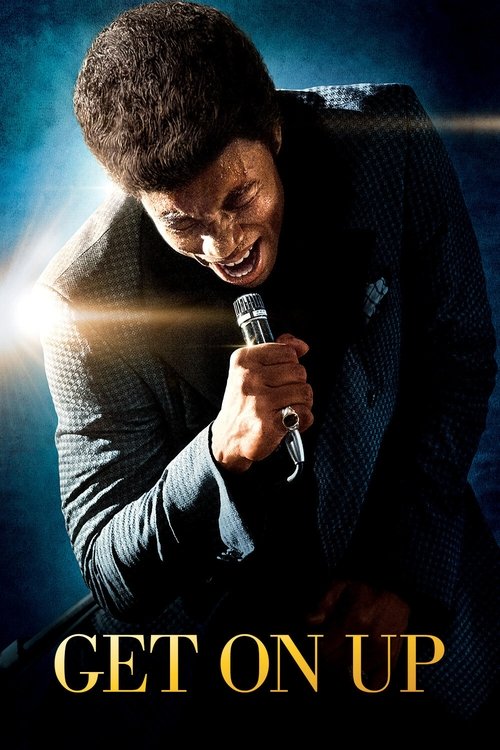
Chadwick Boseman steps into the spotlight as James Brown in Tate Taylor's biographical drama, capturing the soulful energy and turbulent life of the Godfather of Soul. Released in August 2014, this film chronicles the musician's journey from a childhood marked by poverty in South Carolina to his ascent as a global music icon. The production, backed by a budget of $30 million, features a stellar supporting cast including Viola Davis as his mother Susie and Nelsan Ellis as his musical partner Bobby Byrd.
Taylor directs with a focus on raw emotion and kinetic performance rather than polished biography. The movie blends drama and music history to explore themes of domestic violence, artistic ambition, and racial tension during the Vietnam War era. While the film grossed just over $33 million worldwide against its budget, it secured a solid 6.7 rating from critics and audiences alike. The narrative avoids standard hagiography, instead presenting a complex portrait of a man who broke the fourth wall of society while building an empire on stage.
Availability and pricing can change. Confirm on the provider's site before purchasing.
The story opens not at the beginning but in 1968, where James Brown stands at a crossroads between fame and personal chaos. He grapples with the weight of being a cultural icon while facing scrutiny over his role in the Civil Rights Movement and his own volatile home life. This framing device sets the stage for a non-linear exploration of his past, weaving through time to reveal the seeds of his future greatness and destruction.
We travel back to Augusta, Georgia, and Aiken, South Carolina, to witness young James growing up in abject poverty. Living with his grandmother, Aunt Honey, and his volatile mother, Susie, he witnesses a household defined by struggle and racial segregation. His father remains absent, leaving Susie to rely on sex work to keep food on the table. These early years forge a deep-seated insecurity in James, driving him to seek absolute control over every aspect of his existence. He finds solace in the church choir, where his voice first begins to captivate listeners, before moving to the secular stage.
As a teenager, James forms an unbreakable bond with Bobby Byrd, a fellow musician who becomes his lifelong partner and musical director. Together they navigate the gritty R&B circuit of the 1950s and 60s, facing racial barriers and financial exploitation. Their journey takes them from small-time clubs to the legendary Apollo Theater in Harlem, where they hone a revolutionary style that blends gospel, R&B, and funk. The film details the evolution of Brown's unique stage persona, depicting a man who commands the stage with intensity that borders on the manic. He uses dance moves like the "James Brown" split and high-energy performances to captivate audiences, creating a public image of brilliance.
This public success contrasts sharply with his private life, which the film portrays unflinchingly. It highlights his abusive behavior toward his wives, DeeDee and Yvonne Fair, revealing a pattern of domestic violence and infidelity rooted in his traumatic upbringing and need for dominance. The narrative also explores the political climate of the late 1960s, showing Brown clashing with the Civil Rights Movement after controversial comments following the assassination of Martin Luther King Jr. He suggests Black people should take responsibility rather than riot, alienating allies but solidifying his conservative image. The film touches on his relationship with Mick Jagger, showing how the Rolling Stones frontman sought Brown's approval, further cementing Brown's status as a cultural touchstone.
Throughout the movie, Brown struggles with legal and financial entanglements plaguing his empire. He faces scrutiny from the IRS and internal conflicts within his management team, including manager Ben Bart and record executive Syd Nathan. The central conflict remains internal: the battle between the man who needs love and acceptance and the artist who believes he must be feared to succeed. The narrative builds toward a climax involving a major concert and a personal crisis, leaving the audience to ponder the cost of greatness and the complexity of a man who was both a savior to his community and a tyrant in his home.
Official International Trailer
Trailer 2
Trailer
Critical Consensus
While Chadwick Boseman delivers a powerhouse performance that captures the essence of James Brown, the film's non-linear structure and uneven pacing sometimes obscure the emotional core of the story. Despite its flaws, it stands as a fitting tribute to the Godfather of Soul, driven by Boseman's electrifying presence.
“Boseman's performance is nothing short of miraculous. He doesn't just mimic Brown; he inhabits him, capturing the physicality and the soul of the man with terrifying precision.”
A.O. Scott
The New York Times
“Chadwick Boseman is a revelation. He brings a ferocity and vulnerability to James Brown that makes you forget you're watching a biopic and feel like you're witnessing history unfold.”
Peter Travers
Rolling Stone
“While the film occasionally stumbles under the weight of its own ambition, Boseman's portrayal is so compelling that it carries the entire production on its shoulders.”
Kenneth Turan
Los Angeles Times
“Get On Up is a loud, proud, and often messy celebration of James Brown's life. It's not perfect, but it's impossible to ignore, largely thanks to Boseman's transformative performance.”
David Edelstein
New York Magazine
“Boseman is a star in the making, delivering a performance that is both intimate and explosive. He makes James Brown feel real, flawed, and utterly unforgettable.”
Richard Roeper
Chicago Sun-Times
Chadwick Boseman
James Brown
Viola Davis
Susie Brown
Nelsan Ellis
Bobby Byrd
Dan Aykroyd
Ben Bart
Jill Scott
DeeDee Brown
Octavia Spencer
Aunt Honey
Lennie James
Joe Brown
Fred Melamed
Syd Nathan
Tika Sumpter
Yvonne Fair
Nick Eversman
Mick Jagger
Director
Tate Taylor
Writers
Jez Butterworth, John-Henry Butterworth, Steven Baigelman
Composer
Thomas Newman
Cinematographer
Stephen Goldblatt
Producers
Victoria Pearman, Mick Jagger, Tate Taylor, Brian Grazer, Erica Huggins
NAACP Image Awards (2015)
Outstanding Motion Picture: Nominated
NAACP Image Awards (2015)
Outstanding Actor in a Motion Picture: Nominated
Black Reel Awards (2015)
Outstanding Breakthrough Performance: Won
Critics' Choice Movie Awards (2015)
Best Acting Ensemble: Nominated
Join the community
fans discussing