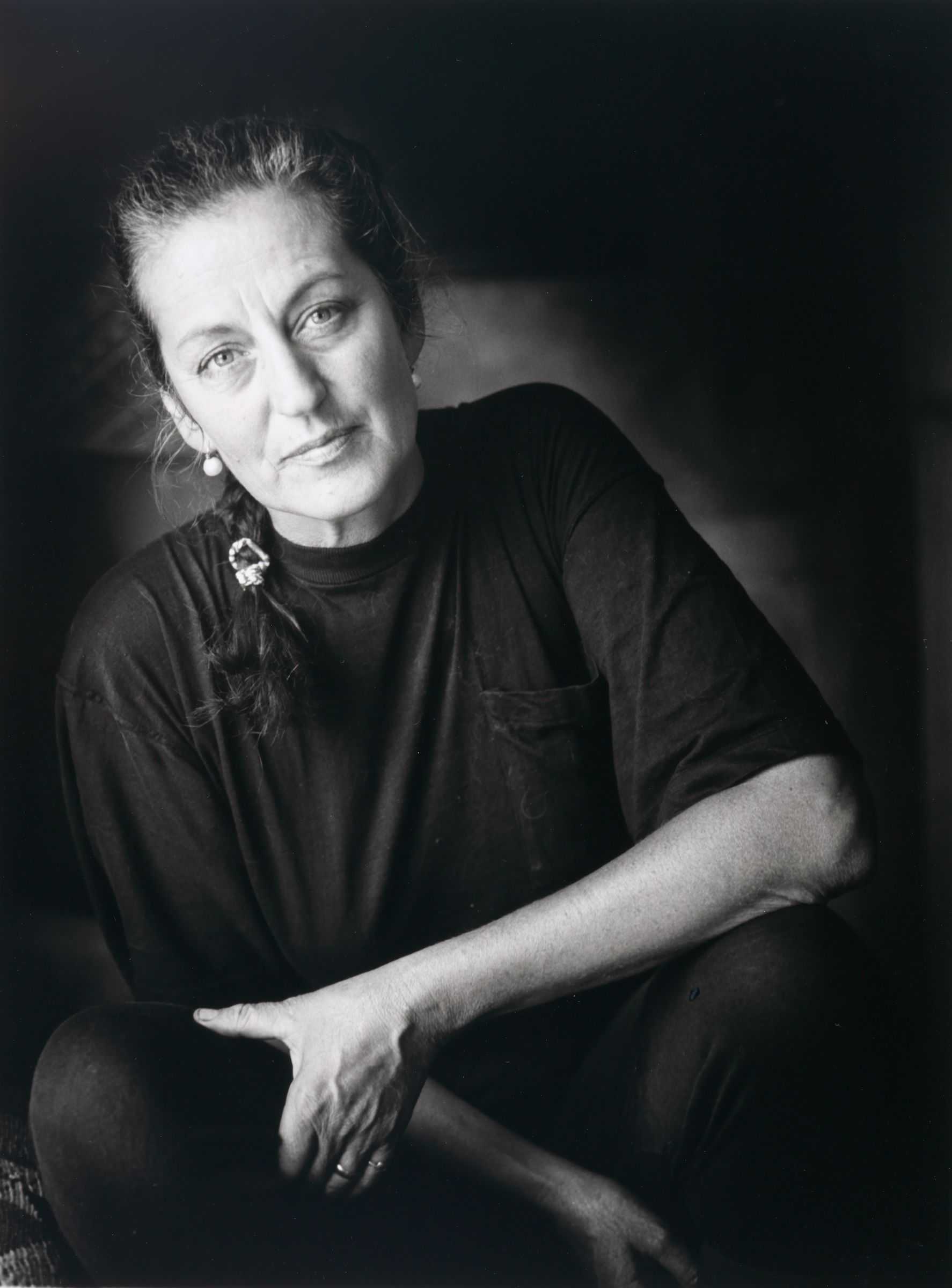
Germaine Greer
 Australia
Birthday
January 29, 1939
Birth Sign
Aquarius
Birthplace
Melbourne, Victoria, Australia
Age
87 years old
About
Germaine Greer is an Australian-born writer, academic, and feminist intellectual who became one of the most prominent voices of second-wave feminism in the 1970s. Born in Melbourne on January 29, 1939, she has spent her career challenging orthodoxies and provoking debate, both within the women's movement and beyond it. Her 1970 book The Female Eunuch remains a cornerstone of feminist literature, translated into over a dozen languages and still in print decades later.
Greer's work spans more than twenty books, academic posts at institutions like the University of Warwick and Newnham College, Cambridge, and regular columns for The Sunday Times and The Guardian. As of 2026, she remains a working writer and commentator, known for her sharp wit and willingness to court controversy. Her later books, including Shakespeare's Wife and White Beech: The Rainforest Years, show her range as a biographer and environmentalist.
Early Life & Background
Germaine Greer grew up in Melbourne, Australia, in a working-class Catholic household. Her father, Eric Reginald Greer, was a newspaper advertising representative, and her mother, Margaret Mary Lafrankie, was a housewife. Her early life was marked by a strict upbringing, which she later credited with fueling her rebellious streak. She attended a convent school before winning a scholarship to the University of Melbourne, where she studied English and French literature. There, she became involved in the bohemian literary scene, befriending future poets and artists.
After graduating in 1959, Greer taught high school for a few years before moving to Sydney to work on a student magazine. In 1964, she won a Commonwealth Scholarship to study at the University of Sydney, then moved to the United Kingdom to pursue a PhD at Newnham College, Cambridge, completing her doctorate on Shakespeare's comedies in 1967. It was in Cambridge that she began writing and performing in satirical revues, and she co-founded the alternative magazine Oz in 1963, though her involvement was brief. Her academic career took off in the late 1960s, with lectureships at the University of Warwick and later at the University of Tulsa, but it was the 1970 publication of The Female Eunuch that transformed her from a promising scholar into a global figure.
Career Growth
The publication of The Female Eunuch in 1970 was a seismic event. The book argued that women had been systematically stripped of their sexuality and autonomy, reduced to passive objects of male desire. It sold over a million copies in its first year and was translated into more than a dozen languages, making Greer a household name and a leading voice of second-wave feminism. She followed it with a string of provocative works, including Sex and Destiny (1984), a critique of Western attitudes toward sexuality, and The Change (1991), a rethinking of menopause. In 1999, she published The Whole Woman, which she described as a sequel to her debut, arguing that feminism had not gone far enough.
Beyond her books, Greer has been a constant presence in public debate. She appeared as a panelist on the BBC's Late Review in the 1990s, and has written columns for The Sunday Times and The Guardian. In 2003, she published The Boy, a study of male beauty in art, and in 2007, Shakespeare's Wife, a speculative biography of Anne Hathaway that challenged conventional scholarship. Her 2013 book, White Beech: The Rainforest Years, documented her efforts to restore a degraded rainforest property in Australia, reflecting her long-standing environmental activism. In 2018, she published On Rape, a controversial essay that drew sharp criticism for its arguments. Even in her eighties, Greer continues to write and lecture, proving that age has not dulled her appetite for provocation.
Career Timeline
Public Image & Style
Germaine Greer's public persona is that of a fierce, often contrarian intellectual. She is known for her sharp wit, her willingness to challenge feminist orthodoxies, and her refusal to be silenced. Her writing style blends academic rigor with a caustic, accessible prose that has earned her a devoted readership among feminist scholars and general readers alike. She has no formal fandom, but her influence is felt across generations of feminist thought. In recent years, her views on transgender women have made her a lightning rod for criticism, with some younger feminists calling her out of touch. Yet she retains a loyal following who admire her uncompromising stance on free speech and her dedication to biological reality. Her public appearances are often marked by controversy, but she remains a sought-after speaker and commentator.
Fame & Fandom (iFAMOUS Rankings)
Germaine Greer's renown rests on a singular, decades-long career as a feminist author and provocateur, yet the architecture of modern fame, with its rankings, fan armies, and measurable global footprint, barely touches her. iFANN's Global Fame Engine, which tracks media coverage and public interest across the world, has evaluated Greer but does not currently place her in the published Top 1,000 list or any Top-100 scope ranking. This absence is less a measure of her cultural weight than a reflection of her audience: a readership and an ideological following rather than a coordinated fanbase. No formal fandom name is documented for Greer, and no organized fan campaigns, charity drives, or streaming pushes exist in her name. Her influence is real but diffuse, exerted through books, columns, and lectures that have shaped feminist thought for over half a century.
What fame she holds is tied to specific, documented moments of controversy. The 2015 Cardiff University lecture, where protests and a petition demanded her appearance be cancelled over her views on transgender women, was covered by the BBC and remains a touchstone in public memory. Her 2016 interview with Time magazine, defending those views, and her 2018 writings on rape, critiqued in The Guardian and Quillette, have cemented a reputation as a contrarian willing to defy feminist orthodoxies. These are not legends but verified events, and they dominate how Greer is discussed today. Her foundational status as a second-wave feminist icon, anchored by the 1970 publication of The Female Eunuch, persists, but the controversies of her later career have reshaped her public image. As of 2024, at age 85, she remains active and provocative, proving that age has not dimmed her capacity to generate debate.
Interesting Facts and Legends
Greer holds a black belt in karate, a fact she once revealed in an interview but rarely discusses. She appeared on the cover of Oz magazine dressed as a nun, a jab at her Catholic upbringing. In 1973, her ex-husband Paul du Feu became the first male centrefold in Cosmopolitan, which Greer has joked about in interviews. She has a lifelong love of gardening and spent years restoring a rainforest property in Australia, later donating it to a conservation trust. She is also a passionate beekeeper. Greer has described herself as a 'contrarian' and has a public feud with Gloria Steinem dating to the 1970s. Among the iconic moments that define her legend, the 2015 Cardiff University lecture stands out: a petition called for its cancellation, and protests erupted over her comments that transgender women are not 'real' women. The lecture went ahead despite the backlash, and the event became a defining moment in her later career. In 2016, she defended her views in Time magazine, reigniting debate. Her 2018 writings on rape, critiqued in The Guardian and Quillette, added another layer to her contentious public persona. These are documented events, not folklore, but they are the stories most associated with Greer today.
Notable Quotes
“The opposite of patriarchy is not matriarchy but fraternity.”
“Women's liberation, if it abolishes the patriarchal family, will abolish a necessary substructure of the authoritarian state.”
“I agree that when I first was thinking about...”
“Revolution is not something fixed in ideology, nor is it something fashioned to a particular decade.”
“The sight of a woman in a suit always gives me a pang.”
Family & Personal Life
Greer was born to Eric Reginald Greer, a newspaper advertising representative, and Margaret Mary Lafrankie, a housewife. She had two siblings, a brother and a sister, but has rarely spoken about them publicly. Her parents' marriage was unhappy, and Greer has said that her mother's frustration shaped her early feminist consciousness. She has no children from her marriage to Paul du Feu or any other relationship. In interviews, she has expressed relief at not having children, saying it allowed her to dedicate her life to her work. Greer has lived in a medieval house in Essex, England, for decades, and also owns property in Queensland, Australia. She is known to keep a menagerie of rescue animals, including dogs and cats.
Notable Connections
Greer's most famous association is with her ex-husband, Paul du Feu, a builder who later became the first male centrefold in Cosmopolitan. In the 1990s, she appeared alongside Mark Lawson, Ekow Eshun, and Tom Paulin on the BBC's Late Review. She has also been linked, through public feuds, with fellow feminist Gloria Steinem.
Relationships & Dating History
Germaine Greer has kept her personal life largely private, but her one known marriage was to Paul du Feu, a builder and carpenter. The couple married in the late 1960s and divorced in the early 1970s. The marriage was brief and produced no children. After their divorce, du Feu gained notoriety as the first male centrefold in Cosmopolitan in 1973. Greer has spoken candidly about the marriage's failure, suggesting that du Feu was not supportive of her career. Since the divorce, Greer has not been publicly linked to any long-term partners. As of 2026, she is single and has been unmarried for over five decades.
- MarriedPaul du Feu1968 - 1973Brief marriage to a builder; ended in divorce in the early 1970s.
Salary, Net Worth In 2026
$5 Million
iFANN Editorial Team estimate
iFANN currently estimates Germaine Greer's net worth at $5 million. Her wealth derives from decades of book royalties, academic salaries, and journalism. The Female Eunuch has sold over a million copies and remains in print, providing a steady income stream. Her other books, while less commercially successful, have contributed to her earnings. She has also earned from speaking engagements and her role as a columnist for major British newspapers. Greer owns property in both England and Australia, including a medieval house in Essex and land in Queensland. She has not been known for lavish spending, and her wealth is relatively modest compared to commercial authors, reflecting her academic and intellectual career.
Awards & Accolades
View 3 records, honours and achievementsKnown For
The Female Eunuch
1970 · Author
The Whole Woman
1999 · Author
Shakespeare's Wife
2007 · Author
White Beech: The Rainforest Years
2013 · Author
Keywords
Sources
Quick Facts
- Profession
- essayist, journalist, professor
- Born
- January 29, 1939
- Birthplace
- Melbourne, Australia
- Gender
- Female
- Spouse
- Paul du Feu
- Birth Sign
- Aquarius
Personal Details
- Full Name
- Germaine Greer
- Spouse
- Paul du Feu
- Education
- University of Melbourne; Newnham College, Cambridge (PhD)
Frequently Asked Questions
Is Germaine Greer still alive?
Was Germaine Greer married?
Why is Germaine Greer controversial?
What is Germaine Greer's most famous book?
Did Germaine Greer have children?
Similar People
Join the community
fans discussing